Category Archives: Toxin

RASFF Alerts – Aflatoxin – Groundnuts – Brown Basmati Rice – Chicken Masala Spice Mix – Pistachios – Peanuts

European Food Alerts

RASFF

aflatoxins (B1 = 52.4; Tot. = 64.2 µg/kg – ppb) in groundnuts from Egypt in Italy

RASFF

aflatoxins (B1 = 9.1 µg/kg – ppb) in organic brown basmati rice from Pakistan in the Netherlands

RASFF

aflatoxins (B1 = 19.1; Tot. = 19.8 µg/kg – ppb) in chicken masala spice mix from Pakistan in Greece

RASFF

aflatoxins (B1 = 10.6 µg/kg – ppb) in masala spice mix from Pakistan in Greece

RASFF

aflatoxins (B1 = 14.1; Tot. = 14.8 µg/kg – ppb) in roasted and salted pistachios in shell from Turkey in Germany

RASFF

aflatoxins (B1 = 20.9; Tot. = 13.4 µg/kg – ppb) in pistachio kernels from Iran in Germany

RASFF

aflatoxins (B1 = 18; Tot. = 21.3 µg/kg – ppb) in pistachio kernels from Iran in Germany

RASFF

aflatoxins (B1 = > 2 µg/kg – ppb) in groundnuts from the United States in Spain

RASFF

aflatoxins (B1 = 34.2 mg/kg – ppm) in shelled pistachios from Iran, via Hong Kong in Italy

RASFF

aflatoxins (B1 = 5.4; Tot. = 6.4 µg/kg – ppb) in groundnuts from Egypt in Germany

RASFF

aflatoxins (B1 = 16.4; Tot. = 17.3 µg/kg – ppb) in pistachios from Iran in Germany

RASFF

aflatoxins (B1 = 20; Tot. = 23 µg/kg – ppb) in peanuts from Argentina in the Netherlands

RASFF

aflatoxins (B1 = 64.7; Tot. = 69.2 µg/kg – ppb) in pistachios in shell from Iran in Italy

RASFF

aflatoxins (B1 = 11.42; Tot. = 15.70 µg/kg – ppb) in pistachios from Turkey in Austria

RASFF Alerts – Histamine – Canned Tuna – Food Poisoning from Yellowfin Tuna Loins

European Food Alerts

RASFF

histamine (1071 mg/kg – ppm) in canned tuna from Thailand in Germany

RASFF

food poisoning caused by histamine (280 mg/kg – ppm) in frozen yellowfin tuna loins from Vietnam, via the Netherlands in Italy

France – Product recall: Carrefour brand basmati rice 1kg bag – Ochratoxin A

Oulah

Product recall: Carrefour brand basmati rice 1kg bag

ENCOUNTERED PROBLEM

Presence of Ochratoxin A

PROPOSED SOLUTION

Do not consume and return to the point of sale for reimbursement.

Ochratoxin A is a mycotoxin produced by several microscopic fungi (genera Penicillium and Aspergillus) and is naturally present in many plant products around the world, such as cereals, coffee beans, cocoa and dried fruits.

FURTHER INFORMATION

▸ Barcode
3560070837984

▸ Lot

▸ DDM
11/21/2022

▸ Consumer service contact
For any further information, you can contact the Carrefour consumer service by dialing N ° Cristal 09 69 39 7000 – non-surcharged call from Monday to Saturday from 9 am to 7 pm.

▸ Source
https://www.carrefour.fr/

RASFF Alerts – STEC E.coli – Veal Meat – Chilled Fillet Americain

European Food Alerts

RASFF

shigatoxin-producing Escherichia coli in veal meat from the Netherlands in the Netherlands

RASFF

shigatoxin-producing Escherichia coli (O26 stx2+ eae+ /25g) in chilled filet americain from Belgium in Belgium

RASFF Alerts – Aflatoxin – Hazlenut Kernels – Roasted Pistachios in Shell – Dried Figs – Spice Mix

European Food Alerts

RASFF

aflatoxins (B1 = 12.8; Tot. = 14 µg/kg – ppb) in hazelnut kernels from Georgia in Bulgaria

RASFF

aflatoxins (B1 = 66; Tot. = 75 µg/kg – ppb) in roasted pistachios in shell from Turkey in France

RASFF

aflatoxins (B1 = 44; Tot. = 47 / B1 = 52; Tot. = 60 µg/kg – ppb) in dried figs from Turkey in France

RASFF

aflatoxins (B1 = 8 µg/kg – ppb) in spice mix from Pakistan in Denmark

RASFF

aflatoxins (B1 = 31; Tot. = 34 µg/kg – ppb) in dried figs from Turkey in France

RASFF Alert – Bacillus cereus Enterotoxin – Salad

European Food Alerts

RASFF

Bacillus cereus enterotoxin (250000 CFU/g) in salad from Italy in Italy

RASFF Alert – Staph Enterotoxin – Chilled Cured Sheep Cheese

European Food Alerts

RASFF

Staphylococcal enterotoxin (presence /25g) in chilled cured sheep cheese from Portugal in Portugal

France – PREMIUM prepared from the Traiteur Pierrot brand -STEC E.coli

AFSCA

Recall of Euro-Délices Distribution
Product: PREMIUM prepared from the Traiteur Pierrot brand.
Problem: Possible presence of E. coli STEC.


In agreement with the AFSCA, Euro-Délices Distribution is withdrawing from sale the “Prepared PREMIUM” products of the Traiteur Pierrot brand and is recalling them to consumers because of the possible presence of STEC.

Euro-Délices Distribution asks its customers not to consume these products and to bring them back to the point of sale where they were purchased, where they will be reimbursed.

Product description Product

name: Prepared PREMIUM TP
Brand: Traiteur Pierrot Use by
date (DLC): 29/01/2021
Batch number: 105201
Sales period: from 07/01/2021 to 21/01/2021
Type of packaging: plastic jar with lid
Weight: 180g – 0.5kg – 1.25kg


The product was sold through various supermarkets, retailers and food stores.

For any further information , contact:

Fabienne Cluts
Tel: 04 / 278.78.12
fabiennecluts@eurodelices.be

Research – High risk of potential diarrheagenic Bacillus cereus in diverse food products in Egypt

Journal of Food Protection

bacillus

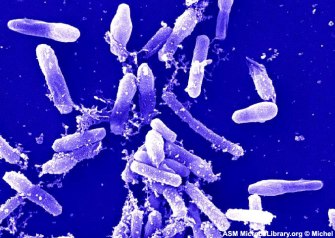
Bacillus cereus is one of the important foodborne pathogens that can be found in various foodstuffs; causing diarrheal and/or emetic syndromes. This study aimed to evaluate the prevalence, antimicrobial susceptibility profile, pathogenic potential, and genotypic diversity of B. cereus isolated from diverse food products from markets in Cairo, Egypt. A total of 39 out of 165 food samples were positive for B. cereus (detection rate of 24%) with a contamination level ranged from 2 to 6 log CFU/g and a higher incidence of > 3 log bacterial count. Antimicrobial susceptibility testing showed that B. cereus isolates were fully sensitive to all tested antimicrobial agents except β-lactams. The pathogenic potential of the 39 B. cereus isolates was assessed by detecting and profiling the secreted virulence or toxin encoding genes including the chromosomal-carried genes hblA , bceT , plc , sph , nheA , entFM , cytK associated with the diarrheal syndrome and the plasmid-carried ces gene associated with the emetic syndrome. The most frequently detected  genes were hblA , nheA and entFM . All isolates harbored more than one of the diarrheal enterotoxins encoding genes with the genetic profile hblA-bceT-nheA-entFM-cytK-plc-sph was the most prevalent (in 20/39 isolates). The emetic toxin ces was not detected at all. ERIC-based analysis of the 20 B. cereus isolates harboring the prevalent genetic profile revelated that they were genetically distinct. In conclusion, the findings of this study provide useful information for public health management and serve as a warning of the potential risk of diarrheagenic B. cereus in diverse food products. Therefore, the consideration to extensively study the epidemiology of this food pathogen in Egypt is warranted. Additionally, strict procedures should be applied to monitor, protect, and safely handle food products, particularly ready to eat foodstuffs that are usually consumed without heat treatment.

Research – Botulism breakthrough? Taming botulinum toxin to deliver therapeutics

Boston Childrens Hospital

kswfoodworld

CDC Image

While rare, botulism can cause paralysis and is potentially fatal. It is caused by nerve-damaging toxins produced by Clostridium botulinum — the most potent toxins known. These toxins often lurk in contaminated food (home canning being a major culprit). Infants can also develop botulism from ingesting C. botulinum spores in honey, soil, or dust; the bacterium then colonizes their intestines and produces the toxin.

Once paralysis develops, there is no way to reverse it, other than waiting for the toxins to wear off. People with serious cases may need to go on ventilators for weeks or months. But a new botulism treatment and delivery vehicle, described today in Science Translational Medicine, could change that.

“Currently, there are anti-toxins, but these only work before the toxins enter the motor neurons,” says Min Dong, PhD, a researcher in the Boston Children’s Hospital Department of Urology and corresponding author on the paper. “What we have developed is the first therapy that can eliminate toxins after they get inside neurons.”

If proven in humans, the approach would represent a breakthrough in treating botulism. In mice, the treatment successfully got inside neurons and reversed muscle paralysis within hours. It also enabled mice to withstand doses of botulinum toxin that would otherwise be lethal.