Category Archives: STX 1

Germany – Reblochon fermier Reblochon Excellence farm production – STEC E.coli

LMW

Warning type: Food
Date of first publication: 08/20/2021
Product name:

Reblochon fermier Reblochon Excellence farm production

Manufacturer (distributor): Coopérative de Thônes France
Reason for warning:

Suspected contamination with undesirable bacteria (Escherichia coli Stec (gen stx and eae).

Packaging Unit: Counter goods
Durability: 08/31/2021
Lot identification:

088421204

Additional Information: Reference is made to the company’s customer information sheet attached.
Contact to the responsible authorities:

Baden-Württemberg: poststelle@mlr.bwl.de

Bavaria:poststelle@lgl.bayern.de
Hamburg:poststelle@justiz.hamburg.de
North Rhine-Westphalia:poststelle@mulnv.nrw.de
Schleswig-Holstein:poststelle@jumi.landsh.de
Press releases and information
title Attachment or web link
Customer information

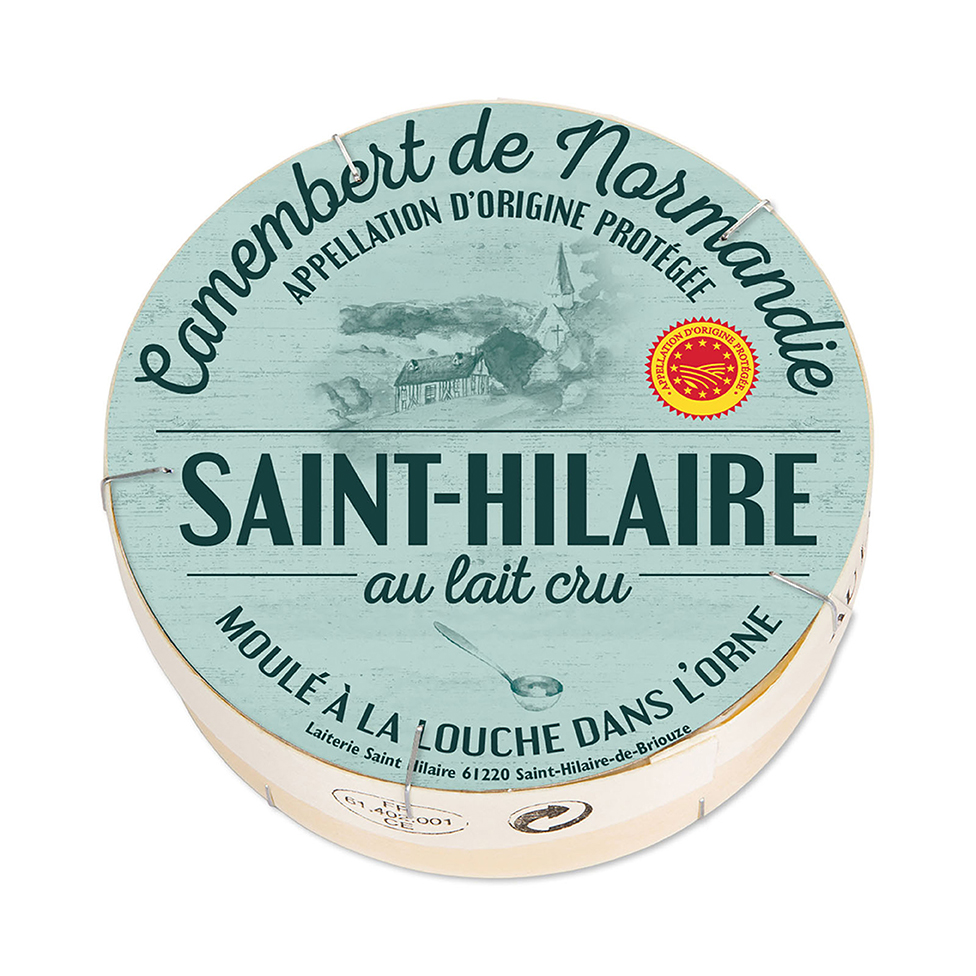
Germany – Camembert de Normandie AOP St. Hilaire aux lait cru, 250 g – STEC E.coli

LMW

Warning type: Food
Date of first publication: 08/04/2021
Product name:

Camembert de Normandie AOP St. Hilaire aux lait cru, 250 g

Product pictures:

Foto_Saint_Hilaire.jpg

Gillot SAS

Manufacturer (distributor):

Manufacturer: Gillot SAS (France)

Reason for warning:

Detection of harmful bacteria (E.coli, stx1 gene, STEC)

Packaging Unit: 250 g
Durability: 08/07/2021
Lot identification: 161311
Additional Information: EAN: 3267031040611 

Reference is made to the enclosed consumer information. 

Contact to the responsible authorities:

Baden-Württemberg:poststelle@mlr.bwl.de

Bavaria:poststelle@lgl.bayern.de
Berlin:poststelle@senjustva.berlin.de
Brandenburg:Konsumenterschutz@Msgiv.Brandenburg.de
Bremen:Schnellwarnung@gesundheit.bremen.de
Hamburg:poststelle@justiz.hamburg.de
Hesse:Schnellwarnung@rpda.hessen.de
Mecklenburg-Western Pomerania:poststelle@lm.mv-regierung.de
Lower Saxony:poststelle@ml.niedersachsen.de
North Rhine-Westphalia:poststelle@mulnv.nrw.de
Rhineland-Palatinate:Poststelle.Referat22@lua.rlp.de
Saarland:poststelle-luv@lav.saarland.de
Saxony:poststelle@sms.sachsen.de
Saxony-Anhalt:poststelle@ms.sachsen-anhalt.de
Schleswig-Holstein:poststelle@jumi.landsh.de
Thuringia:LM-Ueberendung@tlv.thueringen.de
Press releases and information
title Attachment or web link
Consumer information

Germany – Camembert de Normandie AOP Marie Harel au lait cru, 250 g Trademark: Marie Harel -STEC E.coli

LMW

Warning type: Food
Date of first publication: 08/04/2021
Product name:

Camembert de Normandie AOP Marie Harel au lait cru, 250 g Trademark: Marie Harel

Product pictures:

Unnamed.PNG

Gillot SAS

Manufacturer (distributor): Gillot SAS company
Reason for warning:

due to suspected contamination with undesired bacteria (Escherichia coli, STX1-Gen, STEC) these products will be withdrawn from sale

Packaging Unit: 250 g
Durability: 08/07/2021
Lot identification: Batch number: 161311
Additional Information: Reference is made to the company’s customer information sheet attached.
Contact to the responsible authorities:

Baden-Württemberg: poststelle@mlr.bwl.de

Bavaria: poststelle@lgl.bayern.de
Brandenburg:Konsumenterschutz@Msgiv.Brandenburg.de
Hamburg:poststelle@justiz.hamburg.de
Hesse:Schnellwarnung@rpda.hessen.de
Mecklenburg-Western Pomerania:poststelle@lm.mv-regierung.de
Rhineland-Palatinate:Poststelle.Referat22@lua.rlp.de
Saxony-Anhalt:poststelle@ms.sachsen-anhalt.de
Press releases and information
title Attachment or web link
Customer information

Research – High Occurrence of Shiga Toxin-Producing Escherichia coli in Raw Meat-Based Diets for Companion Animals—A Public Health Issue

MDPI

Feeding pets raw meat-based diets (RMBDs) is becoming increasingly popular but comes with a risk of pathogenic bacteria, including Shiga toxin-producing Escherichia coli (STEC). In humans, STEC may cause gastrointestinal illnesses, including diarrhea, hemorrhagic colitis (HC), and the hemolytic uremic syndrome (HUS). The aim of this study was to evaluate commercially available RMBDs with regard to the occurrence of STEC. Of 59 RMBD samples, 59% tested positive by real-time PCR for the presence of Shiga toxin genes stx1 and/or stx2. STECs were recovered from 41% of the 59 samples, and strains were subjected to serotyping and virulence gene profiling, using whole genome sequencing (WGS)-based methods. Of 28 strains, 29% carried stx2a or stx2d, which are linked to STEC with high pathogenic potential. Twenty different serotypes were identified, including STEC O26:H11, O91:H10, O91:H14, O145:H28, O146:H21, and O146:H28, which are within the most common non-O157 serogroups associated with human STEC-related illnesses worldwide. Considering the low infectious dose and potential severity of disease manifestations, the high occurrence of STEC in RMBDs poses an important health risk for persons handling raw pet food and persons with close contact to pets fed on RMBDs, and is of concern in the field of public health. View Full-Text

Research – Shiga Toxin-Producing Escherichia coli (STEC) and STEC-Associated Virulence Genes in Raw Ground Pork in Canada

Journal of Food Protection

Shiga toxin-producing Escherichia coli (STEC) O157:H7/NM and some non-O157 STEC are foodborne pathogens. In response to pork-associated O157 STEC outbreaks in Canada, we investigated the occurrence of STEC in Canadian retail raw ground pork during the period of November 1, 2014 and March 31, 2016. Isolated STEC were characterized to determine the Shiga-toxin gene ( stx ) subtype and the presence of virulence genes encoding intimin ( eae ), and enterohemorrhagic E. coli hemolysin (hlyA) . O157 STEC and non-O157 STEC were isolated from 0.11% (1/879) and 2.24% (13/580) of the pork samples. STEC virulence gene profiles containing both eae and hlyA were found only in the O157 STEC ( stx 2a , eae , hlyA ) isolate. The eae gene was absent from all non-O157 STEC isolates. Of the 13 non-O157 STEC isolates, two virulence genes of stx 1a and hlyA were found in four (30.8%) O91:H14 STEC isolates, while one virulence gene of stx 2e, stx 1a , and stx 2a was identified in five (38.5%), two (15.4%) and one (7.7%) STEC isolates respectively of various serotypes. The remaining non-O157 STEC isolate carried stx 2 , but the subtype is unknown as this isolate could not be recovered for sequencing. O91:H14 STEC ( stx 1a, hlyA ) was previously reported in association with diarrhea illnesses, while the other non-O157 STEC isolates identified in this study are not known to be associated with severe human illnesses. Virulence gene profiles identified in this study indicate that the occurrence of non-O157 STEC capable of causing severe human illness is rare in Canadian retail pork. However, O157 STEC in ground pork can occasionally occur, therefore education regarding the potential risks associated with STEC contamination of pork would be beneficial for the public and those in the food industry in order to help reduce foodborne illnesses.

Research – Genetic diversity and pathogenic potential of Shiga toxin-producing Escherichia coli (STEC) derived from German flour

Science Direct

Abstract

Shiga toxin-producing Escherichia coli (STEC) can cause severe human illness, which are frequently linked to the consumption of contaminated beef or dairy products. However, recent outbreaks associated with contaminated flour and undercooked dough in the United States and Canada, highlight the potential of plant based food as transmission routes for STEC. In Germany STEC has been isolated from flour, but no cases of illness have been linked to flour.

In this study, we characterized 123 STEC strains isolated from flour and flour products collected between 2015 and 2019 across Germany. In addition to determination of serotype and Shiga toxin subtype, whole genome sequencing (WGS) was used for isolates collected in 2018 to determine phylogenetic relationships, sequence type (ST), and virulence-associated genes (VAGs).

We found a high diversity of serotypes including those frequently associated with human illness and outbreaks, such as O157:H7 (stx2c/d, eae), O145:H28 (stx2a, eae), O146:H28 (stx2b), and O103:H2 (stx1a, eae). Serotypes O187:H28 (ST200, stx2g) and O154:H31 (ST1892, stx1d) were most prevalent, but are rarely linked to human cases. However, WGS analysis revealed that these strains, as well as, O156:H25 (ST300, stx1a) harbour high numbers of VAGs, including eae, nleB and est1a/sta1.

Although STEC-contaminated flour products have yet not been epidemiologically linked to human clinical cases in Germany, this study revealed that flour can serve as a vector for STEC strains with a high pathogenic potential. Further investigation is needed to determine the sources of STEC contamination in flour and flour products particularly in regards to these rare serotypes.

Research – A cluster of Shiga Toxin-producing Escherichia coli O157:H7 highlights raw pet food as an emerging potential source of infection in humans

Cambridge Org

In August 2017, a cluster of four persons infected with genetically related strains of Shiga toxin-producing Escherichia coli (STEC) O157:H7 was identified. These strains possessed the Shiga toxin (stx) subtype stx2a, a toxin type known to be associated with severe clinical outcome. One person died after developing haemolytic uraemic syndrome. Interviews with cases revealed that three of the cases had been exposed to dogs fed on a raw meat-based diet (RMBD), specifically tripe. In two cases, the tripe had been purchased from the same supplier. Sampling and microbiological screening of raw pet food was undertaken and indicated the presence of STEC in the products. STEC was isolated from one sample of raw tripe but was different from the strain causing illness in humans. Nevertheless, the detection of STEC in the tripe provided evidence that raw pet food was a potential source of human STEC infection during this outbreak. This adds to the evidence of raw pet food as a risk factor for zoonotic transmission of gastrointestinal pathogens, which is widely accepted for SalmonellaListeria and Campylobacter spp. Feeding RMBD to companion animals has recently increased in popularity due to the belief that they provide health benefits to animals. Although still rare, an increase in STEC cases reporting exposure to RMBDs was detected in 2017. There has also been an increased frequency of raw pet food incidents in 2017, suggesting an increasing trend in potential risk to humans from raw pet food. Recommendations to reduce the risk of infection included improved awareness of risk and promotion of good hygiene practices among the public when handling raw pet food.

RASFF Alerts – STEC E.coli -Chilled Lamb Meat – Chilled Lamb Chops

RASFF-Logo

RASFF

shigatoxin-producing Escherichia coli (stx2+, eae+, /25g) in chilled lamb meat from New Zealand in Italy

RASFF

shigatoxin-producing Escherichia coli (stx1 + stx2 /25g) in chilled lamb chops from Belgium in the Netherlands

RASFF Alert – STEC E.coli – Chilled Beef Rump Tails

European Food Alerts

RASFF

shigatoxin-producing Escherichia coli (O26 stx+ eae+ /25g) in chilled beef rump tails from Argentina in Germany

Research – Escherichia coli in flour – sources, risks and prevention

Click to access escherichia-coli-in-flour-sources-risks-and-prevention.pdf