Category Archives: STEC

RASFF Alert – STEC E.coli – Chilled Vacuum Packed Bovine Meat

RASFF-Logo

RASFF – shigatoxin-producing Escherichia coli in chilled vacuum packed bovine meat from Ireland in Italy

Research-BfR addresses risk of E. coli in flour

Food Safety News#

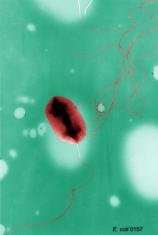
kswfoodworld E.coli O157

Image CDC


A German risk assessment agency has issued an opinion after STEC was frequently found in flour samples.

Shiga toxin-producing E. coli (STEC) was detected in multiple flour samples (wheat, spelt and rye) from mills during routine food monitoring in Germany in 2018.

The Federal Ministry of Food and Agriculture (BMEL) asked the German Federal Institute for Risk Assessment (BfR) to assess the sources, risk and prevention of STEC in flour.

Fifty STEC-positive samples were detected in 328 wheat, spelt and rye flour samples analyzed in 2018 as part of the Federal Monitoring Plan. A product recall in November 2019 of ready-made dough for short pastry biscuits shows STEC can occur in such a product.

Investigations of flour samples from mills in Germany for STEC have shown between 10 and 21 percent have positive samples. Viable STEC of different serogroups are detectable in flour for more than 50 weeks.


RASFF Alert – STEC E.coli – Chilled Lamb Meat

RASFF-Logo

RASFF – shigatoxin-producing Escherichia coli (stx1+ stx2+ eae- /25g) in chilled lamb meat from New Zealand in the Netherlands

Research -Evaluation of Public Health Risk for Escherichia coli O157:H7 in Cilantro

Science Direct

This study sought to model the growth and die-off of Escherichia coli (E. coli) O157:H7 along the cilantro supply chain from farm-to-fork to investigate its risk to public health. Contributing factors included in the model were on farm contamination from irrigation water and soil, solar radiation, harvesting, and transportation and storage times and temperatures. The developed risk model estimated the microbiological risks associated with E. coli O157:H7 in cilantro and determined parameters with the most effect on the final concentration per serving for future mitigation strategies. Results showed a similar decrease in the E. coli O157:H7 (median values) concentrations along the supply chain for cilantro grown in both winter and summer weather conditions. With an estimated 0.1% prevalence of E. coli O157:H7 contamination for cilantro post-harvest used for illustration, the model predicted the probability of illness from consuming fresh cilantro as very low with fewer than two illnesses per every one billion servings of cilantro (1.6 x 10⁻⁹; 95th percentile). Although rare, 3.7% and 1.6% of scenarios run in this model for summer and winter grown cilantro, respectively, result in over 10 cases per year in the United States. This is reflected in real life where illnesses from cilantro are seen rarely but outbreaks have occurred. Sensitivity analysis and scenario testing demonstrated that ensuring clean and high quality irrigation water and preventing temperature abuse during transportation from farm to retail, are key to reducing overall risk of illness.

Japan and South Korea – Thousands sick in E. coli outbreaks

Food Safety News

Officials in Korea are investigating an E. coli outbreak that has affected 100 people while more than 3,000 students and teachers recently got food poisoning in Japan, according to media reports.

The Korea Centers for Disease Control and Prevention (KCDC) has been investigating an Enterohemorrhagic E. coli (EHEC) outbreak with the local municipality and relevant ministries since mid-June. EHEC is also known as Shiga toxin-producing E. coli (STEC).

The outbreak in a kindergarten in Ansan-si, Gyeonggi Province had 58 confirmed cases as of late June with 114 people showing symptoms. Most of these are students of the kindergarten but three are family members of pupils.

A total of 21 people — 19 kindergarten students and two family members — were in hospital for inpatient care. Sixteen people — 14 students and two family members — had onset of symptoms suspected to be hemolytic uremic syndrome (HUS), a type of kidney failure associated with E. coli infection, and four people were receiving dialysis treatment.

Research – Inactivation of Salmonella and Shiga toxin-producing Escherichia coli (STEC) from the surface of alfalfa seeds and sprouts by combined antimicrobial treatments using ozone and electrolyzed water

Science Direct

Individual chemical and non-chemical treatments have failed to disinfect alfalfa seeds and sprouts from pathogens thoroughly. This study investigated the disinfection of alfalfa seeds and sprouts using a procedure combining ozone with acidic (pH 3.0) electrolyzed water (AEW). Inoculated alfalfa seeds with a cocktail of 3 strains Salmonella and 3 strains of STEC were treated sequentially with aqueous ozone followed by AEW. Treatment started by immersing the samples into ozonated water (5 mg/L ozone) for 15 or 20 minutes with persistent oxygen feeding pressurized with 10 psi. The samples then were immersed in 1 L of AEW for 15 min. Salmonella and STEC were significantly (P < 0.05) reduced by 3.6 and 2.9 log CFU/g on seeds respectively, and by 3.1 and 3.0 log CFU/g reduction on sprouts. Significant differences (P < 0.05) were found in the magnitude of the log reduction between Salmonella and STEC on seeds and between seeds and sprouts. Using combined treatments showed no significant changes in the quality, including shelf life, weight, and color in sprouts as compared to controls. The findings suggest that the combination of ozone and AEW is effective in inactivation of Salmonella and STEC on alfalfa seeds and sprouts with no adverse effects on sprouts quality.

Scotland – Salmonella and STEC behind most outbreaks in Scotland

Food Safety News

There were 11 foodborne outbreaks in Scotland this past year with almost 50 people falling ill.

Salmonella and Shiga toxin-producing E. coli (STEC) were the most frequently reported organisms.

Findings come from the Health Protection Scotland (HPS), part of Public Health Scotland (PHS), annual surveillance report on bacterial, protozoal and viral outbreaks of infectious intestinal disease in 2019.

The 11 outbreaks and 49 illnesses in 2019 is down from the 14 outbreaks and 117 illnesses reported in 2018, but in line with the previous five-year average of 13 outbreaks per year. Figures from 2018 include a norovirus outbreak that affected 60 people.

RASFF Alert – STEC E.coli – Chilled Beef Meat

RASFF-Logo

RASFF – shigatoxin-producing Escherichia coli in chilled beef meat from Belgium in the Netherlands

Belgium – Carrefour recall American Nature recall of the Carrefour brand. Problem: potential presence of E. Coli STEC.

AFSCA

Following a check and as a precautionary measure in order to guarantee consumer safety, CARREFOUR requests to withdraw from the market the American Nature 200g, 300g, 600g, 1.2kg sold in the BUTCHER department of certain Carrefour stores in Belgium and calls them back to the consumers following a potential presence of E. Coli STEC.


Product description:

– Product name: Américain Nature
– Brand: Carrefour
– Use by date (DLC) (“To consume until”): 07/19/2020 and 07/20/2020
– Sale period: from 13 / 07/2020 to 15/07/2020
– Type of packaging: transparent plastic tray
– Weight: 200g, 300g, 600g and 1.2 kg
– The package bears the supplier’s stamp number 26/1

PRODUCTS PACKED IN STORES ARE NOT CONCERNED

All products have been withdrawn from sale. Some of these products were, however, sold on the Belgian market before the withdrawal measure. It is therefore recommended that people who hold the products described above not consume them and destroy them or bring them back to the point of sale where they will be reimbursed.

People who have consumed these products and who have intestinal disorders are invited to consult their doctor by reporting this consumption. These symptoms can be made worse in young children, pregnant women, immunocompromised people and the elderly.

People who have consumed the products mentioned above and who present these symptoms are invited to consult their doctor by reporting this consumption.

For any further information, you can contact the Carrefour Belgique consumer service by calling the free number 0800.9.10.11 , from 8:30 a.m. to 8:00 p.m. on working days and from 9:00 a.m. to 5:00 p.m. on Saturdays.

We apologize to our customers for the inconvenience.

Belgium – Viangro Recall -Spicy Beef Hamburger 500g. – STEC E.coli

AFSCA

In agreement with the AFSCA, Viangro is withdrawing the 500g spicy beef burger from the sale and is recalling it from consumers due to the potential presence of E. Coli STEC.

LIDL Belgium asks its customers not to consume this product and to bring it back to the point of sale in which it was purchased.


Product description

– Product name: Spicy beef hamburger
– Use by date (DLC) (“To consume until”): 07/19/2020 and 07/20/2020
– Sales period: from 07/13 / 2020 to 07/15/2020
– Type of packaging: plastic tray
– Weight: 500g

The product was sold through Lidl stores in Belgium.

For further information, contact Lidl customer service ( 0800/73520 (free))