Brand : ///
Name : CHIANINA BEEF HAMBURGHER
Reason for reporting : Recall due to microbiological risk
Publication date : 4 October 2023


Brand : ///
Name : CHIANINA BEEF HAMBURGHER
Reason for reporting : Recall due to microbiological risk
Publication date : 4 October 2023
Posted in food contamination, food handler, Food Hazard, Food Hygiene, Food Inspections, Food Micro Blog, Food Microbiology, Food Microbiology Blog, Food Microbiology Testing, Food Pathogen, Food Poisoning, Food Quality, food recall, Food Safety, Food Safety Alert, Food Safety Management, Food Safety Regulations, Food Testing, STEC, STEC E.coli
Shiga toxin–producing Escherichia coli–associated pediatric hemolytic uremic syndrome (STEC-HUS) remains an important public health risk in France. Cases are primarily sporadic, and geographic heterogeneity has been observed in crude incidence rates. We conducted a retrospective study of 1,255 sporadic pediatric STEC-HUS cases reported during 2012–2021 to describe spatiotemporal dynamics and geographic patterns of higher STEC-HUS risk. Annual case notifications ranged from 109 to 163. Most cases (n = 780 [62%]) were in children ❤ years of age. STEC serogroups O26, O80, and O157 accounted for 78% (559/717) of cases with serogroup data. We identified 13 significant space-time clusters and 3 major geographic zones of interest; areas of southeastern France were included in >5 annual space-time clusters. The results of this study have numerous implications for outbreak detection and investigation and research perspectives to improve knowledge of environmental risk factors associated with geographic disparities in STEC-HUS in France.
The United Kingdom is dealing with a serious outbreak of E. coli and several strains of Salmonella Enteritidis, according to the Food Standards Agency (FSA).
One more case has been added to the ongoing Shiga toxin-producing E. coli (STEC) O183 outbreak, bringing the total to 25 sick since May.
One person has died; while most patients live in England, others are sick in Northern Ireland, Scotland, and Wales.
FSA and the UK Health Security Agency (UKHSA) are trying to find the source with help from other public health agencies. Several product supply chains have been investigated, but no vehicle of infection has yet been identified.
FSA is also investigating outbreaks of separate strains of Salmonella Enteritidis linked to Polish eggs and poultry products.
One outbreak is behind 47 confirmed cases, of which 25 were linked to a restaurant and another 18 ill people had probable restaurant exposure.
Polish authorities found Salmonella Enteriditis at one site that sent eggs to the UK. Eggs from this source have also been linked to a second UK restaurant associated with the outbreak.
Groceries
September 26, 2023
Brick, snack loaf, ore chunks, FichtelBERG cheese
Achim Uhl Mobile cheese dairy Hartensteiner Straße 105 OT Oberdorf 09366 Stollberg DE SN 10682 EG
The above-mentioned products are classified as harmful to health due to the detection of verotoxin-producing Escherichia coli in the brine and lubricating water used for production.
1kg/piece, 1.5-1.8kg/piece
Brick: 10/01/2023/ 05/06/07/08/10/2023/ 12/13/14/10/2023/ 19/10/2023; Vesper loaf: October 1st, 2023/ October 5th, 2023/ October 7th, 2023/ October 12th, 2023; Ore chunks: 10/01/2023/ 05/06/07/08/10/2023/ 12/13/14/10/2023; FichtelBERGkäse: 09/30/2023/ 10/01/2023/ 10/13/2023; FichtelBERG cheese (small): October 1st, 2023.
An illness with verotoxin-producing Escherichia coli usually manifests itself within a week of infection with diarrhea and abdominal cramps. In particular, infants, small children, seniors and people with weakened immune systems can develop more severe illnesses with bloody diarrhea. Rarely, especially in small children, acute kidney failure can occur in a second attack a few days after the onset of diarrhea. People who have eaten this food and develop severe or persistent symptoms should seek medical attention and report a possible EHEC infection.
The above-mentioned cheeses may also have been sold differently from the manufacturer by other distributors (possibly partly direct marketers) and possibly also with different cheese names, so that identification should be carried out in particular using the identification mark (DE SN 10682 EG), or this can be done by the be asked from sellers.
Customers should definitely pay attention to the recall and not consume the affected products.
Posted in food contamination, food handler, Food Hazard, Food Hygiene, Food Inspections, Food Micro Blog, Food Microbiology, Food Microbiology Blog, Food Microbiology Testing, Food Pathogen, Food Poisoning, Food Quality, food recall, Food Safety, Food Safety Alert, Food Safety Management, Food Safety Regulations, food safety training, Food Testing, Food Toxin, STEC, VTEC
Groceries
September 26, 2023
Semi-hard cheese: “house brand spicy”, “house brand pepper”
Achim Uhl Mobile cheese dairy Hartensteiner Straße 105 OT Oberdorf 09366 Stollberg DE SN 10682 EG
The above-mentioned products are classified as harmful to health due to the detection of verotoxin-producing Escherichia coli in the brine and lubricating water used for production.
1.7 – 2 kg/piece, 5 – 6 kg/piece (large)
House brand spicy: October 1st, 2023/ October 5th, 2023/ October 7th/ October 8th, 2023/ October 12th, 2023/ October 19th, 2023/ October 22nd, 2023; House brand Pfeffer: October 1st, 2023/ October 7th, 2023/ October 12th, 2023/ October 14th, 2023/ October 22nd, 2023; House brand with pepper (large): October 13, 2023.
An illness with verotoxin-producing Escherichia coli usually manifests itself within a week of infection with diarrhea and abdominal cramps. In particular, infants, small children, seniors and people with weakened immune systems can develop more severe illnesses with bloody diarrhea. Rarely, especially in small children, acute kidney failure can occur in a second attack a few days after the onset of diarrhea. People who have eaten this food and develop severe or persistent symptoms should seek medical attention and report a possible EHEC infection.
The above-mentioned cheeses may also have been sold differently from the manufacturer by other distributors (possibly partly direct marketers) and possibly also with different cheese names, so that identification should be carried out in particular using the identification mark (DE SN 10682 EG), or this can be done by the be asked from sellers.
Customers should definitely pay attention to the recall and not consume the affected products.
Posted in EHEC, food contamination, food handler, Food Hazard, Food Hygiene, Food Inspections, Food Micro Blog, Food Microbiology, Food Microbiology Blog, Food Microbiology Testing, Food Pathogen, Food Poisoning, Food Quality, food recall, Food Safety, Food Safety Alert, Food Safety Management, Food Safety Regulations, Food Testing, Food Toxin, STEC, STEC E.coli, VTEC
Groceries
September 26, 2023
Semi-hard cheese: “House brand nature”, “House brand fenugreek seeds”
Achim Uhl Mobile cheese dairy Hartensteiner Straße 105 OT Oberdorf 09366 Stollberg DE SN 10682 EG
The above-mentioned products are classified as harmful to health due to the detection of verotoxin-producing Escherichia coli in the brine and lubricating water used for production.
1.7 – 2 kg/piece, 5 – 6 kg/piece (large)
House brand nature: October 1st, 2023/ October 5th, 2023/ October 12th, 2023/ October 22nd, 2023; House brand fenugreek seeds: October 1st, 2023/ October 5th/6th/ October 7th/ October 8th, 2023/ October 12th, 2023/ October 14th, 2023/ October 19th, 2023/ October 22nd, 2023; House brand with fenugreek seeds (large): October 6th, 2023/ October 12th/ October 13th, 2023.
An illness with verotoxin-producing Escherichia coli usually manifests itself within a week of infection with diarrhea and abdominal cramps. In particular, infants, small children, seniors and people with weakened immune systems can develop more severe illnesses with bloody diarrhea. Rarely, especially in small children, acute kidney failure can occur in a second attack a few days after the onset of diarrhea. People who have eaten this food and develop severe or persistent symptoms should seek medical attention and report a possible EHEC infection.
The above-mentioned cheeses may also have been sold differently from the manufacturer by other distributors (possibly partly direct marketers) and possibly also with different cheese names, so that identification should be carried out in particular using the identification mark (DE SN 10682 EG), or this can be done by the be asked from sellers.
Customers should definitely pay attention to the recall and not consume the affected products.
Posted in EHEC, food contamination, food handler, Food Hazard, Food Hygiene, Food Inspections, Food Micro Blog, Food Microbiology, Food Microbiology Blog, Food Microbiology Testing, Food Pathogen, Food Poisoning, Food Quality, food recall, Food Safety, Food Safety Alert, Food Safety Management, Food Safety Regulations, Food Testing, Food Toxin, STEC, STEC E.coli, VTEC
Groceries
September 26, 2023
Semi-hard cheese: “House brand dill”, “House brand cumin”, “House brand black cumin”, “House brand pumpkin seeds”, “House brand caraway”, “House brand chives”, “House brand garlic”
Achim Uhl Mobile cheese dairy Hartensteiner Straße 105 OT Oberdorf 09366 Stollberg DE SN 10682 EG
The above-mentioned products are classified as harmful to health due to the detection of verotoxin-producing Escherichia coli in the brine and lubricating water used for production.
1.7 – 2 kg/piece, 5 – 6 kg/piece (large)
House brand Dill: October 1st, 2023, October 12th, 2023, October 19th, 2023, October 22nd, 2023; House brand with dill (large): October 12, 2023; House brand cumin: October 19, 2023; House brand black cumin: October 5th, 2023/ October 12th, 2023; House brand pumpkin seeds: October 12, 2023; House brand Kümmel: October 12, 2023; House brand chives: October 12, 2023; House brand garlic: October 14, 2023.
An illness with verotoxin-producing Escherichia coli usually manifests itself within a week of infection with diarrhea and abdominal cramps. In particular, infants, small children, seniors and people with weakened immune systems can develop more severe illnesses with bloody diarrhea. Rarely, especially in small children, acute kidney failure can occur in a second attack a few days after the onset of diarrhea. People who have eaten this food and develop severe or persistent symptoms should seek medical attention and report a possible EHEC infection.
The above-mentioned cheeses may also have been sold differently from the manufacturer by other distributors (possibly partly direct marketers) and possibly also with different cheese names, so that identification should be carried out in particular using the identification mark (DE SN 10682 EG), or this can be done by the be asked from sellers.
Customers should definitely pay attention to the recall and not consume the affected products.
Posted in E.coli, EHEC, food contamination, food handler, Food Hazard, Food Hygiene, Food Inspections, Food Micro Blog, Food Microbiology, Food Microbiology Blog, Food Microbiology Testing, Food Pathogen, Food Poisoning, Food Quality, food recall, Food Safety, Food Safety Alert, Food Safety Management, Food Safety Regulations, Food Testing, Food Toxin, STEC, STEC E.coli
The McHenry County Department of Health (MCDH) and Huntley Community School District 158 are working collaboratively to respond to a recent outbreak of Shiga Toxin-Producing E. coli (STEC) at Huntley High School. There are now currently nine confirmed cases of STEC, all of which involve students. The first case was identified on Sunday, September 17. At this time, there is insufficient evidence to indicate the source of the illness. The MCDH is actively monitoring for potential cases; there are no other known McHenry County STEC cases outside of this outbreak.
In a letter to parents, students, and staff, Huntley Community School District 158 officials reiterated that the situation is being taken seriously and that the safety and well-being of students and staff is of the utmost importance.
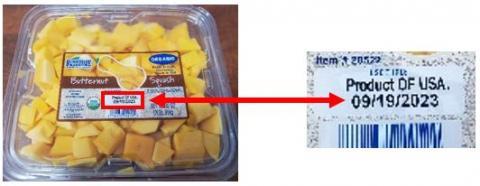
Safeway Fresh Foods of Vineland, NJ, is recalling its 32-oz. Diced Organic Butternut Squash product as it has the potential to be contaminated with Escherichia coli O45. E. coli O45 causes a diarrheal illness often with bloody stools. Although most healthy adults can recover completely within a week, some people develop a form of kidney failure called Hemolytic Uremic Syndrome (HUS). HUS is most likely to occur in young children and the elderly; the condition can lead to serious kidney damage and even death.
The 32-oz. diced Butternut was distributed only to Costco in the following states, Washington DC, Maryland, Pennsylvania, and Virgina
Consumers who specifically purchased Costco item 20522, UPC 040232244124, 32-oz. diced Organic Butternut Squash between September 7, 2023, and September 15, 2023, with a use by date of 09/19/2023 date code are urged to return this item to your local Costco. If you have any product with this date code remaining, do not consume.
No illnesses have been reported to date in connection with this problem.
The potential for contamination was noted after routine testing by the company detected the presence of E. coli O45.
Consumers with questions may contact the company at 1-856-692-7200 Monday to Friday 8:00am ET to 4:00pm ET.
Posted in food contamination, food handler, Food Hazard, Food Hygiene, Food Inspections, Food Micro Blog, Food Microbiology, Food Microbiology Blog, Food Microbiology Testing, Food Pathogen, Food Quality, food recall, Food Safety, Food Safety Alert, Food Safety Management, Food Safety Regulations, Food Testing, Food Toxin, O45, STEC, STEC E.coli
LEHI — The E. coli outbreak tied to Lehi’s irrigation water has grown to 13 cases and seven hospitalizations.
The revelation of a new, lab-confirmed case of E. coli O157 comes after weeks of no new cases.
Lehi confirmed with KSL-TV that the person in the most recent case was exposed to irrigation water at the end of August, which was after the city shock-treated two of its reservoirs in an attempt to lower the levels of bacteria.
“Twelve out of the 13 cases had confirmed (pressurized irrigation) water exposure,” the city said in a press release. “The investigation linked the source of the cases to using pressurized irrigation for drinking and recreation, such as running through sprinklers or playing on slip-n-slides, bounce houses, kiddie pools, and outside water tables.”
The city said there’s no evidence any of the cases came from simply playing on grass or a playground.
Posted in E.coli O157, E.coli O157:H7, STEC, STEC E.coli

 FoodWorld