Category Archives: STEC

UK – Investigators confirm cheese firm’s link to deadly E. coli outbreak

Food Safety News

According to officials, the outbreak strain has been found at a farm that supplied the milk used to make unpasteurized cheese, which was linked to an E. coli outbreak in the UK.

In total, 36 confirmed and one probable Shiga toxin-producing E. coli (STEC) O145 infections have been reported, with 29 in England and eight in Scotland since late July 2023, with most falling ill in November. The last reported primary patient had symptom onset on Dec. 23, 2023.

Twenty patients were female, with ages of all cases ranging from 7 to 81. Of the 31 patients with available information, 20 had bloody diarrhea, 15 were admitted to the hospital, and four also attended the hospital for their symptoms. One person developed hemolytic uremic syndrome (HUS) and later died.

An investigation into the outbreak by the UK Health Security Agency (UKHSA), the local authority, Public Health Scotland, Food Standards Agency (FSA), Food Standards Scotland (FSS) and the Animal Plant Health Agency (APHA) is nearly completed.

Research – Fates of attached E. coli o157:h7 on intact leaf surfaces revealed leafy green susceptibility

Science Direct

Abstract

Leafy greens, especially lettuce, are repeatedly linked to foodborne outbreaks. This paper studied the susceptibility of different leafy greens to human pathogens. Five commonly consumed leafy greens, including romaine lettuce, green-leaf lettuce, baby spinach, kale, and collard, were selected by their outbreak frequencies. The behavior of E. coli O157:H7 87-23 on intact leaf surfaces and in their lysates was investigated. Bacterial attachment was positively correlated with leaf surface roughness and affected by the epicuticular wax composition. At room temperature, E. coli O157:H7 had the best growth potentials on romaine and green-leaf lettuce surfaces. The bacterial growth was positively correlated with stomata size and affected by epicuticular wax compositions. At 37 °C, E. coli O157:H7 87-23 was largely inhibited by spinach and collard lysates, and it became undetectable in kale lysate after 24 h of incubation. Kale and collard lysates also delayed or partially inhibited the bacterial growth in TSB and lettuce lysate at 37 °C, and they sharply reduced the E. coli O157:H7 population on green leaf lettuce at 4 °C. In summary, the susceptibility of leafy greens to E. coli O157:H7 is determined by a produce-specific combination of physiochemical properties and temperature.

RASFF Alert- STEC E.coli – Hamburger Patties

RASFF

Shiga toxin-producing Escherichia coli (STEC) in frozen hamburger patties from Germany in Belgium, Luxembourg and Netherlands

USA- FDA – Investigations of Foodborne Illness Outbreaks

FDA

Date
Posted
Ref Pathogen
or
Cause of
Illness
Product(s)
Linked to
Illnesses

(if any)
Total
Case
Count

Status
2/20/

2024

1215 E. coli
O157:H7
Raw cheddar
cheese
See
Advisory
Active
1/24/

2024

1214 Listeria
monocytogenes
Queso Fresco
and
Cotija Cheese
See
Advisory
Active
11/8/

2023

1198 Elevated
Lead &
Chromium
Levels
Apple
Cinnamon
Puree
See
Advisory
Active

Research FSIS Foodborne Illness Outbreak Investigations, Fiscal Year 2023

FSIS USDA

The U.S. Department of Agriculture’s Food Safety and Inspection Service (FSIS), Office of
Public Health Science, Applied Epidemiology Staff, coordinates the FSIS response to
foodborne illness outbreaks that may involve FSIS-regulated products. This includes outbreaks that involve four foodborne pathogens that most frequently contaminate FSIS-regulated products: Salmonella, Shiga toxin-producing Escherichia coli (STEC), Listeria monocytogenes, and Campylobacter.

A foodborne outbreak occurs when two or more persons experience a similar illness after ingestion of a common food, and epidemiologic analysis implicates the
food as the source of the illness. FSIS may investigate illnesses associated with other, less
common, foodborne pathogens (e.g., Clostridium botulinum) if they are potentially associated with FSIS-regulated products. FSIS collects and evaluates epidemiologic, laboratory, and traceback information to determine if there is an association between an FSIS-regulated product and human illnesses. Epidemiologic information can include details like which foods ill people ate, where they purchased these foods, and where they live. Laboratory information can include comparing bacteria from FSIS samples and ill people to see if they are genetically similar or have similar characteristics. Traceback activities may include determining the location where the product was sold (e.g., grocery store, deli counter, or restaurant) or the source of a product (e.g., the federally inspected slaughter or processing facility). Depending on the evidence collected during an investigation, FSIS may have enough detailed exposure and product information to take one or more actions to prevent additional illnesses. These actions may include requesting that a company remove product from commerce and FSIS issuing a press release announcing that a firm is recalling meat, poultry, or egg products linked to human illnesses or FSIS notifying the public of potential food safety concerns through the issuance of a Public Health Alert (PHA).
This report summarizes outbreaks that FSIS investigated from October 1, 2022, to September
30, 2023, Fiscal Year 2023 (FY 2023). This report also highlights key lessons learned from
outbreak investigations in FY 2023.

 Italy- CASTELMAGNO DOP PRODUCT OF THE MOUNTAIN – STEC E.coli

Salute

Brand : TINO PAIOLO-LA BRUNA

Name : CASTELMAGNO DOP PRODUCT OF THE MOUNTAIN

Reason for reporting : Recall due to microbiological risk

Publication date : 2 March 2024

Documentation

Documentation

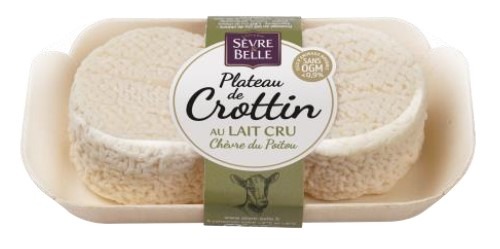
France – Platter of raw Poitou goat’s milk crottin – STEC E.coli O103:H2

Gov France

Product category
Food
Product subcategory
Milk and dairy products
Product brand name
Sèvre and Belle
Model names or references
Freshly packaged raw milk 120g crottin
Product identification
GTIN Batch Date
33199241023423 240451602 Minimum durability date 04/16/2024
Packaging
filmed wooden tray
Start/end date of marketing
From 02/29/2024 to 03/01/2024
Storage temperature
Product to keep in the refrigerator
Health mark
FR 79.061.001 CE
Geographical sales area
Whole France
Distributors
CASINO
List of points of sale
List_of_casino_sales_points.pdf

Italy – CASTELMAGNO DOP – STEC E.coli

Salute

Brand : TERRE D’ITALIA

Name : CASTELMAGNO DOP

Reason for reporting : Recall due to microbiological risk

Publication date : 1 March 2024

Documentation

Documentation

RASFF Alert -STEC E.coli – Raw Milk Goats Cheese

RASFF

Shigatoxine-producing Escherichia coli in raw milk goat cheese from France in Belgium

Italy – CASTELMAGNO DOP – STEC E.coli

Salute

Brand : Beppino Occelli

Name : CASTELMAGNO DOP

Reason for reporting : Recall due to microbiological risk

Publication date : 1 March 2024

Documentation

Documentation