Category Archives: STEC E.coli

Research – Increase in food outbreaks by Escherichia coli. How to prevent them

ACSA

In recent months, outbreaks caused by Escherichia coli have increased (Ireland, Scotland, etc.). Recently, in France, pizzas contaminated by this bacterium affected 56 people─ including 55 small children─ and caused two deaths.

This bacterium is naturally present in our digestive microflora. Although most strains of E. coli  are harmless to humans, others can cause infections or carry antibiotic resistance genes. Among the pathogenic strains, shigatoxigenic E. coli is responsible for serious infections in children and the elderly.

Ruminants, especially cattle, are healthy carriers of these bacteria. Therefore, the bacteria present in their excrement can contaminate animal products (meat and dairy) and the environment (soil and water). Contamination occurs, for example, in the meat slaughterhouse (through the remains or after the evisceration of the animals) or at the time of milking the milk of cattle, sheep or goats.

With regard to plants, this contamination can occur during the spreading of manure or livestock effluents on farmland, or during the use of contaminated irrigation water.

The main foods implicated in outbreaks of shigatoxigenic E. coli infections are undercooked minced beef, non-pasteurized dairy products (raw milk and raw milk cheeses), raw vegetables (salad, young shoots, sprouts), unpasteurized fruits or vegetables and contaminated drinking water .

Throughout the food chain, the management of this risk is based on the application of effective self-controls and the verification of the effectiveness of the measures implemented.

With regard to the consumer, the prevention of infections through food is based on the application of the following measures:

  • Wash hands with soap and water when leaving the toilet, before preparing and eating food, and after handling raw or non-raw food.
  • Wash and peel the vegetables, if possible; and also fruits and aromatic herbs, especially those that are eaten raw.
  • For sensitive populations (young children and the elderly), thoroughly cook ground meat and ground meat products (70°C), avoid consumption of raw milk and raw milk products (except for cooked pressed cheeses), and of raw or undercooked flour.
USA – Could the Wendy’s E. coli Outbreak have sickened over 2,600?

Food Poison Journal

According to the CDC, as of September 1, 2022, a total of 97 people infected with the outbreak strain of E. coli O157:H7 have been reported from six states – Indiana 11, Kentucky 1, Michigan 58, New York 1, Ohio 24, and Pennsylvania 2.  It is expected, according to the NCBI database, that the actual numbers of ill will be 115 or more shortly.  Interestingly, according to the CDC, for E. coli O157:H7, there is an underreporting rate of 26.1 – meaning for everyone 1 person counted by the CDC another 26.1 were actually sickened.

UK – Nearly 200 sick in UK E. coli O157 outbreak.

Food Safety News

Public health officials in the United Kingdom are investigating an outbreak of E. coli O157 that has sickened almost 200 people in a month.

Since early September, 192 genetically linked cases of Shiga toxin-producing E. coli (STEC) O157 have been identified in England, Scotland, Northern Ireland and Wales.

The majority of people sick are adults but there have been no deaths linked to the incident.

No source for the rise in infections has yet been identified but patients are being interviewed to help find the vehicle of infection.

There have also been no cases of hemolytic uremic syndrome (HUS) reported. HUS is a type of kidney failure associated with E. coli infections that can result in lifelong, serious health problems and death.

Dr. Lesley Larkin, head of surveillance, gastrointestinal infections and food safety at the UK Health Security Agency (UKHSA), said a rise in E. coli cases notified to public health surveillance systems had been seen in recent weeks.

Nestlé eyes November re-opening of E. coli-hit Buitoni plant

Just Food

Nestlé is lining up the return of production at a Buitoni factory in France at the centre of a fatal E. coli outbreak earlier this year.

The world’s largest food maker said the site, located in Caudry in northern France, could see output resume in November, subject to the approval of local officials.

France’s national public health agency, Santé Publique France, made its first statement on rising cases of haemolytic uremic syndrome (HUS) or Shiga toxin-producing E. coli (STEC) on 25 February.

Japan – Escherichia coli O157 outbreak in Kyoto Prefecture, Japan.

Minyu

Kyoto Prefecture announced on the 15th that a woman in her 90s who complained of diarrhea and abdominal pain after eating beef yukhoe sold by MEAT & FRESH TAKAMI, a meat dealer in Uji City, Kyoto Prefecture, died. Enterohemorrhagic E. coli O157 was detected in the woman’s stool.

In addition, 22 men and women between the ages of 9 and 87 who ate yukhoe and roast beef at this restaurant complained of similar symptoms, and O157 was detected in 12 people including asymptomatic people. The prefectural government determined that these foods were the cause of the food poisoning.

 On August 27, the deceased woman ate yukhoe sold as “rare steak” at home, and developed symptoms on September 2. She died in hospital on the 15th. Twenty-two ate from August 21-26.

Research – Prevalence and Characterization of Shiga Toxin Producing Escherichia coli Isolated from Animal Feed in Croatia

MDPI

A survey on prevalence and number of Shiga toxin-producing Escherichia (E.) coli (STEC) in animal feed was carried out over a period of nine years in the Republic of Croatia. A total of 1688 feed samples were collected from feed factories and poultry farms. Analysis included two standard procedures: sample enrichment and (a) immunomagnetic separation and plating on two selective media; or (b) plating on two selective media. Confirmation of STEC included morphological examination, biochemical tests, serotyping, and polymerase chain reaction. Morphological and biochemical characterization revealed 629 E. coli strains. Further serological screening method revealed 78 STEC and EPEC serotypes, while only 27 strains were confirmed as STEC with PCR. All positive samples (1.6%) originated from poultry farms and contained combination of virulence genes: eaeA, stx1, and/or stx2. Since the presence of stx (especially stx2) and eae are identified as risk factors for development of severe diseases in humans, results of this survey indicate that avian sources of STEC infections might be one of those “undefined sources” of human illnesses. Further research is necessary for evaluation of risks posed by contaminated feed, poultry, and environment.

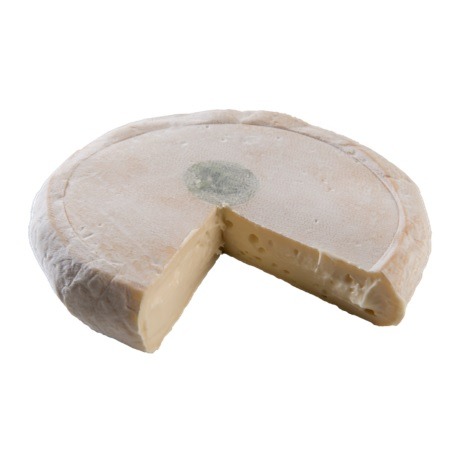
France – FARM REBLOCHON AOP LA GRANGE – STEC E.coli

Gov france

Identification information of the recalled product

  • Product category Feed
  • Product subcategory Milk and dairy products
  • Product brand name BARN
  • Model names or references n / A
  • Identification of products
    GTIN Batch Date
    2481206000007 All lots Use-by date 30/09/2022
  • Marketing start/end date From 08/26/2022 to 09/09/2022
  • Storage temperature Product to be stored in the refrigerator
  • Health markFR-74-160-166-CE
  • Geographic area of ​​sale Whole France
  • Distributors Grand Frais Fresh

Practical information regarding the recall

  • Reason for recall Possible presence of Escherichia coli
  • Risks incurred by the consumer Toxigenic Shiga Escherichia coli (STEC)

Research – Shiga toxin-producing Escherichia coli (STEC) infection – Annual Epidemiological Report for 2020

ECDC

Thumbnail

For 2020, 28 EU/EEA countries reported 4 824 confirmed cases of Shiga toxin -producing Escherichia coli (STEC) infection. The overall notification rate was 1.6 cases per 100 000 population. The highest notification rates were reported in Ireland, Malta, Denmark, and Norway. The EU/EEA notification rate decreased notably in 2020 compared with 2016-2019 due to the COVID-19 pandemic. The highest rate of confirmed cases was observed in 0–4-year-old children, with 8.6 cases per 100 000 population for males and 7.5 cases per 100 000 population for females.

Click to access STEC-infection-AER-2020-JD-FINAL.pdf

USA – E. coli at San Diego State University

Food Poison Journal

On Sept. 6, Student Health Services notified the SDSU community of two cases of Shiga Toxin-Producing E. coli (STEC) in the student community in one residential and one non-residential student.  These students began experiencing symptoms on Aug. 27 and 29, respectively.

At this time, a specific food source has not been identified for either of these cases. SDSU’s Environmental Health and Safety team is working closely with the County of San Diego Health & Human Services Agency to investigate these cases and to identify and confirm the potential source. Additional information will be shared with the community as it becomes available.

USA – FSIS Issues Public Health Alert For Specific Ground Beef In HelloFresh Meal Kits Due to Possible E. Coli O157:H7 Contamination

FSIS USDA

The U.S. Department of Agriculture’s Food Safety and Inspection Service (FSIS) is issuing a public health alert due to concerns that ground beef products in HelloFresh meal kits may be associated with Escherichia coli (E. coli) O157:H7 illness. A recall was not requested because the products are no longer available for purchase.

The meal kits containing ground beef for this public health alert were shipped to consumers from July 2-21, 2022. The following products are subject to the public health alert [view label]:

  • 10-oz. plastic vacuum-packed packages containing “GROUND BEEF 85% LEAN/15% FAT” with codes “EST#46481 L1 22 155” or “EST#46481 L5 22 155” on the side of the packaging.

The ground beef packages bear “EST.46841” inside the USDA mark of inspection and on the plastic ground beef package.

FSIS, the Centers for Disease Control and Prevention, and state public health partners are investigating an outbreak of E. coli O157:H7 and raw ground beef is the probable source of the reported illnesses. Traceback information identified that multiple case-patients received ground beef produced at establishment M46841 and distributed by HelloFresh in meal kits from July 2-21, 2022. Traceback of materials used to produce the ground beef is ongoing and FSIS continues to work with suppliers and public health partners on the investigation.

FSIS is concerned that some product may be in consumers’ freezers. Consumers who have purchased these products are urged not to consume them. These products should be thrown away.

FSIS advises all consumers to safely prepare their raw meat products, including fresh and frozen, and only consume ground beef that has been cooked to a temperature of 160 F. The only way to confirm that ground beef is cooked to a temperature high enough to kill harmful bacteria is to use a food thermometer that measures internal temperature, https://www.fsis.usda.gov/safetempchart.

Media and consumers with questions regarding the public health alert can contact hello@hellofresh.com or by live chat.

Consumers with food safety questions can call the toll-free USDA Meat and Poultry Hotline at 888-MPHotline (888-674-6854) or live chat via Ask USDA from 10 a.m. to 6 p.m. (Eastern Time) Monday through Friday. Consumers can also browse food safety messages at Ask USDA or send a question via email to MPHotline@usda.gov. For consumers that need to report a problem with a meat, poultry, or egg product, the online Electronic Consumer Complaint Monitoring System can be accessed 24 hours a day at https://foodcomplaint.fsis.usda.gov/eCCF/.

Product Images

Company Contact Information

COMPANY MEDIA CONTACT
Company Media Contact