Category Archives: STEC E.coli

Germany – Deer salami – VTEC/STEC E.coli

LMW

Alert type: Groceries
Date of first publication:

November 3, 2023

Product name: Deer salami
Manufacturer (distributor):

“Wurzener Wurstspezialitäten GmbH”

Reason for warning:

Contamination with VTEC bacteria

Packaging Unit: 180g and 400g
Durability: There is no clear best-before date.
Lot identification: 2318608 and 2318605
Additional Information:

The goods were sold to end customers and dealers in Baden-Würtemberg, Lower Saxony and Saxony. The goods were sold between July 18th. and October 23, 2023.

Click to access R%DCCKRUF+Hirschsalami.pdf

Research – Safety Properties of Escherichia coli O157:H7 Specific Bacteriophages: Recent Advances for Food Safety

MDPI

Abstract

Shiga-toxin-producing Escherichia coli (STEC) is typically detected on food products mainly due to cross-contamination with faecal matter. The serotype O157:H7 has been of major public health concern due to the severity of illness caused, prevalence, and management. In the food chain, the main methods of controlling contamination by foodborne pathogens often involve the application of antimicrobial agents, which are now becoming less efficient. There is a growing need for the development of new approaches to combat these pathogens, especially those that harbour antimicrobial resistant and virulent determinants. Strategies to also limit their presence on food contact surfaces and food matrices are needed to prevent their transmission. Recent studies have revealed that bacteriophages are useful non-antibiotic options for biocontrol of E. coli O157:H7 in both animals and humans. Phage biocontrol can significantly reduce E. coli O157:H7, thereby improving food safety. However, before being certified as potential biocontrol agents, the safety of the phage candidates must be resolved to satisfy regulatory standards, particularly regarding phage resistance, antigenic properties, and toxigenic properties. In this review, we provide a general description of the main virulence elements of E. coli O157:H7 and present detailed reports that support the proposals that phages infecting E. coli O157:H7 are potential biocontrol agents. This paper also outlines the mechanism of E. coli O157:H7 resistance to phages and the safety concerns associated with the use of phages as a biocontrol.

RASFF Alert- STEC E.coli – Bovine Meat

RASFF

STEC (stx+;eae+) in bovine meat from Belgium in France

Canada – E. coli O157 outbreak at Calgary daycare centres is over, Alberta Health Services says

CBC

The E. coli outbreak that was declared in September and infected hundreds of kids at several Calgary daycares is now over, Alberta Health Services (AHS) said in a release on Tuesday.

A total of 11 sites, including six branches of the daycare service and five other locations that shared a central kitchen, have been declared outbreak-free, AHS said.

The outbreak left 38 kids and one adult hospitalized. Doctors diagnosed 23 patients with severe illness or hemolytic uremic syndrome while eight received peritoneal dialysis.

No fatalities were reported and all patients have been discharged from the hospital, AHS said, adding that 1,581 kids who were linked to the outbreak have now been cleared by doctors to return to daycare.

Central kitchen still closed

USA – FDA – Investigations of Foodborne Illness Outbreaks

FDA

What’s New

  • A new outbreak of E. coli O121:H19 (ref # 1195) in a not yet identified product has been added to the table. FDA has initiated traceback.
  • For the outbreak of Listeria monocytogenes (ref # 1172) linked to Ice cream, the advisory was updated on October 26, 2023. The outbreak has ended, and FDA’s investigation is closed.
Date
Posted
Ref Pathogen
or
Cause of
Illness
Product(s)
Linked to
Illnesses

(if any)
Total
Case
Count

Status
11/01/

2023

1195 E.Coli
O121:H19
Not
Yet
Identified
37 Active
10/4/

2023

1190 Salmonella
Thompson
Onions See Advisory Active

Norway -Updated: Serious E. coli outbreak is not over.

FHI

There is still a serious outbreak caused by the stomach and intestinal bacteria E. coli (EHEC), which in the worst case can cause acute kidney damage in children, the elderly and people with compromised immune systems. Infection has so far been detected in 24 people. More than half of those infected are children under the age of 13, and 9 of these have developed serious illness.

The outbreak is still ongoing. Infection has so far been detected in 24 people. They fell ill from July to October 2023 and all are infected in Norway. They are aged 1 to 55 and live in Trøndelag (15), Viken (4), Vestfold and Telemark (2), Innlandet (1), Møre and Romsdal (1) and Nordland (1). 15 of the infected are under the age of 13. Nine of the children have developed the serious complication haemolytic uraemic syndrome (HUS).

There is close cooperation between the Institute of Public Health, the Norwegian Food Safety Authority, the Veterinary Institute and the concerned municipal chief medical officers. The outbreak bacterium has been found in hamburger, but other minced meat and stuffing products where the same raw materials have been used have also been withdrawn. The tracking work is complicated, and the Norwegian Food Safety Authority cannot rule out that more products may be withdrawn from the market. FHI clarifies that it is therefore very important that people follow the advice for good food hygiene. 

Research -Nestlé outbreak drives record HUS high in France

Food Safety News

The number of children who suffered a potentially fatal complication of E. coli infection in France reached a record high in 2022, influenced by the Nestlé pizza outbreak, according to statistics recently released.

Hemolytic uremic syndrome (HUS), which can be a complication of E. coli infection, is a type of kidney failure that can result in lifelong, serious health problems and death.

In the outbreak caused by frozen Buitoni Fraîch’Up pizzas, 59 patients had a median age of 6. They fell ill between January and April 2022. Two children died.

Record HUS high
The 253 HUS cases in 2022 are the most since surveillance began in 1996. In 2021, 128 cases were reported. Santé publique France surveillance data on HUS only covers those younger than 15.

The sharp increase in incidence was partly driven by several outbreaks, including the one large Nestlé incident, but was also because of a lot of sporadic cases.

USA – Another 4 reported STEC E. coli cases bring total sick to 17 linked to 4S Ranch restaurant

NBC San Diego

Four more people have reported being sickened by an E. coli outbreak linked to Miguel’s Cocina in the 4S Ranch community of San Diego within the past two days, bringing the total to 17 cases, county health officials said Thursday.

Seven people had to be hospitalized, including four children, according to the county’s Health and Human Services Agency.

“The joint public health and environmental health investigation is ongoing,” HHSA spokesperson Fernanda Lopez said.

Those who fell ill, or their families, reported eating at Miguel’s 4S Ranch location from Oct. 6 to Oct. 18 and developed symptoms from Oct. 13 to Oct. 19, according to the HHSA.

County health officials are still investigating the specific food items that were the source of the Shiga-toxin-producing E. coli (STEC) at the restaurant. Miguel’s voluntarily closed its doors on Tuesday and has been working closely with the County to identify the outbreak.

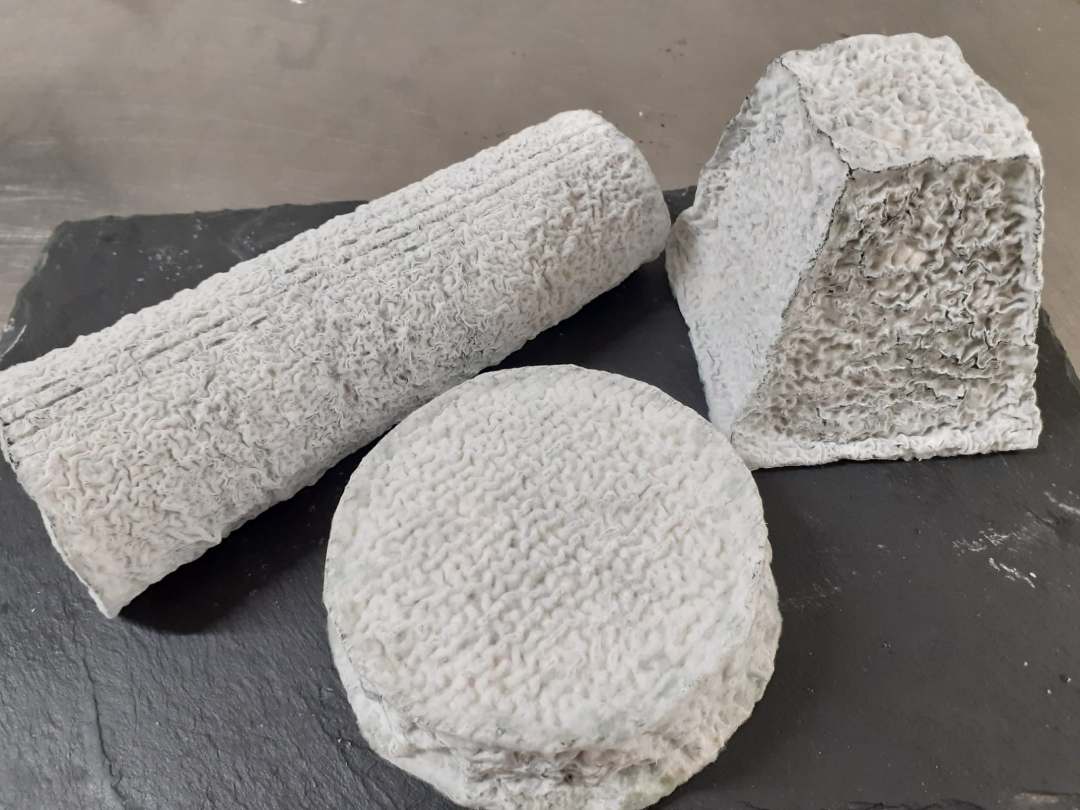
France – GOAT CHEESE – STEC E.coli

Gov france

  • Product category Food
  • Product subcategory Milk and dairy products
  • Product brand name Prairie Farm
  • Model names or references Faisselles, small fresh rounds, fresh salted, fresh ash, Selles sur Cher AOP, pyramids, logs, logs
  • Product identification
    Batch Date
    Lot renneted on 09/10/2023
    Lot renneted on 11/10/2023 including a cheese with DLC Use-by date 10/21/2023
    Lot renneted on 10/16/2023
  • Packaging Paper packaging
  • Start/end date of marketing From 10/13/2023 to 10/20/2023
  • Storage temperature Product to keep in the refrigerator
  • Geographical sales area Sale on Parisian markets: St Charles, Antwerp, Charonne
  • Distributors Direct sales on Parisian markets: St Charles, Antwerp, Charonne

Research – Haemolytic uraemic syndrome in children England, Wales, Northern Ireland, and Ireland: A prospective cohort study

Cambridge Org

Abstract

Haemolytic uraemic syndrome (HUS) caused by infection with Shiga toxin-producing Escherichia coli (STEC) is a relatively rare but potentially fatal multisystem syndrome clinically characterised by acute kidney injury. This study aimed to provide robust estimates of paediatric HUS incidence in England, Wales, Northern Ireland, and the Republic of Ireland by using data linkage and case reconciliation with existing surveillance systems, and to describe the characteristics of the condition. Between 2011 and 2014, 288 HUS patients were included in the study, of which 256 (89.5%) were diagnosed as typical HUS. The crude incidence of paediatric typical HUS was 0.78 per 100,000 person-years, although this varied by country, age, gender, and ethnicity. The majority of typical HUS cases were 1 to 4 years old (53.7%) and female (54.0%). Clinical symptoms included diarrhoea (96.5%) and/or bloody diarrhoea (71.9%), abdominal pain (68.4%), and fever (41.4%). Where STEC was isolated (59.3%), 92.8% of strains were STEC O157 and 7.2% were STEC O26. Comparison of the HUS case ascertainment to existing STEC surveillance data indicated an additional 166 HUS cases were captured during this study, highlighting the limitations of the current surveillance system for STEC for monitoring the clinical burden of STEC and capturing HUS cases.