Category Archives: STEC E.coli

Research – Shiga toxin-producing Escherichia coli (STEC) and food: attribution, characterization, and monitoring

WHO

Strains of pathogenic Escherichia coli that are characterized by their ability to
produce Shiga toxins are referred to as Shiga toxin-producing E. coli (STEC). STEC
are an important cause of foodborne disease and infections have been associated with a wide range of human clinical illnesses ranging from mild non-bloody
diarrhoea to bloody diarrhoea (BD) and haemolytic uraemic syndrome (HUS)
which often includes kidney failure. A high proportion of patients are hospitalized,
some develop end-stage renal disease (ESRD) and some die.
The Codex Committee on Food Hygiene (CCFH) has discussed the issue of STEC
in foods since its 45th Session, and at the 47th Session, in November 2015, it was
agreed that it was an important issue to be addressed (REP 16/FH, 2015)2
. To
commence this work, the CCFH requested the Food and Agriculture Organization
(FAO) and the World Health Organization (WHO) to develop a report compiling
and synthesizing available relevant information, using existing reviews where
possible, on STEC. The CCFH noted that further work on STEC in food, including
the commodities to be focused on, would be determined based on the outputs of
the FAO/WHO consultation.
The information requested by CCFH is divided into three main areas: the global
burden of disease and source attribution; hazard identification and characterization; and monitoring, including the status of the currently available analytical
methods. This report provides an overview of the work undertaken in response to
the request from the CCFH and provides the conclusions and advice of the Expert
Group based on the currently available information.

Research – Assessing the microbiological quality of raw goats’ and ewes’ tank milk samples in Switzerland

Science Direct

In recent years, popularity of raw milk has increased in many industrialised countries.

This study (i) enumerated total viable counts (TVC) and Escherichia coli counts, (ii) assessed prevalence of Staphylococcus (S.aureusSalmonella spp. and STEC, (iii) screened for methicillin resistant S. aureus (MRSA) and extended-spectrum β-lactamases (ESBL)-producing Enterobacteriaceae in sheep and goat tank milk samples collected throughout Switzerland and (iv) provided further strain characteristics on isolated pathogens and MRSA. One hundred and twenty-three tank milk samples from 116 farms were analysed. The median TVC was 3.8 log cfu mL-1E. coli was detected in 16 (13.0%) and S. aureus in 18 (14.6%) samples. Polymerase chain reaction for stx genes was positive in 14 (11.4%) samples. MRSA were isolated from 4 (3.3%) samples. Salmonella spp. and ESBL-producing Enterobacteriaceae were not isolated.

USA -Statement on new findings and current status of the romaine lettuce E. coli O157:H7 outbreak investigation

FDA

Today, the U.S. Food and Drug Administration is providing an update on our investigation of an outbreak of E. coli O157:H7 illnesses linked to romaine lettuce. The FDA takes our responsibility of protecting the public from unsafe food very seriously and is committed to providing the public with more information as it becomes available.

Outbreaks Reported

Early on, based on test results provided by the Maryland Department of Health, our investigation pointed to farms in Salinas, California, as potential sources of contaminated romaine lettuce based on the initial, limited number of reported illnesses. The FDA, in partnership with the California Department of Public Health and the California Department of Food and Agriculture, rapidly mobilized in November to concurrently deploy inspection teams to the farms identified through the initial traceback investigation. The on-site investigations at these farms included collecting a wide-variety of samples for lab testing, including water, soil, soil amendments, scat and swab samples. While the majority of these samples tested negative for the outbreak strain, final results are pending and the Wisconsin Department of Health Services recently reported that it had isolated E. coli O157:H7 from a particular bag of pre-washed, chopped romaine lettuce.

The FDA has also been tracking two additional and separate outbreaks of E. coli O157:H7.

Earlier this week, the FDA, U.S. Centers for Disease Control and Prevention (CDC), and the Canadian Food Inspection Agency announced an outbreak linked to Fresh Express Sunflower Crisp Chopped Salad Kits. To date, the CDC reported eight confirmed cases in the U.S. across three states associated with this cluster of illnesses.The Public Health Agency of CanadaExternal Link Disclaimer also reports 24 cases in six Canadian provinces.

Concurrently, the FDA has been working with health officials in Washington State regarding an outbreak of E. coli O157:H7 associated with romaine consumption at a local restaurant chain. Washington State officials reported 10 confirmed and three probable cases in this outbreak with all reports of exposure in early to mid-November.

It should be noted; these are currently being considered as three separate outbreaks caused by three different strains of E. coli O157:H7.

USA -Investigation of E. coli O157:H7 Outbreak Linked to Romaine from Salinas, California, November 2019

FDA

December 12, 2019

Case Counts

Total Illnesses: 102
Hospitalizations: 58
Deaths: 0
Last illness onset: November 18, 2019
States with Cases:  AZ (3), CA (4), CO (6), FL (1), IA (1), ID (3), IL (1), MD (4), MI (1), MN (3), MT (1), NE (1), NJ (7), NC (1), NM (2), OH (12), OR (1), PA (8), SD (1), TX (4), VA (4), WA (2), WI (31)

Recommendation

FDA, CDC, and state health authorities are investigating an outbreak of illnesses caused by E. coli O157:H7 in the United States. Epidemiologic, laboratory, and traceback evidence indicates that romaine lettuce from the Salinas, California growing region is a likely source of this outbreak. According to CDC, there have been 102 cases reported in 23 states.  The latest date that one of these patients reports becoming ill was on November 18, 2019.

Romaine from Salinas, California Label Enjoy By December 2, 2019


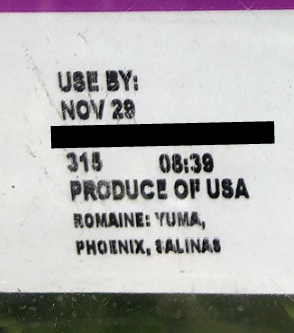
Romaine from Salinas, California Label Use By November 29, 2019

Consumers: Consumers should not eat romaine lettuce harvested from Salinas, California. Additionally, consumers should not eat products identified in the recall announced by the USDA on November 21, 2019.

Romaine lettuce may be voluntarily labeled with a harvest region. If this voluntary label indicates that the romaine lettuce was grown in “Salinas” (whether alone or with the name of another location) do not eat it. Throw it away or return it to the place of purchase.  If romaine lettuce does not have information about harvest region or does not indicate that it has been grown indoors (i.e., hydroponically- and greenhouse-grown), throw it away or return it to the place of purchase. Consumers ordering salad containing romaine at a restaurant or at a salad bar should ask the staff whether the romaine came from Salinas.  If it did, or they do not know, do not eat it.

At this time, romaine lettuce that was harvested outside of the Salinas region has not been implicated in this outbreak investigation. Hydroponically- and greenhouse-grown romaine, which is voluntarily labeled as “indoor grown,” from any region does not appear to be related to the current outbreak. There is no recommendation for consumers to avoid using romaine harvested from these other sources.

Restaurants and Retailers: Restaurants and retailers should not serve or sell romaine harvested from Salinas, California.  If you do not know the source of your romaine lettuce, and if you cannot obtain that information from your supplier, you should not serve, nor sell it.

Suppliers and Distributors: Suppliers, distributors and others in the supply chain should not ship or sell romaine harvested in Salinas, California. If the source of the romaine lettuce is unknown, you should not ship, nor sell the product.

For Restaurants, Retailers, Suppliers and Distributors: Currently, the FDA does not have enough traceback information to identify the specific source of the contamination that would allow us to request a targeted recall from specific growers.

FDA requested that industry voluntarily withdraw romaine grown in Salinas from the market and is requesting that industry withhold distribution of Salinas romaine for the remainder of the growing season in Salinas. Without more specific traceback information, this was the most efficient way to ensure that contaminated romaine was off the market.

At this time, romaine lettuce that was harvested outside of the Salinas region has not been implicated in this outbreak investigation. Hydroponically- and greenhouse-grown romaine, which is voluntarily labeled as “indoor grown,” from any region does not appear to be related to the current outbreak. There is no recommendation for consumers or retailers to avoid using romaine harvested from these other sources.

Update

Based on the information indicating that ill people in Maryland were exposed to romaine lettuce harvested in Salinas, California, FDA, with the assistance of staff from the California Department of Public Health and the California Department of Food and Agriculture, immediately deployed investigators to three farms in the Salinas area that were identified based on the traceback investigation.

FDA continues to actively investigate the cause of this outbreak. Additionally, FDA is investigating two other E. coli outbreaks, each caused by strains that are different from each other and different from the larger outbreak. One of the additional outbreaks, in Washington state, is linked to romaine lettuce, and the other outbreak, with cases in the U.S. and Canada, is linked to Fresh Express Sunflower Crisp Chopped Salad Kits. As part of these investigations, FDA and state partners are conducting traceback investigations to trace romaine exposures to the source.

Currently, the tracebacks on all three outbreaks have identified a common grower in Salinas. FDA, CDC, and California partners are deploying a team to conduct new investigations at several ranches used by this grower as we try to identify the source of the contamination.

Europe – Salmonella the most common cause of foodborne outbreaks in the European Union

ECDC

Nearly one in three foodborne outbreaks in the EU in 2018 were caused by Salmonella. This is one of the main findings of the annual report on trends and sources of zoonoses published today by the European Food Safety Authority (EFSA) and the European Centre for Disease Prevention and Control (ECDC).

In 2018, EU Member States reported 5 146 foodborne outbreaks affecting 48 365 people. A foodborne disease outbreak is an incident during which at least two people contract the same illness from the same contaminated food or drink.

Slovakia, Spain and Poland accounted for 67% of the 1 581 Salmonella outbreaks. These outbreaks were mainly linked to eggs.

 “Findings from our latest Eurobarometer show that less than one third of European citizens rank food poisoning from bacteria among their top five concerns when it comes to food safety. The number of reported outbreaks suggests that there’s room for raising awareness among consumers as many foodborne illnesses are preventable by improving hygiene measures when handling and preparing food” said EFSA’s chief scientist Marta Hugas.

Salmonellosis was the second most commonly reported gastrointestinal infection in humans in the EU (91 857 cases reported), after campylobacteriosis (246 571).

Shiga toxin-producing E. coli (STEC) has become the third most common cause of foodborne zoonotic disease with 8 161 reported cases – replacing yersiniosis with a 37% increase compared to 2017. This may be partly explained by the growing use of new laboratory technologies, making the detection of sporadic cases easier.

Of the zoonotic diseases covered by the report, listeriosis accounts for the highest proportion of hospitalised cases (97%) and highest number of deaths (229), making it one of the most serious foodborne diseases.

The number of people affected by listeriosis in 2018 is similar to 2017 (2 549 in 2018 against 2 480 the previous year). However, the trend has been upward over the past ten years.

The report also includes data on Mycobacterium bovisBrucellaYersiniaTrichinellaEchinococcusToxoplasma, rabies, Coxiella burnetii (Q fever), and tularaemia.

Read the report

Publication

The European Union One Health 2018 Zoonoses Report

Surveillance report  

This report of the European Food Safety Authority and the European Centre for Disease Prevention and Control presents the results of zoonoses monitoring activities carried out in 2018 in 36 European countries (28 Member States (MS) and 8 non-MS).

e.

Research -Shiga toxin-producing Escherichia coli survives storage in wheat flour for two years

Science Direct

Abstract

Wheat flour has recently been recognised as an exposure vehicle for the foodborne pathogen Shiga toxin-producing Escherichia coli (STEC). Wheat flour milled on two sequential production days in October 2016, and implicated in a Canada wide outbreak of STEC O121:H19, was analysed for the presence of STEC in November 2018. Stored in sealed containers at ambient temperature, the water activity of individual flour samples was below 0.5 at 6 months post-milling and remained static or decreased slightly in individual samples during 18 months of additional storage. STEC O121 was isolated, with the same genotype (stx2aeaehlyA) and core genome multilocus sequence type as previous flour and clinical isolates associated with the outbreak. The result of this analysis demonstrates the potential for STEC to persist in wheat flour at levels associated with outbreak infections for periods of up to two years. This has implications for the potential for STEC to survive in other foods with low water activity.

USA -Hodgson Mill Issues Voluntary Recall of Unbleached All-Purpose White Wheat Flour Due to Potential Presence of Pathogenic E.coli

FDA

Hodgson Mill of Effingham, IL, announced today a voluntary national recall of specific lots of its Unbleached All-Purpose White Wheat Flour (5 lb.)

We are taking this voluntary precautionary step because of the potential presence of pathogenic E. coli which was discovered through sampling raw uncooked flour. Hodgson Mill has not received any confirmed reports of illnesses related to this product.

The only product affected by this voluntary recall is:

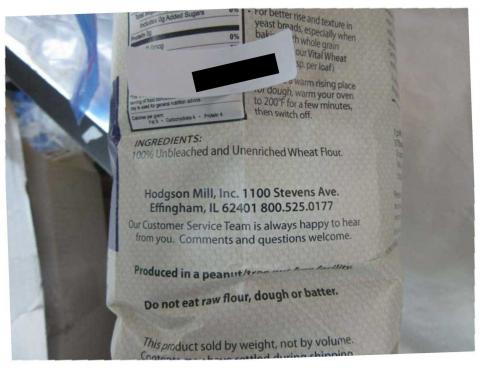
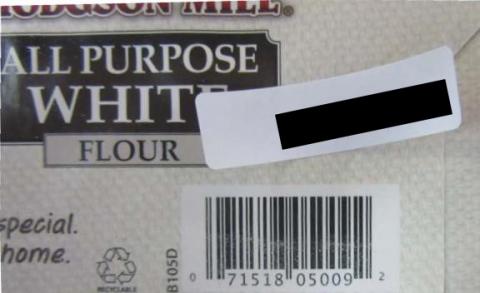
Unbleached All-Purpose White Wheat Flour (5 lb.) UPC 0-71518-05009-2
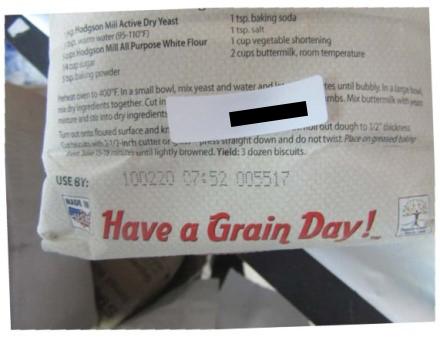
Best By Date 10-01-2020 and 10-02-2020 with lot codes listed Lot# 001042 & 005517

Use By and Lot Code information can be found on the bottom back panel of the 5 lb. Bag. Used By date and Lot Code, along with their location on the bag, must all match in order to represent flour affected by this recall.

Consumer safety is our top priority. Hodgson Mill package states “do not eat raw flour, dough or batter”. The Centers for Disease Control (CDC) warns consumers to not consume raw flour or uncooked raw dough.

E. coli is killed by heat through baking, frying, sautéing, or boiling products made with flour. For more information, refer to the following: https://www.cdc.gov/features/no-raw-dough/index.html. Symptoms of pathogenic E. coli illness include acute, often bloody diarrheal illness and abdominal cramps. Most people recover within a week. However, children, the elderly, and immunosuppressed individuals may develop hemolytic uremic syndrome (HUS), a severe illness which may cause the kidneys to fail.

Consumers are reminded to wash their hands, work surfaces, and utensils thoroughly after contact with raw dough products or flour, and to never eat raw dough or batter.

This lot of flour was milled at an ADM Milling Facility in St Louis, MO and repacked at Hodgson Mill, Inc. facility in Effingham, IL and was distributed by Hodgson Mill through retailers and distribution nationwide and sold through our website www.hodgsonmill.comExternal Link Disclaimer.

Consumers who have purchased 5 lb packages of Unbleached All-Purpose White Wheat Flour with specific lot codes are urged to stop using the product immediately and return them to the place of purchase for a full refund. Consumers with questions may contact the company customer service M-F 9am to 3pm at 1-888-417-9343 x 1.

Any consumers concerned about an illness should contact a physician.

Bakers have trusted Hodgson Mill flour products in their kitchens for many years and because of that trust we have issued this voluntary recall. We remain committed to providing our consumers safe and superior products.


Company Contact Information

Consumers:
 888-417-9343

Product Photos

USA -Investigation of E. coli O157:H7 Outbreak Linked to Romaine from Salinas, California, November 2019

FDA

November 26, 2019

Recommendation

FDA, CDC, and state health authorities are investigating an outbreak of illnesses caused by E. coli O157:H7 in the United States. Epidemiologic, laboratory, and traceback evidence indicates that romaine lettuce from the Salinas, California growing region is a likely source of this outbreak. The CDC is reporting an increase in the case count to 67 and that the most recent illness onset date is November 14, 2019.

Romaine from Salinas, California Label Enjoy By December 2, 2019


Romaine from Salinas, California Label Use By November 29, 2019

Consumers: Consumers should not eat romaine lettuce harvested from Salinas, California. Additionally, consumers should not eat products identified in the recall announced by the USDA on November 21, 2019.

Romaine lettuce may be voluntarily labeled with a harvest region. If this voluntary label indicates that the romaine lettuce was grown in “Salinas” (whether alone or with the name of another location) do not eat it. Throw it away or return it to the place of purchase.  If romaine lettuce does not have information about harvest region or does not indicate that it has been grown indoors (i.e., hydroponically- and greenhouse-grown), throw it away or return it to the place of purchase. Consumers ordering salad containing romaine at a restaurant or at a salad bar should ask the staff whether the romaine came from Salinas.  If it did, or they do not know, do not eat it.

At this time, romaine lettuce that was harvested outside of the Salinas region has not been implicated in this outbreak investigation. Hydroponically- and greenhouse-grown romaine, which is voluntarily labeled as “indoor grown,” from any region does not appear to be related to the current outbreak. There is no recommendation for consumers to avoid using romaine harvested from these other sources.

Restaurants and Retailers: Restaurants and retailers should not serve or sell romaine harvested from Salinas, California.  If you do not know the source of your romaine lettuce, and if you cannot obtain that information from your supplier, you should not serve, nor sell it.

Suppliers and Distributors: Suppliers, distributors and others in the supply chain should not ship or sell romaine harvested in Salinas, California. If the source of the romaine lettuce is unknown, you should not ship, nor sell the product.

For Restaurants, Retailers, Suppliers and Distributors: Currently, the FDA does not have enough traceback information to identify the specific source of the contamination that would allow us to request a targeted recall from specific growers. At this stage in the investigation, the most efficient way to ensure that contaminated romaine is off the market would be for industry to voluntarily withdraw product grown in Salinas, and to withhold distribution of Salinas romaine for the remainder of the growing season in Salinas. FDA has made this request of industry.

At this time, romaine lettuce that was harvested outside of the Salinas region has not been implicated in this outbreak investigation. Hydroponically- and greenhouse-grown romaine, which is voluntarily labeled as “indoor grown,” from any region does not appear to be related to the current outbreak. There is no recommendation for consumers or retailers to avoid using romaine harvested from these other sources.

Background

According to the CDC, as of November 25, 2019, 67 people infected with the outbreak strain of E. coli O157:H7 have been reported from 19 states. The case patients report that illnesses started on dates ranging from September 24, 2019 to November 14, 2019.

The Maryland Department of Health identified E. coli O157:H7 in an unopened package of Ready Pac Bistro® Chicken Caesar Salad collected from an ill person’s home in Maryland. Analysis of this salad, through Whole Genome Sequencing (WGS), has linked strain E. coli O157:H7 to three Maryland cases and the multi-state outbreak.

The FDA and state partners are conducting a traceback investigation to trace romaine exposures to the source. Preliminary information indicates that ill people in Maryland were exposed to romaine lettuce harvested in Salinas, California.

FDA has deployed investigators to the farms in question to try to determine the source and extent of the contamination. More information will be forthcoming as the investigation proceeds.

Additionally, state partners are conducting laboratory analyses of romaine lettuce samples from case patients potentially linked to the outbreak.

The Salinas region as defined by the United Fresh Produce Association and the Produce Marketing Association Romaine Taskforce ReportExternal Link Disclaimer includes: Santa Cruz, Santa Clara, San Benito, and Monterey counties in California.

Genetic analysis of the E. coli O157:H7 strains from patients in this current outbreak are similar to strains of E. coli O157:H7 associated with a previous outbreak from the Fall of 2017 and the Fall of 2018 that affected consumers in both Canada and the U.S. The 2017 outbreak of E. coli O157:H7 was associated with leafy greens in the U.S. and romaine in Canada. The 2018 outbreak of E. coli O157:H7 was associated with romaine in both countries.

Canada – Canada reports US Romaine Lettuce may have sickened at least one Citizen – E.coli O157

Food Poison Journal Eurofins Food Testing UK

Although an outbreak is not occurring in Canada, the Public Health Agency of Canada (PHAC) has identified one Canadian illness with a similar genetic fingerprint to illnesses reported in the U.S. investigation.

The Canadian Food Inspection Agency (CFIA) has confirmed that romaine lettuce from the affected areas reported in the U.S. investigation is imported to Canada at this time of year. The CFIA has taken measures to protect consumers and is implementing new actions at the border to ensure that any affected romaine lettuce products are no longer being imported into Canada.

As a result of the U.S. outbreak investigation and its link to product on the Canadian market, the Public Health Agency of Canada is advising Canadians to follow the U.S. CDC’s public health advice, which advises consumers to not eat, and retailers and food service establishments to not sell or serve, any romaine lettuce harvested from the Salinas, California growing region in the U.S. Romaine lettuce harvested in Canada is not affected by this advice.

Hong Kong -Not to consume romaine lettuce produced in Salinas, California, US – E.coli O157

CFS

Issue Date 23.11.2019
Source of Information US authorities
Food Product Romaine lettuce produced in the US
Product Name and Description Product name: baby spring mix
Brand: organicgirl
Place of origin: Salinas, California, US
Net weight: 5 ounces /142 grams
Reason For Issuing Alert
  • The CFS, through its Food Incident Surveillance System, noted a notice from the US Food and Drug Administration about the investigation of an outbreak of E. coli infections that was likely linked to the consumption of romaine lettuce produced in Salinas, California, which was suspected to be contaminated with E. coli O157:H7.
  • For the sake of prudence, the CFS has immediately suspended the import into and sale within Hong Kong of romaine lettuce produced in the area concerned.
Action Taken by the Centre for Food Safety
  • CFS has informed the US authorities concerned of the import suspension and alerted the trade to the incident.
  • The Centre will continue to follow up on the incident and take appropriate action.
Advice to the Trade
  • Stop using or selling the affected batches of the products immediately if they possess them.
Advice to Consumers
  • Not to consume the affected batches of the products if they have purchased any.
Further Information The CFS press release

Members of the public may call the hotline of the importer at 2299 1133 during office hours for enquiries about the recall.