Category Archives: Staphylococcus aureus

Research – Can bacterial viruses improve the microbiological safety of raw milk cheeses?

Harper Adams

Harper Adams University research is exploring a biological control method to improve the safety of popular Egyptian cheeses produced from raw cows’ milk.

The work is being conducted by Sherif Kandil, a PhD student and scholar sponsored by the Newton Mosharafa Fund. Sherif is in the final year of a three-year study, directed by Dr Lynn McIntyre, Senior Lecturer in Food Safety in the Department of Food Technology and Innovation.

Dr McIntyre explained: “The project was prompted by a number of foodborne outbreaks and prevalence data showing high levels of Staphylococcus aureus (S. aureus) and Escherichia coli (E. coli) in raw milk in Egypt.

“Cheeses made from raw cows’ milk, such as Karish, Domiatti and Ras, are popular in Egypt and Arab countries. Their strong flavour is produced by naturally occurring microorganisms in raw milk rather than the deliberate addition of starter culture organisms. However, their production also relies on smallholders in rural areas who make and store cheese under potentially uncontrolled hygiene and temperature conditions’’ Sherif added. Therefore, the growth of a variety of disease-causing (pathogenic) bacteria such as S. aureus and E. coli can be a real problem.

“These pathogens are also developing some resistance to antibiotics, but pasteurisation, normally used to kill pathogenic bacteria in raw milk, would also kill the desirable microorganisms and alter the flavours, which may be unacceptable to the consumer.”

Bacteriophages are highly specific viruses, which, unlike antibiotics, can selectively kill target bacterial species without affecting the desirable microorganisms. These could therefore have potential to target and control the disease-causing bacteria in raw cows’ milk cheeses, “an area that has not received much attention to date” according to Sherif.

For his study, Sherif collected 100 raw cows’ milk samples and processed them using a standard method to isolate and identify strains of S. aureus and E. coli in the Princess Margaret Laboratories, at Harper Adams University.

Karish, Domiatti and Ras cheeses have been successfully produced from raw cows’ milk on a small-lab-scale using traditional production methods, and their properties characterised during manufacture and storage.

A range of conditions, based on these data, has also been tested to understand how the bacteriophages behave under conditions they will be exposed to during cheese production. The last phase this year will evaluate how effective these phages are at controlling S. aureus and E. coli in milk and during further lab-scale cheese manufacture and storage.

“There is increasing interest in controlling pathogenic bacteria in food using natural non-thermal approaches without compromising the manufacturing process and product quality,” Dr McIntyre added. “We are not immune to these food safety challenges in the UK, and much of what we’ve been investigating in this project could also be applied to raw milk cheese production here.”

Research – Persistence of Foodborne Pathogens on Farmers Market Fomites

Journal of Food Protection

The number of farmers markets registered by the U. S. Department of Agriculture (USDA) has seen a significant increase, jumping from 1,755 in 1994 to 8,771 in 2019. Microbial studies have found evidence that produce sold at farmers can yield higher microbial counts than their retail counterparts; however, no previous literature explored the efficacy of microbial (bacteria and virus) persistence on a variety of different farmers market fomites over a 2-month period. The objectives of the current study were to conduct observations to determine the most commonly used food contact surface fomites at farmers markets and to investigate the persistence of key foodborne pathogens ( Escherichia coli O157:H7, Listeria monocytogenes, Salmonella spp., Staphylococcus aureus, and MS2 bacteriophage) on these fomites. A repeated-measures analysis of variance was used to compare the persistence rates of foodborne pathogens on cardboard, plastic, tablecloth, molded pulp fiber, and wicker baskets used to store, transport, and display produce at farmers markets. In general, molded pulp fiber, plastic and wicker surface materials supported the persistence of foodborne pathogens the most, with S. aureus demonstrating the highest log concentrations over the longest period of time. Additionally, Salmonella and E. coli strains also persisted for a significant period of time (approximately 32-days) on all fomites with the exception of tablecloth. The results suggest that foodborne pathogens on these fomites pose a high-risk of cross-contamination particularly if the fomites cannot be washed, rinsed, and sanitized effectively (e.g. cardboard). The results highlight the need avoid using porous, single-use storage containers such as cardboard, molded pulp fiber and wicker containers for extended periods of time and suggest the use of easily cleanable materials such as plastic containers.

USA – Researchers describe outbreaks in Brazil, Pakistan and Malaysia

Food Safety News

Abstracts from a cancelled event have been issued on outbreaks in Brazil, Pakistan and Malaysia.

The conference abstracts were scheduled to be presented at the International Congress on Infectious Diseases in September 2020 in Kuala Lumpur, Malaysia, but the gathering was called off because of the coronavirus pandemic.

Studies in the International Journal of Infectious Diseases supplement involve E. coli O157, Staphylococcus aureus and Brucella.

The first study involves a deadly Shiga toxin-producing E. coli (STEC) O157:H7 outbreak with hemolytic uremic syndrome (HUS) cases in Brazil.

RASFF Alert – Staphylococcus aureus – Chilled Black Ham

European Food Alerts

RASFF

coagulase-positive Staphylococcus (500 CFU/g) in chilled black ham from Germany in Austria

Research – Animal petting zoos as sources of Shiga toxin‐producing Escherichia coli, Salmonella and extended‐spectrum β‐lactamase (ESBL)‐producing Enterobacteriaceae

Wiley Online

Animal petting zoos and farm fairs provide the opportunity for children and adults to interact with animals, but contact with animals carries a risk of exposure to zoonotic pathogens and antimicrobial‐resistant bacteria. The aim of this study was to assess the occurrence of Shiga toxin‐producing Escherichia coli (STEC), Salmonella, extended‐spectrum β‐lactamase (ESBL)‐producing Enterobacteriaceae and methicillin‐resistant Staphylococcus aureus (MRSA) in animal faeces from six animal petting zoos and one farm fair in Switzerland. Furthermore, hygiene facilities on the venues were evaluated. Of 163 faecal samples, 75 contained stx1, stx2 or stx1/stx2 genes, indicating the presence of STEC. Samples included faeces from sika deer (100%), sheep (92%), goats (88%), mouflons (80%), camels (62%), llamas (50%), yaks (50%), pigs (29%) and donkeys (6%), whereas no stx genes were isolated from faeces of calves, guinea pigs, hens, ostriches, ponies, zebras or zebus. Salmonella enterica subsp. enterica serovar Stourbridge (S. Stourbridge) was detected in faecal samples from camels. A total of four ESBL‐producing E. coli strains were isolated from faeces of goats, camels and pigs. PCR and sequencing identified the presence of blaCTX‐M‐15 in three and blaCTX‐M‐65 in one Ecoli. Antimicrobial resistance profiling using the disk diffusion method revealed two multidrug‐resistant (MDR) E. coli with resistance to ciprofloxacin, gentamicin and azithromycin, all of which are critically important drugs for human medicine. Multilocus sequence typing identified E. coli ST162, E. coli ST2179, extraintestinal high‐risk E. coli ST410 and E. coli ST4553, which belongs to the emerging extraintestinal clonal complex (CC) 648. No MRSA was detected. On all animal petting venues, there were inadequacies with regard to access to hygiene information and handwashing hygiene facilities. This study provides data that underscore the importance of hygiene measures to minimize the risk of transmission of zoonotic pathogens and MDR, ESBL‐producing E. coli to visitors of animal petting venues.

RASFF Alert – Staph Enterotoxin – Chilled Cured Sheep Cheese

European Food Alerts

RASFF

Staphylococcal enterotoxin (presence /25g) in chilled cured sheep cheese from Portugal in Portugal

Research – Investigation and Follow-Up of a Staphylococcal Food Poisoning Outbreak Linked to the Consumption of Traditional Hand-Crafted Alm Cheese

MDPI

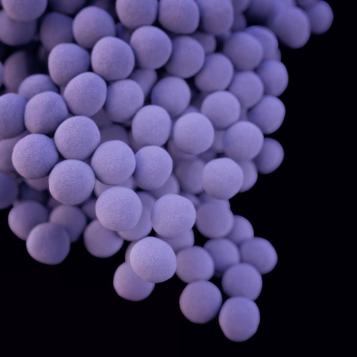
Staph

Image CDC

Staphylococcal food poisoning (SFP) is one of the most important foodborne diseases. This work describes a SFP event linked to the consumption of alm cheese and involved three people belonging to the same family. Leftovers of the consumed cheese, samples from the grocery store and the producing alm were collected and tested for Coagulase positive staphylococci (CPS) enumeration and for the presence of staphylococcal enterotoxins (SEs). Isolates were typed with MLST, spa typing, and tested for SEs and methicillin resistance genes. An in vitro test evaluated SEs production in relation to bacterial growth. The presence of CPS and SEs was detected in all cheese samples and all isolates belonged to the same methicillin sensitive ST8/t13296 strain harbouring sedser and sej genes. The in vitro test showed the production of enterotoxins started from 105 CFU/mL. The farmer was prescribed with corrective actions that led to eradication of the contaminating strain. View Full-Text

Research – Biofilm-Forming Ability of Pathogenic Bacteria Isolated from Retail Food in Poland

Journal of Food Protection

ABSTRACT

Biofilms have a significant impact on food safety in the food industry. Many foodborne outbreaks have been associated with pathogenic bacterial strains that can form a biofilm. The present study was conducted under the Official Control and Monitoring Program in Poland to examine the ability of pathogenic bacteria collected from retail food samples to form biofilms. Biofilm formation was assessed by qualitative detection of extracellular polymeric substances on Congo red agar, by adherence to glass with the tube method, by the crystal violet biofilm (CV) assay, and by the 3-(4,5-dimethylthiazol-2-yl)-2,5-diphenyl tetrazolium bromide (MTT) assay. A total of 40 isolates from food samples (10 strains each of Listeria monocytogenes, Staphylococcus aureus, Escherichia coli, and Bacillus cereus) were examined. The strains were classified as adherent, slightly adherent, or nonadherent; biofilm production was classified as weak (WBP), moderate (MBP), or strong (SBP); and metabolic activity was classified as weak (WMA), moderate (MMA), or high (HMA). The incubation conditions and time influenced the amount of biofilm formed as well as did the growth medium. In the test tubes with Luria-Bertani broth (LBB), 22.5% of the strains were adherent and 77.5% were slightly adherent. Stronger adhesion was obtained in brain heart infusion (BHI) with 2% sucrose; 60% of the isolates were classified as adherent. With the CV assay with LBB, SBP was noted for 7.5% of the strains after 24 h of incubation and for 37.5% of the strains after 48 h. In BHI plus 2% sucrose, SBP was noted for 42.5 and 37.6% of the strains after 24 and 48 h, respectively. With the MTT assay with LBB, HMA was found for 15% of the strains after 24 h of incubation and for 25% of the strains after 48 h. In BHI plus 2% sucrose, 70 and 85% of the incubated strains were classified as HMA after 24 and 48 h, respectively.

HIGHLIGHTS
  • All tested bacterial pathogens isolated from food formed biofilms.
  • Biofilm formation was dependent on environmental conditions and the assay used.
  • Culture in BHI plus 2% sucrose produced more biofilm with higher metabolic activity.

Research – Attributing Human Foodborne Diseases to Food Sources and Water in Japan Using Analysis of Outbreak Surveillance Data

Journal of Food Protection

ABSTRACT

In Japan, strategies for ensuring food safety have been developed without reliable scientific evidence on the relationship between foodborne diseases and food sources. This study aimed to provide information on the proportions of foodborne diseases caused by seven major causative pathogens (Campylobacter spp., Salmonella, enterohemorrhagic Escherichia coli [EHEC], Vibrio parahaemolyticus, Clostridium perfringens, Staphylococcus aureus, and norovirus) attributed to foods and to explore factors affecting changes in these source attribution proportions over time using analysis of outbreak surveillance data. For the calculation of the number of outbreaks attributed to each source, simple-food outbreaks were assigned to the single-food category in question, and complex-food outbreaks were classified under each category proportional to the estimated probability. During 2007 to 2018, 8,730 outbreaks of foodborne diseases caused by seven pathogens were reported, of which 6,690 (76.6%) were of unknown source. We estimated the following source attribution proportions of foodborne diseases: chicken products (80.3%, 95% uncertainty interval [UI] 80.1 to 80.4) for Campylobacter spp.; beef products (50.1%, UI 47.0 to 51.5) and vegetables (42.3%, UI 40.9 to 45.5) for EHEC; eggs (34.6%, UI 27.8 to 41.4) and vegetables (34.4%, UI 27.8 to 40.8) for Salmonella; finfish (50.3%, UI 33.3 to 66.7) and shellfish (49.7%, UI 33.3 to 66.7) for V. parahaemolyticus; grains and beans (57.8%, UI 49.7 to 64.9) for S. aureus; vegetables (63.6%, UI 48.5 to 74.6), chicken products (12.7%, UI 4.6 to 21.5), and beef products (11.1%, UI 8.5 to 13.1) for C. perfringens; and shellfish (75.5%, UI 74.7 to 76.2) for norovirus. In this study, we provide the best available evidence-based information to evaluate the link between foodborne diseases and foods. Our results on source attribution for Campylobacter spp. and EHEC suggest that the strict health regulations for raw beef were reflected in the proportions of these diseases attributed to this food.

HIGHLIGHTS
  • Source attribution proportions of foodborne diseases in Japan were estimated.
  • Source attribution was useful to guide interventions and evaluate their effect.
  • Strict health regulations for raw beef affected source attribution proportions.

Norway – Microbiological control of pasteurised and unpasteurised dairy products, 2018

Mattilsynet

The microbiological quality was generally good for the 189 dairy products on the Norwegian market that the Norwegian Food Safety Authority examined in 2018. Nevertheless, we see that there are microbiological challenges in connection with unpasteurised dairy products.

What did we investigate? 189 samples of unpasteurised and pasteurised cheeses and other dairy products produced in Norway and in the EU.
Period: 2018
What were we looking for?

The four categories have been analysed for various disease-causing bacteria (pathogens). These choices are made in order to get the most information for each category.

The different categories are:

PN = pasteurised milk product produced in Norway.

P EU = pasteurised milk product produced outside Norway.

UN = unpasteurised milk product produced in Norway.

U EU = unpasteurised milk product produced outside Norway.
 

The various disease-causing infectious agents we analysed for:

Listeria monocytogenes (pathogen): PN, P EU, UN, U EU, number 189 pcs.

Shigatoxin-producing Escherichia coli (STEC) (pathogen): UN, U EU, number 96 pcs.

E. coli (hygiene parameter): PN, UN, U EU, 169 st.

S. aureus (hygiene parameter): UN, number 71 st.

Toxins (enterotoxin) from S. aureus (pathogen): UN, U EU, number 96 pcs.

Salmonella (pathogen): U EU, number 25 st.

What did we find?

Listeria monocytogenes : No detection in 189 samples of dairy product.

Shigatoxin-producing Escherichia coli (STEC):
One finding in French red cow cheese of cow’s milk ( E. coli O-, stx2 and eae ). A total of 25 unpasteurised milk products produced outside Norway were examined. No findings in 71 unpasteurised milk products from Norway.

Escherichia coli (hygiene parameter):
In 73 pasteurised milk products from Norway, there was a detection and this was above the lower limit value (100 cfu / g) but below the upper limit value (1,000 cfu / g). No E. coli was detected above the detection limit of 10 colony forming units / g sample (cfu / g) in the other samples.

In 61 of the 71 unpasteurised milk products produced in Norway, E. coli was not detected above the detection limit of 10 colony-forming units / g sample (cfu / g). 3 st. (4.2%) was above 100 cfu / g.

In unpasteurised dairy products from the EU (25), 5 (20%) of the products had more than 100 cfu/ g E. coli. There is no microbiological criterion for E. coli in the regulations for unpasteurised cheeses.

Staphylococcus aureus:
Of 71 samples, none exceeded the regulatory limit of 10,000 cfu/ g.

Of the 96 unpasteurised dairy products examined, the enterotoxins AE Toxins (enterotoxins), which some S. aureus can produce , were not detected .

Salmonella was not detected in the 25 samples of unpasteurised milk products produced outside Norway.

Report Link