Brand : CONSORZIO COOPERATIVE RIUNITE DELLA PESCA MARCEDDI’
Name : ARSELLE CUORE – VONGOLE VERACI MARCEDDI’
Reason for reporting : Recall due to chemical risk
Publication date : 10 June 2024


Brand : CONSORZIO COOPERATIVE RIUNITE DELLA PESCA MARCEDDI’
Name : ARSELLE CUORE – VONGOLE VERACI MARCEDDI’
Reason for reporting : Recall due to chemical risk
Publication date : 10 June 2024
Posted in Algal Toxin, food contamination, food handler, Food Hazard, Food Hygiene, Food Inspections, Food Micro Blog, Food Microbiology, Food Microbiology Blog, Food Microbiology Testing, Food Poisoning, Food Quality, food recall, Food Safety, Food Safety Alert, Food Safety Management, Food Safety Regulations, Food Testing, Food Toxin, Lipophilic Marine Biotoxin, Marine Biotoxin, Shellfish, shellfish toxin
Brand : cirdu
Name : arselle Cuore
Reason for reporting : Recall due to chemical risk
Publication date : 10 June 2024
Posted in Algal Toxin, food contamination, food handler, Food Hazard, Food Hygiene, Food Inspections, Food Micro Blog, Food Microbiology, Food Microbiology Research, Food Microbiology Testing, Food Poisoning, Food Quality, food recall, Food Safety, Food Safety Alert, Food Safety Management, Food Safety Regulations, Food Testing, Food Toxin, Lipophilic Marine Biotoxin, Marine Biotoxin, Shellfish, shellfish toxin
Brand : Cooperativa Pescatori Arborea
Name : Heart clams (Cerastoderma spp)
Reason for reporting : Recall due to chemical risk
Publication date : 8 June 2024
Posted in Diarrhoeic Shellfish Poisoning, DSP, food contamination, food handler, Food Hazard, Food Hygiene, Food Inspections, Food Micro Blog, Food Microbiology, Food Microbiology Blog, Food Microbiology Testing, Food Poisoning, Food Quality, food recall, Food Safety, Food Safety Alert, Food Safety Management, Food Safety Regulations, Food Testing, Food Toxin, Lipophilic Marine Biotoxin, Marine Biotoxin, okadaic acid, Shellfish, shellfish toxin
An outbreak of paralytic shellfish poisoning that has sickened at least 20 people has prompted health officials to urge those who harvested mussels from a stretch of Oregon’s coast since Saturday to discard the mollusks.
Officials at the Oregon Health Authority’s Public Health Division also recommend people who experience any symptoms of paralytic shellfish poisoning, such as numbness of the mouth and lips, nausea, vomiting, diarrhea, weakness, and in severe cases, shortness of breath or irregular heartbeat, to immediately contact a health care provider. Advice is also available by calling the Oregon Poison Center at 800-222-1222.
The Centre for Food Safety (CFS) received a referral from the Centre for Health Protection in April 2023 of a suspected case of diarrhoetic shellfish poisoning (DSP) presented with diarrhoea, nausea, vomiting and abdominal pain within an hour after consuming venus clams from a restaurant. This article will give a brief introduction on shellfish poisoning.
Shellfish poisoning is caused by a group of toxins, known as shellfish toxins, produced by certain species of algae. When shellfish eat toxins producing algae, the toxins can accumulate in their tissue. Consumption of shellfish with shellfish toxins by humans can cause a variety of gastrointestinal and neurological illnesses, known as shellfish poisoning. Examples of shellfish that have been involved in shellfish poisoning include mussels, clams, oysters, scallops and geoducks.
Many shellfish toxins have been described around the world; they could cause different types of shellfish poisoning
South Korea’s Ministry of Food and Drug Safety (MFDS) has unveiled a comprehensive strategy for 2024, aimed at curtailing food poisoning outbreaks, specifically those caused by norovirus and salmonella. This initiative draws together 34 public organizations, including central administrative agencies and local governments, in a unified effort to enhance food safety management and outbreak prevention measures.
| Reason for alert | Paralytic Shellfish Poisoning (PSP) |
| Date warning issued | Media release: 26 January 2024
Update: The area affected by the warning was reduced on 15 February 2024. |
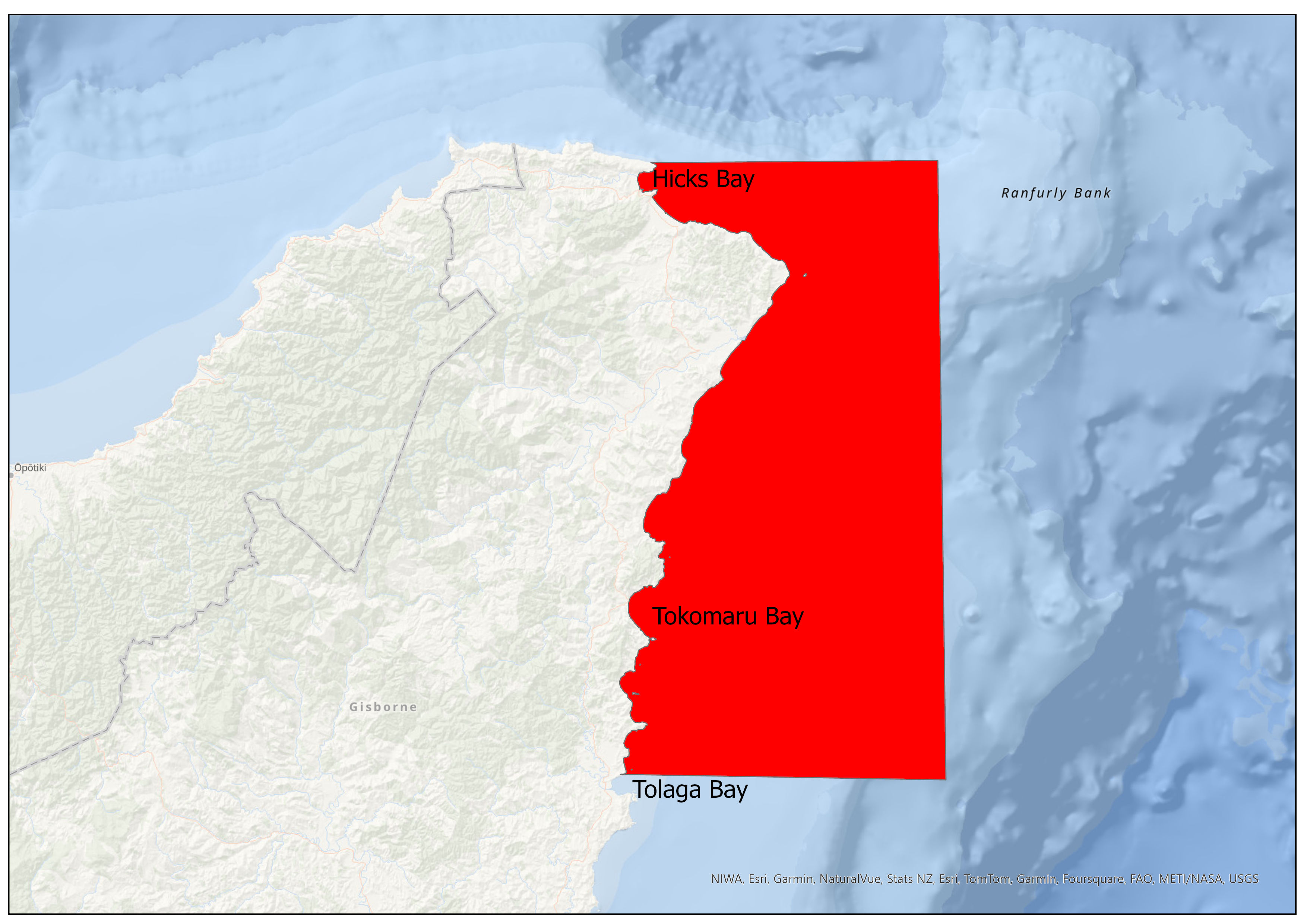
| Affected area | From 15 February 2024, the area extends from the north side of Tolaga Bay to Hicks Bay. |
| Shellfish affected | Lobster are the only species affected. Shellfish and finfish are not affected by this warning.
Lobster (crayfish) may still be eaten if the gut has been completely removed prior to cooking, as toxins can accumulate in the gut. If the gut is not removed its contents could contaminate the meat during the cooking process. |
| Symptoms | Symptoms typically appear between 10 minutes and 3 hours after ingestion and may include:
|
| Other information | Elevated paralytic shellfish toxins are still being detected in lobster near Tokomaru Bay. |
The Centre for Food Safety (CFS) received in April 2023 a referral from the Centre for Health Protection of a suspected case of diarrhoetic shellfish poisoning in which the affected persons developed diarrhoea, nausea, vomiting and abdominal pain within an hour after consuming venus clams at a restaurant. This article gives a brief introduction on shellfish poisoning.
Shellfish poisoning is caused by shellfish toxins produced by certain species of algae. When shellfish eat toxin-producing algae, the toxins can accumulate in their tissue. Consumption of shellfish containing shellfish toxins by humans can cause a variety of gastrointestinal and neurological illnesses, known as shellfish poisoning. Examples of shellfish that have been involved in shellfish poisoning include mussels, clams, oysters, scallops and geoducks.
Numerous shellfish toxins have been discovered around the world; they could cause different types of shellfish poisoning. Five major types of shellfish poisoning are discussed below:
(i) Paralytic shellfish poisoning (PSP) — caused by paralytic shellfish toxins (PSTs), which are a group of water-soluble alkaloid neurotoxins, including saxitoxins (STXs).
(ii) Diarrhoetic shellfish poisoning (DSP) — caused by diarrhoetic shellfish toxins (DSTs), which are a group of lipid-soluble polyether toxins, including okadaic acid (OA).
(iii) Neurotoxic shellfish poisoning (NSP) — caused by neurotoxic shellfish toxins (NSTs), which are a group of lipid-soluble polyether toxins, including brevetoxins (BTXs).
(iv) Amnesic shellfish poisoning (ASP) — caused by amnesic shellfish toxins (ASTs), including the water-soluble amino acid domoic acid (DA).
(v) Azaspiracid shellfish poisoning (AZP) — caused by azaspiracid shellfish toxins (AZTs), including the lipid-soluble toxin azaspiracid (AZA).
Characteristics of Shellfish Toxins
Different groups of shellfish toxins display multifarious chemical structures, which can be broadly classified into amino acids (DA), alkaloids (STXs) and polyketides (OA, BTXs and AZA).
The reasons why some algae produce shellfish toxins remain unknown. These toxins are secondary metabolites with no explicit function for the algae. They are probably used by the algae to compete for space, defence against predators or prevent the overgrowth of other organisms.
In general, shellfish toxins are heat stable, odourless, tasteless and not destroyed by cooking, freezing or other food preparation procedures. It is hard to distinguish between toxic and non-toxic shellfish visually.
Bioaccumulation of Shellfish Toxins in Bivalve Molluscs
Algae are part of the natural diet of bivalve molluscs. After shellfish has ingested shellfish toxin-producing algae, shellfish toxins will accumulate and concentrate in their internal organs, such as hepatopancreas of bivalves (Figure 1). Generally speaking, the adductor muscle contains only a low level of shellfish toxins.
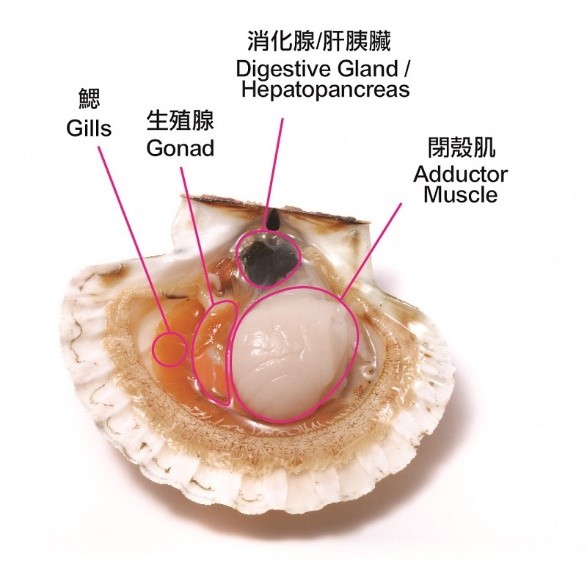
Figure 1: Internal parts of a scallop
Symptoms of Shellfish Poisoning
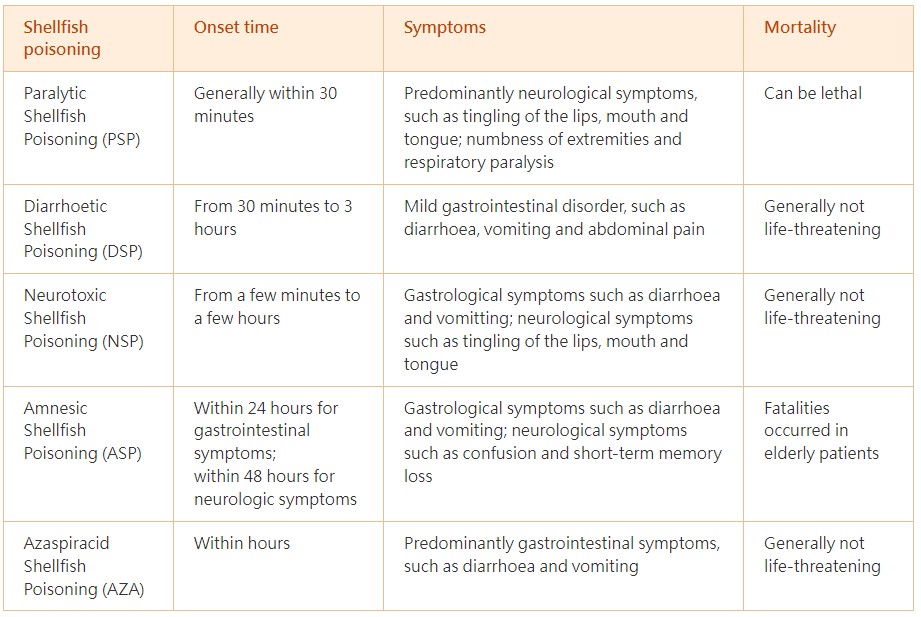
Shellfish toxins can cause a wide variety of symptoms in humans, depending on the type and amount of toxins ingested. Symptoms of different types of shellfish poisoning are summarised below:
Safety Levels of Shellfish Toxins
The toxicity of various shellfish toxins was evaluated by a joint expert working group of the Food and Agriculture Organization of the United Nations (FAO), the World Health Organization (WHO) and the Intergovernmental Oceanographic Commission of UNESCO in 2004. Acute reference doses (ARfDs) (i.e. the amount of toxins that can be ingested in a period of 24 hours or less without appreciable health risk) have been established for these shellfish toxins. In addition, the Codex Alimentarius Commission (Codex) has established the maximum levels (MLs) for shellfish toxins in edible parts (the whole or any part intended to be eaten separately) of live bivalve molluscs. While the ARfDs are critical in assessing the safety of food in terms of the level of shellfish toxins contained, Codex MLs are the levels recommended by Codex to be permitted in shellfish.
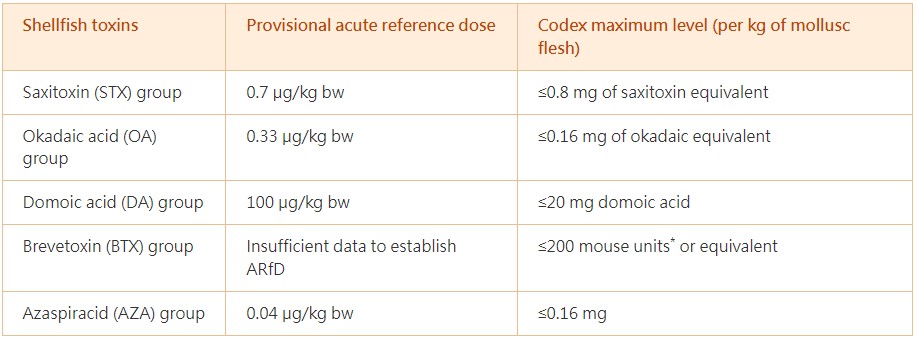
*An estimate of toxicity of the toxin made by mouse bioassay.
Key Points to Note
Advice to Consumers
Certain whole, live scallops that were received from an unlicensed harvester, believed to be harvested from prohibited waters in MA and incorrectly labeled as harvest location FED 514, with harvest dates 12/26/23, 12/27/23 and 01/01/24 that were distributed to IL, MA, NJ, NY, and PA. It is possible that these scallops may have been distributed to other states as well.
The US Food and Drug Administration (FDA) is advising consumers not to eat, and restaurants and food retailers not to sell, and to dispose of certain Intershell International Corp (MA 7802 SP) whole, live scallops that were received from an unlicensed harvester, believed to be harvested from prohibited waters in MA and incorrectly labeled as harvest location FED 514, with harvest dates 12/26/23, 12/27/23 and 01/01/24 because they may be contaminated. The scallops were directly distributed to distributors and retailers in IL, MA, NJ, NY, and PA and may have been distributed further from these states.
Scallops harvested from prohibited waters may be contaminated with human pathogens, toxic elements or poisonous or deleterious substances and can cause illness if consumed.
Posted in FDA, Food Pathogen, food recall, Pathogen, pathogenic, product recall, Recall, Shellfish, shellfish toxin
The sale of shellfish from the region has been banned following several cases of gastroenteritis linked to their consumption.
An increase in emergency room visits for gastroenteritis (a severe type of food poisoning) over December 25 and 26 has been linked to shellfish poisoning, prompting the prefect of the Gironde department to ban their sale.
No deaths have been reported and investigations into the exact cause are still ongoing.
People who have purchased shellfish from the area are advised not to eat them and to return them to the point of sale. Remaining stocks have been withdrawn from shelves.

 FoodWorld