Category Archives: Salmonella

RASFF Alerts – Salmonella -Polish Chicken Products – Black Pepper – Fresh Duck with Offal – Dried Dill – Mussels – Chicken Wings – Hummus – Organic Ashwagandha – Chicken Thighs – Chicken Breast – Bovine Carcases

RASFF

Salmonella Enteritidis in frozen chicken legs from Poland in Romania

RASFF

Salmonella enteritidis in frozen hen filet breast, oirgin Poland in Romania

RASFF

Salmonella EO in dried Dill from Egypt in Latvia and Poland

RASFF

Salmonella Enteritidis pulpe superioare pui din Polonia/// Salmonella Enteritidis in chicken legs from Poland in Romania and the Netherlands

RASFF

Salmonella enterica ser. Newport in chilled chicken legs from Poland in Romania

RASFF

S. typhimurium in young, fresh duck with offal from Hungary in Slovenia

RASFF

Riscontro di Salmonella spp. ed alta conta di E. coli in mitili //Salmonella spp and too high count of E. coli in mussels from Spain in Italy

RASFF

Salmonella Enteritidis in chilled chicken meat from Poland in Czech Republic, Greece, Hungary and Lithuania

RASFF

Salmonella in trio hummus from the Netherlands in Belgium

RASFF

Salmonella spp in chicken wings from Slovenia in Croatia

RASFF

Salmonella Typhimurium in chilled chicken breasts and thighs from France in Germany

RASFF

Salmonella Morehead and Salmonella Rubislaw in black pepper from Brazil in Germany
RASFF

Salmonella Enteritidis and Salmonella group C2-C3 in official samples of chicken neck skins from Poland in Poland and Germany

RASFF

Salmonella spp. in food supplement Organic ashwagandha in capsules from Slovenia in Italy, Hungary and Germany

RASFF

Salmonella enterica ser. Enteritidis in Bovine carcases from Germany in Norway

RASFF

Salmonella Newport in poultry carcasses, elements of poultry meat, poultry offal from Poland in Bulgaria, Czech Republic, Latvia and Romania

RASFF

Salmonella Morehead in black pepper from Brazil in Germany
RASFF Alerts – Animal Feed -Salmonella – Rice Bran – Organic Soya Bean Cake -Toasted Soya Bean – Ornamental Fish Food

RASFF

Salmonella in rice bran from Bulgaria in Croatia

RASFF

Salmonella (presence /25g) in organic soybean cake from Italy in Germany, France, Belgium and Sweden

RASFF

Salmonella Agona in toasted soy bean from Belgium in France

RASFF

Salmonella spp. and enterobacteria in frozen ornamental fish food from Thailand in the Netherlands and Germany

USA – Core Outbreak Table Update

FDA

Date Ref Pathogen Product(s) Total Investigation Status
11/24/2021 1044 Salmonella     Javiana Not Yet Identified 19 Active
11/17/2021 1043 E. coli O157:H7 Spinach See Outbreak Advisory Active
9/15/2021 1031 Salmonella Oranienburg Red, Yellow, and White Onions See Outbreak Advisory Active
9/15/2021 1025 Salmonella Thompson Seafood See Outbreak Advisory Active


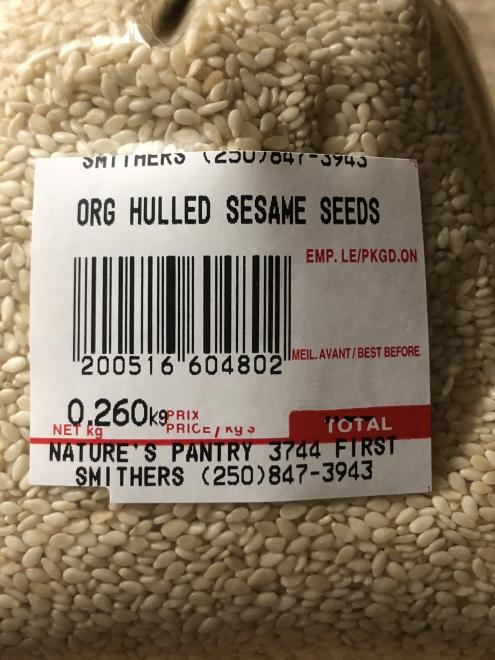
Canada – Org hulled sesame seeds recalled due to Salmonella

CFIA

Summary

Product
Org hulled sesame seeds
Issue
Food » Microbial Contamination » Salmonella
What to do

Do not consume the recalled product

Affected products

Brand Product Size UPC Codes Distribution
None Org hulled sesame seeds Variable – sold clerk served Starting with 200516 All units sold from October 8, 2021 to November 16, 2021 inclusively Sold at Nature’s Pantry, 3744 First Ave., Smithers, BC

Issue

Nature’s Pantry is recalling Org hulled sesame seeds from the marketplace due to possible Salmonella contamination.

The recalled product has been sold as indicated in the table.

What you should do

  • If you think you became sick from consuming a recalled product, call your doctor
  • Check to see if you have the recalled product in your home
  • Do not consume the recalled product
  • Recalled products should be thrown out or returned to the location where they were purchased

Food contaminated with Salmonella may not look or smell spoiled but can still make you sick. Young children, pregnant women, the elderly and people with weakened immune systems may contract serious and sometimes deadly infections. Healthy people may experience short-term symptoms such as fever, headache, vomiting, nausea, abdominal cramps and diarrhea. Long-term complications may include severe arthritis.

USA – Preparing Your Holiday Turkey Safely

CDC

Are you preparing a turkey for your holiday meal? Turkey and its juice can be contaminated with germs that can make you and your family sick. For example, turkey can contain SalmonellaClostridium perfringensCampylobacter, and other germs. Whether you’re cooking a whole bird or a part of it, such as the breast, you should take special care. Follow the steps below to safely store, thaw, handle, and cook your turkey.

1. Store Turkey Properly

  • Frozen raw turkey should be stored in the freezer until you are ready to thaw it. Make sure your freezer is at 0˚F or below. Don’t store a turkey in a place where you can’t closely monitor the temperature, such as in a car trunk, a basement, the back porch, or in snow.
  • Fresh raw turkey can be stored in the refrigerator 1 to 2 days before cooking.

2. Thaw Turkey Safely

Use one of these methods to thaw your turkey.

  • Thaw your turkey in the refrigerator.
    • Keep your turkey in its original wrapping and place it in a container before putting it in the refrigerator. The container will prevent the turkey’s juice from dripping on other food.
    • Allow about 24 hours of thawing for each 4 to5 pounds of turkey.
    • A turkey thawed in the refrigerator can remain in the refrigerator for 1 to 2 days before cooking.
  • Thaw your turkey in cold water.
    • Be sure your turkey is in a leak-proof plastic bag before you place it in the sink. The bag will prevent the turkey’s juice from spreading in the kitchen. It will also prevent the turkey from absorbing water, which can make your cooked turkey runny.
    • Make sure your turkey is fully covered with the cold tap water.
    • Change the water every 30 minutes.
    • Allow about 30 minutes of thawing for each pound of turkey.
    • A turkey thawed in cold water must be cooked immediately after thawing.
  • Thaw your turkey in the microwave.
    • Follow the microwave manufacturer’s instructions for thawing turkeys.
    • A turkey thawed in the microwave must be cooked immediately after thawing.

Never thaw your turkey by leaving it out on the counter. A turkey must thaw at a safe temperature. When a turkey stays out at room temperature for more than 2 hours, its temperature becomes unsafe even if the center is still frozen. Germs can grow rapidly in the “danger zone” between 40°F and 140°F.

Get more information about thawing turkeys.external icon

3. Handle Turkey Correctly to Prevent the Spread of Germs

Raw turkey and its juice can contaminate anything they touch. Be sure to handle your turkey correctly to prevent harmful germs from spreading to your food, family, and friends.

  • Wash your hands with soap and water for 20 seconds before and after handling turkey.
  • Use a separate cutting board for raw turkey.
  • Never place cooked food or fresh produce on a plate, cutting board, or other surface that held raw turkey.
  • Wash cutting boards, utensils, dishes, and countertops with hot soapy water after preparing raw turkey and before you prepare the next item.

Learn more about the four steps to food safety: clean, separate, cook, and chill.

Do not wash or rinse raw turkey. Federal food safety advice has recommended against washing turkey or chicken since 2005, but some habits are hard to break. A 2020 survey* found that 78% of participants reported washing or rinsing turkey before cooking. Old recipes and family cooking traditions may tempt you to keep this practice going, but it can make you and your family sick. Poultry juices can spread in the kitchen and contaminate other foods, utensils, and countertops.

∗Source: 2020 Porter Novelli Consumer Stylesexternal icon Survey of 3,625 U.S. adults

4. Cook Stuffing Thoroughly

It’s safest to cook stuffingexternal icon in a casserole dish instead of inside your turkey. Cooking stuffing in a casserole dish makes it easy to be sure the stuffing is thoroughly cooked. If you do cook stuffing in the turkey, put the stuffing in the turkey just before cooking.

With either cooking method, use a food thermometer to make sure the stuffing’s center reaches 165°F. Germs can survive in stuffing that has not reached 165°F. If you cooked the stuffing in your turkey, wait 20 minutes after taking the bird out of the oven before removing the stuffing. This allows the stuffing to cook a little longer.

5. Cook Turkey Thoroughly

To roast a turkey in your oven, set the oven temperature to at least 325°F. Place the completely thawed turkey in a roasting pan that is 2 to 2-1/2 inches deep. Cooking timesexternal icon depend on the weight of the turkey and whether it is stuffed.

Use a food thermometer to make sure the turkey has reached a safe minimum cooking temperature of 165°F. Check by inserting a food thermometer into the center of the stuffing and the thickest part of the breast, thigh, and wing. Even if your turkey has a pop-up timer, you should still use a food thermometer to check that it is safely cooked. Let the turkey stand 20 minutes before removing all stuffing from the cavity and carving the meat. This will let the stuffing cook a little longer and make the turkey easier to carveexternal icon.

If you are cooking your turkey using another method, such as smoking or frying it, or roasting a turkey that is not fully thawed, follow these guidelinesexternal icon for cooking your bird safely.

Learn more about safe minimum cooking temperaturesexternal icon for other foods and how to use a food thermometerexternal icon.

6. Take Care of Leftovers

Refrigerate leftoversexternal icon at 40°F or colder within 2 hours of cooking to prevent food poisoning. Slice or divide big cuts of meat, such as a roast turkey, into small quantities for refrigeration so they can cool quickly. Reheat all leftovers to at least 165°F before serving.

Cooked turkey and dishes made with turkey, such as a casserole, can be stored in the refrigerator for 3 to 4 days or can be frozen to store longer.

Always refrigerate leftovers within 2 hours, or 1 hour if exposed to temperatures above 90°F (like a hot car or picnic).

The bacteria Clostridium perfringens grows in cooked foods left at room temperature. It is the second most common bacterial cause of food poisoning. The major symptoms are vomiting and abdominal cramps within 6 to 24 hours after eating.

  • Clostridium perfringens outbreaks occur most often in November and December.
  • Many of these outbreaks have been linked to foods commonly served during the holidays, such as turkey and roast beef.

Wales – Salmonella outbreak affected 20 in Wales

Food Safety News

An outbreak of Salmonella linked to a traditional meal containing meat affected more than 20 people earlier this year in Wales.

Public Health Wales was notified about two cases of salmonellosis in late July, according to a presentation at the ESCAIDE conference, organized by the European Centre for Disease Prevention and Control (ECDC).

Both belonged to the Sudanese community who bought lamb to barbecue in a park in Cardiff in July to celebrate the Muslim festival Eid-al-Adha.

Further investigations found of 33 people who attended the barbecue, 22 were identified as patients. Seven were confirmed as infected from Salmonella Typhimurium.

Nine people reported attending A&E, four were admitted to hospital overnight and one patient to intensive care. The outbreak also drew attention to a wider ongoing cluster across the UK, which is still under investigation.

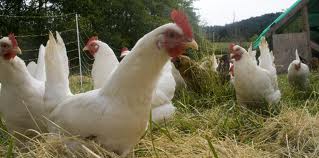
USA – Backyard Chickens hospitalize 273 and kill 2 with Salmonella – 1,135 sick in 2021 including 268 under the age of 5

Food Poison Journal

Salmonella Campylobacter

CDC: This year’s investigation of outbreaks linked to backyard poultry is over. However, any backyard poultry can carry Salmonella germs that can make you sick. Always take steps to stay healthy around your flock.

CDC and public health officials in several states investigated multistate outbreaks of Salmonella infections with serotypes of Enteritidis, Hadar, Indiana, Infantis, Mbandaka, and Muenchen.

Epidemiologic and laboratory data showed that contact with backyard poultry made people sick.

A total of 1,135 people infected with one of the outbreak strains were reported from 48 states, the District of Columbia, and Puerto Rico. The true number of sick people in these outbreaks was likely much higher than the number reported, and these outbreaks may not have been limited to the states with known illnesses. This is because many people recover without medical care and are not tested for Salmonella.

Research – Gamma radiation treatment of postharvest produce for Salmonella enterica reduction on baby carrot and grape tomato

Wiley Online

Occurrences and contamination of Salmonella enterica on produce are a significant food safety issue. The objective of this research was to evaluate the effects of low-dose gamma radiation on survival and reductions of S. enterica on postharvest carrot and tomato. Irradiation treatments of 0–1 kGy were applied on produce, following pathogen inoculations in replicated experiments. The effects of temperatures (5 and 20°C) and storage times (0, 3, and 7 days) on pathogen reductions were determined. The mean Salmonella populations in untreated control produce varied from 7.12 ± 0.05 to 7.54 ± 0.12 log Cfu/g of produce. Pathogen reductions by gamma radiation were significant (p < .05) and varied with storage times (0–7 days). Salmonella populations were reduced on carrot by 4.3 logs (5°C) and 3.7 logs (20°C) at 1 kGy treatment. On tomato, pathogen reductions at 1 kGy did not differ significantly (p > .05) and were 5.6 and 5.8 logs at 5 and 20°C, respectively. Linear decreases in Salmonella populations occurred as radiation dosage increased. Injury of bacterial cells from radiation treatment was comparatively greater at 1 kGy than other treatments. Low-dose gamma radiation treatment resulted in significant Salmonella reductions on produce and enhanced postharvest safety of carrot and tomato.

Canada – Certain sesame seed-containing products recalled due to Salmonella

CFIA

Summary

Product
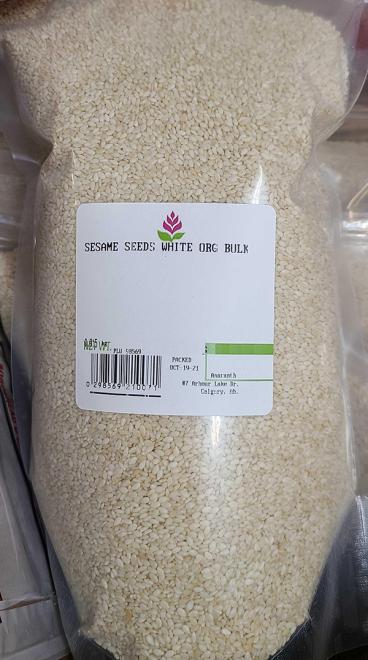
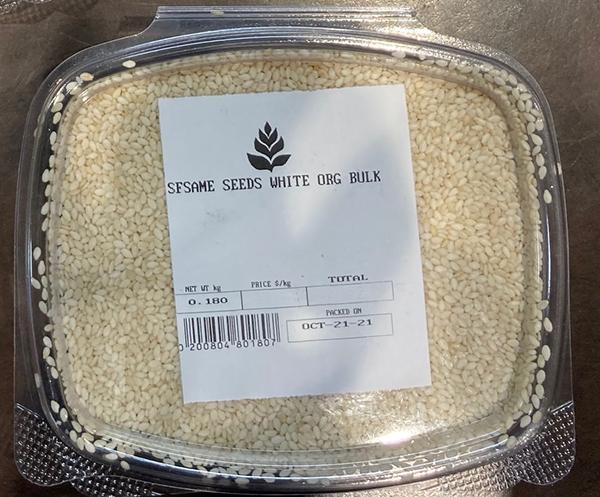
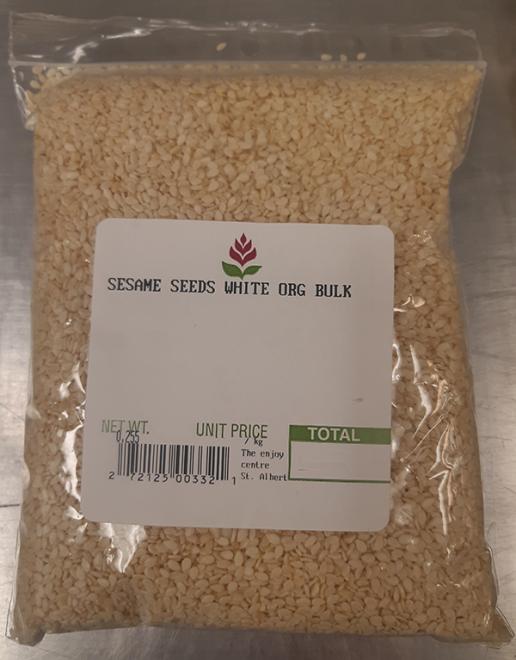
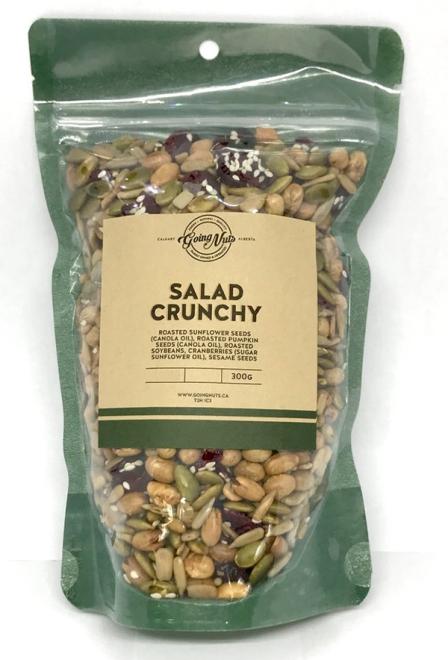
Sesame seeds white org bulk, Salad Crunchy (Mix)
Issue
Food » Microbial Contamination » Salmonella
What to do

Do not consume the recalled products

Affected products

Brand Product Size UPC Codes Additional Information
None Sesame seeds white org bulk Variable Starts with 2 72125 All units sold from August 11, 2021 to November 16, 2021, inclusively Sold at Amaranth Whole Foods Market The Enjoy Centre, 101 Riel Dr., St. Albert, AB
None Sesame seeds white org bulk Variable Starts with 0 298569 Packed OCT-19-21 Sold at Amaranth 4th Street Market, 1407 4th St., Calgary, AB
None Sesame seeds white org bulk Variable Starts with 0 200804 Packed on OCT-21-21 Sold at Amaranth Health, 5222 130 Ave. SE, Calgary, AB
None Sesame seeds white org bulk Variable – sold in bulk None All product sold from August 23, 2021 to November 17, 2021, inclusively Sold at Amaranth Whole Foods Market, 7 Arbour Lake Dr. NW, Calgary, AB
Going Nuts Salad Crunchy (Mix) 300 g 6 28110 71284 4 L2136 Sold in Alberta and online

Issue

Industry is recalling certain sesame seed-containing products from the marketplace due to possible Salmonella contamination.

The recalled products have been sold as indicated in the table.

What you should do

  • If you think you became sick from consuming a recalled product, call your doctor
  • Check to see if you have the recalled products in your home
  • Do not consume the recalled products
  • Recalled products should be thrown out or returned to the location where they were purchased

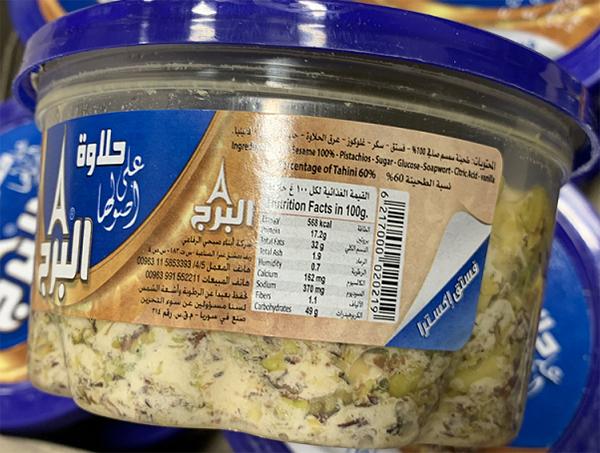
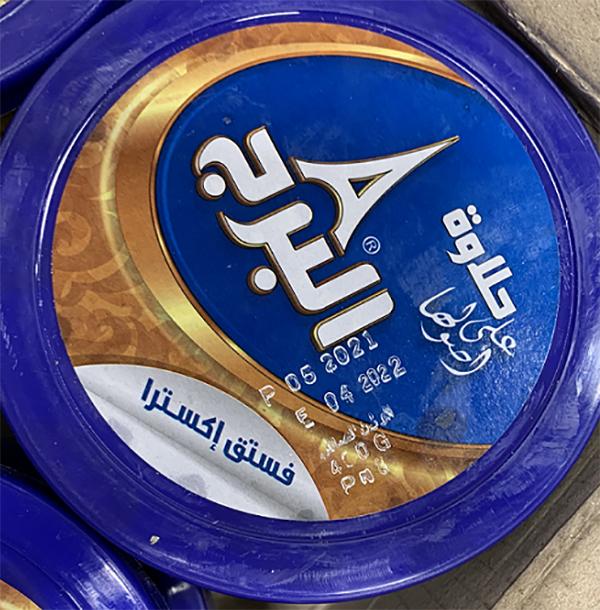
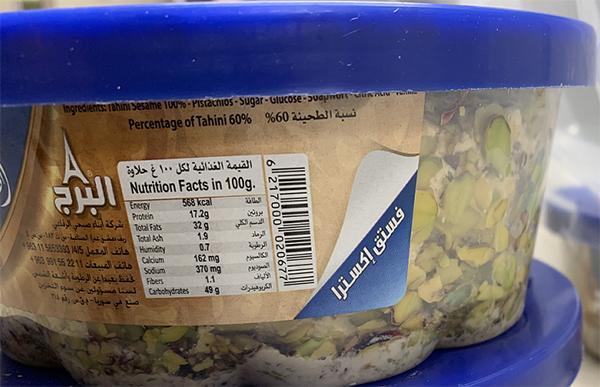
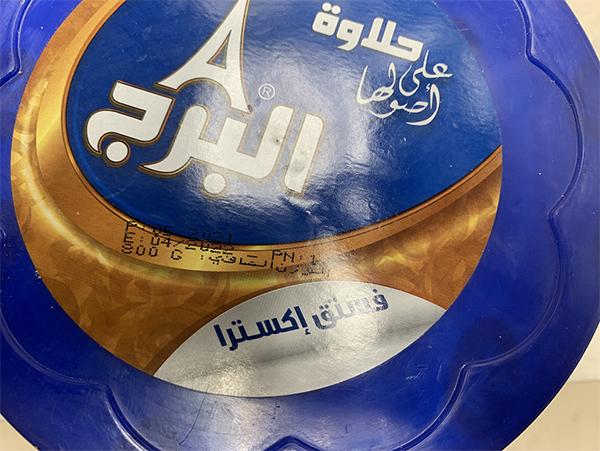
Canada – AlBurj brand Halawa Pistachio Extra recalled due to Salmonella

CFIA

Summary

Product
Halawa Pistachio Extra
Issue
Food » Microbial Contamination » Salmonella
What to do

Do not consume the recalled products

Affected products

Brand Product Size UPC Codes
AlBurj (Arabic characters only) Halawa Pistachio Extra (Arabic characters only) 400 g 6 217000 020219
  • P: 04/2021
  • E: 03/2022
  • P: 05/2021
  • E: 04/2022
AlBurj (Arabic characters only) Halawa Pistachio Extra (Arabic characters only) 800 g 6 217000 020677
  • P: 05/2021
  • E: 04/2022

Issue

Fandi Import Export Ltd. is recalling AlBurj brand Halawa Pistachio Extra from the marketplace due to possible Salmonella contamination.

The recalled products have been sold in Alberta.

What you should do

  • If you think you became sick from consuming a recalled product, call your doctor
  • Check to see if you have the recalled products in your home
  • Do not consume the recalled products
  • Recalled products should be thrown out or returned to the location where they were purchased