Category Archives: Salmonella

France- France Salmonella outbreak linked to Kinder chocolate hits 81

Food Poison Journal

Following the investigations carried out by the Belgian health authorities, together with their English, European and in particular French counterparts, the company Ferrero proceeded on April 5, 2022 to the recall of several Kinder range products manufactured in a factory in Belgium due to suspected contamination by Salmonella Typhimurium . On April 8, 2022, the recall finally affected all Kinder products from this factory, regardless of their expiry date. On April 14, 2022, an update of the recalled products, including the 2021 Christmas Advent Calendars, was released.

In total, as of 05/04/2022: 81 cases of salmonellosis with a strain belonging to the epidemic have been identified by the National Reference Center (CNR) for salmonella at the Institut Pasteur in France.

The 81 cases are spread over 12 regions (Grand-Est (14 cases), Ile-De-France (13 cases), Provence-Alpes-Côte d’Azur (13 cases), Auvergne-Rhône-Alpes (11 cases), Hauts-de-France (8 cases), Normandy (5 cases), Bourgogne-Franche-Comté (4 cases), New Aquitaine (4 cases), Occitanie (4 cases), Brittany (3 cases), Pays de la Loire (1 case) and Corsica (1 case)), with a median age of 4 years, and concern 42 girls and 39 boys.

Belgium – “Halal” chicken burger and “plain” chicken burger of the Carrefour brand (Belki) -Salmonella

AFSCA

Recall of Belki NV
Products: “Halal” chicken burger and “plain” chicken burger of the Carrefour brand (Belki).
Problem: possible presence of salmonella.


In agreement with the FASFC, Belki NV withdraws the Halal chicken burger and the plain chicken burger from sale and recalls it from consumers due to the possible presence of salmonella.

Belki NV asks its customers not to consume these products and to return them to the point of sale where they were purchased where they will be reimbursed.

– Product name: Halal chicken burger and plain chicken burger
– Brand: Carrefour (Belki)
– Use-by dates (DLC) (“Use by”) 5/13/2022
and 5/15/2022
– Batch number(s): 220505012 with DLC 5/15/2022 and 220502020 with DLC 5/13/2022
– Sales period: from 02/05/2022 to 06/05/2022
– Nature of packaging : plastic
– Weight: 250 g

The products were distributed by Carrefour.

For further information , contact:

Belki NV Quality Department: 053 77 13 36 or kwaliteit@belki.be .

Ireland – Recall of Some Marks and Spencer Products Containing Chicken Due to the Possible Presence of Salmonella

FSAI

Summary
Category 1: For Action
Alert Notification: 2022.30
Product: Please see tables below for details.
Batch Code: Please see tables below for details.
Country Of Origin: United Kingdom

Message:

Marks & Spencer is recalling some products containing chicken due to the possible presence of Salmonella.  Point-of-sale recall notices will be displayed in stores supplied with the implicated batches.

Nature Of Danger:

People infected with Salmonella typically develop symptoms between 12 and 36 hours after infection, but this can range between 6 and 72 hours. The most common symptom is diarrhoea, which can sometimes be bloody.  Other symptoms may include fever, headache and abdominal cramps. The illness usually lasts 4 to 7 days. Diarrhoea can occasionally be severe enough to require hospital admission. The elderly, infants, and those with impaired immune systems are more likely to have more severe illness.

Action Required:

Consumers:

Consumers are advised not to eat the implicated batches.

M and S Product Table 1
M and S Product Table 2
M and S Product Table 3
M and S Product Table 4

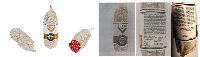
Italy – Hunter’s Salami – Listeria monocytogenes and Salmonella

Salute

Brand : VILLANI

Name : hunter’s salami

Reason for reporting : Recall due to microbiological risk

Publication date : 14 May 2022

Documentation

Documentation

Research – Inactivation of Foodborne Pathogens on Inshell Walnuts by UV-C Radiation

Journal of Food Protection

Inshell walnuts could be contaminated with pathogens through direct contact or cross-contamination during harvesting and postharvest hulling, drying, or storage. This study aimed to assess the efficacy of ultraviolet–C (UV–C) radiation in inactivating foodborne pathogens on inshell walnut surfaces. Intact inshell walnut surfaces were inoculated separately with Salmonella spp., Escherichia coli O157:H7, Listeria monocytogenes , and Staphylococcus aureus , and then subjected to UV–C radiation at doses of 29.4, 147.0, 294.0, 588.0, and 882.0 mJ/cm 2 . UV–C radiation inactivated the inoculated pathogens in a dose-dependent manner, and a tailing effect was observed for the inactivation of pathogens. UV–C radiation at 29.4 mJ/cm 2 and 882.0 mJ/cm 2 reduced the populations of  S . Enteritidis PT 30, S . Typhimurium, E. coli O157:H7, L. monocytogenes , and S. aureus on inshell walnut surfaces by 0.82–1.25 and 1.76–2.41 log CFU/walnut, respectively. Scanning electron photomicrographs showed pathogenic bacterial cells in the cracks and crevices of the inshell walnut surface, and the shielding of microorganisms by the cracks and crevices may have contributed to the tailing effect observed during UV–C inactivation. No significant changes ( p  > 0.05) were found in walnut lipid oxidation following UV–C radiation at doses up to 882.0 mJ/cm 2 . Together, the results indicate that UV–C radiation could be a potential technology for reducing the populations of various foodborne pathogens on inshell walnut surfaces while maintaining the quality of walnuts.

Research – Dutch survey finds a quarter of people wash chicken, despite expert advice

Food Safety News

A survey in the Netherlands has found more than a quarter of people wash raw chicken, which public health officials say increases the chances of spreading bacteria.

Results come from two surveys by the Netherlands Nutrition Centre (Voedingscentrum) with the Dutch population about safe food handling.

The first survey in May 2021 with 2,000 participants asked Dutch consumers about general food safety handling in the domestic kitchen. One of the questions was if they washed their chicken.

A second survey in November 2021 with 1,000 respondents was focused on safe handling of chicken. People were asked if they washed their chicken and more details about why and how. Both surveys revealed that more than 25 percent of consumers washed their chicken often or almost always.

Bacteria on chicken can cause food poisoning. Usually it is because of Campylobacter or Salmonella.

Washing raw poultry is not recommended, because of concerns about contaminating other foods and surfaces and increasing the risk of foodborne illness.

Research – Attachment and survival of Salmonella enterica and Listeria monocytogenes on tomatoes (Solanum lycopersicum) as affected by relative humidity, temperature and time of storage 

Journal of Food Protection

Tomatoes (Solanum lycopersicum) are one of the most consumed fruits worldwide. The fruit can become contaminated with Salmonella and Listeria monocytogenes at different stages of the production and supply chain, and these pathogens may survive under different storage conditions. The effect of relative humidity, temperature and time of storage on the attachment and survival characteristics of both pathogens on the surface of tomatoes was investigated. Fresh whole Roma tomatoes were inoculated with a cocktail of Salmonella or L. monocytogenes and stored at 5, 12, 25, 30, or 35 ºC for 10 days. Every day during storage, relative humidity and temperature were measured and tomatoes were removed to enumerate cells of these pathogens that were loosely attached (LA, cells detached from the tomato surface by simple rinse) and strongly attached (SA, cells that required sonication to detach. Enumeration was achieved by spread-plate method. Surviving populations of LA and SA cells were obtained and the attachment strength (SR) was calculated to express the proportion of SA cells on the tomato surface. The LA initial counts of Salmonella and L. monocytogenes on the surface of the fruit after inoculation were 6.6 and 6.5 log CFU/tomato, and for SA were 5.1 and 5.6 log CFU/tomato, respectively. For both pathogens, the LA counts were higher (p < 0.05) than the SA counts. Also, the LA and SA counts varied significantly as a function of temperature, relative humidity and time of storage. The S R for Salmonella was affected by the time but not the temperature of storage, while the S R for L. monocytogenes was affected by the temperature, relative humidity and time of storage (p < 0.05). Understanding the attachment and survival of Salmonella and L. monocytogenes on tomatoes stored at different temperature conditions may be useful in determining ways to prevent/reduce the establishment of pathogens and designing improved decontamination methods for tomatoes.

UK – Salmonella finding closes factory and prompts large-scale recall

Food Safety News

A poultry company in England has halted production at one of its sites after finding Salmonella in chicken. Dozens of products have been recalled.

Cranswick said the facility in Hull will remain closed until an investigation into the possible cause of contamination has been completed.

A routine internal inspection identified the presence of Salmonella in some cooked chicken products.

The products are sold as ingredients for sandwiches and meals in UK retailers and food-to-go outlets.

“As a precautionary measure, we have asked our customers to remove any of their products containing our ready to eat chicken produced during the affected period. We are working closely with the Foods Standards Agency and will collaborate with their experts to resolve the matter,” the company said in a statement.

“The safety and quality of every product produced by Cranswick is our number one priority and all necessary protocols will be followed and completed before we restart production.”

Germany – Salame cacciatore italiano DOP, about 150 g – Salmonella and Listeria monocytogenes

LMW

Unnamed.PNG

Alert type:

Food

Date of first publication:

05/12/2022

Product name:

Salame cacciatore italiano DOP, about 150 g

customer information

Manufacturer (distributor):

Producer: Villani SpA, Via E. Zanasi 24, IT-41051 Castelnuovo Rangone Distributor: Di Gennaro Feinkost- und Weinhandelsgesellschaft mbH

Reason for warning:

The affected product with the batch mentioned should no longer be consumed, as it could be contaminated with Salmonella and Listeria bacteria.

Packaging Unit:

150g

Durability:

BBD: 07/15/2022

Production date:

01/26/2022

Lot identification:

Batch: 240222

Additional Information:

Reference is made to the company’s attached customer information.

Click to access Pressemitteilung+Fa.+Di+Gennaro.pdf

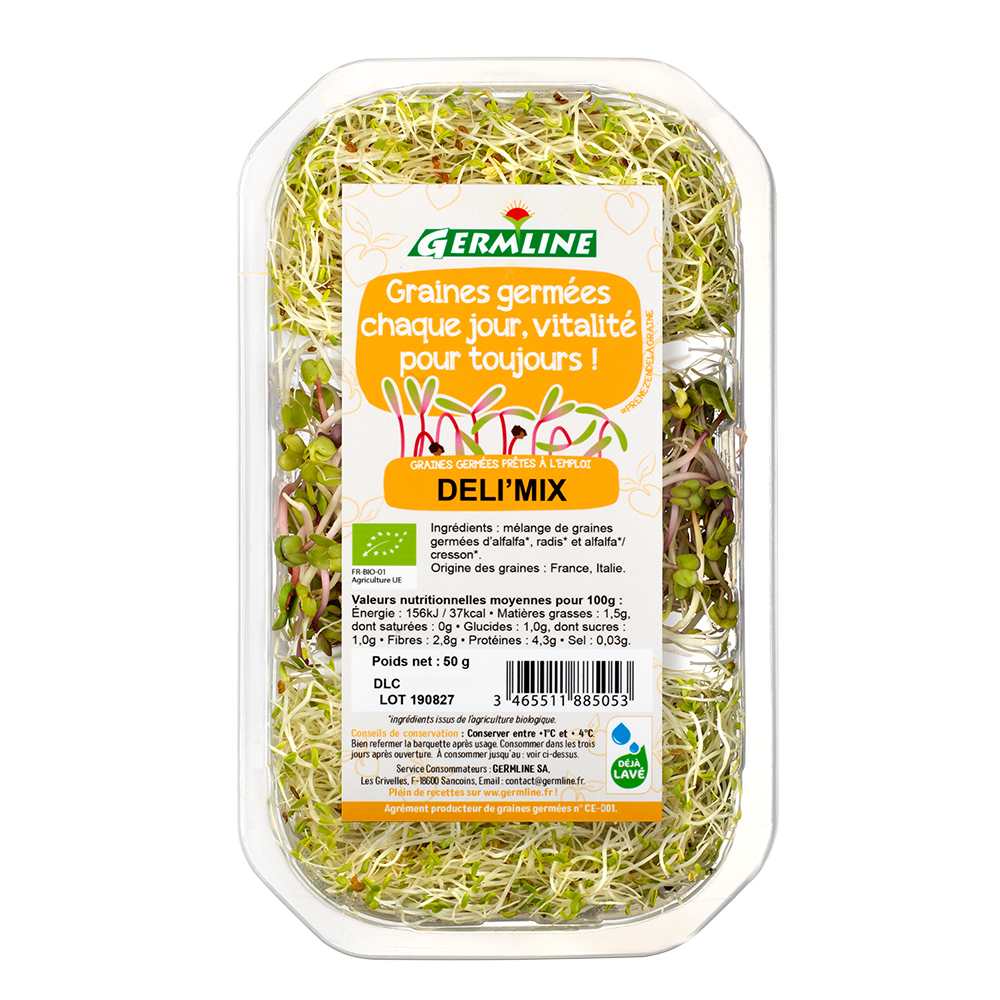
France – Deli’mix Sprouted Seeds- Salmonella

Gov france

Identification information of the recalled product

  • Product category Food
  • Product subcategory Nuts and seeds
  • Product brand name GERMLINE
  • Model names or references Deli’mix
  • Identification of products
    GTIN Batch Date
    3465511885053 220509 Use-by date 05/21/2022
  • Packaging Wrapped tray 50g
  • Marketing start/end date From 05/10/2022 to 05/21/2022
  • Storage temperature Product to be stored in the refrigerator
  • Geographic area of ​​sale Whole France
  • Distributors VITAFRAIS RELAIS VERT THE NEW ROBINSON

Practical information regarding the recall

  • Reason for recall Salmonella detection
  • Risks incurred by the consumer Salmonella spp (causative agent of salmonellosis)