Category Archives: Salmonella

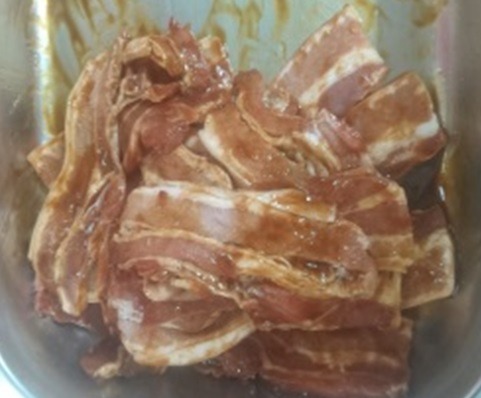
France -TEX-MEX MARINATED PORK BREAST – Salmonella

Gov france

Identification information of the recalled product

  • Product category Food
  • Product subcategory Meats
  • Product brand name/
  • Model names or references TEX-MEX MARINATED PORK BREAST SOLD AT BUTCHER STAND
  • Identification of products
    Batch
    TEX-MEX MARINATED PORK BREAST SOLD AT BUTCHER STAND BETWEEN MAY 3 AND 17, 2022
  • Products List Reminder_poster.pdf Enclosed
  • Packaging Packed in a butcher’s stand
  • Marketing start/end date From 03/05/2022 to 17/05/2022
  • Storage temperature Product to be stored in the refrigerator
  • Health mark/
  • Further information The packaging date is indicated on the label of the bag given to the customer.
  • Geographic area of ​​sale Auchan Nancy Tomblaine
  • Distributors Auchan Nancy Tomblaine

Practical information regarding the recall

  • Reason for recall presence of Salmonella
  • Risks incurred by the consumer Salmonella spp (causative agent of salmonellosis)

EU – Update: Multi-country Salmonella outbreak linked to chocolate products

EFSA

EFSA and ECDC have updated their assessment, published in April 2022, of the multi-country outbreak of monophasic Salmonella Typhimurium infections linked to chocolate products by a company in its Belgian plant.

Cases, which have now started to decrease, stood at 324 (including both probable and confirmed) in the EU/EEA and the UK, as of 18 May 2022. They have been reported in twelve EU/EEA countries (Austria, Belgium, Denmark, France, Germany, Ireland, Italy, Luxembourg, the Netherlands, Norway, Spain and Sweden), the UK, Switzerland, Canada, and USA. The first patient was reported in the UK on 7 January, with a sampling date of 21 December 2021.

On 8 April 2022, the food safety authority in Belgium stopped the production at the facility. Withdrawals and recalls have been implemented in the countries where chocolate products manufactured at the Belgian plant were distributed. Public warnings have been issued by the competent national authorities in different countries.

EU – Multi-country outbreak of monophasic Salmonella Typhimurium sequence type 34 linked to chocolate products – first update

EFSA

Abstract

On 17 February 2022, the United Kingdom (UK) reported a cluster of cases with monophasic Salmonella Typhimurium sequence type 34 infection. As of 18 May 2022, 324 cases had been reported in 12 EU/EEA countries and the UK, including two distinct strains. Most cases are below ten years of age and 41% of all cases have been hospitalised. The two strains are multidrug-resistant and some tested isolates also carry resistance to disinfectants that are based on quaternary ammonium compounds and hydrogen peroxide, but remain susceptible to azithromycin, ciprofloxacin, meropenem, and third generation cephalosporins. Epidemiological investigations suggested specific chocolate products of Brand A, produced by Company A in Processing Plant B in Belgium, as likely vehicles of infection.

Two strains of monophasic Salmonella Typhimurium matching the outbreak strains were identified in the buttermilk line at Plant B between December 2021 and January 2022. The buttermilk was provided by an Italian supplier where Salmonella was not detected. The Italian supplier delivered the buttermilk to other plants of Company A where, based on the available evidence, Salmonella was not detected.

On 8 April 2022, based on official controls, the food safety authority in Belgium decided to withdraw the authorisation for production of the Plant B due to lack of transparency and insufficient guarantees for safe production. Company A globally recalled all products of Brand A produced at Plant B. Public warnings were issued by the competent national authorities in different countries.

This outbreak has evolved rapidly, with children most at risk for severe infection. The closure of Plant B and the global recall of all their products have reduced the risk of exposure. However, eight cases cannot be explained by consumption of chocolate products such as those manufactured at Plant B, suggesting that there may also be other sources of infection.

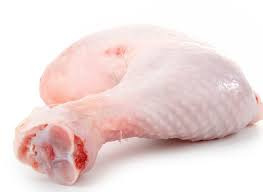
France – CHICKEN THIGH – Salmonella

RASFF

Identification information of the recalled product

  • Product category Food
  • Product subcategory Meats
  • Product brand name SIEBERT
  • Model names or references CHICKEN THIGH
  • Identification of products
    GTIN Batch Date
    03343660011441 3160422922 Use-by date 04/27/2022
  • Products Listscan0013.pdfEnclosed
  • Marketing start/end date From 04/21/2022 to 04/26/2022
  • Storage temperature Product to be stored in the refrigerator
  • Health mark PRESENCE OF SALMONELLA
  • Further information CHICKEN LEG FOR SALE IN THE TRADITIONAL BUTCHER DEPARTMENT
  • Geographic area of ​​sale Whole France
  • Distributors BASE INTER ST DIE

Practical information regarding the recall

  • Reason for recall PRESENCE OF SALMONELLA
  • Risks incurred by the consumer Salmonella spp (causative agent of salmonellosis)

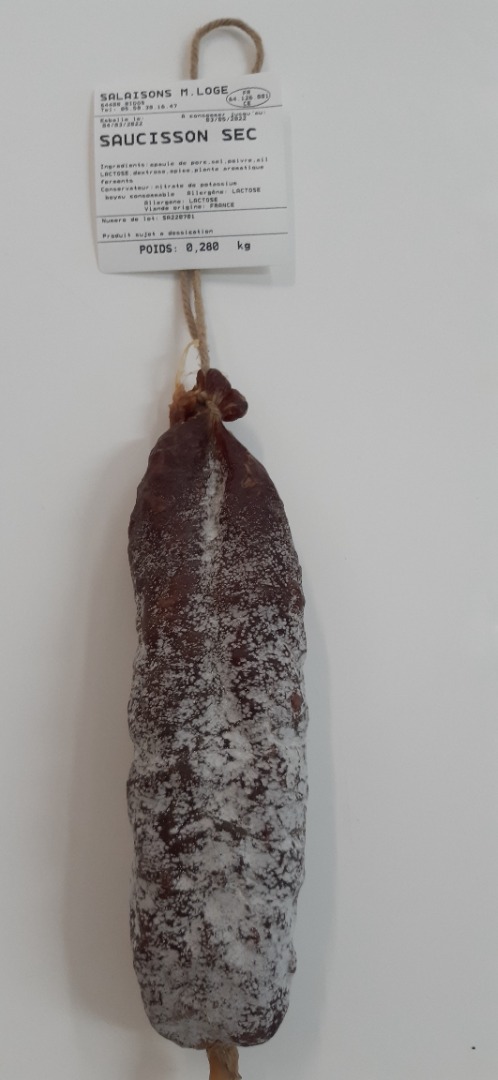
France – Dry Sausage – Salmonella

Gov france

Identification information of the recalled product

  • Product category Food
  • Product subcategory Meats
  • Product brand name dry sausage
  • Model names or references dry sausage lot SA220701
  • Identification of products
    Batch
    SA220701
  • Packaging Bare product or vacuum packaging
  • Marketing start/end date From 02/28/2022 to 04/02/2022
  • Storage temperature Product to be stored at room temperature
  • Health mark EN 64126 001 CE
  • Geographic area of ​​sale30Km around the manufacturing site
  • Distributors LECLERC OLORON INTERMARCHE ARAMITS INTERMARCHE ACCOUS UTILE OGEU LES BAINS VIVAL LASSEUBE Other retailers (see PDF below)
  • List of points of saleLIST_OF_INDEPENDENT_RESELLERS_OF_SALAISONS_LOGE.pdf

Practical information regarding the recall

  • Reason for recall Salmonella detected during a self-check analysis
  • Risks incurred by the consumer Salmonella spp (causative agent of salmonellosis)

Ireland – Recall of a Batch of Villani Cacciatore Italiano Salami due to the Presence of Salmonella and Listeria monocytogenes

FSAI

Summary
Category 1: For Action
Alert Notification: 2022.31
Product: Villani Cacciatore Italiano salami; pack size: 170g; approval number: IT 68 L CE
Batch Code: 240222; best before date: 15.07.22
Country Of Origin: Italy

Message:

The above batch of Villani Cacciatore Italiano salami is being recalled due to the presence of Salmonella and Listeria monocytogenes. Point-of-sale recall notices will be displayed in stores supplied with the implicated batch.

Nature Of Danger:

People infected with Salmonella typically develop symptoms between 12 and 36 hours after infection, but this can range between 6 and 72 hours.  The most common symptom is diarrhoea, which can sometimes be bloody.  Other symptoms may include fever, headache and abdominal cramps.  The illness usually lasts 4 to 7 days. Diarrhoea can occasionally be severe enough to require hospital admission. The elderly, infants, and those with impaired immune systems are more likely to have a severe illness.

Symptoms of Listeria monocytogenes infection can include mild flu-like symptoms, or gastrointestinal symptoms such as nausea, vomiting and diarrhoea.  In rare cases, the infection can be more severe, causing serious complications. Some people are more vulnerable to Listeria monocytogenes infections, including pregnant women, babies, and people with weakened immune systems, including the elderly.  The incubation period (time between initial infection and first symptoms appearing) is on average 3 weeks but can range between 3 and 70 days.

Action Required:

Manufacturers, wholesalers, distributors, caterers & retailers:

Retailers are requested to remove the implicated batch from sale and to display a point-of-sale recall notice in stores where the affected batch was sold. 

Consumers:

Consumers are advised not to eat the implicated batch.

Italian Salami

China – Outbreak Reports: Extensively Drug-Resistant (XDR) Salmonella Typhi Outbreak by Waterborne Infection — Beijing Municipality, China, January–February 2022

China CDC

kswfoodworld Salmonella

On February 6, 2022, an unusual infection event was noticed by hospitals and Beijing CDC: 4 clinically diagnosed typhoid cases (3 in Beijing, 1 in Chifeng City, Inner Mongolia Autonomous Region) were reported to China’s Infectious Disease Information System. The detailed epidemiological investigation was initiated by Changping District CDC. This outbreak involved 23 cases in an apartment in Changping District in Beijing and was caused by extensively drug-resistant (XDR) Salmonella Typhi (S. Typhi) through polluted water supply, which was confirmed by laboratory detection.

Based on the epidemiological curve by date of onset and spatial distribution of cases, a point outbreak was suggested. Considering the possibility of foodborne infection, we checked the dietary history of these cases for 14 days prior to onset, but no evidence of common food or dining together was found to support this. We did not conduct case-control studies, but we received information that most cases keep good hygiene in water usage: they did not drink raw water, but they used tap water to wash vegetables and brush teeth. During this survey, the residents reported that the household water had an odor for about half a month in late December 2021, and some reported that there was disruption of water supply and transient muddy water in mid-January 2022. Herein, the water supply in this apartment was further investigated. The domestic water was supplied from a self-provided well in the village, which was piped to six apartments including the apartment where the cases lived in. Water was pumped from a nearby branch well to storage tank on the roof of the apartment for 24 hours a day to ensure adequate water supply, and then distributed to each room. In field investigation, we learned that sewage pipeline reconstruction work was carried out in December 2021 near the apartment, and the sewage pipeline was just about 1 meter away from the branch well which supplied water for the apartment.

In summary, this was the first report of waterborne outbreak caused by XDR S. Typhi in China. Whole-genome comparison and drug resistance analysis indicated that it belonged to H58 lineage 4.3.1.1.P1 originating from Pakistan, which had the capacity to invade and spread globally by travel-associated international transmission, with the potential to replace native strains (4). However, it was unclear how this novel clone strain entered China and was associated with this outbreak, due to the lack of detailed historical epidemiological data. Importantly, in a modern city such as Beijing, especially in suburban or rural areas where the municipal water supply does not reach, there is still a potential risk of typhoid fever outbreak. So, it is urgent to appeal to relevant governmental authorities to provide safe and hygienic potable water, strengthen supervision on water quality, and educate the public to keep good hygiene habits. In addition, with narrow treatment options for typhoid fever, XDR typhoid itself should also attract great attention, which may lead to treatment failure, prolonged hospitalization, as well as recurrent and extensive transmission of the disease. Therefore, it is necessary to track the source of the XDR strains and to strengthen monitoring their spread through laboratory and extensive epidemiological investigations in the future.

Israel – Salmonella found in Tnuva milk powder production line

Jpost

Tnuva’s milk powder production line was found to be contaminated with Salmonella after a test came back positive for the bacteria, the Health Ministry said on Friday, according to Walla News.

The ministry reportedly ordered Tnuva to carry out a recall of milk powder produced between August 8 and 25, 2021, and instructed the institutions that received the milk powder to refrain from using it until the conclusion of the investigation.

According to the ministry statement, salmonella was first detected in the manufacturing plant on April 19, but it was not detected in the samples that were taken from finished food products. As a result, it instructed the company to continue conducting tests of the production facility and the raw ingredients.

Then, on the evening of April 21, a preliminary report showed indications of salmonella also being present in the raw material. However, because this was detected through a rapid test and not a full laboratory test, the manufacturer was not required by law to issue a recall at that stage.

Belgium – 62 salmonella infections in Belgium linked to Ferrero factory in Arlon

AFSCA

Since several cases of salmonellosis have been reported in Europe, the Federal Agency for the Safety of the Food Chain (AFSCA), the National Reference Laboratory for Salmonella Sciensano and the Communities (Care and Health Agency, Aviq and GGC Brussels) are carrying out an investigation into possible salmonella infections linked to Belgium. This investigation shows that 62 cases are linked to this salmonella epidemic. No significant increase in the number of infections is expected.

Last month, in April, a link was established between consumers who fell ill after consuming various Kinder chocolate products and the Ferrero factory in Arlon. Through extensive genetic analysis of stool samples (by Sciensano) and patient interviews (by the Communities), 62 cases of salmonellosis in Belgium have been confirmed to be linked to the salmonella outbreak.

The ECDC (European Center for Disease Prevention and Control) reports figures for confirmed cases of salmonellosis in Europe and the UK linked to the Ferrero factory in Arlon. The figures for Belgium will be sent to them so that they can be updated.

An investigation was also opened by the prosecutor’s office of the province of Luxembourg. Only the prosecution will communicate on this investigation. The FASFC will of course continue to inform consumers.

Restart of the Arlon factory

The FASFC decided in April to withdraw the authorization for the Arlon factory and to remind consumers of all products in the Kinder range manufactured there. At the end of last week, Ferrero officially submitted a new authorization request for the site to the FASFC. If the conclusions of the FASFC’s assessment are favourable, provisional authorization will be granted. It will be evaluated after 3 months. Ferrero is currently making every effort to restart its activities as soon as possible. Cooperation in this regard is going well so far.

David Clarinval, Federal Minister of Agriculture : “I am delighted with the good current collaboration between the FASFC and the Ferrero company in Arlon. Everything is being done to restart production as soon as possible, through a provisional authorization and with consumer safety as the absolute priority. The decision taken by the FASFC in April to withdraw the authorization from the factory was not taken lightly. The impact has been huge, especially for the company’s many employees. We are working on a quick reopening, which will be very positive news for the company, the workers, and the treat lovers! »

Israel – Strauss warns of profit impact due to Salmonella incident

Food Safety News

Strauss Group has estimated the impact of Salmonella illnesses and related recalls to be about U.S. $33 million on first quarter financial results.

The company said net profit for the first quarter of 2022 is expected to be hit by Israeli New Shekel 115 to 125 million ($33.6 to $36.5 million). The financial statement as of March 31 is expected to be published around May 25.

During an inspection of Strauss’s factory in Nof Hagalil, Israel in April, the Ministry of Health found “significant” failings in the company’s protocols. The agency has suspended the plant’s approval for three months or until issues detected during the visit have been rectified.

Elite branded items such as cakes, wafers, energy grain snacks, energy chocolate rice cakes, chewing gum and toffee candies were sent to the United States, Canada, Australia, New Zealand, Austria, Brazil, Cyprus, Estonia, France, Germany, Hungary, Italy, Luxembourg, Netherlands, Poland, Romania, Russia, South Africa, Spain, Sweden and the United Kingdom.