Category Archives: Salmonella

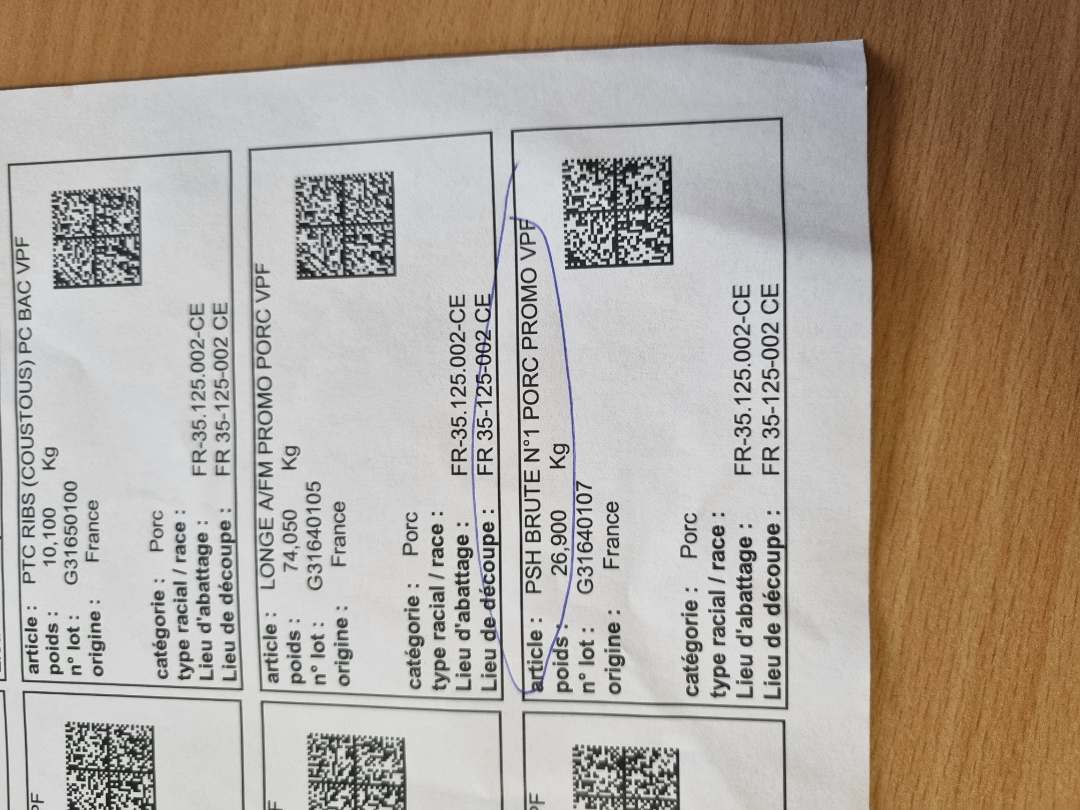
France – MARINE BACON – Salmonella

Gov france

Identification information of the recalled product

  • Product category Feed
  • Product subcategory Meats
  • Product brand name GATIN
  • Model names or references MARINE BACON
  • Identification of products
    GTIN Batch Date
    31640107 All lots Use-by date 06/25/2023
  • Products List 20230703121133675.pdf Attachment
  • Packaging BULK OR TRAYS
  • Marketing start/end date From 06/20/2023 to 06/25/2023
  • Storage temperature Product to be stored in the refrigerator
  • Geographic area of ​​sale Whole France
  • Distributors INTERMARCHE MORHANGE

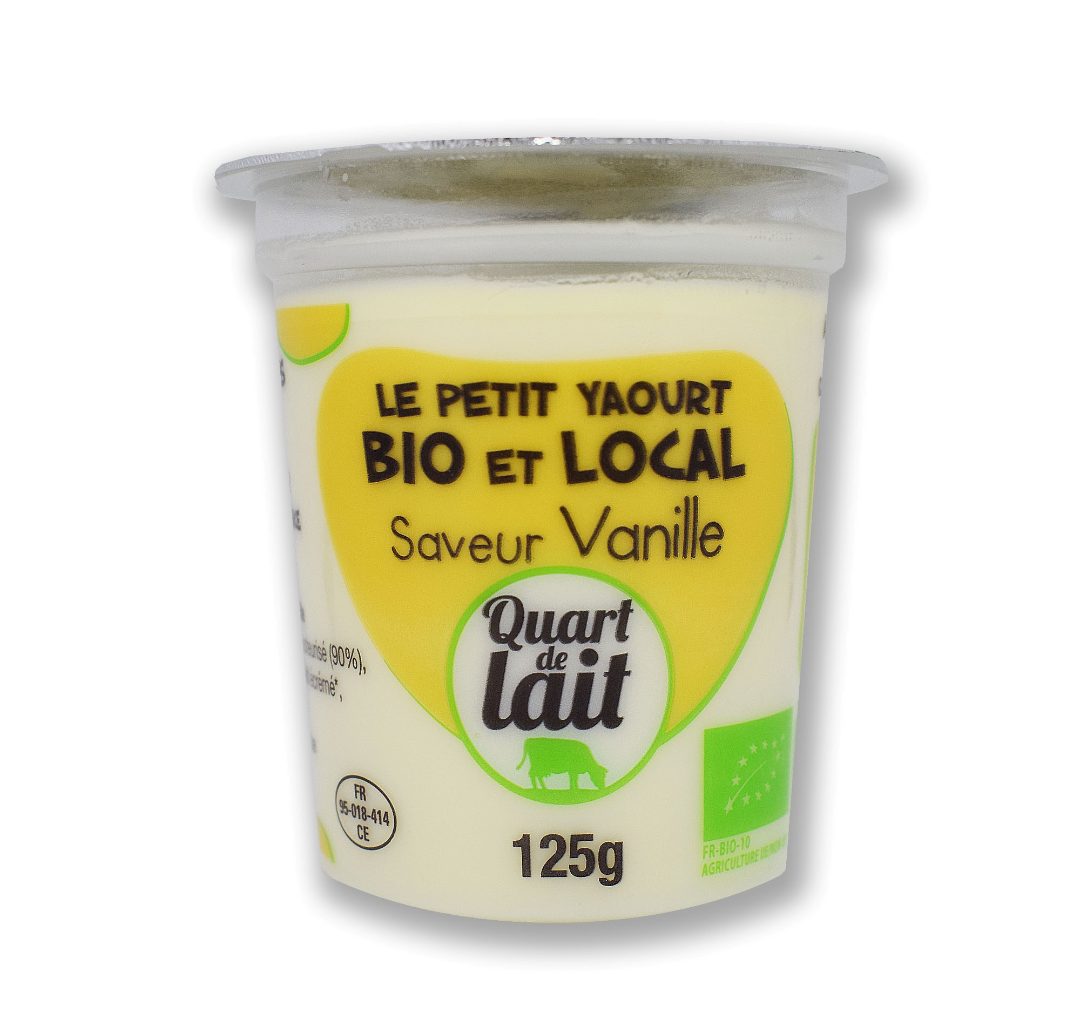
France – ORGANIC YOGHURT VANILLA FLAVOR QUARTER MILK 125 G – Salmonella

Gov france

Identification information of the recalled product

  • Product category Feed
  • Product subcategory Milk and dairy products
  • Product brand name QUARTER OF MILK
  • Model names or references ORGANIC YOGHURT VANILLA FLAVOR QUARTER MILK 125 G
  • Identification of products
    GTIN Batch Date
    3770003809142 07/12/2023 Use-by date 07/12/2023
  • Products List FT.003.01_Yoghurt_BIO_Saveur_Vanille_125g_24u.pdfAttachment
  • Packaging JAR 125G
  • Marketing start/end date From 06/22/2023 to 07/12/2023
  • Storage temperature Product to be stored in the refrigerator
  • Health mark ORGANIC YOGHURT VANILLA FLAVOR QUARTER MILK 125 G
  • Further information ORGANIC YOGHURT VANILLA FLAVOR QUARTER MILK 125 G
  • Geographic area of ​​sale Regions: Ile-de-France
  • Distributors eurocheese

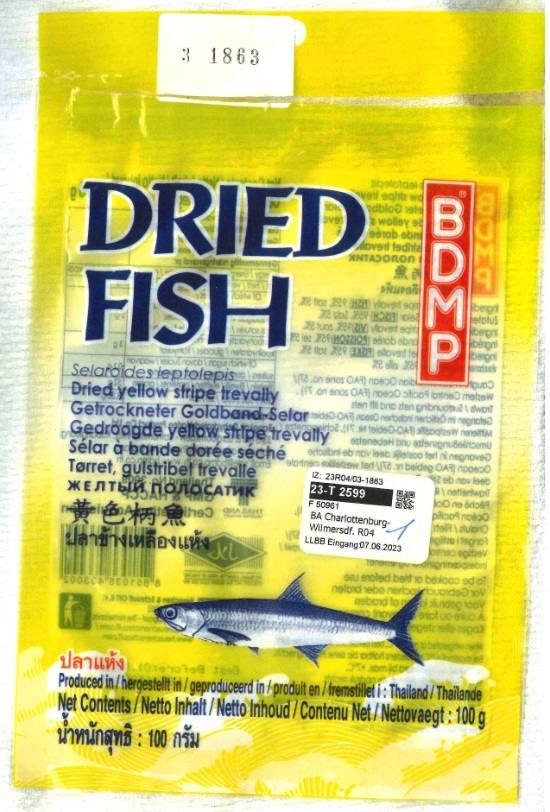
France – Dried yellow stripe – Dried yellow stripe trevally – Salmonella

Gov france

Identification information of the recalled product

  • Product category Feed
  • Product subcategory Fishery and aquaculture products
  • Product brand name BDMP
  • Model names or references Lot 35253 A
  • Identification of products
    GTIN Batch Date
    8851035433002 35253A Best before date 09/01/2024
  • Packaging 100g
  • Marketing start/end date Since 19/12/2022
  • Storage temperature Product to keep in the freezer
  • Geographic area of ​​sale Whole France
  • Distributors Multi brands in the departments 06 / 38 / 75
  • List of points of saleRecipient_list.pdf

Research USA – FoodNet 2022 Preliminary Data

CDC

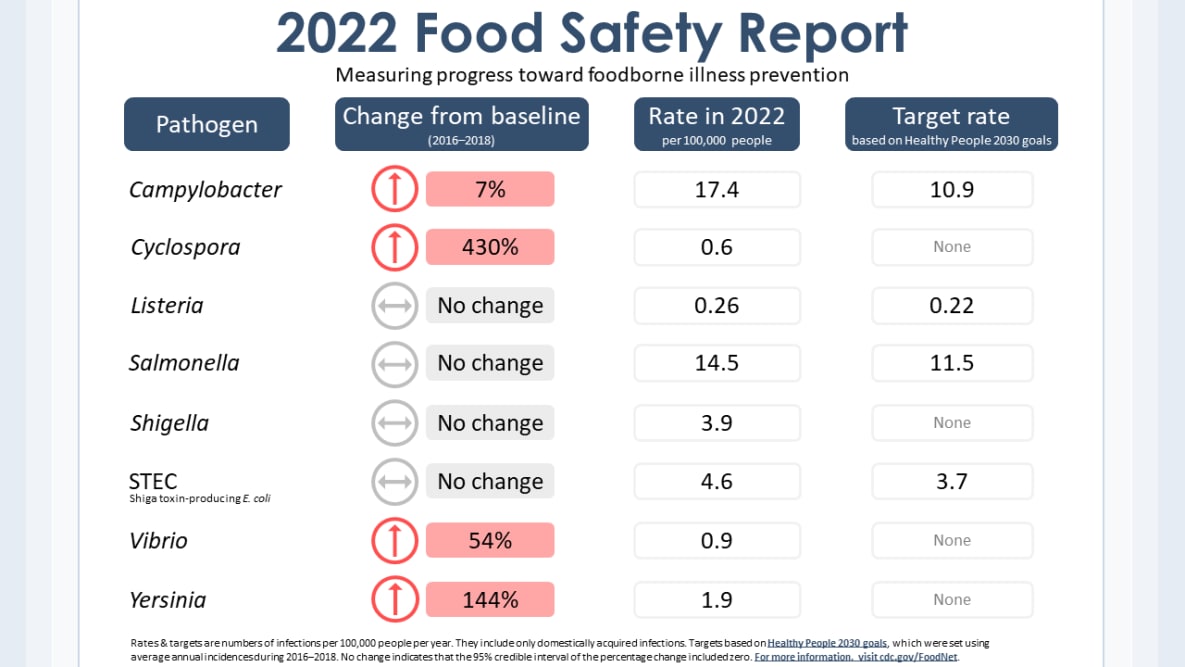
Graphic showing progress in 2022 toward foodborne illness prevention, with changes from the 2016–2018 baseline, rates in 2022, and target rates based on Healthy People 2030 goals. Rates increased for Campylobacter, Cyclospora, Vibrio, and Yersinia and did not change for Listeria, Salmonella, Shigella, and Shiga toxin-producing E. coli. Rates for Campylobacter, Listeria, Salmonella, and Shiga toxin-producing E. coli are all higher than their established target rates.

This year’s report summarizes 2022 preliminary surveillance data. It describes 2022 incidence compared with the average incidence for 2016–2018, the reference period used for the U.S. Department of Health and Human Services (HHS) Healthy People 2030 goals. The report also summarizes cases of hemolytic uremic syndrome (HUS) during 2021.

  • In 2022, enteric (intestinal) infections monitored by FoodNet generally returned to or exceeded levels observed in 2016–2018 (before the COVID-19 pandemic).
    • Incidence of CampylobacterListeriaSalmonella, and Shigella infections did not change in 2022 compared with 2016–2018.
    • Incidence of Cyclospora, STEC, Vibrio, and Yersinia infections increased in 2022 compared with 2016–2018.
  • Campylobacter and Salmonella remain the top causes of enteric infections monitored by FoodNet.
  • Increased use of CIDTs contributed to the increased detection of infections.
  • FoodNet data show lack of progress during 2022 toward Healthy People 2030 goals for reducing foodborne illness. Concerted efforts are needed to implement effective prevention strategies to reduce disease burden.

Research – Inhibition of Salmonella Enteritidis by Essential Oil Components and the Effect of Storage on the Quality of Chicken

MDPI

Abstract

This research investigates the antibacterial potential of plant essential oil components including thymol, carvacrol, citral, cinnamaldehyde, limonene, and β-pinene against Salmonella Enteritidis (S. Enteritidis). Through the determination of minimum inhibitory concentration, three kinds of natural antibacterial agents with the best inhibitory effect on S. Enteritidis were determined, namely thymol (128 μg/mL), carvacrol (256 μg/mL), and cinnamaldehyde (128 μg/mL). Physical, chemical, microbial, and sensory characteristics were regularly monitored on days 0, 2, 4, and 6. The findings of this study reveal that both thymol at MIC of 128 μg/mL and carvacrol at MIC of 256 μg/mL not only maintained the sensory quality of chicken, but also decreased the pH, moisture content, and TVB-N value. Additionally, thymol, carvacrol and cinnamaldehyde successfully inhibited the formation of S. Enteritidis biofilm, thereby minimizing the number of S. Enteritidis and the total aerobic plate count in chicken. Hence, thymol, carvacrol, and cinnamaldehyde have more effective inhibitory activities against S. Enteritidis, which can effectively prevent the spoilage of chicken and reduce the loss of its functional components.

Research – Salmonella (non-typhoidal)

WHO

Key facts

  • Salmonella is 1 of 4 key global causes of diarrhoeal diseases.
  • Most cases of salmonellosis are mild; however, sometimes it can be life-threatening. The severity of the disease depends on host factors and the serotype of Salmonella.
  • Antimicrobial resistance is a global public health concern and Salmonella is one of the microorganisms in which some resistant serotypes have emerged, affecting the food chain.
  • Basic food hygiene practices, such as “cook thoroughly”, are recommended as a preventive measure against salmonellosis.

Research – Growth Kinetics of Listeria monocytogenes and Salmonella enterica on Dehydrated Vegetables during Rehydration and Subsequent Storage

MDPI

Abstract

Dehydrated vegetables have low water activities and do not support the proliferation of pathogenic bacteria. Once rehydrated, vegetables can be incorporated into other foods or held for later use. The aim of this study was to examine the survival and proliferation of Listeria monocytogenes and Salmonella enterica on dehydrated vegetables during rehydration and subsequent storage. Carrots, corn, onion, bell peppers, and potatoes were heat dehydrated, inoculated at 4 log CFU/g, and rehydrated at either 5 or 25 °C for 24 h. Following rehydration, vegetables were stored at 5, 10, or 25 °C for 7 d. Both L. monocytogenes and S. enterica survived on all vegetables under all conditions examined. After 24 h of rehydration at 5 °C, pathogen populations on the vegetables were generally <1.70 log CFU/g, whereas rehydration at 25 °C resulted in populations of 2.28 to 6.25 log CFU/g. The highest growth rates during storage were observed by L. monocytogenes on potatoes and S. enterica on carrots (2.37 ± 0.61 and 1.63 ± 0.18 log CFU/g/d, respectively) at 25 °C when rehydration occurred at 5 °C. Results indicate that pathogen proliferation on the vegetables is both rehydration temperature and matrix dependent and highlight the importance of holding rehydrated vegetables at refrigeration temperatures to hinder pathogen proliferation. Results from this study inform time and temperature controls for the safety of these food products.

USA – Investigations of Foodborne Illness Outbreaks

FDA

What’s New

  • A new outbreak of Cyclospora cayetanensis (ref #1163) in a not yet identified product has been added to the table. FDA has initiated sample collection and analysis.
  • For the outbreak of Cyclospora cayetanensis (ref #1159), the case count has increased from 36 to 37 cases.
Date
Posted
Ref Pathogen
or
Cause of
Illness
Product(s)
Linked to
Illnesses

(if any)
Total
Case
Count

Status
7/6/2023 1163 Cyclospora
cayetanensis
Not Yet
Identified
105 Active
6/14/2023 1157 Salmonella
Paratyphi B
var. L(+)
tartrate+
Not Yet
Identified
34 Active
6/14/2023 1159 Cyclospora
cayetanensis
Not Yet
Identified
37 Active
5/24/2023 1156 Salmonella
Enteritidis
Raw
Cookie
Dough
See
Advisory
Active
4/26/2023 1152 Not Yet
Identified
Morel
Mushroom
See
Advisory
Active
3/1/2023 1143 Hepatitis
A Virus
Frozen
Strawberries
See
Advisory
Active

Research – Local Salmonella Enteritidis restaurant outbreak investigation in England provides further evidence for eggs as source in widespread international cluster, March to April 2023

Eurosurveillance

An outbreak of food-borne infection linked to a restaurant was reported to the UK Health Security Agency (UKHSA) East of England Health Protection Team (HPT) in early April 2023. Whole genome sequencing (WGS) results indicated  Enteritidis infection, with all cases in a 5-single nucleotide polymorphism (SNP) cluster falling into a wider genomically diverse 10-SNP cluster investigated in several countries. We identified additional cases in the 5-SNP cluster with no known links to the restaurant, and historical cases reported since July 2022.

Our investigations aimed to define common exposures for cases in the 5-SNP cluster to determine the likely source of infection and implement control measures.

A confirmed case was defined as a person with laboratory-confirmed  Enteritidis infection belonging to the 5-SNP cluster 1.2.3.18.180.7268.% [1] in England since 1 March 2023. A probable case was defined as a person with gastroenteritis or confirmed  spp. infection in England who dined at the restaurant of interest from 1 March to 1 April 2023. Confirmed cases were further categorised as having known, unknown or no exposure to the restaurant.

In early April 2023, UKHSA was notified via Accident and Emergency doctors, general practitioners, and a local authority environmental health (EH) department of multiple cases of gastroenteritis following food consumption at a restaurant, with attendance or take-away dates in late March. We identified  Enteritidis as the causative organism.  isolates are routinely sent to the UKHSA Gastrointestinal Bacteria reference unit (GBRU) for sequencing [2]. The outbreak cases were confirmed to be within a 5-SNP cluster defined at UKHSA as 1.2.3.18.180.7268.% matching the Enterobase cgMLST hierarchical cluster HC2_316378 [3], falling into a wider genomically diverse cluster 1.2.3.18.180.%/HC5_2301 that is subject to several national and international investigations.

Cases identified through initial case notifications were interviewed using generic food history questionnaires; for cases notified since 2 May 2023, a bespoke menu-based questionnaire was used. Early cases were re-interviewed with the bespoke questionnaire completed by telephone or online. Additional cases identified through WGS were contacted to establish whether they were linked to the restaurant, and if so, asked to complete the bespoke questionnaire by telephone or online. Cases who did not reveal exposure to the restaurant completed a modified  trawling questionnaire focussed on poultry products.

Belgium – Poultry hamburger – Salmonella

AFSCA

Recall from Fiers NV
Product: Poultry hamburger
Nature of the problem: presence of Salmonella

In agreement with the FASFC, Fiers NV withdraws the Poultry Hamburger from sale and recalls it from consumers due to the presence of Salmonella.
Fiers NV asks its customers not to consume this product and to return it to the point of sale where it was purchased, where it will be refunded.

Product description

– Product name: Poultry hamburger
– Brand: Fiers
– Use-by dates (BBD) (“Use by”): 04-07-2023 / 05-07-2023 / 06-07-2023
– Batch number: 79393 – 79553 – 79691
– Sales period: from 06/27/2023 to 06/29/2023
– Type of packaging: transparent plastic dish
– Weight: 2 pieces per packaging

06/07/2023
Recall from Fiers NV
Product: Poultry hamburger
Nature of the problem: presence of Salmonella


In agreement with the FASFC, Fiers NV withdraws the Poultry Hamburger from sale and recalls it from consumers due to the presence of Salmonella.
Fiers NV asks its customers not to consume this product and to return it to the point of sale where it was purchased, where it will be refunded.Product description

– Product name: Poultry hamburger
– Brand: Fiers
– Use-by dates (BBD) (“Use by”): 04-07-2023 / 05-07-2023 / 06-07-2023
– Batch number: 79393 – 79553 – 79691
– Sales period: from 06/27/2023 to 06/29/2023
– Type of packaging: transparent plastic dish
– Weight: 2 pieces per packaging

The product was distributed by:

CARREFOUR EXPRESS NIEUWPOORT Albert I Laan 213, 8620 Nieuwpoort
GB ZWIJNAARDE ZWIJNAARDSESTEENWEG 736, 9000 GENT
GB MARKET AALST Hovenierstraat 20, 9300 Aalst
Proxy Denderleeuw A. DE COCKSTRAAT 13, 9470 Denderleeuw

For any additional information , contact Mrs. Vandenheede; kwaliteit@fiers.net or 04778/493117