Category Archives: Research

Research – Case–Control Study of Risk Factors for Acquired Hepatitis E Virus Infections in Blood Donors, United Kingdom, 2018–2019

CDC

Hepatitis E virus (HEV) is the most common cause of acute viral hepatitis in England. Substantial yearly increases of autochthonous infections were observed during 2003–2016 and again during 2017–2019. Previous studies associated acute HEV cases with consumption of processed pork products, we investigated risk factors for autochthonous HEV infections in the blood donor population in England. Study participants were 117 HEV RNA–positive blood donors and 564 HEV RNA–negative blood donors. No persons with positive results were vegetarian; 97.4% of persons with positive results reported eating pork products. Consuming bacon (OR 3.0, 95% CI 1.7–5.5; p<0.0001), cured pork meats (OR 3.5, 95% CI 2.2–5.4; p<0.0001), and pigs’ liver (OR 2.9, 95% CI 1.0–8.3; p = 0.04) were significantly associated with HEV infection. Our findings confirm previous links to pork products and suggest that appropriate animal husbandry is essential to reduce the risk for HEV infection.

USA – FDA to Implement Sampling Effort for Lettuce Grown in Salinas Valley, California

FDA

The U.S. Food and Drug Administration will be collecting and testing samples of lettuce grown in California’s Salinas Valley from local commercial coolers from May through November 2021. The agency will test the samples for Shiga toxin-producing Escherichia coli (STEC), including E. coli O157:H7, and Salmonella spp. as part of ongoing surveillance efforts following reoccurring outbreaks linked to this region, including most recently in the fall of 2020.

The FDA assignment will direct sampling to be conducted at commercial cooling and cold storage facilities where field heat is removed from harvested lettuce and where product is cold-stored before processing. Sampling may include pre-cooled product (preferred) or post-cooled product. Sample collection at commercial coolers helps the FDA efficiently obtain samples from multiple farms at centralized locations and facilitates prompt traceback and follow-up if contamination is detected.

The agency plans to collect and test a total of approximately 500 post-harvest samples of iceberg, leaf and romaine lettuce. Each sample will consist of 10 subsamples, each made up of one head of lettuce (trimmed, cored and possibly wrapped), or in the case of romaine lettuce, loose leaves or one package of hearts.  FDA laboratories will conduct all testing.

During this sampling assignment, the FDA will take extra precautions to help ensure the safety of agency investigators and firm employees during the COVID-19 pandemic. FDA investigators will preannounce their visits to firms per the Agency’s COVID-19 safety practices. They will be outfitted with personal protective equipment (PPE) and will carry out their work while adhering to local, state and applicable CDC guidance.

Helping to ensure the safety of leafy greens remains a high priority of the FDA. This assignment adds to other work underway in collaboration with stakeholders in the California Central Coast growing region to identify where the recurring strain of pathogenic E. coli is persisting and the likely routes of leafy green contamination with STECs.  This includes continued implementation of actions identified in the recently updated Leafy Greens Action Plan, including a multi-year longitudinal  study to assess the environmental factors impacting the presence of foodborne pathogens in this region. Consistent with the action plan, if the FDA detects a pathogen such as E. coli O157:H7, the agency will conduct a follow-up investigation to identify potential sources and routes of contamination. Such investigations are designed to inform what additional preventive measures may be needed to help prevent outbreaks of foodborne illness.

Research – ANSES sets value to protect people from emerging toxin in shellfish

Food Safety News

A French agency has proposed a guideline value to protect consumers of shellfish from a group of marine biotoxins.

The French Agency for Food, Environmental and Occupational Health and Safety (ANSES) said brevetoxins (BTX) were first detected in mussels in Corsica in 2018. If ingested by humans, these toxins can cause neurological, gastrointestinal or cardiovascular symptoms.

After this finding a few years ago, ANSES was asked by the Directorate General for Food (DGAL) and Directorate General for Health (DGS) to propose a guideline value to protect the health of people who eat shellfish. The agency has published an opinion and report on the subject in French.

Based on reports of food poisoning in other countries, ANSES has set a guideline value to protect consumers of products such as oysters and mussels. This value is 180 µg/kg of shellfish flesh, expressed in BTX-3 equivalents, with BTX-3 being the form of brevetoxin used as the reference.

Sweden – An outbreak of Salmonella Braenderup is being investigated.

Folkhalsomyndigheten

kswfoodworld salmonella

6 May 2021

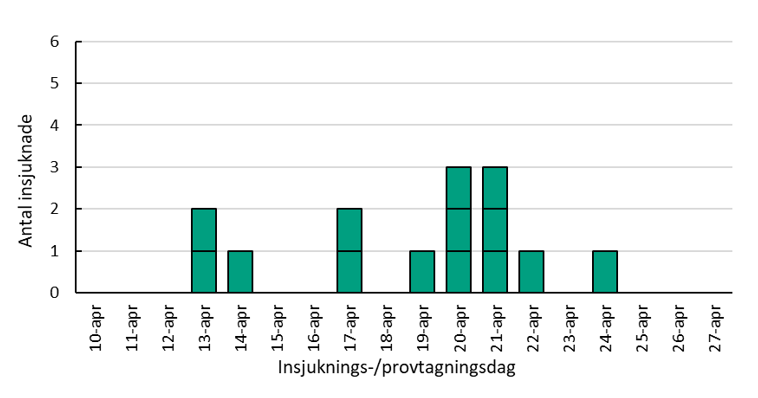
During the period 13 April to 24 April, 14 cases fell ill in Salmonella Braenderup in 10 different regions in Sweden. The cases have been linked using whole genome sequencing (analysis of the bacterium’s genome). The ages vary from 0 to 91 years and ten of the cases are women. Affected infection control units, municipalities, the National Food Administration and the Swedish Public Health Agency are jointly investigating the outbreak to identify the source of infection that is suspected to be a food that has been widely distributed in Sweden. The investigation interviews the cases of what they ate the week before falling ill, with the aim of identifying common suspicious foods.

Figure. Inhalation curve for Salmonella Braenderup (n = 14), 2021-05-06.

The bar chart shows that the fourteen outbreak cases have fallen ill between 13-24 April 2021.

USA – Fresh, organic produce common source of E. coli O157 infections in 7 children

Food Poison Journal

Public Health is investigating a new cluster of seven children infected with Shiga toxin-producing E. coli (also known as STEC) in King County. All cases are currently under 15 years of age, and three are under 5 years of age. Cases have been reported during April 22–May 1, 2021.

Our investigation is ongoing. We have identified multiple types of fresh produce, mostly organic, in common among the majority of cases but cannot yet rule out other possibilities. We are still uncertain if these cases share the same source of their infection or not. Updates will continue to be posted when more information is available.

Denmark – Legionnaires’ disease in Denmark in 2020

SSI

Legionella_Plate_01    CDC legionella

278 cases of legionnaires’ disease were detected in Denmark in 2020. Of these, 94.6% had been infected in Denmark. That is the highest number ever.

The Statens Serum Institut (SSI) has issued the annual report on how many cases of Legionnaires’ disease (LS) were found in Denmark in 2020.

A total of 278 cases of LS, also known as legionella pneumonia, were detected. Of these, 165 were men (59.4%) and 113 women (40.6%).

Out of these, 39 patients died within 30 days after the disease had broken out or they had been hospitalized. It gives a mortality rate of 14%.

Almost 95% infected in Denmark

Out of the 278, 263 people were infected in Denmark. This corresponds to 94.6%. This is an increase of 25% compared to the average for the last three years, and thus the highest number ever.

“The increase in the number of infected in Denmark may be related to a higher test activity in 2020. It may be due to the fact that many hospitalized patients with suspected covid-19 have also been examined for legionella infection,” says head of department Søren Anker Uldum from SSI.

15 infected on travel

There are only 15 cases (5.4%) where people in 2020 were infected with LS when traveling abroad. In 9 cases, it was while traveling in Europe. 5 were infected while traveling in Asia and 1 traveling to the American continent.

The proportion of travel-related LS cases is usually 20-25%

“Due to the extensive travel restrictions in 2020 due to the Covid-19 pandemic, there has been very limited travel activity. This is probably the reason for the few travel-associated legionella cases in 2020 ”, says Søren Anker Uldum.

Read more

You can read more about Legionnaires’ disease here.

You can also see the annual statement for legionnaires’ disease in Denmark in 2020 here .

Research – Identification of Microorganisms from Several Surfaces by MALDI-TOF MS: P. aeruginosa Is Leading in Biofilm Formation

MDPI

New ecological trends and changes in consumer behavior are known to favor biofilm formation in household appliances, increasing the need for new antimicrobial materials and surfaces. Their development requires laboratory-cultivated biofilms, or biofilm model systems (BMS), which allow for accelerated growth and offer better understanding of the underlying formation mechanisms. Here, we identified bacterial strains in wildtype biofilms from a variety of materials from domestic appliances using matrix-assisted laser desorption/ionization-time of flight mass spectroscopy (MALDI-TOF-MS). Staphylococci and pseudomonads were identified by MALDI-TOF-MS as the main genera in the habitats and were analyzed for biofilm formation using various in vitro methods. Standard quantitative biofilm assays were combined with scanning electron microscopy (SEM) to characterize biofilm formation. While Pseudomonas putida, a published lead germ, was not identified in any of the collected samples, Pseudomonas aeruginosa was found to be the most dominant biofilm producer. Water-born Pseudomonads were dominantly found in compartments with water contact only, such as in detergent compartment and detergent enemata. Furthermore, materials in contact with the washing load are predominantly colonized with bacteria from the human. View Full-Text

Research – In-Plant Validation of Novel On-Site Ozone Generation Technology (Bio-Safe) Compared to Lactic Acid Beef Carcasses and Trim Using Natural Microbiota and Salmonella and E. coli O157:H7 Surrogate Enumeration

MDPI

The purpose of this study was to evaluate the antimicrobial efficacy of an aqueous ozone (Bio-Safe) treatment andtech lactic acid solutions on natural microbiota and E. coli O157:H7 and Salmonella surrogates on beef carcasses and trim in a commercial beef processing plant. For every repetition, 40 carcass and 40 trim swabs (500 cm2) were collected. Samples were taken using EZ-ReachTM swabs, and plated into aerobic plate count (APC), coliform, and E. coli PetrifilmTM for enumeration. In addition, a five-strain cocktail (MP-26) of E. coli surrogates was inoculated onto trim. For every trim surrogate repetition, 30 trim pieces were sampled after attachment and after ozone intervention. Samples were diluted and counts were determined using the TEMPO® system for E. coli enumeration. Ozone and lactic acid interventions significantly reduced (p < 0.003) bacterial counts in carcasses and trim samples. Moreover, lactic acid further reduced APC and coliforms in trim samples compared to ozone intervention (p < 0.009). In the surrogate trials, ozone significantly reduced (p < 0.001) surrogate concentration. Historical data from the plant revealed a reduction (p < 0.001) of presumptive E. coli O157:H7 in trim after a full year of ozone intervention implementation. The novel technology for ozone generation and application as an antimicrobial can become an alternative option that may also act synergistically with existing interventions, minimizing the risk of pathogens such as Salmonella and E. coli O157:H7. View Full-Text

Research -Genome sequencing reveals how salmonella carves out a niche in pork production

Phys Org

Salmonella kswfoodworld

Variants of concern (VOCs) and variants of interest (VOIs) have become familiar terms due to the current pandemic, but variants of familiar pathogens such as salmonella also present a threat to human and animal health.

To better understand the different threats these variants pose, a collaboration led by Professor Rob Kingsley from the Quadram Institute and Professor Mark Stevens from the Roslin Institute working with scientists from the Earlham Institute has focused on common variants of  present in  in the UK. Their findings, published recently in the journal Communications Biology, has shown that despite being extremely closely related, variants can have very different effects on the health of the pig and also on the risks they pose to .

Salmonella Typhimurium is one of the most common types of salmonella. It is a major cause of human gastroenteritis, notably from consuming undercooked pork products or as a result of cross-contamination of foods consumed raw. This bacterial pathogen is also a concern to the pork industry as it can affect the health, productivity and welfare of pigs. Salmonella Typhimurium is relatively common in pig herds globally, and processes implemented in abattoirs are designed to prevent contamination of meat destined for the food chain.

Research – A cold soak lowers the risk of salmonella growth on ‘sprouted’ foods

Phys Org

Soaking “sprouted” foods in cold water, rather than the more common practice of soaking at ambient temperature, lowers the risk of salmonella growth on these increasingly popular healthy snack foods, according to an Oregon State University study.

The study, published in Food Protection Trends, demonstrates the risk of “sprouting” practices and presents practical strategies to improve safety of these raw foods, said Joy Waite-Cusic, associate professor of food safety systems in OSU’s College of Agricultural Sciences.

“If this soaking phase happens at ambient temperature, then there is a significant food safety problem,” said Waite-Cusic, who is also OSU Extension’s statewide specialist for home food safety and food preservation in the College of Public Health and Human Sciences. “This study provides regulators with clear guidance on the risks associated with this new category of ‘sprouted’ products.”