Category Archives: Pathogen

Research – From chicken to salad: Cooking salt as a potential vehicle of Salmonella spp. and Listeria monocytogenes cross-contamination

PubMed

Epidemiological studies show that improper food handling practices at home account for a significant portion of foodborne illness cases. Mishandling of raw meat during meal preparation is one of the most frequent hazardous behaviours reported in observational research studies that potentially contributes to illness occurrence, particularly through the transfer of microbial pathogens from the raw meat to ready-to-eat (RTE) foods. This study evaluated the transfer of two major foodborne pathogens, Salmonella enterica and Listeria monocytogenes, from artificially contaminated chicken meat to lettuce via cooking salt (used for seasoning) during simulated domestic handling practices. Pieces of chicken breast fillets were spiked with five different loads (from ca. 1 to 5 Log CFU/g) of a multi-strain cocktail of either S. enterica or L. monocytogenes. Hands of volunteers (gloved) contaminated by handling the chicken, stirred the cooking salt that was further used to season lettuce leaves. A total of 15 events of cross-contamination (three volunteers and five bacterial loads) were tested for each pathogen. Immediately after the events, S. enterica was isolated from all the cooking salt samples (n = 15) and from 12 samples of seasoned lettuce; whereas L. monocytogenes was isolated from 13 salt samples and from all the seasoned lettuce samples (n = 15). In addition, S. enterica and L. monocytogenes were able to survive in artificially contaminated salt (with a water activity of 0.49) for, at least, 146 days and 126 days, respectively. The ability of these foodborne pathogens to survive for a long time in cooking salt, make it a good vehicle for transmission and cross-contamination if consumers do not adopt good hygiene practices when preparing meals.
Research – Public Health Risk of Foodborne Pathogens in Edible African Land Snails, Cameroon

CDC

In tropical countries, land snails are an important food source; however, foodborne disease risks are poorly quantified. We detected Campylobacter spp., Yersinia spp., Listeria spp., Salmonella spp., or Shiga-toxigenic Escherichia coli in 57%–86% of snails in Cameroon. Snail meat is a likely vector for enteric diseases in sub-Saharan Africa countries.

Research – Antimicrobial Susceptibility and Molecular Characterization of Escherichia coli Recovered from Milk and Related Samples

MDPI

There is a rising concern about illnesses resulting from milk consumption due to contamination by pathogenic microorganisms including Escherichia coli. This study examined the occurrence and antimicrobial susceptibility of E. coli isolated from cow milk and related samples. Furthermore, partial sequencing was done to ascertain the genetic relatedness and possible cross contamination among the samples. In all, 250 samples, that is, 50 each of raw milk, cow teat, milkers’ hands, milking utensils, and fecal matter of cows, were cultured for the identification of E. coli. E. coli was detected in 101/250 samples (40.4%). Milk and fecal samples recorded the highest percentages of 68.0% and 66.0%, respectively. Forty-two (42) E. coli strains examined for antimicrobial resistance showed an overall 25.5% resistance, 15.0% intermediate resistance, and 59.5% susceptibility. The isolates had a high level of resistance to teicoplanin (100.0%), but were susceptible to chloramphenicol (95.2%) and azithromycin (92.9%). The Multiple Antibiotic Resistance (MAR) index pattern ranged from 0.1 to 0.5, and 40.5% exhibited multiple drug resistance. The E. coli strains formed 11 haplotypes, and a phylogenic tree analysis showed relatedness among the isolates in other African countries. This observation is an indication of cross contamination among the milk and its related samples. View Full-Text

Research – Efficacy of 405 nm Light-Emitting Diode Illumination and Citral Used Alone and in Combination for Inactivation of Vibrio parahaemolyticus on Shrimp

MDPI

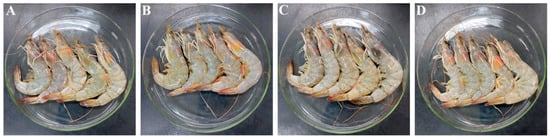
Vibrio parahaemolyticus is a widely distributed pathogen, which is frequently the lead cause of infections related to seafood consumption. The objective of the present study was to investigate the antimicrobial effect of the combination of 405 nm light-emitting diode (LED) and citral on V. parahaemolyticus. The antimicrobial effect of LED illumination and citral was evaluated on V. parahaemolyticus not only in phosphate-buffered saline (PBS) but also on shrimp. Quality changes of shrimp were determined by sensory evaluation. Changes in bacteria cell membrane morphology, cell membrane permeability, cell lipid oxidation level, and DNA degradation were examined to provide insights into the antimicrobial mechanism. The combination of LED treatments and citral had better antimicrobial effects than either treatment alone. LED combined with 0.1 mg/mL of citral effectively reduced V. parahaemolyticus from 6.5 log CFU/mL to below the detection limit in PBS. Combined treatment caused a 3.5 log reduction of the pathogen on shrimp within 20 min and a 6 log reduction within 2 h without significant changes in the sensory score. Furthermore, combined LED and citral treatment affected V. parahaemolyticus cellular morphology and outer membrane integrity. The profile of the comet assay and DNA fragmentation analysis revealed that combination treatment did not cause a breakdown of bacterial genomic DNA. In conclusion, LED may act synergistically with citral. They have the potential to be developed as novel microbial intervention strategies. View Full-Text

Research – Simulation and identification of foodborne outbreaks in a large supermarket consumer purchase dataset

Nature.com

Foodborne outbreaks represent a significant public health burden. Outbreak investigations are often challenging and time-consuming, and most outbreak vehicles remain unidentified. The development of alternative investigative strategies is therefore needed. Automated analysis of Consumer Purchase Data (CPD) gathered by retailers represents one such alternative strategy. CPD-aided investigations do not require trawling questionnaires to create a hypothesis and can provide analytical measures of association by direct data analysis. Here, we used anonymized CPD from 920,384 customers enrolled in Norway’s largest supermarket loyalty program to simulate foodborne outbreaks across a range of different parameters and scenarios. We then applied a logistic regression model to calculate an odds ratio for each of the different possible food vehicles. By this method, we were able to identify outbreak vehicles with a 90% accuracy within a median of 6 recorded case-patients. The outbreak vehicle identification rate declined significantly when using data from only one of two retailers involved in a simulated outbreak. Performance was also reduced in simulations that restricted analysis from product ID to the product group levels accessible by trawling questionnaires. Our results show that—assuming agreements are in place with major retailers—CPD collection and analysis can solve foodborne outbreaks originating from supermarkets both more rapidly and accurately than than questionnaire-based methods and might provide a significant enhancement to current outbreak investigation methods.

Research – Decontamination of Pathogenic and Spoilage Bacteria on Pork and Chicken Meat by Liquid Plasma Immersion

MDPI

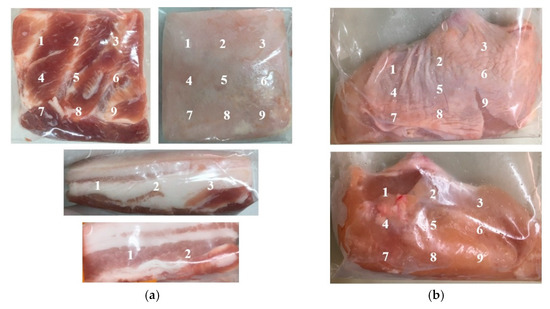
In this research, we aimed to reduce the bacterial loads of Salmonella Enteritidis, Salmonella Typhimurium, Escherichia coliCampylobacter jejuniStaphylococcus aureus, and Pseudomonas aeruginosa in pork and chicken meat with skin by applying cold plasma in a liquid state or liquid plasma. The results showed reductions in S. Enteritidis, S. Typhimurium, E. coli, and C. jejuni on the surface of pork and chicken meat after 15 min of liquid plasma treatment on days 0, 3, 7, and 10. However, the efficacy of the reduction in S. aureus was lower after day 3 of the experiment. Moreover, P. aeruginosa could not be inactivated under the same experimental conditions. The microbial decontamination with liquid plasma did not significantly reduce the microbial load, except for C. jejuni, compared with water immersion. When compared with a control group, the pH value and water activity of pork and chicken samples treated with liquid plasma were significantly different (p ≤ 0.05), with a downward trend that was similar to those of the control and water groups. Moreover, the redness (a*) and yellowness (b*) values (CIELAB) of the meat decreased. Although the liquid plasma group resulted in an increase in the lightness (L*) values of the pork samples, these values did not significantly change in the chicken samples. This study demonstrated the efficacy of liquid plasma at reducing S. Enteritidis, S. Typhimurium, E. coliC. jejuni, and S. aureus on the surface of pork and chicken meat during three days of storage at 4–6 °C with minimal undesirable meat characteristics. View Full-Text

Research – PDIA, an Iminosugar Compound with a Wide Biofilm Inhibitory Spectrum Covering Both Gram-Positive and Gram-Negative Human Bacterial Pathogens

MDPI

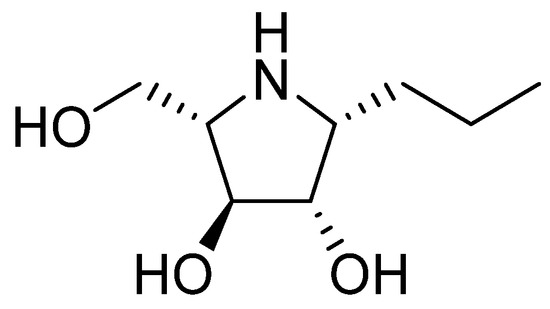
Many difficult-to-treat human infections related to catheters and other indwelling devices are caused by bacteria residing in biofilms. One of the key properties of microorganisms residing in a biofilm is decreased susceptibility towards antimicrobial agents. Therefore, many different approaches have been researched to destroy or inhibit biofilm production by bacteria. Different iminosugars (IS) were reported to inhibit biofilm formation in S. mutansS. aureus, and P. aeruginosa. The aim of this study was to look for a spectrum of the activity in one of these IS. The iminosugar PDIA beta-1-C-propyl-1,4-dideoxy-1,4-imino-L-arabinitol was tested in vitro at the same concentration against 30 different strains of the most important Gram-negative and Gram-positive human pathogens looking for their biofilm production and viability at different time intervals. It appeared that PDIA inhibited biofilm production of Enterobacter spp., P. aeruginosaEnterococcus spp. and S. aureus in 8 h, and Klebsiella spp., Acinetobacter spp. and S.epidermidis in 24 h. PDIA caused no growth inhibition of the tested bacteria at a concentration of 0.9 mM. Our results indicate a broad-spectrum biofilm inhibitory activity of PDIA. which may be the basis for future application studies that will help in control of the associated device and biofilm-related infections caused by a wide spectrum of the causative agents. View Full-Text

Research – Inactivation of viruses related to foodborne infections using cold plasma technology

Wiley Online

Globally, there is a rise in day-to-day demand for minimally processed foods to supply nutritious, wholesomeness and safe foods to the consumers. Contamination of food by pathogens is a serious problem resulting in several outbreaks. Food pathogens like molds, bacteria were detectable and can be inactivated. The virus detection in foods is always a difficult task as their presence could not alter any noticeable change in the quality. Norovirus, Hepatitis A viruses are well-known for their foodborne outbreaks and illnesses. Enveloped viruses are resistant and have the stability to the current traditional preservation methods due to the presence of a protective capsid layer and an envelope. The current thermal processing has shown significant effect on the product quality. The use of chemical disinfestation compounds is not suitable for food commodities. There is a need for alternative nonthermal food processing technologies for decontamination of food and food packages and preserving the food quality as well. Cold plasma is one of the emerging nonthermal, chemical-free residues, and eco-friendly technology widely being applied to the different food sectors. The main antiviral mechanism is the disruption of the capsid protein layer, the oxidation and denaturation of viral proteins. The method has also caused damage to the envelope layer and genetic material. This review focuses on cold plasma inactivation efficiency on different viruses.

Research – Temperature, Time, and Type, Oh My! Key Environmental Factors Impacting the Recovery of Salmonella Typhimurium, Listeria monocytogenes, and Tulane Virus from Surfaces 

Journal of Food Protection

Environmental monitoring (EM) programs are designed to detect the presence of pathogens in food manufacturing environments with the goal of preventing microbial contamination of food. Nevertheless, limited knowledge exists regarding the influence of environmental conditions on microbial recovery during EM. This study utilizes a commercially-available polyurethane foam (PUF) EM tool to determine the influence of environmental factors on the recovery of foodborne pathogens. The specific objectives of this study were to determine if environmental conditions and surface composition impact the recovery of sought-after microorganisms found in food processing environments. These data are compared across 1) microorganism type, 2) surface type, 3) environmental temperature and relative humidity, and 4) exposure time. Two bacteria ( Listeria monocytogenes , Salmonella Typhimurium) and one human norovirus surrogate (Tulane virus [TV]) were inoculated onto three non-porous surfaces (polypropylene, stainless steel, neoprene). Surfaces were held in an environmental chamber for 24 or 72 h at 30°C/30%, 6°C/85%, and 30°C/85% relative humidity (RH). Data indicate that microbial recovery from environmental surfaces significantly (p ≤ 0.05) varies by microorganism type, environmental conditions, and exposure time. For instance, all microorganisms were significantly different from each other, with the greatest mean log reduction being TV and the lesser reduction being L. monocytogenes at 4.94 ± 1.75 log 10 PFU/surface and 2.54 ± 0.91 log 10 CFU/surface, respectively. Overall, these data can be used to improve the effectiveness of EM programs and underscores the need to better comprehend how EM test results are impacted by food manufacturing environmental conditions.

Research – Inactivation of Foodborne Pathogens on Inshell Walnuts by UV-C Radiation

Journal of Food Protection

Inshell walnuts could be contaminated with pathogens through direct contact or cross-contamination during harvesting and postharvest hulling, drying, or storage. This study aimed to assess the efficacy of ultraviolet–C (UV–C) radiation in inactivating foodborne pathogens on inshell walnut surfaces. Intact inshell walnut surfaces were inoculated separately with Salmonella spp., Escherichia coli O157:H7, Listeria monocytogenes , and Staphylococcus aureus , and then subjected to UV–C radiation at doses of 29.4, 147.0, 294.0, 588.0, and 882.0 mJ/cm 2 . UV–C radiation inactivated the inoculated pathogens in a dose-dependent manner, and a tailing effect was observed for the inactivation of pathogens. UV–C radiation at 29.4 mJ/cm 2 and 882.0 mJ/cm 2 reduced the populations of  S . Enteritidis PT 30, S . Typhimurium, E. coli O157:H7, L. monocytogenes , and S. aureus on inshell walnut surfaces by 0.82–1.25 and 1.76–2.41 log CFU/walnut, respectively. Scanning electron photomicrographs showed pathogenic bacterial cells in the cracks and crevices of the inshell walnut surface, and the shielding of microorganisms by the cracks and crevices may have contributed to the tailing effect observed during UV–C inactivation. No significant changes ( p  > 0.05) were found in walnut lipid oxidation following UV–C radiation at doses up to 882.0 mJ/cm 2 . Together, the results indicate that UV–C radiation could be a potential technology for reducing the populations of various foodborne pathogens on inshell walnut surfaces while maintaining the quality of walnuts.