Category Archives: outbreak

USA – Salmonella Outbreak Linked to Flour

CDC

Investigators are working to identify a specific brand of flour linked to this outbreak. However, any raw (unbaked) flour can have germs, like Salmonella. Do not eat or play with uncooked flour, dough, or batter.

Fast Facts
  • Illnesses: 12
  • Hospitalizations: 3
  • Deaths: 0
  • States: 11
  • Recall: No
  • Investigation status: Active
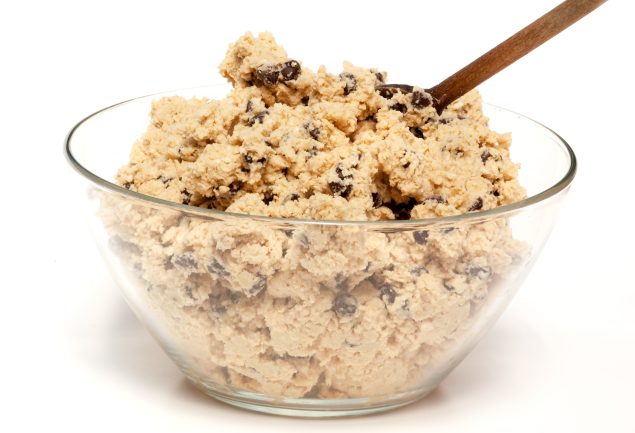
Bowl of cookie dough with a wooden spoon and chocolate chips
Salmonella in Raw Flour

Flour doesn’t look like a raw food, but most flour is raw. This means that it hasn’t been treated to kill germs that cause food poisoning. Any raw (unbaked) flour used to make dough or batter can be contaminated with germs like Salmonella, but Salmonella germs are killed when flour is cooked or baked. You can get sick after eating or tasting raw dough or batter. Children can get sick from handling or eating raw dough used for crafts or play clay.

Source of the Outbreak

Most people reported eating raw dough or batter made with flour before they got sick. Flour was the only common ingredient in the raw dough or batter people reported eating. Investigators are working to identify a specific brand of flour linked to illnesses.

What You Should Do
  • Do not eat raw dough or batter – even a small amount can make you or your child sick
    • Bake or cook food made with raw flour, like cookie dough or cake batter, before eating it.
    • Follow the recipe or package instructions for cooking or baking. Use the temperature and cooking time given in the recipe or instructions.
    • Buy heat-treated flour to use in recipes for homemade playdough.
  • Clean
    • Wash any bowls, utensils, and surfaces that touched raw flour with warm water and soap.
    • Wash your hands with warm water and soap before and after using raw flour.
  • Separate
    • Keep raw flour, dough, and batter separate from foods that won’t be cooked.
  • Call a healthcare provider right away if you or your child have:
    • Diarrhea and a fever higher than 102°F
    • Diarrhea for more than 3 days that is not improving
    • Bloody diarrhea
    • So much vomiting that you cannot keep liquids down
    • Signs of dehydration, such as:
      • Not peeing much
      • Dry mouth and throat
      • Feeling dizzy when standing up

Norovirus confirmed on three recent cruises

Outbreak News Today

Celebrity Cruises’ Celebrity Equinox’s March 9–March 18, 2023 voyage had 136 illnesses among passengers and crew.

Celebrity Cruises’ Celebrity Constellation March 6–March 17, 2023 voyage had 96 passengers and crew sickened with norovirus.

Princess Cruises’ Ruby Princess February 26–March 5, 2023 voyage had 318 cases of vomiting and diarrhea from norovirus.

In 2023 to date, nine cruise ship voyages have had outbreaks investigated by the CDC. Four had norovirus as the etiology, while the other five remain unknown.

Norovirus is a highly contagious viral illness that often goes by other names, such as viral gastroenteritis, stomach flu, and food poisoning.

The symptoms include nauseavomitingdiarrhea, and some stomach cramping. Sometimes people additionally have a low-grade fever, chills,headache, muscle aches, and a general sense of tiredness. The illness often begins suddenly, and the infected person may feel very sick. In most people, the illness is self-limiting with symptoms lasting for about 1 or 2 days. In general, children experience more vomiting than adults do.

Research – Rare Recombinant GI.5[P4] Norovirus That Caused a Large Foodborne Outbreak of Gastroenteritis in a Hotel in Spain in 2021 – Food Handler

Journals ASM

Noroviruses are among the most important causes of acute gastroenteritis (AGE). In summer 2021, a large outbreak of norovirus infections affecting 163 patients, including 15 norovirus-confirmed food handlers, occurred in a hotel in Murcia in southeast Spain. A rare GI.5[P4] norovirus strain was identified as the cause of the outbreak.
The epidemiological investigation determined that norovirus transmission might have been initiated through an infected food handler. The food safety inspection found that some symptomatic food handlers continued working during illness. Molecular investigation with whole-genome and ORF1 sequencing provided enhanced genetic discrimination over ORF2 sequencing alone and enabled differentiation of the GI.5[P4] strains into separate subclusters, suggesting different chains of transmission. These recombinant viruses have been identified circulating globally over the last 5 years, warranting further global surveillance.
IMPORTANCE Due to the large genetic diversity of noroviruses, it is important to enhance the discriminatory power of typing techniques to differentiate strains when investigating outbreaks and elucidating transmission chains. This study highlights the importance of (i) using whole-genome sequencing to ensure genetic differentiation of GI noroviruses to track chains of transmission during outbreak investigations and (ii) the adherence of symptomatic food handlers to work exclusion rules and strict hand hygiene practices. To our knowledge, this study provides the first full-length genome sequences of GI.5[P4] strains apart from the prototype strain.

St Kitts and Nevis updates guidance on acute gastro outbreak – Norovirus

Loop News

Food Borne Illness - Norovirus -CDC Photo

St Kitts and Nevis has once again addressed the issue of acute gastroenteritis on island.

The St Kitts and Nevis Information Service (SKNIS) says according to a report from the Chief Medical Officer, over the past few weeks several children and adults in the Federation have been diagnosed with acute gastroenteritis (AGE).

It notes this outbreak of AGE is not unique to St Kitts and Nevis, and that a similar trend is observed in several CARICOM member states.

It is reported the Caribbean Public Health Agency (CARPHA) has noted a multi-country increase in reported cases of AGE in children and adults and based on epidemiological information, the most likely cause of this AGE multi-country outbreak is Norovirus.

Norovirus was confirmed on more than one of the cruise ships travelling in the Caribbean and the UK Health Security Agency reports a sharp increase in confirmed cases of norovirus in recent weeks.

Norovirus can only be confirmed through laboratory testing.

Samples were sent off to CARPHA for analysis on Monday, March 27, 2023.

USA – Listeria Outbreak Linked to Deli Meat and Cheese

CDC

This outbreak is over. Even when there are no ongoing Listeria outbreaks, people who are pregnant, aged 65 or older, or have a weakened immune system should reheat deli meat and deli-sliced cheese to an internal temperature of 165°F or until steaming hot to kill any germs.

Fast Facts
  • Illnesses: 16
  • Hospitalizations: 13
  • Deaths: 1
  • States: 6
  • Recall: No
  • Investigation status: Closed
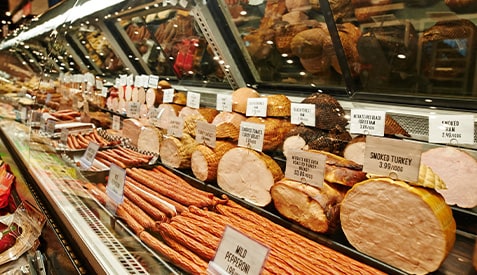
Store with deli meat and cheese on shelves
Listeria in Deli Meat and Deli-Sliced Cheese

Deli meats (cold cuts, lunch meats, hot dogs, and pâtés) and deli-sliced cheeses are known sources of Listeria illnesses. This is because Listeria can easily spread among food, food preparation surfaces like deli slicers, and hands. Listeria is a hardy germ that can be difficult to fully remove once it is present in a deli or a food processing facility. It can survive and grow at cold temperatures in a refrigerator.

Outbreak Investigation Summary

Data showed that deli meat and cheese bought at deli counters in multiple states were the likely sources of this outbreak.

  • Of 12 people interviewed, 11 reported eating meat or cheese from deli counters.
  • The outbreak strain of Listeria was found in open packages of mortadella, ham, and salami sliced at the deli, as well as a deli in Brooklyn, New York.

A single deli or food source was not identified. It is difficult for investigators to identify the specific source of outbreaks linked to deli meats and cheeses. This is because Listeria spreads easily between food and the deli environment, and it can live for a long time in deli display cases and on equipment. A contaminated food likely introduced the outbreak strain of Listeria into delis in multiple states.

Research – Multi-country outbreak of Salmonella Virchow ST16 infections linked to the consumption of meat products containing chicken meat

EFSA

Abstract

Since June 2017, a persistent cross-border outbreak of Salmonella Virchow ST16 has been ongoing in five European Union/European Economic Area (EU/EEA) countries, the United Kingdom (UK), and the United States (US). A total of 210 cases have been reported from the following countries: Denmark (2), France (111), Germany (26), Ireland (4), the Netherlands (34), the UK (32), and the US (1). Among the interviewed cases (55), hospitalisation rates ranged from 16.7% (2/12) in the UK, to 29.4% (5/17) and 38.5% (10/26) in France and Germany, respectively. No deaths have been reported. A majority of cases have been linked to local restaurants serving kebab meat. The number of confirmed cases represents only a small proportion of all infections in the EU/EEA, partly due to the varying sequencing capacities of countries.

The comparison of the representative outbreak strains with the available genome profiles of S. Virchow ST16 from non-human isolates, revealed that most of the matching isolates belonged to broiler meat and broiler-related environments, thereby supporting the hypothesis of chicken meat as a vehicle of infections.

The available information from case interviews, traceback investigations, and whole genome sequencing (WGS) cluster analysis, showed that kebab meat products containing contaminated chicken meat are the likely vehicles of infections, and that the clone has been circulating in the EU poultry meat production chain at least in France, Germany, and the Netherlands. In the absence of batch numbers of the contaminated kebab products and related Salmonella testing information, the source(s) of the infections could not be established.

New infections are likely to occur in the EU/EEA affecting any age group, until further investigations are performed to identify the source(s) and point(s) of contamination along the chicken meat production chain, including the primary production upstream lines. This will allow appropriate control measures to be implemented.

USA – FDA Core Investigation Table Update

FDA

What’s New

  • A new outbreak of Salmonella Infantis (ref #1141) linked to a not yet identified product has been added to the table. FDA has initiated traceback. This investigation is ongoing and additional information will be provided as it becomes available.
  • For the Salmonella Hartford outbreak in a not yet identified food, the case count has increased from 50 to 53 cases.
Date
Posted
Ref Pathogen
or
Cause of
Illness
Product(s)
Linked to
Illnesses

(if any)
Total
Case
Count

Status
3/29/2023 1141 Salmonella Infantis Not Yet
Identified
12 Active
3/8/2023 1144 Salmonella Hartford Not Yet
Identified
53 Active
3/1/2023 1143 Hepatitis A Virus Frozen Organic
Strawberries
See
Outbreak
Advisory
Active
2/15/2023 1123 Listeria
monocytogenes
Not Yet
Identified
See
CDC
Investigation
Notice
Active
11/9/2022 1127 Listeria
monocytogenes
Enoki
Mushrooms
See
Outbreak
Advisory
Active

USA – Stewart Parnell looks for better Habeas in Atlanta than he just had in Mid-Georgia – Peanut Butter Salmonella Outbreak

Food Safety News

A decade after his indictment and a year after United States Magistrate Judge Thomas Q. Langstaff denied his petition for early release, one-time peanut butter mogul Stewart Parnell still has one more card to play.

Parnell, 68, has 15 years to run on his sentence imposed after a 2014 jury conviction for numerous federal felonies associated with the deadly 2008-09 multistate Salmonella outbreak traced to his Peanut Corporation of America peanut processing facility in Blakely, GA. He is serving his time at the federal correctional facility at Hazelton, WV.

Parnell begins this year with a new appeal of his Habeas corpus petition in the U.S. Court of Appeals for the 11th U.S. Circuit in Atlanta. A Habeas petition claims unlawful detention or imprisonment because of constitutional infractions. It can open cell doors,

Research – A foodborne outbreak of Campylobacteriosis at a wedding – Melbourne, Australia, 2022

1 Health

Abstract

Campylobacter is the most common bacterial cause of foodborne gastroenteritis in Australia; how-ever, outbreaks caused by the pathogen are relatively uncommon. In March 2022, the Victorian Department of Health was notified of a gastrointestinal illness in 20 guests following attendance at a wedding reception.

Two of these individuals were notified with laboratory-confirmed campylobacteriosis, and an investigation was undertaken to identify the source of the infection and implement strategies to prevent further illness. A case-control study was conducted to determine the likely source of infection. Cases were defined as attendees of the wedding reception, with onset of diarrhoea and/or abdominal cramping 1–10 days after attending the function. Controls were randomly selected from the remaining list of non-ill guests. Cases and controls were interviewed using a standardised, menu-based questionnaire.

Food preparation processes were documented, and food samples collected.

A total of 29 wedding guests met the case definition. Cases reported onset of illness 2–5 days fol-lowing the wedding and major symptoms included abdominal cramping (100%), diarrhoea (90%), headache (79%), and fever (62%). Two cases were hospitalised, one with ongoing secondary neu-rological sequelae.

Illness was significantly associated with consumption of a duck breast brioche canapé containing duck liver parfait (odds ratio = 2.85; 95% confidence interval: 1.03–7.86). No leftover food samples were available for testing.The investigation found that the duck canapé was the likely vehicle of infection. Consistent with the literature on Campylobacter transmission, it is likely that inadequate cooking of the duck liver for the parfait was the contributing factor that led to illness. This highlights the risks posed by undercooked poultry dishes, and shows that education of food handlers remains a priority.

UK reveals more sick in multi-country Salmonella outbreak

Food Safety News

The number of patients in a Salmonella outbreak in the United Kingdom has increased to more than 130.

It was previously reported that 81 people were sick in the UK as part of a multi-country Salmonella Mbandaka outbreak. As of early March, there are 132 UK cases, according to the Food Standards Agency (FSA).

Whole genome sequencing confirmed a microbiological link between ready-to-cook chicken breast manufactured in Ukraine, and cases in Finland, Estonia, and the UK. The chicken was supplied to the UK from Ukraine via the Netherlands, and a company in the Netherlands has recalled products sent to the UK. All items were for food service use and have been withdrawn from the UK market.

In May 2022, the UK reported 31 Salmonella Mbandaka cases with 25 from England and three each in Scotland and Wales with sample dates between Sept. 2021 and April 2022. Four were admitted to the hospital and one person died.

As of late 2022, Finland had 89 cases while a few patients also lived in the Czech Republic, Estonia, France, Germany, Ireland, the Netherlands, and Israel. Cases occurred in all age groups.

Ready-to-eat (RTE) chicken products or fresh chicken meat, such as those used in sandwiches and wraps, were said to be the likely vehicles of infection, according to an assessment by the European Centre for Disease Prevention and Control (ECDC).

Finnish officials linked the suspected RTE products to an Estonian company, which received processed chicken meat from different suppliers.

ECDC said epidemiological data and microbiological evidence from whole genome sequencing of human isolates indicated there were several sources through different distribution chains.