RASFF – foodborne outbreak suspected to be caused by and Salmonella (presence /25g) in chilled vacuum-packed cooked sliced pork shoulder from Spain in France

RASFF – foodborne outbreak suspected to be caused by and Salmonella (presence /25g) in chilled vacuum-packed cooked sliced pork shoulder from Spain in France
Posted in food bourne outbreak, food contamination, Food Hygiene, Food Illness, Food Inspections, Food Micro Blog, Food Microbiology, Food Microbiology Blog, Food Pathogen, Food Poisoning, food recall, Food Safety, Food Safety Alert, Food Testing, foodborne outbreak, foodbourne outbreak, outbreak, RASFF, Salmonella, Uncategorized
“Although there is no intentional criminal behavior like there was in the Peanut Corporation of America case that sickened several hundred, killing nine, this hefty food safety fine for negligence, should clearly send a message to the restaurant industry,” said Marler Clark attorney, William Marler.
According to a US Attorney press release today, Chipotle Mexican Grill Inc. will pay $25 million to resolve criminal charges related to the company’s involvement in foodborne illness outbreaks that sickened more than 1,100 people between 2015 and 2018.
The $25 million criminal fine, the largest ever in a food safety case.
Chipotle was implicated in at least five foodborne illness outbreaks between 2015 and 2018 connected to restaurants in the Los Angeles area, Boston, Virginia, and Ohio. These incidents primarily stemmed from store-level employees’ failure to follow company food safety protocols at company-owned restaurants, including a Chipotle policy requiring the exclusion of employees who were sick or recently had been sick.
Posted in Clostridium perfringens, food bourne outbreak, food contamination, food handler, Food Hygiene, Food Illness, Food Inspections, Food Micro Blog, Food Microbiology, Food Microbiology Blog, Food Microbiology Research, Food Microbiology Testing, Food Pathogen, Food Poisoning, Food Poisoning Death, food recall, Food Safety, Food Safety Alert, Food Testing, Food Toxin, foodborne outbreak, foodbourne outbreak, Norovirus, outbreak, Research, Uncategorized
At least 5 people in New Jersey have been hospitalized after consuming romaine lettuce contaminated with E. coli micro organism, because the nationwide outbreak has now jumped to greater than 100 instances, the state well being division confirmed Thursday.
A complete of seven people from Atlantic, Burlington, Camden, Cumberland and Ocean counties have been contaminated with the possibly lethal pressure, which brought on 75,233 kilos of bagged salad merchandise in 22 states to be recalled in final month.
Posted in E.coli, food bourne outbreak, food contamination, Food Hygiene, Food Illness, Food Inspections, Food Micro Blog, Food Microbiology, Food Microbiology Blog, Food Microbiology Testing, Food Pathogen, food recall, Food Safety, Food Safety Alert, foodborne outbreak, foodbourne outbreak, outbreak, Uncategorized
More than 1,600 foodborne outbreaks were declared in France in 2018 affecting 14,700 people with two deaths, according to statistics published by the national public health agency.
A total of 1,630 illness outbreaks were reported involving 14,742 people, and 777 of them needed hospital treatment.
Santé Publique France said the number has gone up from 2017 when 1,310 outbreaks were recorded affecting 13,010 people.
The two people that died were more than 85 years old. The first death was because of microbiologically confirmed poisoning from Bacillus cereus. The second followed intoxication where Bacillus cereus and Clostridium perfringens were suspected.
Consumers should not eat and should check their refrigerators and throw away any recalled enoki mushrooms from Sun Hong Foods, Inc., Guan’s Mushroom Co., and H&C Food, Inc. because they may be contaminated with Listeria monocytogenes.
Restaurants and retailers should not sell or serve recalled enoki mushrooms distributed by Sun Hong Foods, Inc., Guan’s Mushroom Co., and H&C Food, Inc.
FDA recommends that anyone who received recalled products use extra vigilance in cleaning and sanitizing any surfaces and containers that may have come in contact with these products to reduce the risk of cross-contamination. Listeria can survive in refrigerated temperatures and can easily spread to other foods and surfaces.
At this time, high risk groups, including the elderly, people with weakened immune systems or chronic diseases, pregnant women and their newborn babies, should not eat enoki mushrooms from Korea (Republic of Korea), even if they were not part of the recalls.
Consumers, restaurants, retailers, and high risk groups should discard and not eat, sell, or serve enoki mushrooms if they cannot tell where they came from.
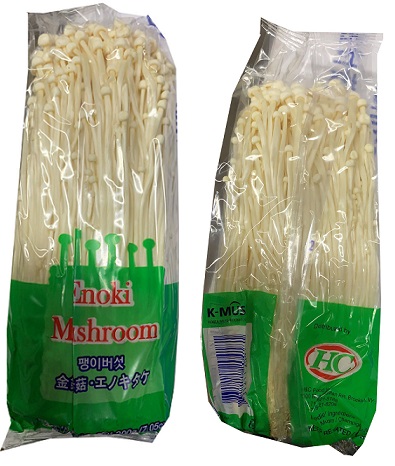
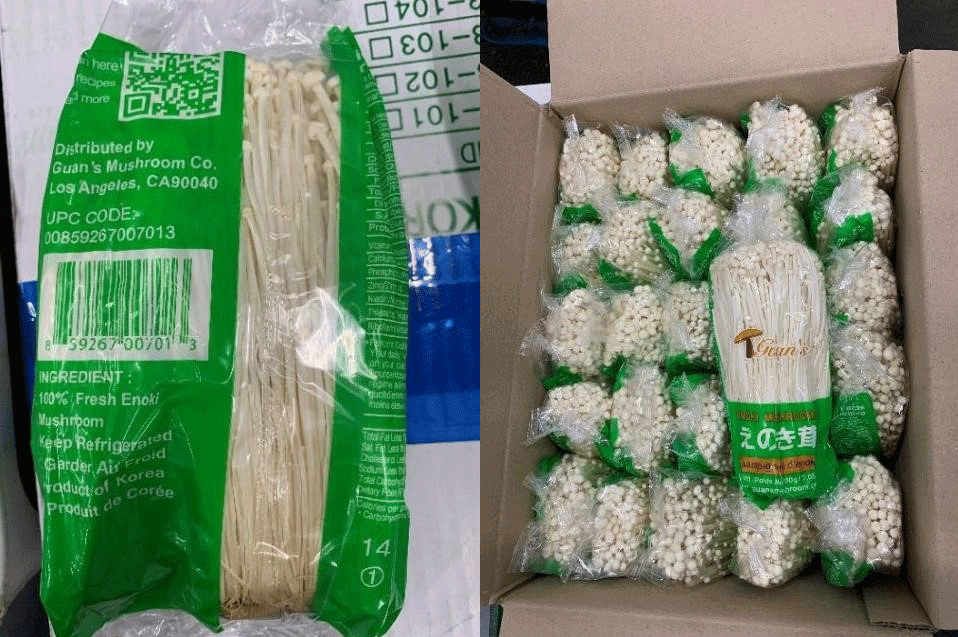
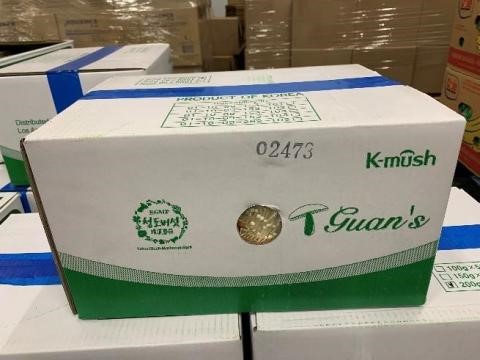


| Company | Size | UPC Code | Retailers* | Distribution* |
|---|---|---|---|---|
| Sun Hong Foods, Inc. | 200 g/ 7.05 oz. | 7 426852 625810 | J&L Supermarket, Jusgo Supermarket, ZTao Market, New Sang Supermarket, Galleria Market, Distributors | CA, FL, IL, OR, TX, WA |
| Guan’s Mushroom Co. | 200 g/ 7.05 oz. | 859267007013 | Sold to Distributors and Wholesalers | CA, NY, PA |
| H&C Food Inc. | 200 g/ 7.05 oz. | 831211204181 | Great Wall Supermarket | NY, MD, VA |
*This includes confirmed distribution information from companies; products could have been further distributed and sent to additional retailers and states.
FDA, CDC, and state and local partners are currently investigating a multistate outbreak of Listeria monocytogenes infections linked to enoki mushrooms. Enoki mushrooms are a long thin white mushroom, usually sold in clusters. They are especially popular in East Asian cuisine and are also known as enokitake, golden needle, futu, or lily mushrooms.
On April 7, 2020, H&C Foods Inc. recalled 200 g/7.05 oz packages of enoki mushrooms imported from Green Co. LTD of the Republic of Korea. FDA import samples of enoki mushrooms from Green Co. LTD tested positive for Listeria monocytogenes and on April 6, 2020, whole genome sequencing analysis determined that the Listeria monocytogenes found in the positive samples matched the outbreak strain. As a result, On April 7, 2020, Green Co. LTD was placed on Import Alert 99-23, which flags imported shipments from this firm for potential detention without physical examination. The FDA is encouraging the international community to consult the Import Alert.
The investigation is ongoing to determine the source of contamination and if additional products are linked to illness. Additional information will be provided as it becomes available.
Total Illnesses: 36
Hospitalizations: 30
Deaths: 4
Illness Onset Date Range: November 23, 2016 – December 13, 2019
States with Cases: AZ (2), CA (9), FL (2), HI (3), IN (1), KY (1), MA (2), MD (2), MI (1), MO (1), NC (1), NJ (1), NV (1), NY (4), RI (1), TN (1), VA (3)
Product Distribution*: CA, FL, IL, NY, MD, OR, PA, TX, VA, WA
*States with confirmed distribution; product could have been distributed further
Posted in FDA, food bourne outbreak, food contamination, food death, Food Hygiene, Food Illness, Food Inspections, Food Micro Blog, Food Microbiology, Food Microbiology Blog, Food Microbiology Testing, Food Pathogen, food recall, Food Safety, Food Safety Alert, Food Testing, foodborne outbreak, foodbourne outbreak, Listeria, Listeria monocytogenes, outbreak, Uncategorized
The Centers for Disease Control and Prevention (CDC) has updated the clover sprouts E. coli O103 outbreak that is associated with Jimmy John’s restaurants and Chicago Indoor Garden raw clover sprouts. Since the last update on February 26, 2020, 25 more patients who live in two states have been identified. Twenty-four of the new patients live in Utah, and Florida has been added to the state count.
Posted in E.coli, E.coli O103, food contamination, food handler, Food Hygiene, Food Illness, Food Inspections, Food Micro Blog, Food Microbiology, Food Microbiology Blog, Food Microbiology Testing, Food Pathogen, Food Poisoning, food recall, Food Safety, Food Safety Alert, Food Testing, Food Toxin, outbreak, STEC, STEC E.coli, Uncategorized
At least 36 people are sick in an enoki mushroom Listeria monocytogenes outbreak linked to product imported from Korea. The mushrooms were imported by Sun Hong Foods. The mushrooms were just recalled after a sample tested positive for Listeria monocytogenes by the Michigan Department of Agriculture and Rural Development. There is zero tolerance for Listeria monocytogenes contamination in ready to eat foods in this country.

Posted in food bourne outbreak, food contamination, food handler, Food Hygiene, Food Illness, Food Inspections, Food Micro Blog, Food Microbiology, Food Microbiology Blog, Food Microbiology Testing, Food Pathogen, food recall, Food Safety, Food Safety Alert, Food Testing, foodborne disease, Foodborne Illness, foodborne outbreak, foodbourne outbreak, Listeria, Listeria monocytogenes, outbreak, Uncategorized
A Salmonella outbreak linked to horse meat from Romania sickened 25 people in France this past year, according to a new report.
Eleven cases were men and 14 were women. They ranged from 2 to 90 years of age and the median was 68 years old.
In September 2019, the regional unit of Santé Publique France in the Hauts-de-France region was alerted to a spike in Salmonella Bovismorbificans notifications in Nord and Pas-de-Calais during the first two weeks of August, found by the National Reference Center for E. coli, Salmonella and Shigella at Institut Pasteur.
The 25 salmonellosis cases, belonging to the same genomic cluster, were identified between Aug. 4 and 26, 2019. Nine people needed hospital treatment and two had severe complications but none died.
Posted in food bourne outbreak, food contamination, Food Hygiene, Food Illness, Food Inspections, Food Micro Blog, Food Microbiology, Food Microbiology Blog, Food Microbiology Testing, Food Pathogen, food recall, Food Safety, Food Safety Alert, Food Testing, foodborne outbreak, foodbourne outbreak, outbreak, Salmonella, Uncategorized
USDA data on daily shipments of romaine lettuce can be used to determine which production regions are free from contamination during a foodborne illness outbreak. These data, reported by USDA’s Agricultural Marketing Service with a one- or two-day lag, provide essentially real-time information on produce shipped out to retailers. An analysis conducted by the USDA’s Economic Research Service (ERS) demonstrates how this information may allow FDA to rule out an entire production region as the source of contamination.
Leafy greens, including romaine lettuce, are the sixth most commonly consumed type of vegetable in the United States. From May to November, most romaine lettuce in the U.S. comes from California’s Central Coast region; from December to April, most comes from the Yuma, Ariz. region. Among the 29 outbreaks of Shiga-toxin producing Escherichia coli O157:H7 (E. coli) associated with romaine lettuce between 1998 and 2018, illnesses peaked in April and October, which corresponds with the tail end of harvest season in the two main romaine growing regions. In 2017 and 2018, there were three multistate, multinational foodborne illness E. coli outbreaks associated with the consumption of romaine lettuce that occurred at the tail end of either Yuma, Ariz., or California’s Central Coast production seasons. These outbreaks led to a total of 376 illnesses, 158 hospitalizations, and 7 deaths.
Posted in E.coli, E.coli O157, E.coli O157:H7, food bourne outbreak, food contamination, Food Hygiene, Food Illness, Food Inspections, Food Micro Blog, Food Microbiology, Food Microbiology Blog, Food Microbiology Research, Food Microbiology Testing, Food Pathogen, Food Poisoning, food recall, Food Safety, Food Safety Alert, Food Testing, Food Toxin, foodborne outbreak, foodbourne outbreak, outbreak, Uncategorized
Total Illnesses: 165
Hospitalizations: 73
Deaths: 0
Last illness onset: January 11, 2020
States with Cases: CA, CO, CT, DE (49), FL, GA, IL, MA, MN, NJ (50), NY (7), PA (49), VA, WA
FDA, CDC and state and local partners investigated an outbreak of illnesses caused by Salmonella Javiana. Epidemiologic and traceback evidence indicated that fruit mix with cantaloupe, honeydew, pineapple, and grapes from Tailor Cut Produce of North Brunswick, New Jersey, was the source of this outbreak. CDC has announced this outbreak is over. The FDA’s investigational activities, including an inspection, are complete.
The firm recalled the fruit mix, called Fruit Luau, as well as cut honeydew, cut cantaloupe and cut pineapple products on December 7. The FDA recommended that food service and institutional food operators not sell or serve the recalled products.
In interviews, ill people reported eating cut fruit that was served in the week before illness started. Ill people reported eating cut fruit that was served in long-term care facilities, hospitals, hotels, schools, or universities. Several ill people also reported purchasing cut fruit from multiple locations of a grocery store chain. A review of records determined that these locations served or sold cut fruit from Tailor Cut Produce.
The FDA worked with CDC and state partners to trace back the cut fruit and learn more about the potential routes of contamination. Tailor Cut Produce was identified as the common processor, but the source of the contamination was not identified. When FDA did an inspection at Tailor Cut Produce, the inspectors observed these general deficiencies: the firm’s hazard analysis did not identify a known or reasonably foreseeable hazard that required a preventive control; the firm did not identify a preventive control for a hazard when one was needed; and the firm did not maintain the plant in a clean and sanitary condition and keep the plant in repair. The firm is working with the FDA to address the deficiencies.
As of February 14, 2020, CDC is reporting 165 illnesses were confirmed by Whole Genome Sequencing (WGS) in CA, CO, CT, DE, FL, GA, IL, MA, MN, NJ, NY, PA, VA, and WA. Illnesses were reported from states where Tailor Cut Produce distributes, including Pennsylvania, New York City, New Jersey, and Delaware. Ill people from other states reported traveling to these states in the week before their illness started.
Posted in FDA, food bourne outbreak, food contamination, food handler, Food Hygiene, Food Illness, Food Inspections, Food Micro Blog, Food Microbiology, Food Microbiology Blog, Food Microbiology Testing, Food Pathogen, food recall, Food Safety, Food Safety Alert, Food Testing, foodborne outbreak, foodbourne outbreak, outbreak, Salmonella, Uncategorized


 FoodWorld