Category Archives: Norovirus

USA – Norovirus implicated in Carnival Splendor outbreak

Outbreak News Today

In a follow-up on the gastrointestinal outbreak that affected 93 people (passengers and crew) onboard a recent voyage of Carnival Cruise Line’s, Carnival Splendor, the Centers for Disease Control and Prevention (CDC) now states that norovirus was the causative agent of the outbreak.

Seventy-seven passengers and 16 crew members suffered with symptoms of vomiting and diarrhea during the May 24–31, 2022 voyage.

Canada – Whole raspberries (frozen) recalled due to Norovirus

CFIA

Summary

Product
Whole raspberries (frozen)
Issue
Food – Microbial Contamination – Norovirus
What to do

Do not consume recalled products

Affected products

Issue

Épicerie Frenette is recalling the affected product from the marketplace due to possible norovirus contamination.

The recalled product has been sold at Épicerie Frenette, 625 rue Principale, Beresford, New Brunswick.

What you should do

  • If you think you became sick from consuming a recalled product, call your doctor
  • Check to see if you have recalled products
  • Do not consume recalled products
  • Recalled products should be thrown out or returned to the location where they were purchased

People with norovirus illness usually develop symptoms of gastroenteritis within 24 to 48 hours, but symptoms can start as early as 12 hours after exposure. The illness often begins suddenly. Even after having the illness, you can still become re-infected by norovirus. The main symptoms of norovirus illness are diarrhea, vomiting (children usually experience more vomiting than adults), nausea and stomach cramps. Other symptoms may include low-grade fever, headache, chills, muscle aches and fatigue (a general sense of tiredness).  Most people feel better within one or two days, with symptoms resolving on their own, and experience no long-term health effects. As with any illness causing diarrhea or vomiting, people who are ill should drink plenty of liquids to replace lost body fluids and prevent dehydration. In severe cases, patients may need to be hospitalized and given fluids intravenously.

Canada – Certain Tri-Star Seafood Supply Ltd. Spot Prawns recalled due to Norovirus

CFIA

Summary

Product
Certain Spot Prawns
Issue
Food – Microbial Contamination – Norovirus
What to do

Do not consume, use, sell, serve, or distribute the recalled products

Affected products

Issue

Tri-Star Seafood Supply Ltd. is recalling certain Spot Prawns from the marketplace due to possible norovirus contamination.

The recalled products have been sold in British Columbia and Ontario and may have been distributed in other provinces and territories.

What you should do

  • If you think you became sick from consuming a recalled product, call your doctor
  • Check to see if you have the recalled products in your home or establishment
  • Do not consume the recalled products
  • Do not serve, use, sell, or distribute the recalled products
  • Recalled products should be thrown out or returned to the location where they were purchased
  • Consumers who are unsure if they have purchased the affected products are advised to contact their retailer

People with norovirus illness usually develop symptoms of gastroenteritis within 24 to 48 hours, but symptoms can start as early as 12 hours after exposure. The illness often begins suddenly. Even after having the illness, you can still become re-infected by norovirus. The main symptoms of norovirus illness are diarrhea, vomiting (children usually experience more vomiting than adults), nausea and stomach cramps. Other symptoms may include low-grade fever, headache, chills, muscle aches and fatigue (a general sense of tiredness).  Most people feel better within one or two days, with symptoms resolving on their own, and experience no long-term health effects. As with any illness causing diarrhea or vomiting, people who are ill should drink plenty of liquids to replace lost body fluids and prevent dehydration. In severe cases, patients may need to be hospitalized and given fluids intravenously.

Research – Foodborne Illness Outbreaks Reported to National Surveillance, United States, 2009–2018

CDC

Abstract

Foodborne outbreaks reported to national surveillance systems represent a subset of all outbreaks in the United States; not all outbreaks are detected, investigated, and reported. We described the structural factors and outbreak characteristics of outbreaks reported during 2009–2018. We categorized states (plus DC) as high (highest quintile), middle (middle 3 quintiles), or low (lowest quintile) reporters on the basis of the number of reported outbreaks per 10 million population. Analysis revealed considerable variation across states in the number and types of foodborne outbreaks reported. High-reporting states reported 4 times more outbreaks than low reporters. Low reporters were more likely than high reporters to report larger outbreaks and less likely to implicate a setting or food vehicle; however, we did not observe a significant difference in the types of food vehicles identified. Per capita funding was strongly associated with increased reporting. Investments in public health programming have a measurable effect on outbreak reporting.

Foodborne diseases remain a major public health challenge in the United States, where 31 known pathogens cause an estimated 9 million illnesses, 56,000 hospitalizations, and 1,300 deaths annually (1). Efforts to improve food safety and reduce the burden of foodborne disease rely on data from foodborne disease surveillance and outbreak investigations to help prioritize food safety interventions, policies, and practices. Data from foodborne illness outbreaks reported to the Centers for Disease Control and Prevention (CDC) provide vital information on the foods causing illness and common food–pathogen pairs. Those data are used by the Interagency Food Safety Analytics Collaboration (IFSAC) to inform outbreak-based attribution models that attribute illnesses to specific food categories (2,3).

Foodborne illness outbreaks are investigated by local, state, and territorial health departments, CDC, the US Food and Drug Administration (FDA), and the Food Safety and Inspection Service of the United States Department of Agriculture and are reported to CDC’s Foodborne Disease Outbreak Reporting Surveillance System (FDOSS) through the web-based National Outbreak Reporting System (NORS). Although reported outbreaks are a rich data source, they represent a subset of all outbreaks occurring in the United States; not all outbreaks will be detected, investigated, and reported. Factors influencing which outbreaks are detected, investigated, and reported to CDC include both structural factors associated with the jurisdiction in which the outbreak occurred (e.g., infrastructure and capacity) and characteristics of the outbreak (e.g., size, geographic location, pathogen).

We integrated data from a variety of sources to examine structural factors and describe outbreak characteristics of foodborne outbreaks involving Salmonella, Shiga toxin–producing Escherichia coli (STEC) O157, norovirus, and bacterial toxins that were reported to national surveillance. In addition, we assessed the effects of state variation in outbreak reporting on the types of food vehicles identified.

Research – Inactivation of viruses related to foodborne infections using cold plasma technology

Wiley Online

Globally, there is a rise in day-to-day demand for minimally processed foods to supply nutritious, wholesomeness and safe foods to the consumers. Contamination of food by pathogens is a serious problem resulting in several outbreaks. Food pathogens like molds, bacteria were detectable and can be inactivated. The virus detection in foods is always a difficult task as their presence could not alter any noticeable change in the quality. Norovirus, Hepatitis A viruses are well-known for their foodborne outbreaks and illnesses. Enveloped viruses are resistant and have the stability to the current traditional preservation methods due to the presence of a protective capsid layer and an envelope. The current thermal processing has shown significant effect on the product quality. The use of chemical disinfestation compounds is not suitable for food commodities. There is a need for alternative nonthermal food processing technologies for decontamination of food and food packages and preserving the food quality as well. Cold plasma is one of the emerging nonthermal, chemical-free residues, and eco-friendly technology widely being applied to the different food sectors. The main antiviral mechanism is the disruption of the capsid protein layer, the oxidation and denaturation of viral proteins. The method has also caused damage to the envelope layer and genetic material. This review focuses on cold plasma inactivation efficiency on different viruses.

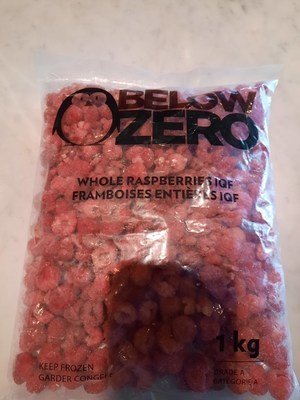
Quebec – Notice not to consume Below Zero brand frozen IQF whole raspberries sold by Segal Grocery

Quebec

IQF Whole Raspberries (CNW Group/Ministry of Agriculture, Fisheries and Food)

QUEBEC CITY , May 31, 2022 /CNW Telbec/ – The Ministry of Agriculture, Fisheries and Food (MAPAQ), in collaboration with the Food Inspection Division of the City of Montreal and the Segal Grocery , warns the public not to consume the product indicated in the table below, because this food may have been contaminated with a norovirus.

This warning stems from a Canadian Food Inspection Agency food recall involving Below Zero brand IQF Whole Raspberries originating from China and distributed to several establishments across Canada .

The product was offered in a frozen state. Its label includes, in addition to its name, the mentions “Below Zero” and “Mantab”.

Establishment

Product name

Format

Affected lot

Segal grocery store

4001, boul. Saint Laurent

Montreal

“IQF Whole Raspberries”

1kg

Lot No. XT21253

PO| : M14475

BB/MA: 2023-SE-09

The company named in the table is voluntarily recalling the product in question. It has agreed with MAPAQ and the Food Inspection Division of the City of Montreal to issue this warning as a precautionary measure. In addition, people who have this product in their possession are advised not to consume it. They must return it to the establishment where they bought it or throw it away.

Even if the product does not show signs of tampering or a suspicious odor, it is likely to be contaminated with norovirus. People exposed to this virus usually show symptoms within 24 to 48 hours of consumption. Common symptoms are nausea, vomiting, diarrhea and abdominal cramps. Muscle pain, fatigue, fever, chills and headache may also occur. Cases of illness have been reported to MAPAQ and could be associated with the consumption of this food.

Canada – Certain Tri-Star Seafood Supply Ltd. brand Live Spot Prawns recalled due to Norovirus

CFIA

Food Borne Illness - Norovirus -CDC Photo

Summary

Product
Certain Live Spot Prawns
Issue
Food – Microbial Contamination – Norovirus
What to do

Do not consume, use, sell, serve, or distribute the recalled product

Affected products

Issue

Tri-Star Seafood Supply Ltd. is recalling certain Tri-Star Seafood Supply Ltd. brand Live Spot Prawns from the marketplace due to possible norovirus contamination.

The recalled product has been sold in British Columbia, Alberta, Manitoba, and Ontario, and may have been distributed in other provinces and territories.

What you should do

  • If you think you became sick from consuming a recalled product, call your doctor
  • Check to see if you have the recalled product in your home or establishment
  • Do not consume the recalled product
  • Do not serve, use, sell, or distribute the recalled product
  • Recalled products should be thrown out or returned to the location where they were purchased
  • Consumers who are unsure if they have purchased the affected product are advised to contact their retailer

People with norovirus illness usually develop symptoms of gastroenteritis within 24 to 48 hours, but symptoms can start as early as 12 hours after exposure. The illness often begins suddenly. Even after having the illness, you can still become re-infected by norovirus. The main symptoms of norovirus illness are diarrhea, vomiting (children usually experience more vomiting than adults), nausea and stomach cramps. Other symptoms may include low-grade fever, headache, chills, muscle aches and fatigue (a general sense of tiredness).  Most people feel better within one or two days, with symptoms resolving on their own, and experience no long-term health effects. As with any illness causing diarrhea or vomiting, people who are ill should drink plenty of liquids to replace lost body fluids and prevent dehydration. In severe cases, patients may need to be hospitalized and given fluids intravenously.

RASFF Alert – Norovirus – Oysters

RASFF

Norovirus in oysters (Crassostrea gigas) from France in Spain

Finland – Large Salmonella outbreak dominates Finnish figures

Food Safety News

A Salmonella outbreak affected more than 700 people in Finland in 2021, according to new information from the Finnish Food Authority (Ruokavirasto).

The implicated food was a salad with iceberg lettuce, cucumber and peas served in several kindergartens. It was previously known that almost 450 people, mostly children, had been ill.

Officials in the city of Jyväskylä investigated the incident with the help of the National Institute for Health and Welfare (THL).

Overall, 46 foodborne outbreaks were recorded in Finland this past year affecting almost 1,400 people. In 2020, 34 outbreaks were reported involving 543 people.

Seven Salmonella outbreaks sickened 824 people compared to three outbreaks with 21 sick in 2020.

The most common pathogen was norovirus with nine outbreaks and 260 cases. One of the main factors that contributed to foodborne norovirus incidents was an infected kitchen worker.

Read More at the link above.

USA – More than 100 sick after outbreak at ‘camporee’ event in Scioto County, Ohio – Norovirus?

abc6

More than 100 people are now sick after an outbreak at a Girl Scout “camporee” in Scioto County, Ohio, including two children hospitalized, a county health official said Wednesday.

At least 112 people are experiencing vomiting, diarrhea, fever or chills after attending the “camporee” at Camp Molly Lauman in Lucasville this past weekend, according to Molly Dargavell, the regional epidemiologist for Scioto and Lawrence counties.

Dargavell said two children have been hospitalized with the illness and secondary cases from people who did not attend the event have also been reported.

Officials said they believe the common factor between all those who have fallen ill is that they drank water and/or lemonade at the camp. Dargavell said they believe the illness may be norovirus.