Category Archives: Mould Toxin

Research -Efficient Reduction of Food Related Mould Spores on Surfaces by Hydrogen Peroxide Mist

MDPI

CDC Mould

The aim of the study was to evaluate the fungicidal effect of a H2O2 mist generating system for disinfection of spores of six food-related moulds (Alternaria alternataAspergillus flavusGeotrichum candidumMucor plumbeusPaecilomyces variotii, and Penicillium solitum) dried on stainless steel. Exposure to H2O2 mist for 2 or 4 h lead to >3 log reduction in mould spores in the majority of the tests. The presence of the soils 2% skim milk or 3% BSA did not significantly alter the fungicidal effect, while the presence of raw meat juice had an adverse fungicidal effect against Penicillium and Mucor in two out of three tests. Fungicidal suspension tests with liquid H2O2 confirmed the effectiveness of H2O2 on reducing the mould spores. Both the surface test and the suspension test indicated that P. variotii is more resistant to H2O2 compared to the other moulds tested. The study shows the efficiency of H2O2 mist on reducing food-related mould spores on surfaces. View Full-Text

RASFF Alert – Mycotoxin – Ochratoxin A – Dried Figs

European Food Alerts

RASFF

ochratoxin A (28.8 mg/kg – ppm) in dried figs from Turkey in Germany

RASFF Alert – Moulds – Sesame Seeds

European Food Alerts

RASFF

sesame seeds from Nigeria, via Turkey infested with moulds in the Netherlands

RASFF Alerts – Aflatoxin – Organic Almonds – Pistachio Kernels – Dried Figs – Groundnut Kernels

European Food Alerts

RASFF

aflatoxins (B1 = 31; Tot. = 34 µg/kg – ppb) in organic almonds from Italy in Denmark

RASFF

aflatoxins (B1 = 38.8; Tot. = 44 µg/kg – ppb) in pistachio kernels from the United States, dispatched from Turkey in Bulgaria

RASFF

aflatoxins (B1 = 12.8; Tot. = 24.4 µg/kg – ppb) in dried figs in Sweden

RASFF

aflatoxins (B1 = 175; Tot. = 190 µg/kg – ppb) in groundnut kernels from Angola in Portugal

RASFF

aflatoxins (B1 = 17.4; Tot. = 24.5 µg/kg – ppb) in organic dried figs from Spain in Denmark

RASFF

aflatoxins (B1 = 34; Tot. = 37 µg/kg – ppb) in pistachios from Turkey in the Netherlands

RASFF

aflatoxins (B1 = 64.8; Tot. = 72.2 µg/kg – ppb) in pistachio kernels from Iran in Germany

Australia – Nudie nothing but 2 apples 200ml – Mycotoxin – Patulin

FSANZ

Product information

Monde Nissan Australia Pty Ltd (nudie Foods) is conducting a recall of nudie nothing but 2 apples 200ml. The product has been available for sale at independent food retailers including IGA in NSW, Vic & SA and independent food retailers in Qld, Tas & WA and Woolworths nationally.

Date markings

BEST BEFORE 18-JUNE-21
(All other Best Before dates are not affected)

nudie nothing but 2 apples 200ml

Problem

The recall is due to microbial (mycotoxin – patulin) contamination.

Food safety hazard

Food products containing the mycotoxin patulin may cause illness if consumed.

Country of origin

Australia

What to do​

Any consumers concerned about their health should seek medical advice and should return the products to the place of purchase for a full refund.

For further information please contact:

Monde Nissan Australia Pty Ltd
1800 466 834
info@nudie.com.au
www.nudie.com.au

Related links:

Research – Citrinin in Foods and Supplements: A Review of Occurrence and Analytical Methodologies

MDPI

Citrinin (CIT) deserves attention due to its known toxic effects in mammalian species and its widespread occurrence in food commodities, often along with ochratoxin A, another nephrotoxic mycotoxin. Human exposure, a key element in assessing risk related to food contaminants, depends upon mycotoxin contamination levels in food and on food consumption. Commercial supplements, commonly designated as red rice, usually used in daily diets in Asiatic countries due to their medicinal properties, may pose a health problem as a result of high CIT levels. In addition to the worldwide occurrence of CIT in foods and supplements, a wide range of several analytical and detection techniques with high sensitivity, used for evaluation of CIT, are reviewed and discussed in this manuscript. This review addresses the scientific literature regarding the presence of CIT in foods of either vegetable or animal origin, as well as in supplements. On what concerns analytical methodologies, sample extraction methods, such as shaking extraction and ultrasonic assisted extraction (UAE), clean-up methods, such as liquid-liquid extraction (LLE), solid phase extraction (SPE) and Quick, Easy, Cheap, Effective, Rugged and Safe (QuECHERS), and detection and quantification methods, such as thin layer chromatography (TLC), high performance liquid chromatography (HPLC), capillary electrophoresis (CE), biosensors, and ELISA, are also reviewed.

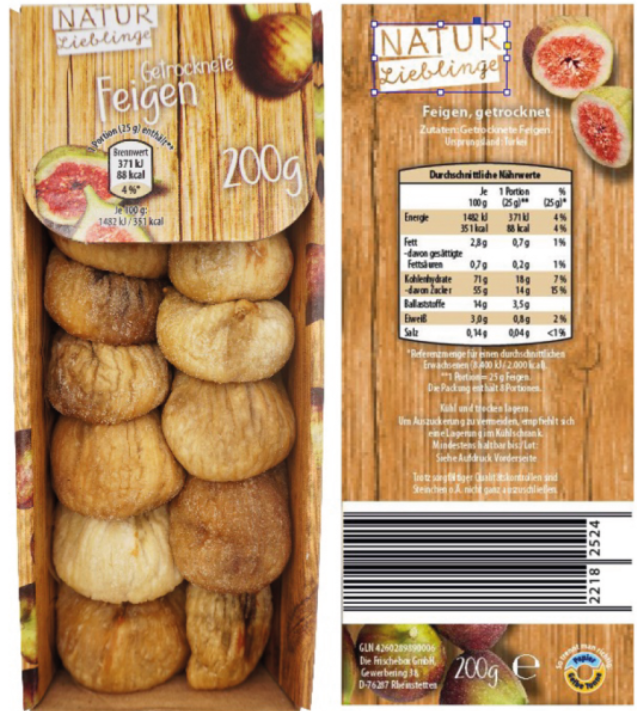
Germany – “NATUR favorites – Dried figs, 200 g” – Ochratoxin A

LMW


Warning type:Food
Date of first publication:December 21, 2020
Product name:

“NATUR favorites – Dried figs, 200 g”

Product pictures:

Unnamed.PNG

Press release

Manufacturer (distributor): Distributor: Frischebox GmbH, 76287 Rheinstetten Distribution via Aldi Süd in the federal states of Baden-Württemberg, Hesse and Rhineland-Palatinate
Reason for warning:

An increased content of ochratoxin-A (OTA) was found.

Packaging Unit: 200 g
Durability: Best before 20.06.2021
Lot identification: L4302 / 350058631-11-580
Further information:

Reference is made to the company’s consumer information sheet attached.

Contact to the responsible authorities:

Baden-Württemberg:

poststelle@mlr.bwl.de

Hesse:

Schnellwarnung@rpda.hessen.de

Rhineland-Palatinate:

Poststelle.Referat22@lua.rlp.de

India – FSSAI issues new manual for analysing aflatoxin in food

FNB News

The apex food regulator, FSSAI, has issued a revised manual for methods of analysis of mycotoxins including aflatoxin in food. FSSAI has stated that the manual shall be used by the laboratories with immediate effect and this manual shall supersede the earlier manual on mycotoxins.

According to the FSSAI all food samples suspected of being contaminated with mycotoxins must be handled with extreme care, as aflatoxins are potent carcinogenic substances.

The manual talks about personal safety precautions, precautions during analysis  and handling of glassware for aflatoxin analysis.

Currently, the regulatory limits for mycotoxins in food as defined by the FSSAI include 15 microgram per kg in cereals, and cereal products, pulses, nuts and nuts for further processing. For Aflatoxins  the limit is prescribed at 10 microgram  per kg for ready to eat products, and dried figs, while 30 microgram per kg for spices and for oilseeds for further processing, the limit is set at 15 microgram per kg.

Similarly, the limit of Aflatoxin M1 in milk is 0.5 microgram per kg, Ochratoxin A in wheat, barley and rye is at 20 microgram per kg, and for Patulin, the limit is 50mcrogram per kg in apple juice and apple juice ingredients in other beverages.

Further, the limit for Deoxynivalenol  in wheat is fixed at 1000ppm.

Mycotoxins—toxic secondary metabolites of filamentous fungi—are biological in origin. Only a few of the thousands of mycotoxins present significant food safety challenges to the farm-to-fork food continuum. The natural fungal flora associated with food safety is dominated by three genres: Aspergillus, Fusarium, and Penicillium.

Aflatoxins are highly toxic secondary metabolites and aflatoxin-producing fungi can contaminate crops in the field, at harvest, and during storage. Some of the more common crops susceptible to contamination with aflatoxins are cereals (e.g. maize, rice and wheat). The husk of these cereals are often used as animal feed.

Deoxynivalenol (DON) Deoxynivalenol (DON) also known as vomitoxin is a trichothecene mycotoxin mainly produced by Fusarium fungi (Fusarium molds). This plant pathogens can cause scab mainly in wheat and barley etc., and damages cereals the most widely by contamination in the field. The main commodities affected are cereals such as wheat, rice, barley, oats and maize etc.

Patulin is a mycotoxin that is produced by certain species of Penicillium, Apergillus, and Byssochylamys molds that may grow on a variety of foods including fruit, grains, and cheese  while Ochratoxin A (OTA) is a naturally occurring foodborne mycotoxin found in a wide variety of agricultural commodities worldwide, ranging from cereal grains to dried fruits to wine and coffee.

Denmark – Risk of Aflatoxin b1 in dried figs

Aarstiderne A / S recalls dried figs, due to risk of content of aflatoxin b1 in the product

Recalled Foods , Published: December 18, 2020

Which food
Dried figs
Net content: 1 kg
Best before date: 01.07.2021
Country of origin: Spain

Sold where The
product was sold in the period 8 November 2020 – 17 December 2020 via Aarstiderne.com, Arstiderna.com and in Aarstidernes Gårdbutik at Krogerup Avlsgaard, Krogerup 3, 3050 Humlebæk and Aarstidernes Gårdbutik on Banegaarden, Otto Busses Vej 45, 2450 København SV.

Company recalling
Aarstiderne A / S

Cause
At a random check taken by the Danish Veterinary and Food Administration, aflatoxin b1 has been found in the product.

Risk
Aflatoxin is a toxin produced by molds and can be carcinogenic.

Advice for consumers
Consumers are advised to discard the product or return it to the store where it was purchased.

RASFF Alerts – Aflatoxin – Dried Figs -Pistchios – Groundnuts- Roasted and Salted Pistachios –

European Food Alerts

RASFF

aflatoxins (B1 = 143.5; Tot. = 152.3 µg/kg – ppb) in pistachios from Turkey in Germany

RASFF

aflatoxins (B1 = 25; Tot. = 26.4 µg/kg – ppb) in pistachios in shell from Turkey in Germany

RASFF

aflatoxins (B1 = 15.3; Tot. = 16.4 µg/kg – ppb) in pistachios from Turkey in Germany

RASFF

aflatoxins (B1 = 38.1; Tot. = 44.9 µg/kg – ppb) in groundnuts from Vietnam in Finland

RASFF

aflatoxins (B1 = 37.5; Tot. = 43.2 µg/kg – ppb) in pistachios in shell from Turkey in Germany

RASFF

aflatoxins (B1 = 10.3; Tot. = 24.4 µg/kg – ppb) in dried figs from Turkey in Germany

RASFF

aflatoxins (B1 = 41.7; Tot. = 50.4 / B1 = 115; Tot. = 169.2 µg/kg – ppb) in roasted and salted pistachios in shell from Turkey in Germany

RASFF

aflatoxins (B1 = 10.3; Tot. = 42.3 µg/kg – ppb) in dried figs from Turkey in Belgium

RASFF

aflatoxins (B1 = 27; Tot. = 28.8 µg/kg – ppb) in pistachios in shell from the United States in Belgium

RASFF

aflatoxins (B1 = 26.55; Tot. = 31.44 µg/kg – ppb) in dried figs from Turkey in Germany