Category Archives: mold

Research – Surveillance and source tracking of foodborne pathogens in the vegetable production systems of India

Science Direct

Abstract

Fresh vegetables are prone to foodborne pathogen infection due to improper cultivation methods and poor post-harvest handling practices. This paper describes the prevalence of foodborne pathogens in three vegetables (tomato, brinjal, and lablab) cultivated by small-scale producers of India. We assessed the possible entry of pathogens into the vegetable production chain. Samples from soil, manure, irrigation water, harvesting bins, and workers’ hands were assessed as sources of possible pathogen entry. In addition, further sampling was done to determine prevalence of these pathogens in the produce from the agricultural fields and markets. Total plate counts, yeast and mold count, total coliforms like general microbial indices, and possible foodborne pathogens like SalmonellaEscherichia coli O157, Staphylococcus aureusPseudomonas aeruginosa, and Norovirus were assessed in all the samples by standard microbiological, biochemical, and molecular methods. The results revealed that among the three vegetables we studied, brinjal had the highest load of general microbial indicators. Moreover, the total coliforms count of market vegetables was higher than that of on-farm vegetables, indicating poor hygiene in post-harvest operations. The pathogen Pseudomonas aeruginosa was found in the market tomatoes (0.35 log10 cfu/g), and E. coli was detected in the market samples of brinjal (2.98–3.89 log10 cfu/g) and lablab (0.59–2.21 log10 cfu/g), thereby revealing fecal cross-contamination during pre or post-harvest operations. None of the vegetable samples were contaminated with E. coli O157:H7, Staphylococcus aureusSalmonella sp., and norovirus. However, the microbiological source tracking of primary production farms showed that E. coli O157:H7 was present in manure (9/27), soil (6/27), harvest bins (6/27), and irrigation water samples (3/27) of SSP farms. In addition, soil (33%), manure (11%), and harvest bins (11%) had Pseudomonas aeruginosa. In conclusion, our study suggests that adequate knowledge of good agricultural practices for small-scale producers to cultivate microbiologically safe vegetable production and proper handling strategies for vegetable vendors is crucial to mitigate foodborne pathogen outbreaks through fresh vegetables.
Canada – Jeden Tag brand Remoulade recalled due to mould

CFIA

Product
Remoulade
Issue
Food – Microbial Contamination – Non harmful (quality or spoilage)
What to do

Do not use, sell, serve or distribute the affected product.

Audience
Retail
Distribution
Alberta
British Columbia
Manitoba
Ontario

Jeden Tag brand Remoulade recalled due to mould.

RASFF Alert- Mycotoxin – Fumonisins – Maize Flour

RASFF

Aflatoxins and fumonisines in maize flour from Togo in Belgium

RASFF Alerts- Mycotoxins – DON – Corn

RASFF

Deoxynivalenol (DON) in corn from South Africa, via the Netherlands in Germany

RASFF Alerts – Mold/Mould – Raspberries – Chocolate Biscuits

RASFF

Presence of mold in chocolate biscuits “ricciarelli” from Italy in France

RASFF

Signs of mold, organic contamination and plastic in frozen raspberries from Ukraine in Poland

RASFF Alert- Mycotoxin – Ochratoxin A – Coffee – Soya Beans -Dried Figs

RASFF

Too much Ochratoxin A in dried figs from Turkiye in Finland

RASFF

Ochratoxin A in soybeans from Canada in Belgium

RASFF

Ochratoxin A in coffee from Belgium in France

RASFF Alert- Mycotoxins – Pistachio Powder

RASFF

Mycotoxins and Listeria monocytogenes in pistachio powder from France in Germany

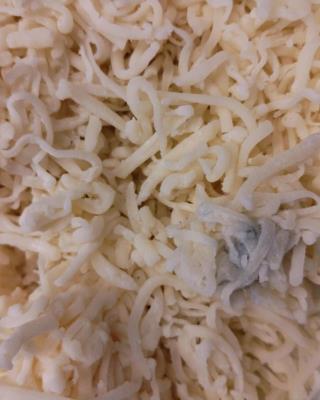
Czech Republic – Czech taste, DUTCH-TYPE castle cheese, fat 45% in dry matter, 200g – Visible Mould/Mould

Potravinynapranyri

Illustrative photo #6

Place of inspection:
Ústí nad Orlicí ( Lochmanova 1440, 562 01 Ústí nad Orlicí )
ID: 44012373
Food group: Milk and milk products Cheese

Czech taste, DUTCH-TYPE castle cheese, fat 45% in dry matter, 200g
Category: Dangerous foods
Invalid parameter:

fungi visible to the eye

All inspected packages were found to contain mold under the packaging. Food is not considered safe if it shows signs of spoilage.

Unsuitable storage temperatures of this product were not detected during the inspection. The food did not have an expiration date.

Batch: Use by: 01/18/2024
Expiration date: 18/01/2024
Packaging: plastic bag
Quantity of the product in the package: 200 g
Manufacturer: Jaroměřická mlékárna, as, Kauniova 198, 67551, Jaroměřice nad Rokytnou
Country of origin:  Czechia
Date of sample collection: 8/1/2024
Reference number: 24-000120-SZPI-CZ
The sample was detected by the official control of the State Agricultural and Food Inspection.

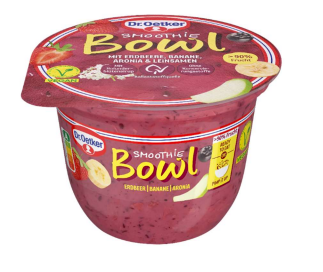
Luxembourg – Smoothie Bowl with Erdbeere, Banana, Aronia and Leinsamen from the Dr. Oetker brand – Mycotoxin – Patulin

SAP

The following product is recalled in Luxembourg:

Name Smoothie Bowl with Erdbeere, Banana, Aronia and Leinsamen
Brand Dr. Oetker
Unit 200g
Minimum Durability Date (MBD) All DDMs until 04/23/2024
Barcode 4023600 01685 7 42456292
Item no. 1-05-584100

Danger  : High Patulin content

Patulin is a mycotoxin, a natural toxic substance, produced by a certain number of fungal species (fungi), mainly of the Penicillium genus which contaminate Pomacae (apples, pears, quince). Patulin has been detected as a contaminant in many fruits, vegetables, grains and other foodstuffs; however, the main sources of contamination are apples and apple products.

The product can be distributed by different points of sale in Luxembourg.

Information source: RASFF (Rapid Alert System for Food and Feed)

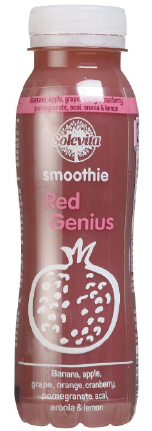
Luxembourg – 100% fruit smoothie – Red Genius from the Solevita brand – Mycotoxin – Patulin

SAP

The following product is recalled in Luxembourg:

Name 100% fruit smoothie – Red Genius
Brand Solevita
Unit 250ml
Barcode 20803896
DLC/DDM 03/13/2024

Danger  : High Patulin content

Patulin is a mycotoxin, a natural toxic substance, produced by a certain number of fungal species (fungi), mainly of the Penicillium genus which contaminate Pomacae (apples, pears, quince). Patulin has been detected as a contaminant in many fruits, vegetables, grains and other foodstuffs; however, the main sources of contamination are apples and apple products.

The product can be distributed by different points of sale in Luxembourg.