Category Archives: Microbiology

Bali – 21 students in Lombok got food poisoning after eating deep fried tempe

Coconuts Bali

Dozens of students from a madrasah (Islamic school) in Central Lombok are suspected to have gotten food poisoning after snacking on deep fried tempe, for which they had to be taken to the local community clinic (Puskesmas).

West Praya sub-precinct chief, Heri Indrayanto, said in a statement that the students bought the deep fried tempe from a street vendor identified as M and ate them with chili sauce during recess.

“It is suspected that the victims got food poisoning after eating the fried tempe with chili sauce,” Heri said.

Fifteen minutes after consuming the fritter, the students started to get headaches and felt nauseous, while some started vomiting. They were then taken to the nearest Puskesmas for treatment.

Heri said a total of 21 students had food poisoning, and even the seller M also experienced the same symptoms. Authorities had seized all the ingredients and sent them for a lab test at the Health Agency in Central Lombok.

Hong Kong – Raw Oysters and Food Safety

CFS

Vibrio

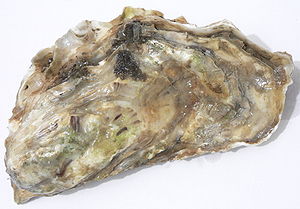
It is getting cold and winter is the traditional season for savouring oysters. There are different ways to enjoy oysters, including deep fried, hot-pot and some members of the public may choose to eat raw oysters. If consumers choose to eat raw oysters, they should be aware of the associated risk. Due to their specific growing nature, oysters can be easily contaminated by pathogens (including bacteria and viruses) and chemical contaminants. Consumption of raw oysters contaminated with pathogens may cause food poisoning, affecting our health.

Consumers who choose to eat raw oysters are advised to take note of the following food safety tips:

  • Susceptible populations (the elderly, young children, pregnant women and people with weakened immune systems or liver diseases) should avoid taking raw oysters.
  • Eating raw oysters carries inherent food safety risk. To minimise the impact on health, raw oysters should only be consumed in or obtained from reliable licensed premises.
  • Consumers choose to eat raw oysters are reminded to apply the Five Keys to Food Safety to mitigate the risk.
  • For oysters intended for consumption after cooking, never eat them raw.

USA – The amount of coastal water that can harbor harmful Vibrio bacteria has spiked 56%. One species is flesh-eating.

Business Insider

KSWFOODWORLD

The amount of coastal water in which harmful bacteria can live has increased 56% over the past few decades, a report published Wednesday found.

That bacteria family, called Vibrio, lives in salty or brackish coastal waters, including in the US and Canada. The infection it causes, vibriosis, is usually contracted by eating raw or undercooked seafood or by exposing a wound to bacteria-infested seawater. Mild cases resolve in about three days, but Vibrio can also cause severe diseases, including gastroenteritis, life-threatening cholera, dangerous wound infections, and sepsis.

One species of Vibrio bacteria, Vibrio vulnificus, is referred to as flesh-eating because the bacteria can aggressively destroy body tissue. Those infections, though rare, often require intensive care or amputation. And they can be fatal, killing one in five infected people, usually within two days, according to the Centers for Disease Control and Prevention.

The reasons Vibrio is becoming a greater threat are that sea surface temperatures are rising and seawater is getting saltier. That’s one of many alarming findings from the medical journal The Lancet’s sixth annual report on health and climate change. In it, researchers from academia and the United Nations tracked 44 indicators of health effects linked to climate change.

USA – National Advisory Committee on Microbiological Criteria For Foods (NACMCF)

FSIS USDA

The National Advisory Committee on Microbiological Criteria for Foods (NACMCF) provides impartial scientific advice to federal agencies to use in developing integrated food safety systems from farm to table and to ensure food safety in domestic and imported foods.

The National Advisory Committee on Microbiological Criteria for Foods (NACMCF) provides impartial scientific advice to federal agencies to use in developing integrated food safety systems from farm to table and to ensure food safety in domestic and imported foods.

The NACMCF was established in 1988, under Departmental Regulation 1043-28, in response to the recommendations of two external organizations. The National Academy of Sciences recommended an interagency approach to microbiological criteria, since various federal, State, and local agencies are responsible for food safety. Also, the U.S. House of Representatives Committee on Appropriations made a similar recommendation in the Rural Development, Agriculture, and Related Agencies Appropriation Bill for fiscal year 1988.

The NACMCF provides scientific advice and recommendations to the Secretary of Agriculture and the Secretary of Health and Human Services (HHS). The Committee covers public health issues relative to the safety and wholesomeness of the U.S. food supply, including development of microbiological criteria and review and evaluation of epidemiological and risk assessment data and methodologies for assessing microbiological hazards in foods.

The food safety programs of the USDA Food Safety and Inspection Service (FSIS) and the U.S. Department of HHS Food and Drug Administration (FDA) are strengthened through NACMCF recommendations. The programs of other federal agencies concerned with food safety, including the Department of HHS Centers for Disease Control and Prevention, the Department of Commerce, National Marine Fisheries Service, and the Department of Defense (DoD), Veterinary Services Activity also benefit from NACMCF work.

The NACMCF charter was approved on September 24, 2010.

The activities of the NACMCF are carried out, in part, by subcommittees that are focused on specific areas being considered by the full Committee. The NACMCF has made important contributions to a broad range of critical food safety issues. The NACMCF has developed reference documents emphasizing the role of regulatory agencies, industry, and consumers to control specific foodborne pathogens. The NACMCF was instrumental in formulating and standardizing the principles of hazard analysis and critical control point (HACCP) systems. NACMCF reports provide current information and scientific advice to federal food safety agencies and serve as a foundation for regulations and programs aimed at reducing foodborne disease and enhancing public health.

Recently completed projects include the following final reports:

  • “Response to Questions Posed by the Food Safety and Inspection Service Regarding Determination of the most Appropriate Technologies for the Food Safety and Inspection Service to Adopt in Performing Routine and Baseline Microbiological Analyses”,
  • “Parameters for Inoculated Pack/Challenge Study Protocols”, and
  • “Assessment of the Food Safety Importance of Mycobacterium avium subspecies paratuberculosis.”

New planned subcommittee work areas include:

  • the study of microbiological criteria as indicators of process control or insanitary conditions, and
  • control strategies for reducing foodborne norovirus infections.

India – Chhattisgarh: 77 people, mostly kids, fall ill after consuming food at weekly market

India Tv News

As many as 77 people, including children, fell ill after consuming various food items in Chhattisgarh, a health official said on Wednesday. According to the details, all had consumed food items at a weekly market in a village in Rajnandgaon district of the state.

Commenting on the incident, Rajnandgaon’s chief medical and health officer Dr Mithlesh Chaudhary said the market was held on Tuesday in Gatapar Kala village under Thelkadih police station area limits.

As per preliminary information, these people had consumed ‘gupchup’ (pani puri-a spicy snack) and other food items.

Later, in the evening, they complained of uneasiness and vomiting following which they were rushed to a nearby health centre, the official said.

Prima facie, food poisoning seems to be the cause of the illness, the official said, adding that further probe was underway into the matter.

India – Minor dead, 40 hospitalised after suspected food poisoning in Bihar

Hindustan Times

At least nine minors were admitted to Kejriwal hospital, and 20 others were undergoing treatment at the primary health centre at Saraiya for stomach pain, dizziness and vomiting.

A health department team led by civil surgeon Vinay Kumar Sharma visited the village on Wednesday to investigate the cause behind the mass illness but the food samples served at the feast had already been disposed off, leaving no scope for inspection.

Research – Prevalence of E. coli Sequence Type 131as a foodborne pathogen in Swiss chicken

Click to access Wetzel%20and%20Fieseler_E.%20coli%20ST131_Prevalence.pdf

Research – Effect of Direct Viral–Bacterial Interactions on the Removal of Norovirus From Lettuce

Frontiers in Microbiology

Norovirus Food Safety kswfoodworld

Norovirus (NoV) is the main non-bacterial pathogen causing outbreaks of gastroenteritis and is considered to be the leading cause of foodborne illness. This study aims to determine whether lettuce-encapsulated bacteria can express histo-blood group antigen (HBGA)–like substances to bind to NoV and, if so, to explore its role in protecting NoV from disinfection practices. Fifteen bacterial strains (HBGA-SEBs) were isolated from the lettuce microbiome and studied as they were proved to have the ability to express HBGA-like substances through indirect ELISA detection. By using attachment assay, HBGA-SEBs showed great abilities in carrying NoVs regarding the evaluation of binding capacity, especially for the top four strains from genera WautersiellaSphingobacterium, and Brachybacterium, which could absorb more than 60% of free-flowing NoVs. Meanwhile, the direct viral–bacterial binding between HBGA-like substance-expressing bacteria (HBGA-SEB) and NoVs was observed by TEM. Subsequently, results of simulated environmental experiments showed that the binding of NoVs with HBGA-SEBs did have detrimental effects on NoV reduction, which were evident in short-time high-temperature treatment (90°C) and UV exposure. Finally, by considering the relative abundance of homologous microorganisms of HBGA-SEBs in the lettuce microbiome (ca. 36.49%) and the reduction of NoVs in the simulated environments, we suggested putting extra attention on the daily disinfection of foodborne-pathogen carriers to overcome the detrimental effects of direct viral–bacterial interactions on the reduction of NoVs.

Denmark – Gas evolution in potato salad – Microbial Contamination

DVFA

BY Lantz is recalling organic potato salad with carrots due to gas evolution in the packages, indicating unwanted growth of microorganisms. Updated 08.10.2021 with new best before date. Updated 19.10.2021 with new best before date.

Recalled Foods , Published: September 27, 2021

Modified October 19, 2021

What food:
Organic Potato salad with carrots
Net content: 350g
Best before-dates: 29.09.2021, 06.10.2021, 10.20.2021 and 03.11.2021
EAN bar code number: 5710871004605

Sold in:
Irma Shops Zealand

Company withdraws:
BY Lantz, Hovedvagtsgade 8,5, 1103 København K

Cause:
The company has found gas development in some of the packages, which indicates unwanted growth of microorganisms.

Risk: The
evolution of gas and the possible growth of microorganisms make the product unfit for human consumption.

Advice for consumers:
Consumers are advised to return the product to the store where it was purchased or to discard it.

India – FSSAI guidelines for sampling for microbiological analysis

FNB News

The Food Safety and Standards Authority of India (FSSAI) has issued a draft on guidelines for sampling for microbiological analysis.

The guidelines prescribe the general requirement for microbiological sampling, sampling plan, sampling tools, equipment & material, sampling procedure, labelling of sample, storage & transportation and food category wise sampling procedures.

According to the FSSAI, the microbiological analysis was vital to verify the compliance with the criteria laid down in Food Safety and Standards Regulations, food safety management system and process control, compliance of individual batches, and general information on the microbiological status of certain products placed on the market. Further, the analysis will help in monitoring and surveillance of food products along with investigation of suspected food-borne outbreaks, customer complaints.

Ashwin Bhadri, CEO, Equinox Labs, says that the sampling process ensures that the food quality hasn’t been compromised. Sampling is one of the best ways to know in which state food can be preserved for consumption without contamination.

He said, “For the betterment of people, adhering to the regulatory guidelines when it comes to sampling becomes essential. Consumer safety is foremost and following those policies assures that they are safeguarded. In India, FSSAI has introduced guidelines that every food product should undergo microbiology sampling before it is consumed.”

He explains, “It examines the compliance of individual batches. Microbiological sampling is undertaken by authorised people who are experienced and trained in those processes. They select the samples from the huge lot that allows a sample to stand for a whole lot and give the right decision concerning quality, contamination and shelf life of food products. Sampling and testing are absolutely necessary as it helps to verify the compliance laid down as per the Food Safety and Standards Regulations. The procedure of microbiological sampling and testing allows the investigation of customer complaints and also to suspect food-borne outbreaks if any.”

The guidelines were approved by the Scientific Panel on Methods of Sampling & Analysis in a meeting recently.  And FSSAI has sought comments from the stakeholders on the same.