Category Archives: Microbiology

Research – Enhanced antimicrobial activity against Alicyclobacillus acidoterrestris in apple juice by genome shuffling of Lactobacillus acidophilus NX2-6

Wiley Online

Food safety and quality are seriously compromised by the growth of spoilage bacteria in food. Various lactic acid bacteria (LAB) may inhibit the growth of spoilage bacteria in food and animal feed. In our study, the antibacterial activity of Lactobacillus acidophilus NX2-6 was improved by genome shuffling. The starting populations were obtained via 60Coγ-ray, diethyl sulfate mutagenesis, and UV mutagenesis of protoplasts. The optimal conditions for protoplast formation and regeneration were found to be 30 mg/ml of lysozyme at 37°C for 40 min. The protoplasts were inactivated by UV irradiation for 110 s or by heating at 58°C for 30 min. After two rounds of genome shuffling, the inhibitory activity of strain F50 was improved by 5.6-fold compared to the original strain. The shuffled strain has broad-spectrum antibacterial activity and is a promising candidate for bio-preservative. The antibacterial substances produced by L. acidophilus NX2-6 can be applied to the preservation of apple juice. The results showed that the growth of Alicyclobacillus acidoterrestris in apple juice was significantly inhibited by the addition of 0.1% culture supernatant with acidocin NX2-6 at 28°C and 0.2% culture supernatant with acidocin NX2-6 at 45°C for 30 days. The sugar−acid ratio, pH value, clarity, and fruit flavor of apple juice were well maintained during storage. This study showed that genome shuffling was an effective strategy to improve the bacterial inhibitory activity of LAB and that the shuffled LAB and their metabolites are expected to be used as bio-based food protectors for food safety.

Research – Emergence of non-choleragenic Vibrio infections in Australia

1 Health

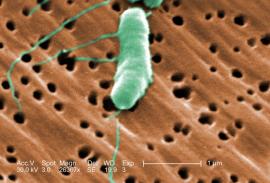
Vibrio_vulnificus_01a

Vibrio infection was rarely reported in Tasmania prior to 2016, when a multistate outbreak of Vibrio parahaemolyticus associated with Tasmanian oysters was identified and 11 people reported ill. Since then, sporadic foodborne cases have been identified following consumption of commercially- and recreationally-harvested oysters. The increases in both foodborne and non-foodborne Vibrio infec-tions in Tasmania are likely associated with increased sea water temperatures. As oyster production increases and climate change raises the sea surface temperature of our coastline, Tasmania expects to see more vibriosis cases. Vibriosis due to oyster consumption has been reported in other Australian states, but the variability in notification requirements between jurisdictions makes case and outbreak detection difficult and potentially hampers any public health response to prevent further illness.

USA – Video – How CDC Investigates Foodborne Outbreaks

You Tube

Have you ever wondered how CDC investigates foodborne outbreaks such as Salmonella? PulseNet USA is a nationwide network used to identify the bacteria making people sick and track it back to the source. In this video you will learn how the general public and CDC scientists can work together to identify foodborne illnesses. This video can also be viewed at https://www.cdc.gov/wcms/video/low-re…

Research – Introduction to the Special Issue: Microbiological Safety and Quality of Foods

MDPI

Recent shifts in food production, processing and distribution, linked to the globalization of the food trade and the need to meet new consumers habits, are continuously challenging global food systems. Every effort is being made to ensure healthy and safe, food that is crucial to guarantee public health and wellbeing.
Despite the advancements in food safety management, foodborne diseases (FBD) still remain an important problem worldwide, with a significant negative impact on human health and countries’ economies and development. It has been determined that food unsafe for consumption causes 600 million cases of FBD every year, and 25% of all foods produced globally are lost due to microbial spoilage. Serious outbreaks have occurred, involving both developing and industrialized countries, showing how food safety is a transnational challenge and that a strong joint commitment between food safety authorities is needed.
Despite this awareness, the full extent of the impact of food contamination is still unknown. Foodborne contaminants are numerous, including viruses and bacteria, parasites, chemicals, toxins and allergens that cause a wide range of conditions. Globally, FBD caused by bacteria are more common than those caused by viruses and parasites. [1]. Moreover, between one-third and one-half of all human infectious diseases have a zoonotic origin. Among bacteria, Campylobacter, followed by Salmonella, are the major etiological agents of FBD, while, among viruses, norovirus is the foremost enteric pathogen of foodborne disease worldwide [2].
The most common foodborne parasites instead are protozoa such as Cryptosporidium spp., Giardia intestinalis and Toxoplasma gondii; roundworms such as Trichinella spp. and Anisakis spp.; and tapeworms such as Diphyllobothrium spp. and Taenia spp. [3]. In particular, Anisakiasis is an emerging zoonosis caused by the fish parasitic nematode Anisakis. Humans are accidental hosts that become infected by eating raw or undercooked fish that contain viable Anisakis spp. larvae.
The major determinants for the incidence of FBD are unsafe raw food, abused temperature, inadequate storage, improper handling, undercooking and cross contamination [4]. Food from animal sources, fresh produce and ready-to-eat (RTE) foods are the most at risk. In particular, RTE foods are an emerging issue concerning food safety. Furthermore, they have been demonstrated to contain antimicrobial-resistant strains. Since these products are consumed without any further treatment, they could serve as a vector for the spread of antibiotic-resistant microorganisms, posing a significant threat to public health [5].
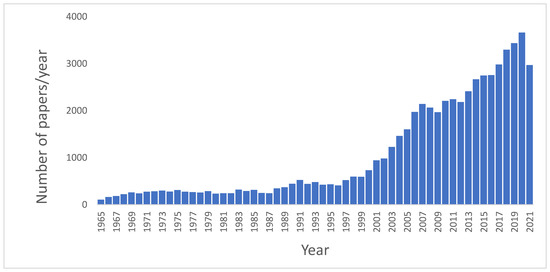
The importance of these topics is documented by the increasing number of papers published related to Food Safety. In a basic search using PubMed database, from 1945 to 2021, selecting as the search topic “Microbiological food safety”, a total of 54,210 results were obtained.
Although the first articles concerning microbiological food safety date from 1946, and since then a dozen articles appear in the following years, it is not until 1965 that a significant number of articles are published every year. Figure 1 shows the evolution of the number of papers per year (from 1965 to 2021) published regarding Microbiological food safety. As can be seen in this figure, approximately 80% of these papers have been published in the last 20 years, and the number continues to rise, revealing an increasing and ever-present interest towards the topic addressed in this Special Issue.
Foods 11 00673 g001 550

RASFF Alert – Animal Feed – Clostridium perfringens – Fish Meal

RASFF

The presence of Clostridium perfringens in fishmeal from the Czech Republic in Romania

RASFF Alert – Animal Feed – Mycotoxin – Rye Ergot – Rye

RASFF

Rye ergot in rye from Germany in Austria

RASFF Alerts – Animal Feed – Salmonella – Soybean Flour – Cat 3 Frozen Chicken Meat

RASFF

Salmonella in soybean meal from Germany in Germany, Poland and Switzerland

RASFF

Salmonella infantis in frozen chicken meat cat 3 from Netherlands in Italy

Research – Ireland – Overview of 2019 Zoonois Data

Zoonoses are diseases and infections naturally transmissible between animals and humans. Transmission may occur via direct contact with an animal or indirect contact with animal excreta (e.g. faeces) present in contaminated food, water or the environment.
Foodborne zoonotic diseases are caused by consuming food or drinking water contaminated by zoonotic pathogenic (disease-causing) microorganisms such as bacteria and their toxins, viruses and parasites. They enter the body through the gastrointestinal tract where the first symptoms often occur. Many of these microorganisms are commonly found in the intestines of healthy food-producing animals.
The risks of contamination are present from farm to fork and require prevention and control throughout the food chain. While it is possible for anybody to become infected with a zoonotic pathogen, certain population groups such as the very young, the elderly and immunocompromised are particularly vulnerable and at greater risk of more serious consequences. The eradication of zoonoses in humans and animals is very challenging.
The impact of zoonoses on the health of humans and animals can however be limited, by (i) monitoring the reservoirs of infectious zoonotic pathogens with a view to understanding and controlling their modes of transfer; (ii) by businesses controlling the hazard along the food chain and; (iii) by educating the public about how to avoid or limit the risk of infection.
The Irish zoonoses report is published annually by the FSAI, in collaboration with the Department of Agriculture, Food and the Marine (DAFM), the Health Service Executive(HSE),the Local Authority Veterinary Service (LAVS), the Sea-Fisheries Protection Authority(SFPA) and the Health Protection Surveillance Centre (HPSC).
The report brings together the results of thousands of tests carried out on samples of food and feed, as well as tests on material of animal or human origin, in an effort to determine the pattern and extent of infection by zoonotic pathogens transmitted to humans from animals. Zoonoses data collected by EU Member States serve as a basis for the EU to set targets for the reduction of these microorganisms in food-producing animals and foodstuffs.
The impact of the reduction programmes on the actual prevalence of zoonoses in animals and foods and related human health cases are then monitored and analysed in the annual EU summary reports published by the European Food Safety Authority and the European Centre for Disease Control and Prevention (EFSA and ECDC, 2020).
The data in the 2019 tables for the results of Irish testing carried out in food, animal and animal feed samples are presented in four categories (routine, census, objective and suspect sampling) depending on the sampling context. Routine sampling is planned sampling but does not involve statistically random sampling. Census sampling is when the totality of a population, on which the data are reported, is controlled.
Objective sampling is the planned selection of a random sample, which is statistically representative of the population to be analysed (EFSA, 2020). Suspect sampling is the unplanned selection of a sample whereby the individual units are selected based on the recent judgement and experience regarding the population, lot or sampling frame, e.g., earlier positive samples (EFSA, 2020).
The samples obtained from suspect sampling may have a higher likelihood of having pathogens present.

Ireland – EPA – Drinking Water Quality in Private Group Schemes and Small Private Supplies in 2020 – E.coli

EPA

Click to access DWQinPrivateGroupWaterSupplies-2022-02-21.pdf

Key Findings for 2020

➤The quality of drinking water in private supplies was not as good as it should be: one in 20 private water supplies were contaminated with E. coli.

➤93% of Private Group Schemes complied with the Trihalomethanes standard. However, 13 supplies are cited on EU infringement proceedings against Ireland for failing to take the measures necessary to ensure compliance.

➤Over a quarter of Small Private Supplies were not monitored by Local Authorities.

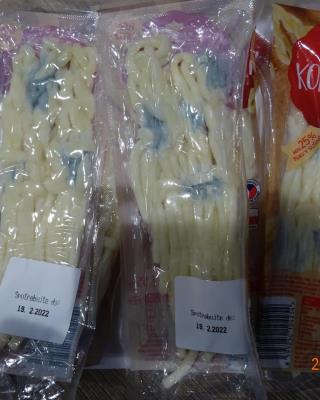
Czech Republic – KARLOVA KORUNA KORBÁČIK Steamed Cheese – Mould/Mold

Potravinynapranyri

Illustration photo no. 1

Place of inspection:
Semily ( Tyrsova 393, 51301 Semily )
ID: 64945880
Food group: Milk and milk products Cheese

KARLOVA KORUNA KORBÁČIK steamed cheese
Category: Dangerous food
Unsatisfactory parameter:

mold visible to the eye

In part of the package, the presence of mold visible to the naked eye was detected under the package. Food is not considered safe if it shows signs of spoilage.

During the inspection, unsatisfactory storage temperatures of this product were not found. The product has not expired.

Expiration date: 2/19/2022
Packaging: PP bag with print, protective atmosphere
Quantity of product in package: 0.055 kg
Producer: SIMABELLE sro, č.p.1074, 739 98 Mosty u Jablunkova, branch: Rudé armády 1820, 733 01 Karviná – Hranice
Country of origin:  Czechia
Sampling date: Jan 20, 2022
Reference number: 22-000078-CAFIA-CZ