Category Archives: Microbiology

Research – An Evaluation of Food Safety Performance in Wineries

MDPI

Wine production has food safety hazards. A Hazard Analysis Critical Control Point (HACCP) system makes it possible to identify, evaluate, and control significant food safety hazards throughout the wine production process. The Prerequisites Programs (PPRs) and HACCP performance in Protected Denomination of Origin “Vinos de Madrid” wineries were analyzed. Winery performances were evaluated for every critical control point (CCPs) in each winemaking process stage, including their implementation of PPR and HACCP principles. This study was developed through a survey of 55 questions divided into 11 sections, and it was conducted on a sample of 21 wineries. The results revealed that the CCPs worst performance level are for the control of metals (Cd, Pb, As) in grapes and fungicides or pesticide control in the harvest reception. A total of 91.5% of the wineries had implemented a prerequisites program (PPRs), regardless of their annual wine production. However, there was variability in the type of prerequisite plans, training, level of knowledge of operators, and annual budget allocation. Three out of four wineries had an HACCP, although corrective action procedures and verification procedures had the lowest and the worst HACCP practical implementation. The significant barriers for HACCP performance in wineries are linked with a lack of food safety staff training, low involvement of all staff in food safety tasks, and poor application of CCP chemical and microbiologic control methods.

Research – Role of Lactic Acid Bacteria in Food Preservation and Safety

MDPI

Fermentation of various food stuffs by lactic acid bacteria is one of the oldest forms of food biopreservation. Bacterial antagonism has been recognized for over a century, but in recent years, this phenomenon has received more scientific attention, particularly in the use of various strains of lactic acid bacteria (LAB). Certain strains of LAB demonstrated antimicrobial activity against foodborne pathogens, including bacteria, yeast and filamentous fungi. Furthermore, in recent years, many authors proved that lactic acid bacteria have the ability to neutralize mycotoxin produced by the last group. Antimicrobial activity of lactic acid bacteria is mainly based on the production of metabolites such as lactic acid, organic acids, hydroperoxide and bacteriocins. In addition, some research suggests other mechanisms of antimicrobial activity of LAB against pathogens as well as their toxic metabolites. These properties are very important because of the future possibility to exchange chemical and physical methods of preservation with a biological method based on the lactic acid bacteria and their metabolites. Biopreservation is defined as the extension of shelf life and the increase in food safety by use of controlled microorganisms or their metabolites. This biological method may determine the alternative for the usage of chemical preservatives. In this study, the possibilities of the use of lactic acid bacteria against foodborne pathogens is provided. Our aim is to yield knowledge about lactic acid fermentation and the activity of lactic acid bacteria against pathogenic microorganisms. In addition, we would like to introduce actual information about health aspects associated with the consumption of fermented products, including probiotics.

USA – FDA and Stop Foodborne Illness to Co-Host Third Food Safety Culture Webinar

The U.S. Food and Drug Administration and Stop Foodborne Illness, a non-profit public health organization, are announcing a third webinar in their collaborative series that explores food safety culture.

The third webinar is called “Building a Coalition of Food Safety Culture Champions Across Your Organization.” It will take place on May 18, 2022, at 12:30-1:30 p.m. ET. The webinar will feature:

  • Charlean Gmunder, Chief Operating Officer at Blue Apron
  • Dale Estep, Corporate Food Safety & Quality Assurance Manager at McKee Foods Corporation
  • Ellison Beasley, R&D Food Safety Scientist at McKee Foods Corporation

The webinar series is entitled “Collaborating on Culture in the New Era of Smarter Food Safety.” It engages experts from the public and private sectors in a collaborative exchange of ideas and experiences related to the importance of a robust food safety culture in helping to ensure safe food production.

Food safety culture is one of the core elements in FDA’s New Era of Smarter Food Safety blueprint, which states that dramatic improvements in reducing the burden of foodborne illness cannot be made without doing more to influence the beliefs, attitudes, and, most importantly, the behaviors of people and the actions of organizations.

For More Information

To Register

To learn more about this webinar series and to listen to recordings of the first two webinars, visit Collaborating on Culture in the New Era of Smarter Food Safety.

USA – FDA Core Investigation Table Update

FDA

What’s New

  • For the investigation with a reference number 1064, the total adverse event reports have increased to 446.
  • For the Listeria monocytogenes outbreak in a not yet identified food (reference #1040), the case count has increased to 19 cases.
  • The investigation has closed for the Salmonella Saintpaul outbreak in an unidentified food.
  • For the Listeria monocytogenes outbreak in a not yet identified food (reference #1057), the case count has increased to 17 cases.
Date
Posted
Ref Pathogen or
Cause of Illness

Product(s)
Linked to
Illnesses

(if any)
Total
Case Count

Status
Outbreak
Status
4/20/

2022

1064 Not Yet
Identified
Dry Cereal 446

adverse
event

reports

Active Ongoing
See Advice
4/13/

2022

1057 Listeria
monocytogenes
Not Yet
Identified
17 Active Ongoing
See Advice
4/6/

2022

Not App Norovirus* Raw Oysters See
CDC Alert
Active Ongoing
See
Safety Alert
3/30/

2022

1060 Not Yet
Identified
Meal Replace

ment
Drink

6

adverse
event

reports

Active Ongoing
See Advice
3/16/

2022

1055 Salmonella
Saintpaul
Not Identified 60 Closed Ended
See Advice
2/17/

2022

1056 Cronobacter
sakazakii
Powdered
Infant
Formula
See
Advisory
Active Ongoing
See
Advisory
2/9/

2022

1040 Listeria
monocytogenes
Not Yet
Identified
19 Active Ongoing
See Advice
2/2/

2022

1054 Enteroinvasive
E. coli
O143:H26
Not
Identified
16 Closed Ended
See Advice
1/10/

2022

1050 E. coli
O121:H19
Romaine 4 Closed Ended
12/29/

2021

1052 E. coli
O157:H7
Packaged
Salad
See Outbreak
Advisory
Closed Ended
See Outbreak
Advisory
12/20/

2021

1039 Listeria
monocytogenes
Packaged
Salad
See Outbreak
Advisory
Closed Ended
See Outbreak
Advisory
12/15/

2021

1048 Listeria
monocytogenes
Packaged
Salad
See Outbreak
Advisory
Closed Ended
See Outbreak
Advisory

*Outbreaks associated with shellfish are managed by the FDA Division of Seafood Safety, not CORE Response Teams. This outbreak is included here for the convenience of the consumer and will be removed once the outbreak is over and the investigation is closed.

Research – Mechanisms of Inhibition of Quorum Sensing as an Alternative for the Control of E. coli and Salmonella

MDPI

Quorum sensing (QS) is a process of cell–cell communication for bacteria such as E. coli and Salmonella that cause foodborne diseases, with the production, release, and detection of autoinducer (AI) molecules that participate in the regulation of virulence genes. All of these proteins are useful in coordinating collective behavior, the expression of virulence factors, and the pathogenicity of Gram-negative bacteria. In this work, we review the natural or synthetic inhibitor molecules of QS that inactivate the autoinducer and block QS regulatory proteins in E. coli and Salmonella. Furthermore, we describe mechanisms of QS inhibitors (QSIs) that act as competitive inhibitors, being a useful tool for preventing virulence gene expression through the downregulation of AI-2 production pathways and the disruption of signal uptake. In addition, we showed that QSIs have negative regulatory activity of genes related to bacterial biofilm formation on clinical artifacts, which confirms the therapeutic potential of QSIs in the control of infectious pathogens. Finally, we discuss resistance to QSIs, the design of next-generation QSIs, and how these molecules can be leveraged to provide a new antivirulence therapy to combat diseases caused by E. coli or SalmonellaView Full-Text

RASFF Alert – Animal Feed – Salmonella – Premix NutriBlend Plus Dry – Raw Dog Food

RASFF

Salmonella spp. in premix NutriBind Plus Dry from Germany in Belgium

RASFF

Salmonella Diarizonae in raw dog feed from Norway in Denmark, France, Germany, Lithuania, Norway Sweden, Switzerland and the UK

Research – Unraveling the Antimicrobial Effectiveness of Coridothymus capitatus Hydrolate against Listeria monocytogenes in Environmental Conditions Encountered in Foods: An In Vitro Study

MDPI

The increased resistance of bacteria to antimicrobials, as well as the growing interest in innovative and sustainable alternatives to traditional food additives, are driving research towards the use of natural food preservatives. Among these, hydrolates (HYs) have gained attention as “mild” alternatives to conventional antimicrobial compounds. In this study, the response of L. monocytogenes ATCC 7644 exposed to increasing concentrations of Coridothymus capitatus HY (CHY) for 1 h at 37 °C was evaluated by means of Phenotype Microarray, modelling the kinetic data obtained by inoculating control and treated cells into GEN III microplates, after CHY removal. The results revealed differences concerning the growth dynamics in environmental conditions commonly encountered in food processing environments (different carbon sources, pH 6.0, pH 5.0, 1–8% NaCl). More specifically, for treated cells, the lag phase was extended, the growth rate was slowed down and, in most cases, the maximum concentration was diminished, suggesting the persistence of stress even after CHY removal. Confocal Laser Scanner Microscopy evidenced a diffuse aggregation and suffering of the treated cells, as a response to the stress encountered. In conclusion, the treatment with HY caused a stressing effect that persisted after its removal. The results suggest the potential of CHY application to control L. monocytogenes in food environments.

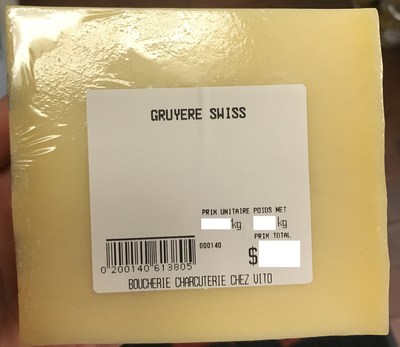
Quebec – Absence of information necessary for the safe consumption of raw milk Gruyère cheese packaged and sold by the Butchery Charcuterie at Vito

MAPAQ

QUEBEC CITY , April 27, 2022 /CNW Telbec/ – The Ministry of Agriculture, Fisheries and Food (MAPAQ), in collaboration with the Food Inspection Division of the City of Montreal and the Boucherie Charcuterie at Vito located at 5180, rue Saint-Urbain in Montreal, advises people considered vulnerable (pregnant women, people with weakened immune systems, children and the elderly) not to consume the product indicated in the table below. below, because it does not include the mention “made of raw milk” which is required.

Product name

Format

Affected batch

“GRUYERE SWISS”

Variable

Units sold until April 27, 2022

The product that is the subject of this warning was offered for sale until April 27, 2022 inclusive, only at the establishment designated above. It was wrapped in clear plastic wrap and sold chilled. The product label included the words “Boucherie Charcuterie chez Vito”.

The retailer is voluntarily recalling the products in question. It has agreed with MAPAQ and the Food Inspection Division of the City of Montreal to issue this warning as a precautionary measure. In addition, persons deemed vulnerable (designated above) who have this product in their possession are advised not to consume it. They should return it to the establishment where they bought it, use it in a cooked dish that will be cooked until it reaches a safe cooking temperature of 74°C or throw it away. However, no case of disease associated with the consumption of this food has been reported to MAPAQ to date.

Additional information

The Ministry publishes various information documents concerning food safety. Interested persons can consult them in the “Food Consumption” section of the MAPAQ website: www.mapaq.gouv.qc.ca/consommation  . They also have the possibility of registering online by visiting www.mapaq.gouv.qc.ca/rappelsfoods  to receive, by e-mail, the food recall press releases published by the Ministry. Finally, it is possible to follow “MAPAQfoods” on Twitter at the following address: www.twitter.com/MAPAQfoods  .

Gruyère Swiss (CNW Group/Ministry of Agriculture, Fisheries and Food) 

Hazard Classification: Class 1
Reference Number: 4540

Source:
Media relations
Direction des communications
Ministry of Agriculture, Fisheries
and Food
Tel. : 418 380-2100, extension 3512

Research – Shiga toxin-producing Escherichia coli (STEC) data: 2019

UKSHA

Main points for 2019

The main points of the 2019 report are:

1. A total of 539 confirmed cases of Shiga toxin-producing Echerichia coli (STEC) O157 were reported in England and Wales in 2019.

2. The lowest incidence of STEC O157 was in the East Midlands region (0.56 per 100,000 population) and the highest in the Yorkshire and Humber region (1.51 per 100,000 population).

3. Children aged 1 to 4 years had the highest incidence of infection (3.28 per 100,000 population, CI 95% 2.63–4.04).

4. Nearly one-third of confirmed STEC O157 cases in England were hospitalised and 3% were reported to have developed haemolytic ureamic syndrome (HUS).

5. In England and Wales, detection of non-O157 STEC increased in line with the growing number of NHS labs implementing gastrointestinal (GI) diagnostics using polymerase chain reaction (PCR); in 2019, 768 culture-positive non-O157 STEC cases (655 in England, 113 in Wales) were reported.

6. A further 347 specimens in England and 66 in Wales were positive for Shiga toxins (stx) genes on PCR at the Gastrointestinal Bacteria Reference Unit (GBRU) but an organism was not cultured.

7. The most commonly isolated non-O157 STEC serogroup was STEC O26 (England: n=109/655, 17% and Wales: n=28/113, 25%).

8. Five outbreaks of STEC involving 65 cases in England were investigated in 2019.

Cases of STEC in England and Wales in 2019

In 2019, 1,720 confirmed cases of STEC were reported in England and Wales; these comprised 539 culture-confirmed cases of STEC serogroup O157 (515 cases in England and 24 in Wales) and 768 cases (655 in England, 113 in Wales) where a serogroup other than O157 was isolated (non-O157). For a further 413 cases, samples were confirmed as STEC by testing positive by PCR for stx genes, but STEC was not cultured (347 in England, 66 in Wales).

Five confirmed cases were infected with multiple serogroups:

  • O157 and O26
  • O26 and O103
  • O76 and O113
  • O91 and O128ab
  • O146 and O91

There were 13 probable cases with serological evidence of STEC infection, with antibodies detected to O157 lipopolysaccharides in 11 cases (England: 10, Wales: 1), for O111 lipopolysaccharides in one case, and for O26 lipopolysaccharides in another case.

The crude incidence rate of confirmed STEC O157 in England and Wales was 0.91 per 100,000 cases (95% CI 0.83–0.99), continuing the downward trend observed since 2015 (Figure 1). It is the lowest number of cases reported annually since 1996, when testing began in England for STEC O157 on all faecal specimens from patients with suspected gastrointestinal infection (7).

Non-O157 STEC cases in England and Wales
Historically, cases of non-O157 STEC have been under ascertained, with 89 cases of STEC non-O157 reported between 2009 and 2013, prior to PCR being implemented.

Following the increase in recent years in frontline laboratories using PCR, there has been a significant increase in the detection of non-O157 STEC in England. It is not possible to estimate a denominator for incidence calculations for non-O157 STEC because details of contract arrangements for referral of samples from primary care and catchment areas of each diagnostic laboratory using PCR are not known.

In 2019, of 5,760 samples received at GBRU for STEC testing, 1,002 non-O157 STEC cases were confirmed in England. Of the 1,002 non-O157 cases, 655 culture positive cases of 72 different serogroups were confirmed. For 21 isolates, a serotype could not be identified as the genes encoding the somatic O antigen did not match any known sequence in the database. Specimens for a further 347 cases in England were positive for stx genes on PCR at GBRU but an organism was not cultured (PCR positive-culture negative).

In Wales, 113 non-O157 cases of 40 different serotypes were confirmed and a further 66 were PCR positive-culture negative. The most common non-O157 serogroups isolated in 2019 were O26 (28/113, 25%), O146 (15/113, 13%), O128ab (10/113, 9%) and O91 (8/113, 7%) followed by O111 (4/113, 4%), O113 (4/113, 4%) and O156 (4/113, 4%).

USA – CDC issues Health Alert: Investigation of Illness Complaints After Consuming Lucky Charms Cereal

Food Poison Journal

During April 2022, there has been an increase in complaints of gastrointestinal illness (GI) attributed to eating Lucky Charms cereal reported primarily to a crowdsourcing website. Some complaints of illness have also been reported to the U.S. Food and Drug Administration (FDA), state, and local health departments. There are very little data on the clinical presentation of these complaints, e.g., symptom profiles, incubation periods, and illness durations, as well as a lack of laboratory testing of clinical specimens. The scarcity of data and lack of a consistent clinical presentation are making it difficult to ascertain if any of these illnesses are linked to the suspected cereal.

The Centers for Disease Control and Prevention (CDC) is coordinating with state and federal partners to characterize the clinical presentations and epidemiology of recent illness reports. CDC is also collaborating with state and federal partners to evaluate data collected from ill people to determine if an outbreak of GI illnesses is occurring and its potential link to Lucky Charms cereal.