Category Archives: Microbiology

Luxembourg – Luxembourg to set up new food agency

Food Safety News

Luxembourg is to get a single agency in charge of official controls in the food chain.

Legislators in the country voted this past week to create the Luxembourg Veterinary and Food Administration (ALVA).

The new authority will bring together all official controls relating to the food supply chain under the remit of the Minister of Agriculture, Viticulture and Rural Development.

Minister of Consumer Protection and Health Paulette Lenert said the reform would bring together services currently under the supervision of three different ministries and involve 100 people.

USA – Salmonella Enteritidis Outbreak at Nebraska Correctional Facility

Food Poisoning Bulletin

A Salmonela Enteritidis outbreak at a Nebraska correctional facility this year sickened at least 15 people, according to the CDC’s Morbidity and Mortality Weekly Report (MMWR) for the week of July 15, 2022. The Lincoln-Lancaster County Health Department (LLCDH) notified the Nebraska Department of Health and Human Services of two cases of laboratory-confirmed Salmonella in inmates on January 14, 2022.

The investigation linked consumption of mechanically separated chicken to the illnesses. Mechanically separated chicken is produced by separating edible meat from bone and cartilage under pressure. It is often used for use in institutions like prisons, jails, and correctional facilities because it’s cheap. A Salmonella Heidelberg outbreak linked to that product sickened at least nine inmates in Tennessee in 2015.

USA – Collaborating on Culture in the New Era of Smarter Food Safety – August 3rd Webinar

FDA

Date:
August 3, 2022
Time:
12:15 PM – 1:15 PM ET

The U.S. Food and Drug Administration and Stop Foodborne Illness External Link Disclaimer, a non-profit public health organization, are collaborating on a webinar series that explores food safety culture, one of the core elements in FDA’s New Era of Smarter Food Safety initiative.

The fourth webinar, called “What More Do You Want to Know About Food Safety Culture?,” will be broadcast live from the International Association for Food Protection 2022 Annual Meeting on August 3, 2022, at 12:15 p.m. ET. Speakers and attendees will engage in a question-and-answer session on an array of food safety culture topics. Registration is available for both in-person and virtual attendance.

The series, entitled “Collaborating on Culture in the New Era of Smarter Food Safety,” began on Thursday, November 4, 2021, with the session entitled “Key Concepts in Addressing Food Safety Culture as a Science – Not a Slogan.”

The second webinar in the series, called “Making Leaders Risk Aware and Push to Reduce Risk,” took place on Wednesday, February 16, 2022.

The third webinar, called “Building a Coalition of Food Safety Culture Champions Across Your Organization,” took place on May 18, 2022.

The New Era of Smarter Food Safety blueprint states that dramatic improvements in reducing the burden of foodborne illness cannot be made without doing more to influence the beliefs, attitudes, and, most importantly, the behaviours of people and the actions of organizations.

The webinar series will engage experts from the public and private sectors in a collaborative exchange of ideas and experiences related to the importance of a robust food safety culture in helping to ensure safe food production.

The series will have valuable information for both those well-versed on, and those just learning about, food safety culture.

Register Here External Link Disclaimer

Registration is required; a recording will be available after the event.

USA – New Era of Smarter Food Safety Blueprint

FDA

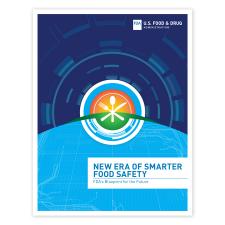
New Era for Smarter Food Safety Blueprint

The New Era of Smarter Food Safety Blueprint is centered around four core elements:

  1. Tech-enabled Traceability
  2. Smarter Tools and Approaches for Prevention and Outbreak Response
  3. New Business Models and Retail Modernization
  4. Food Safety Culture

These are the foundational pillars of the New Era of Smarter Food Safety, covering the range of technologies, analytics, business models, modernization and values that are its building blocks. These elements, working together, will help create a safer and more digital, traceable food system.

Research – Marine Harmful Algal Bloom (HAB)-Related Illness Tracking

OEHHA

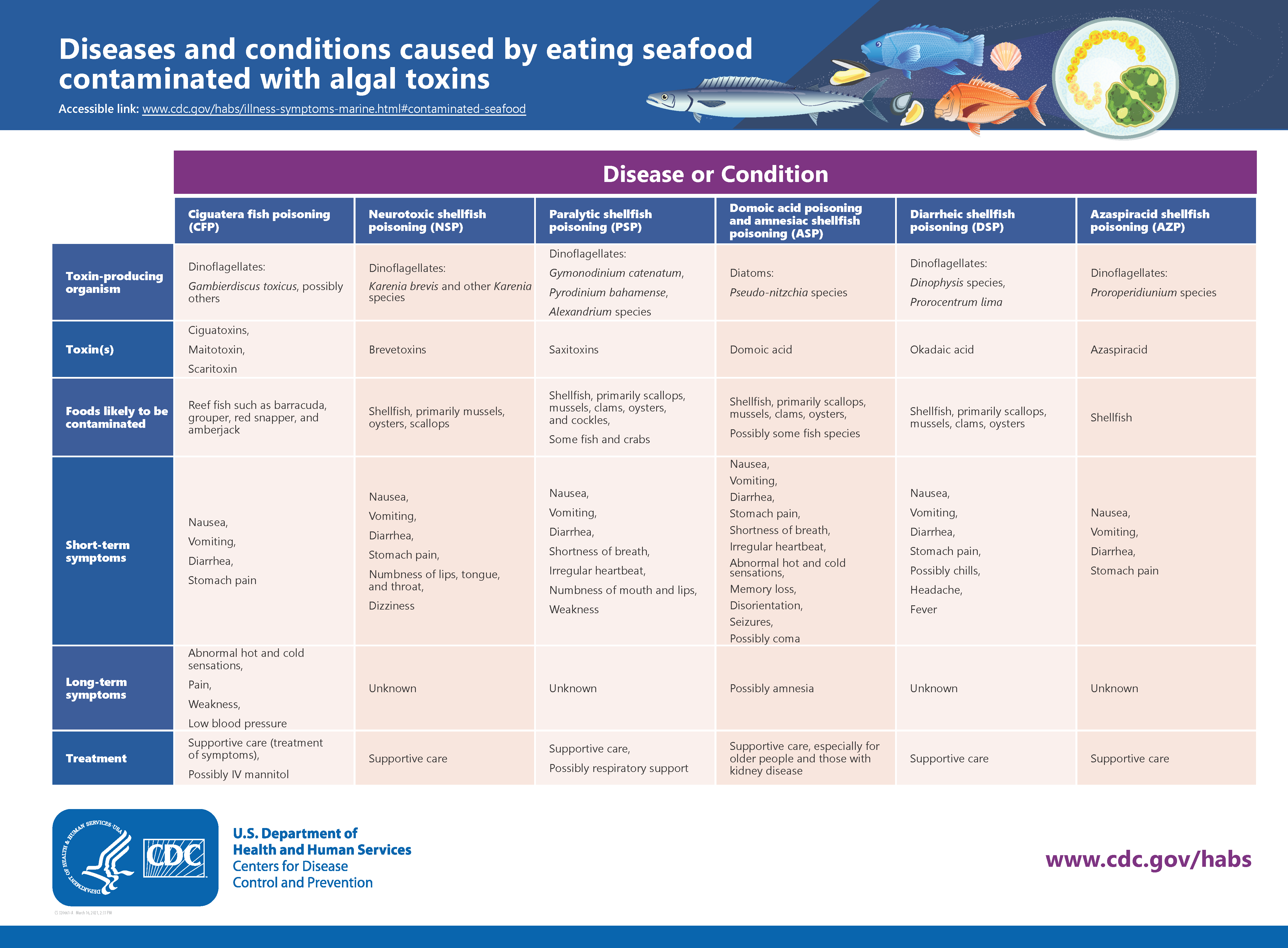
Diseases and conditions caused by eating seafood contaminated with algal toxins

What are marine harmful algal bloom (HAB)-related illnesses?

When phytoplankton and algae in marine waters occur at levels that pose a health risk to humans, animals, and the environment, they are referred to as marine harmful algal blooms (HABs). The US Centers for Disease Control and Prevention (CDC) provide resources on potential human and animal exposures to marine HABs or associated marine biotoxins via skin contact or inhalation, or consumption of fish and shellfish.

Research – Publisher’s Platform: Colonel Colon and his League of Faecal Fighters coming soon to help make your food safer

Food Safety News

Over a decade ago, the mom of two clients who both developed acute kidney failure after consuming E. coli O157:H7-tainted spinach sent me an unexpected present. The outbreak sickened over 205 people, killing five, sending hundreds to the hospital, many with life-altering complications. The gift was a bobble-head that bore a similarity to a younger version on me. On the base it said: “Colonel Colon and his League of Fecal Fighters.” It sits on my desk today.

I have always thought of doing something with the gift, and with the talent of my incredible niece, Janae Dueck, and borrowing from the work of the good food people at the FDA and FSIS, and idea is brewing of a way to help educate us all to be Fecal Fighters.

Over the next year we will be working on comic book, a cartoon video about the adventures of these superheroes, and a food safety jingle (thanks to my friend Vincent).

Read More at the Link Above

India – 11-year-old dies, 4 others ill after taking food at Madrasa

New Indian Express

GUNTUR: A 11-year-old boy died of suspected food poisoning and four other children were hospitalised after reportedly having breakfast served at a madrasa in Palnadu district on Saturday. Police said as many as 18 boys were studying at the Islamia Nurul Huda madrasa in Gurazala.

Gurazala Deputy Superintendent of Police (DSP) Jayaram said preliminary investigation revealed that the boys had consumed food that was brought to the madrasa by a local resident, Hafeez, who had held a house-warming ceremony on Friday night. “The five boys ate the leftover food on Saturday morning and took ill after a couple of hours. Initially, we suspected that the roselle used in the food was not properly cleaned, and had pesticide residue,’’ he said. Hafeez is a pesticide dealer.

The body of the deceased was sent to hospital for post-mortem, police said, adding the cause of the death could be ascertained after getting the autopsy report.

USA – FDA reports illnesses linked to Daily Harvest product have more than doubled

Food Safety News

The number of complaints of illnesses related to Daily Harvest brand French Lentil & Leek Crumbles has more than doubled since the FDA’s report on June 30.

As of July 14 the Food and Drug Administration is reporting 277 reports from people who ate the frozen crumbles. The agency continues to advise people to not eat the product and to check their freezers for it. As of June 30, 133 people had reported illnesses to the FDA. The company has reported receiving more than 470 reports.

India – Food poisoning at RGUKT Basara, 500 students admitted to hospital

The Hindu

Nearly 500 students of the Rajiv Gandhi University of Knowledge Technologies (RGUKT), Basara, were taken ill on Friday due to suspected food poisoning.

The students were treated locally, while some were shifted to Nizamabad for better treatment. It is suspected that fried rice made with rotten eggs could have led to food poisoning. However, officials have not revealed the exact reason.

Research – Epidemiological and microbiological investigation of a large increase in vibriosis, northern Europe, 2018

Eurosurveillance

Food Illness

The habitat of  spp. bacteria is fresh and brackish water with moderate salinity. Non-toxigenic , as well as several human pathogenic non-cholera  species, including  and , cause vibriosis after seawater exposure or consumption of contaminated seafood [1]. Clinical manifestations range from mild gastroenteritis and otitis to wound infections that may lead to severe necrotising fasciitis and septicaemia with a potentially fatal outcome [25].

The Baltic Sea region is one of the areas where increasing numbers of cases related to  species causing vibriosis (VCV) have been reported in the last decades [6]. Several studies have shown how the occurrence of heatwaves, which lead to an increase in sea surface temperature, are linked with an increase in the number of reported vibriosis cases [4,712]. For instance, the years with an especially warm summer in the Baltic Sea region, 2006, 2010 and particularly 2014 (the warmest year in historical records at the time), were also the years with the largest number of vibriosis cases reported [6,11].

However, there is a notable gap in surveillance data for vibriosis since it is not a notifiable disease in the majority of European countries [1,6]. Therefore, the aim of this multi-country study was to describe the epidemiology of vibriosis cases in countries bordering the North and Baltic Seas area during the exceptionally warm year of 2018 [13,14], in order to investigate the extent of these infections in the study countries, map their genetic diversity, understand the predictors for developing severe vibriosis, and propose recommendations for public health measures.