Salmonella in feather meal from Russia in Poland and Hungary
Salmonella Senftenberg in soy flour from Hungary, via the Netherlands in Italy, Slovenia and Belgium
Salmonella Yoruba in Soya bean meal from NL in Finland

Salmonella in feather meal from Russia in Poland and Hungary
Salmonella Senftenberg in soy flour from Hungary, via the Netherlands in Italy, Slovenia and Belgium
Salmonella Yoruba in Soya bean meal from NL in Finland
Posted in Animal Feed, Animal Feed Salmonella, Animal Feed Testing, Decontamination Microbial, Food Micro Blog, Food Microbiology, Food Microbiology Blog, Food Microbiology Testing, microbial contamination, Microbiological Risk Assessment, Microbiology, Microbiology Investigations, Microbiology Risk, RASFF
Over 100 persons, including children, were hospitalised in Manipur’s Senapati district since Tuesday over suspected case of food poisoning from a birthday celebration in the hilly state.
The doctors said they are suspecting food poisoning. Locals claim the consumption of fermented fish chutney during birthday celebrations could be the primary cause.
“However, it will take at least 7 to 14 days to get the results for the samples which we collected and sent for testing and we’ve also collected blood samples to check other diseases, Dr Veidai said.”
Meanwhile, the food safety department officials also went to the Senapati district village to ascertain the causes of the mass sickness.
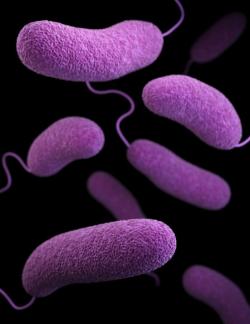
A cholera outbreak in several regions of Syria presents “a serious threat to people in Syria and the region”, the United Nations representative in the country said, calling for an urgent response to contain its spread.
The outbreak is believed to be linked to irrigation of crops using contaminated water and people drinking unsafe water from the Euphrates river which bisects Syria from the north to the east, UN Resident and Humanitarian Coordinator Imran Riza said in a statement.
Posted in Contaminated water, food bourne outbreak, Food Illness, Food Microbiology, Food Microbiology Blog, Food Microbiology Testing, Foodborne Illness, foodborne outbreak, foodbourne outbreak, Illness, microbial contamination, Microbiological Risk Assessment, Microbiology, Microbiology Investigations, Microbiology Risk, outbreak, Vibrio, Vibrio cholera, Water, water microbiology, Water Safety
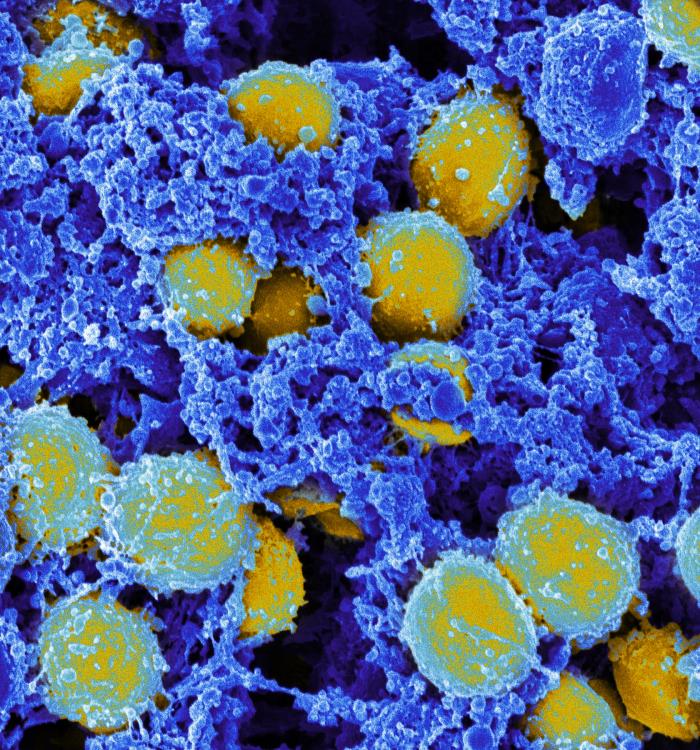
This study examined the changes in biofilm-formation ability, hemolytic/lipase/nuclease/protease activities, and resistance to various bactericidal treatments of Staphylococcus aureus after sublethal treatment with carvacrol and thymol. The minimum inhibitory concentrations (MICs) of carvacrol and thymol for S. aureus were 0.4 and 0.3 mg/ml, respectively, and sublethal concentrations (1/2 and 1/4 MIC) were determined based on these concentrations. Sublethal treatment with carvacrol and thymol did not change the protease and lipase activities but reduced the hemolytic and nuclease activities of S. aureus. After sublethal treatment with carvacrol and thymol, the biofilm-formation ability of S. aureus was decreased, which was found to be due to the decrease in cell surface hydrophobicity. In addition, after sublethal treatment with carvacrol and thymol, the resistance of S. aureus to heating and malic acid treatments increased, whereas resistance to ultraviolet and hypochlorous acid (HOCl) decreased, and resistance to hydrogen peroxide (H2O2) did not change. The results of this study show that sublethal treatment with carvacrol and thymol can effectively suppress some virulence factors of S. aureus and that applying HOCl or ultraviolet radiation would be an effective subsequent treatment to inactivate S. aureus after sublethal treatment.
Posted in Biofilm, Decontamination Microbial, Food Micro Blog, Food Microbiology, Food Microbiology Blog, Food Microbiology Research, Food Microbiology Testing, microbial contamination, Microbiological Risk Assessment, Microbiology, Microbiology Investigations, Microbiology Risk, Research, Staphylococcus aureus
For 2020, 28 EU/EEA countries reported 4 824 confirmed cases of Shiga toxin -producing Escherichia coli (STEC) infection. The overall notification rate was 1.6 cases per 100 000 population. The highest notification rates were reported in Ireland, Malta, Denmark, and Norway. The EU/EEA notification rate decreased notably in 2020 compared with 2016-2019 due to the COVID-19 pandemic. The highest rate of confirmed cases was observed in 0–4-year-old children, with 8.6 cases per 100 000 population for males and 7.5 cases per 100 000 population for females.
Posted in food bourne outbreak, Food Micro Blog, Food Microbiology, Food Microbiology Blog, Food Microbiology Research, Food Microbiology Testing, foodborne outbreak, microbial contamination, Microbiological Risk Assessment, Microbiology, Microbiology Investigations, Microbiology Risk, outbreak, Research, STEC, STEC E.coli
New Zealand Food Safety today reduced a public health warning against collecting shellfish in the Waikato and Taranaki region. The public health warning now extends from Albatross Point south to Oakura Beach and no longer applies to Kawhia and Aotea Harbours. More testing is being undertaken to determine the levels of paralytic shellfish toxins in the affected area.
Routine tests on shellfish samples taken from the Aotea/Kawhia Harbour area have shown levels of Paralytic Shellfish Poisoning (PSP) toxins are now within the safe limit of 0.8 mg/kg set by New Zealand Food Safety.
Mussels, oysters, tuatua, pipi, toheroa, cockles, scallops, catseyes, kina (sea urchin), and all other bivalve shellfish should not be eaten.
Note, cooking shellfish does not remove the toxin.
Pāua, crab, and crayfish may still be eaten if the gut has been completely removed prior to cooking, as toxins accumulate in the gut. If the gut is not removed, its contents could contaminate the meat during the cooking process.
Symptoms typically appear between 10 minutes and 3 hours after ingestion and may include:
If anyone becomes ill after eating shellfish from an area where a public health warning has been issued, phone Healthline for advice on 0800 61 11 16, or seek medical attention immediately. You are also advised to contact your nearest public health unit and keep any leftover shellfish in case it can be tested.
Monitoring of toxin levels will continue and any changes will be communicated accordingly. Commercially harvested shellfish – sold in shops and supermarkets, or exported – is subject to strict water and flesh monitoring programmes by MPI to ensure they are safe to eat.
Posted in Algal Toxin, Decontamination Microbial, Food Micro Blog, Food Microbiology, Food Microbiology Blog, Food Microbiology Research, Food Microbiology Testing, Food Toxin, Lipophilic Marine Biotoxin, Marine Biotoxin, microbial contamination, Microbiological Risk Assessment, Microbiology, Microbiology Investigations, Microbiology Risk, MPI, paralytic shellfish poisoning, PSP
Eleven people fell sick after consuming stale food during ‘shraddh’, a ritual performed to pay homage to a dead ancestor, in Madhya Pradesh’s Khargone district, an official said on Monday.
The incident took place on Sunday after ‘kheer’ (a sweet dish made of milk) was served to the people during the ritual in Saigon town.
In the evening, 11 people including five women and two girls complained of vomiting and upset stomach. After preliminary treatment at Saigon health centre, they were referred to the district hospital, Dr Mayank Patidar from the medical facility said.
The condition of all of them is stable now, he said.
The food department has collected the kheer sample for testing, he said.
The official said it was suspected that the milk used in the kheer preparation had turned stale which resulted in food poisoning.
The Vibrio suitability tool (Vibrio map viewer) shows the environmental suitability for Vibrio growth in the Baltic Sea. It is a near real-time model that uses daily updated remote sensing data to examine worldwide environmental conditions, such as sea surface temperature and salinity for Vibrio spp.. The model used for the Vibrio viewer has been calibrated to the Baltic Region in Northern Europe and might not apply to other worldwide settings prior to validation.
Infections caused by Vibrio species other than V. cholerae can be serious, particularly for immunocompromised persons. However, the overall occurrence is low despite an increase having recently been observed in northern Europe.
ECDC monitors Vibrio growth in the Baltic Sea during the summer. If and when the risk of Vibrio growth is determined as medium or above, notifications are reported in the weekly threats reports (CDTR). The original viewer is available on the ECDC website: https://geoportal.ecdc.europa.eu/vibriomapviewer
Posted in Food Micro Blog, Food Microbiology, Food Microbiology Blog, Food Microbiology Research, Food Microbiology Testing, microbial contamination, Microbiological Risk Assessment, Microbiology, Microbiology Investigations, Microbiology Risk, Research, Vibrio, Vibrio cholera, Vibrio parahaemolyticus
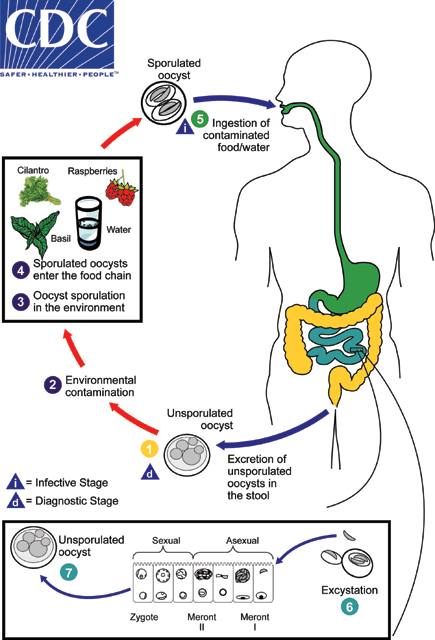
Each spring and summer, Canada sees an increase in non-travel related Cyclospora illnesses reported to the Public Health Agency of Canada (PHAC). PHAC is working with its public health and food safety partners to identify possible ways infections are occurring in Canada. Previous Cyclospora illnesses have been linked to various types of imported fresh produce, including pre-packaged salad mix, basil, cilantro, berries, lettuce, and snow and snap peas.
Learn more about the causes, symptoms and risks of infection, as well as how to prevent and treat an illness.
| Investigation status | Ongoing |
|---|---|
| Case count | 310 |
| Provinces/Territories |
|
| Hospitalizations | 13 |
| Deaths | 0 |
| Gender |
|
| Age Range in Years | 1-90 |
| Recall | No |
| Public Health Notice | No |
Posted in Cyclospora, Cyclosporiasis, food bourne outbreak, Food Micro Blog, Food Microbiology, Food Microbiology Blog, Food Microbiology Testing, foodborne outbreak, foodbourne outbreak, microbial contamination, Microbiological Risk Assessment, Microbiology, Microbiology Investigations, Microbiology Risk, outbreak

 FoodWorld