Archives
-
Join 346 other subscribers
KSWFoodWorld
Blog Stats
- 445,792 Views
Category Archives: Microbiological Risk Assessment
Research – Effects of Ginger and Garlic Powders on the Physicochemical and Microbiological Characteristics of Fruit Juices during Storage
Natural preservatives such as garlic and ginger can be added to the formulation of fresh fruit juices to encourage the consumption of health-promoting foods. In this study, the influence of garlic and ginger and the storage conditions on physicochemical and microbiological characteristics of fruit juices were investigated. The fruit juice assortments were produced from apple, apple and pumpkin, and apple and pomegranate and were treated with 0.5 g garlic powder, 0.5 g ginger powder, and 0.25 g mix of garlic and ginger powders. A total of 12 unpasteurized samples were produced, of which 3 were control samples. Samples stored at 20 and 4 °C were analyzed at 0, 3, 6, and 9 days for water activity (aw), pH, titratable acidity (TA), total soluble solids (TSS), electrical conductivity (EC), vitamin C, color parameters, total number of germs, yeasts, and molds, Listeria, Enterobacteriaceae, and Escherichia coli. Results showed that aw, pH, TSS, and vitamin C content decreased during storage of fruit juice samples, while TA increased. The lowest increase in total number of aerobic mesophilic germs was determined for the apple and pumpkin juice with garlic and ginger and apple juice with garlic.
RASFF Alert – Enterobacteriaceae – Dog Chews
High content of Enterobactericeae in dog chews from India in the Netherlands and Germany
RASFF Alerts – Animal Feed – Salmonella – Chickens for Feed – Raw Pet Food
Salmonella in raw pet food from the Netherlands in Belgium
Salmonella in chickens for animal feed from Denmark in the Netherlands
RASFF Alerts – Animal Feed – Aflatoxin – Peanuts- Dairy Sheep Compound Feed
Aflatoxin B1 in Indian peanuts for bird feed in the Netherlands
Aflatoxin B1 in dairy sheep compound feed from France in Spain
USA – FDA Warning Letter – Mariscos Bahia, Inc. – Salmonella Outbreak
The United States Food and Drug Administration (FDA) and the California Department of Public Health (CDPH) inspected your seafood processing facility, Mariscos Bahia Inc, located at 8300 Rex Rd., Pico Rivera, CA 90660-3719 from October 6 to October 21, 2022. The inspection was initiated as part of a multistate foodborne outbreak investigation of Salmonella Litchfield (S. Litchfield) infections linked to seafood, including fresh, raw salmon, supplied by your facility. According to the Centers for Disease Control and Prevention (CDC), 39 people from 4 states were infected with the outbreak strain of S. Litchfield. During our inspection we collected environmental samples (swabs) from various areas in your facility, including areas that are near food during processing operations. FDA laboratory analyses found the presence of the outbreak strain of S. Litchfield and two additional Salmonella strains, Salmonella Mbandaka (S. Mbandaka) and Salmonella Oranienburg (S. Oranienburg), which are human pathogens, in your facility. On October 20, 2022, your firm recalled various types of fresh fish processed at your facility and distributed between June 14, 2022 and October 17, 2022, because they had the potential of being contaminated with Salmonella. FDA and CDC have determined, based upon the epidemiologic, traceback evidence, and whole genome sequencing (WGS) matches between clinical and FDA environmental samples, that fresh salmon processed at your facility was the likely source of this multistate S. Litchfield outbreak.
Posted in FDA, food bourne outbreak, Food Illness, Food Micro Blog, Food Microbiology, Food Microbiology Blog, Food Microbiology Research, Food Microbiology Testing, Foodborne Illness, foodborne outbreak, foodbourne outbreak, Illness, microbial contamination, Microbial growth, Microbiological Risk Assessment, Microbiology, Microbiology Investigations, Microbiology Risk, outbreak
USA – FDA -Core Investigation Table
What’s New
- For the outbreak of Salmonella Hartford (ref # 1144) in a not yet identified product, the case count has increased from 47 to 50 cases. FDA has also initiated an onsite inspection and sample collection and analysis.
| Date Posted |
Ref | Pathogen or Cause of Illness |
Product(s) Linked to Illnesses (if any) |
Total Case Count |
Status |
| 3/8/2023 | 1144 | Salmonella Hartford | Not Yet Identified |
50 | Active |
| 3/1/2023 | 1143 | Hepatitis A Virus | Frozen Organic Strawberries |
See Outbreak Advisory |
Active |
| 2/15/2023 | 1123 | Listeria monocytogenes |
Not Yet Identified |
See CDC Investigation Notice |
Active |
| 11/9/2022 | 1127 | Listeria monocytogenes |
Enoki Mushrooms |
See Outbreak Advisory |
Active |
Posted in Decontamination Microbial, FDA, food bourne outbreak, Food Illness, Food Micro Blog, Food Microbiology, Food Microbiology Blog, Food Microbiology Research, Food Microbiology Testing, Foodborne Illness, foodborne outbreak, foodbourne outbreak, Hepatitis A, Illness, Listeria, Listeria Enoki Mushrooms, Listeria monocytogenes, microbial contamination, Microbial growth, Microbiological Risk Assessment, Microbiology, Microbiology Investigations, Microbiology Risk, outbreak, Salmonella
Research – Proposal and Verification of the Theory of Layer-by-Layer Elimination of Biofilm in Listeria monocytogenes
Abstract
Biofilms are microbial communities that represent a high abundance of microbial life forms on Earth. Within biofilms, structural changes during clearance processes occur in three spatial and temporal dimensions; therefore, microscopy and quantitative image analysis are essential in elucidating their function. Here, we present confocal laser scanning microscopy (CLSM) in conjunction with ISA-2 software analysis for the automated and high-throughput quantification, analysis, and visualisation of biofilm interiors and overall biofilm properties in three spatial and temporal dimensions. This paper discusses the removal process of Listeria monocytogenes (LM) biofilms using slightly acidic electrolytic water, non-electrolytic hypochlorite water, and alternating the use of strongly acidic and strongly alkaline electrolytic water. The results show that the biofilm gradually thins and gutters from the initial viscous dense and thick morphology under the action of either biocide. This process is consistent with first-level kinetics. After CLSM filming to observe the biofilm structure, analysis software was used to process and quantify the biovolume, average biofilm thickness, biofilm roughness and other indicators; fluorescence enzyme markers were used to verify the remaining amount of extracellular nucleic acid. In this study, we proposed and validated the theory of layer-by-layer elimination of LM biofilm.
Posted in Biofilm, Food Micro Blog, Food Microbiology, Food Microbiology Blog, Food Microbiology Research, Food Microbiology Testing, Listeria, Listeria monocytogenes, microbial contamination, Microbial growth, Microbiological Risk Assessment, Microbiology, Microbiology Investigations, Microbiology Risk
USA – FDA Releases FDA Activities for the Safety of Imported Seafood
Today, the FDA released Activities for the Safety of Imported Seafood (PDF). The report shares the comprehensive approach the FDA is taking to ensure that imported seafood consumed in the U.S. meets food safety requirements and the standards of domestically produced seafood.
Seafood is one of the most highly traded food commodities in the world with 2018 total imports accounting for approximately 94% of seafood sold by volume in the U.S. Seafood contains high quality protein and other essential nutrients and is an important part of a healthy diet. The safety of imported seafood, particularly shrimp, the most consumed type of seafood in the U.S., has garnered the attention of Congress and industry, among other stakeholders.
The FDA Strategy for the Safety of Imported Food (Import Strategy) is the roadmap for this report. It describes a comprehensive approach to imported food safety – guided by four goals:
- Food Offered for Import Meets U.S. Food Safety Requirements
- FDA Border Surveillance Prevents Entry of Unsafe Foods
- Rapid and Effective Response to Unsafe Imported Food
- Effective and Efficient Food Import Program
The Activities for the Safety of Imported Seafood details how established FDA regulation and innovative programs and technology are employed to support each of the four goals as they relate to imported seafood safety. These include proactively engaging and establishing partnerships with FDA regulatory counterparts in countries that export seafood to the United States; exploring the use of Artificial Intelligence (AI), specifically Machine Learning (ML), to strengthen predictive analytics; and developing new tools that leverage technology such as geographic information system (GIS) to provide spatial intelligence about potential seafood hazards.
Posted in Decontamination Microbial, Food Micro Blog, Food Microbiology, Food Microbiology Blog, Food Microbiology Research, Food Microbiology Testing, Food Safety, Food Safety Management, food safety training, microbial contamination, Microbial growth, Microbiological Risk Assessment, Microbiology, Microbiology Investigations, Microbiology Risk
Viet Nam – One dead, one in critical condition, nine hospitalized after eating pickled carp – Clostridium botulinum
Ten people in a mountainous district of the Central Province of Quang Nam were hospitalized for Botulinum poisoning, with one of them dead after eating pickled carp on March 7.
Three seriously ill patients including one female and two male adults requiring mechanical ventilation were given Botulism Antitoxin Heptavalent (BAT) to treat Clostridium Botulinum poisoning. Up to now, 2/3 of patients have had good improvement after antidote infusion, a good prognosis; however, one patient is in critical condition.
Previously, the SGGP Newspaper released that after eating pickled carp at a house of a local inhabitant, four people experienced poisonous symptoms. They were rushed to the local infirmary for treatment. On the morning of March 18, physicians of the General Hospital in Phuoc Duc Commune of Phuoc Son District connected with Cho Ray Hospital in Ho Chi Minh City for consultation. Soon, doctors of Cho Ray Hospital flew to Quang Nam Province with five antidotes vitals to the General Hospital of the Northern mountainous region of Quang Nam for the treatment of the patients with botulinum poisoning.
Yesterday, Director of the Quang Nam Department of Health Mai Van Muoi said that the unit has just sent a dispatch on strengthening measures to prevent and control food poisoning when people like eating traditional foods such as fermented foods.
Thereby, the Department of Health of Quang Nam province suggested localities, especially highland areas, strengthen communication about food safety to local inhabitants to raise their awareness.
Posted in Bacterial Toxin, Clostridium, Clostridium botulinum, Decontamination Microbial, Food Micro Blog, Food Microbiology, Food Microbiology Blog, Food Microbiology Testing, Food Poisoning, Food Poisoning Death, microbial contamination, Microbial growth, Microbiological Risk Assessment, Microbiology, Microbiology Investigations, Microbiology Risk, Poisoning
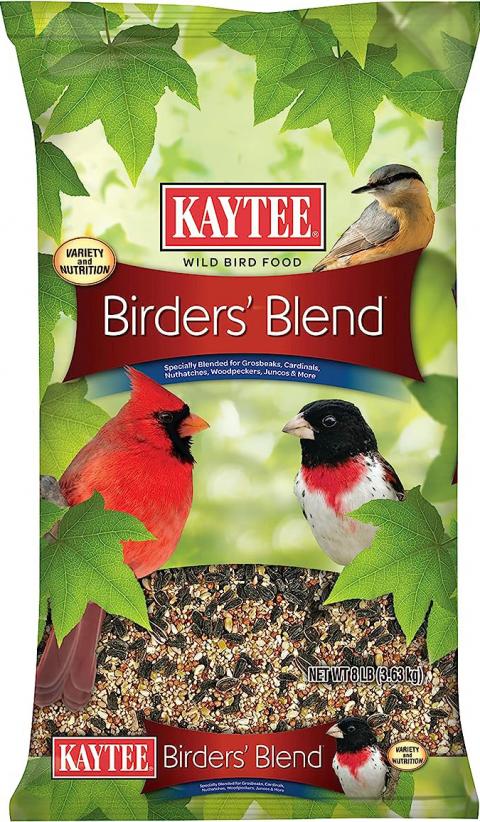
USA – Voluntary Recall of One Lot of Kaytee® Wild Bird Food Birders Blend, 8 Lb Bag, Due to Elevated Levels of Aflatoxin

CHILTON, WI – March 18, 2023 – Kaytee Products Inc. is voluntarily recalling one lot of Kaytee® Wild Bird Food Birders’ Blend, 8 lb. bag, UPC 0 71859 02711 1, Lot Number PennPak1 102022 933, best buy date of 041224, due to potentially elevated levels of Aflatoxin above the acceptable limit. Aflatoxin is a naturally occurring by-product from the growth of Aspergillus flavus and can be harmful to wild birds if consumed in significant quantities. No illnesses have been reported in association with this product to date and no other Kaytee products are affected.
On March 13, 2023, the Georgia Department of Agriculture notified Kaytee Products Inc. that after conducting a routine laboratory analysis of the product, Lot PennPak1 102022 933 located on the bottom right corner of the front of the 8 lb. bags of Kaytee® Wild Bird Food Birder’s Blend was found to contain elevated levels of Aflatoxin.
The products affected by this announcement are:
|
Product |
Size |
UPC |
Lot No. |
Best by |
|---|---|---|---|---|
| Kaytee® Wild Bird Food Birders’ Blend | 8 lb | 0 71859 02711 1 | PennPak1 102022 933 |
041224 |
Posted in Aflatoxin, Animal Feed, Animal Feed Mould Toxin, Animal Feed Testing, Aspergillus, Aspergillus Toxin, Food Micro Blog, Food Microbiology Blog, microbial contamination, Microbial growth, Microbiological Risk Assessment, Microbiology, Microbiology Investigations, Microbiology Risk, mold, Mold Toxin, Mycotoxin