Category Archives: Microbiological Risk Assessment

Research – Validation of simulated commercial manufacturing of flour tortillas to control Salmonella contamination

Wiley Online

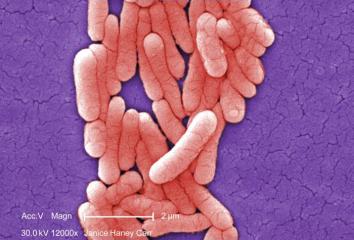
Salm2

This study validated a typical batch commercial flour tortilla cooking process against Salmonella contamination. Tortilla dough prepared from flour inoculated with a 7‐serovar Salmonella cocktail was pressed in a dough press (preset at 200 °F [93.3°C]) for 3 s, then heated on a griddle (preheated to 221.1°C [430 °F]) for 30, 45 or 60 s on each side, followed by ~8 min of ambient air cooling. The maximum internal temperature of tortillas during cooking was >97°C for all cooking times. The Salmonella counts in tortillas decreased >6‐log at all cooking times; however, tortillas cooked for 30 and 45 s had an undercooked appearance. The water activity and pH of cooked tortillas after 60 s of heating on both sides followed by cooling were 0.934 and 6.62, respectively. The D‐values of the Salmonella cocktail in raw tortilla dough were 22.2, 13.4, and 4.6 min at 55, 58, and 61°C, respectively, and the z‐value was 8.9°C.

Research – The use of antifungal oat‐sourdough lactic acid bacteria to improve safety and technological functionalities of the supplemented wheat bread

Wiley Online

In the present study, predominant lactic acid bacteria (LAB) were isolated from oat sourdough. Then, the isolates were screened based on their in vitro antifungal activity. Subsequently, biotechnological capabilities of the selected LAB were evaluated in wheat bread supplemented with controlled fermented oat containing the isolate. Pediococcus pentosaceus was molecular identified as predominant antifungal isolate. Based on our results, fermented oat not only significantly (p < .05) reduced the mold expansion on the produced breads, but also improved the quality attributes of the product. Crumb porosity and antioxidant capacity of the supplemented bread revealed the positive effects of the isolate on textural and functional characteristics of the enriched bread. Wheat bread supplemented with controlled fermented oat had also the highest 2,2‐diphenyl‐1‐picrylhydrazyl radical scavenging activity compared to the other samples. Accordingly, the potential applications of Ppentosaceus isolate as profunctional starter culture in processing of mixed wheat‐oat sourdough bread were verified.

Research – Photocatalytically Enhanced Inactivation of Internalized Pathogenic Bacteria in Fresh Produce using Ultraviolet Irradiation with Nano-titanium Dioxide

Journal of Food Protection

Once pathogens are internalized in fresh produce, they pose a challenging food safety issue since they are not effectively inactivated by conventional rinsing or sanitization. To protect food safety and public health, the objectives were to examine internalized levels of foodborne pathogens in different types of fresh produce and to investigate the effectiveness of photocatalytically enhanced inactivation of internalized pathogens in fresh produce using UV irradiation with titanium dioxide (TiO 2 ). For this, green fluorescent protein-labeled S. Typhimurium and E. coli O157:H7 were inoculated on the leaf surface of four types of fresh produce (~10 8 CFU (colony-forming unit)/leaf) and varying concentrations of TiO 2 suspension (0.50, 0.75, 1.00, 1.25, and 1.50 µg/ml)) were applied to the surface of contaminated leaves. Depending on the nature of each vegetable, the internalized bacterial level differed (log 2 – 5 CFU/g of leaf). When UV irradiation (6,000 J/m 2 ) was applied, the internalized S. Typhimurium and E. coli levels were reduced by 0.8 – 2.4 log CFU/leaf and was with TiO 2 , the reduction was 1.1 – 3.7 log CFU/leaf. The inactivation efficiency increased as the TiO 2 concentration (up to 1.50 μg/leaf). These results indicate that the TiO 2 application enhanced the photocatalytic inactivation of internalized foodborne pathogens. The application of TiO2 would be most practical before UV irradiation and before distributing the produce. This study established a platform for future research on the inactivation of various internalized pathogens for protecting public health and scaling up fresh produce treatments by the food industry.

Research – Tech developed to detect food poisoning in real-time

Korea Biomed

The Korea Food Research Institute (KFRI) said Wednesday its researchers have developed a technology to manage food-poisoning bacteria in food materials safely in variable temperature environments of the food supply chain, such as storage and distribution.

KFRI’s “dynamic prediction model” can predict the proliferation of food poisoning and contamination of food supplies in real-time using the Internet of Things by linking the temperature provided by the food supply network.

Most of the food ingredients in group meals are safe. Still, some food products contaminated with food poisoning bacteria may increase due to temperature changes during the distribution-storage process. This explains why real-time safety management technology is needed in the process, KFRI said in a news release.

USA – Estimate of Burden and Direct Healthcare Cost of Infectious Waterborne Disease in the United States

CDC

Provision of safe drinking water in the United States is a great public health achievement. However, new waterborne disease challenges have emerged (e.g., aging infrastructure, chlorine-tolerant and biofilm-related pathogens, increased recreational water use). Comprehensive estimates of the health burden for all water exposure routes (ingestion, contact, inhalation) and sources (drinking, recreational, environmental) are needed. We estimated total illnesses, emergency department (ED) visits, hospitalizations, deaths, and direct healthcare costs for 17 waterborne infectious diseases. About 7.15 million waterborne illnesses occur annually (95% credible interval [CrI] 3.88 million–12.0 million), results in 601,000 ED visits (95% CrI 364,000–866,000), 118,000 hospitalizations (95% CrI 86,800–150,000), and 6,630 deaths (95% CrI 4,520–8,870) and incurring US $3.33 billion (95% CrI 1.37 billion–8.77 billion) in direct healthcare costs. Otitis externa and norovirus infection were the most common illnesses. Most hospitalizations and deaths were caused by biofilm-associated pathogens (nontuberculous mycobacteria, PseudomonasLegionella), costing US $2.39 billion annually.

At the beginning of the 20th century, diseases commonly transmitted by water, such as cholera and typhoid, were major causes of death in the United States (1). Reliable provision of treated, safe drinking water dramatically reduced the burden of these diseases and has been recognized as one of the greatest public health achievements of the 20th century (2). Despite this achievement, waterborne disease in the United States persists (35).

In the United States, outbreaks associated with large public drinking water systems have sharply declined in the past 40 years (3,6), likely the result of improvements in regulation and operation. However, transmission of disease via drinking water systems still occurs, often attributable to aging infrastructure, operational challenges, and the private or unregulated water systems (e.g., private wells) that serve an estimated 43 million persons (7). At the same time, the complexity and scope of water use has increased; drinking, sanitation, hygiene, cooling, and heating needs are supported by 6 million miles of plumbing inside US buildings (i.e., premise plumbing) (8,9). Premise plumbing water quality can be compromised by long water residency times, reduced disinfectant levels, and inadequate hot water temperatures, creating environments where pathogens (e.g., nontuberculous mycobacteria [NTM], Pseudomonas, and Legionella) can amplify in biofilms (10). People can be exposed to these pathogens through contact, ingestion, or inhalation of aerosols (e.g., from showerheads, building cooling towers, or decorative fountains).

As leisure time has increased, swimming pools, waterparks, water playgrounds, and hot tubs have proliferated (5). These venues rely largely on chlorination as the major barrier against disease transmission. Cryptosporidium has emerged as the major cause of outbreaks associated with treated aquatic venues because it is extremely chlorine resistant and has a low infectious dose (5,11,12). Warmer oceans have led to Vibrio-associated wound infections farther north than previously documented (13).

Estimates of the overall burden of foodborne disease in the United States, including both known and unknown agents, have been useful in directing prevention activities and setting public health goals (14,15). Quantifying the burden of infectious waterborne disease in the United States would also be beneficial.

Previous studies have attempted to estimate the burden of gastrointestinal illness (16,17) or all illness associated with drinking water (18) and untreated recreational water (19) in the United States, but the burden of disease from all water sources (drinking, recreational, environmental) and exposure routes (ingestion, contact, inhalation) has not been estimated. We present an estimate of the burden of waterborne disease in the United States that includes gastrointestinal, respiratory, and systemic disease; accounts for underdiagnosis; and includes all water sources and exposure routes.

Research – Assessing Food Safety Practices Among Texas Small Growers

Journal of Food Protection

This could be applied to many small growers all over the world.

This study aimed to assess current food safety gaps among small growers in Texas to identify key areas of focus for potential education and training materials for these stakeholders. Small growers earn ≤$25,000 in annual sales over a 3-year period and have an average food sale of less than $500,000. To this end, a survey tool was designed to determine the gaps in small farm growers’ food safety knowledge. A total of 29 questions were disseminated to participants at fruit and vegetable conference. The questions included topics such as food safety practices and perceptions, and current and past food safety training experiences. Data from 70 growers was collected and analyzed and the results demonstrated that more than 34% of growers use manure and 51% have domestic animals on the farm premises. Even though more than 51% of participants use bare hands for harvesting, 39% of growers do not provide handwashing facilities for workers, and 46% of the growers do not provide toilet facilities for their workers. Only 25% of the growers surveyed have access to food safety training materials for their employees. The results also showed that 21% of participants have previous food safety training. Furthermore, half of the growers surveyed used soil amendments and approximately 87% did not test irrigation water. About 30% of growers believe that organic produce is safer than conventional produce and 37% believe that organically grown produce has fewer harmful bacteria. Also, > 41% of participants could not recognize the difference between hydroponically grown produce and conventional systems. The results indicated specific areas of opportunity, gaps in resources needed by growers, and lack of food safety training materials. The results of this study will help in the design of targeted and specific food safety training materials for small growers.


Research – Inhibitory Activity of Essential Oils against Vibrio campbellii and Vibrio parahaemolyticus

MDPI

Vibriosis, caused by Vibrio strains, is an important bacterial disease and capable of causing significant high mortality in aquatic animals. Essential oils (EOs) have been considered as an alternative approach for the treatment of aquatic bacterial diseases. In this study, we evaluated the antibacterial activity of essential oils (= 22) or essential oil components (EOCs, = 12) against Vibrio strains belonging to the harveyi clade. It was verified by three different approaches, e.g., (i) a bacterial growth assay, comparing Vibrio growth with or without EO(C)s at various concentrations; (ii) a vapor-phase-mediated susceptibility assay, comparing the effect of EO(C)s on bacterial growth through the vapor phase; and (iii) a quorum sensing-inhibitory assay, based on specific inhibition of quorum sensing-regulated bioluminescence. The results showed that, in the bacterial growth assay, EOs of Melaleuca alternifolia and Litsea citrata at 0.0001%, Eucalyptus citriodora at 0.01% can inhibit the growth of Vibrio campbellii BB120. These EOs can also prevent the growth of V. parahaemolyticus strains but need to be present at a higher concentration (0.1%). Moreover, in the vapor-phase-mediated susceptibility assay, EOs of M. alternifoliaL. citrata and E. citriodora can inhibit the growth of V. campbellii BB120 through their vapor phase. However, V. parahaemolyticus strains (CAIM170, LMG2850 and MO904) cannot be inhibited by these EOs. Additionally, in the quorum sensing-inhibitory assay, EOs of Mentha pulegiumCuminum cyminumZingiber officinalis, and E. citriodora, all at 0.001%, have quorum sensing-inhibitory activity in V. campbellii BB120. Taken together, our study provides substantial evidence that usage of the major components, individually or in combination, of the tested commercial EOs (extracted from M. alternifoliaL. citrata, and E. citriodora) could be a promising approach to control V. campbellii BB120.

Research – Consumer knowledge and behaviors regarding food safety risks associated with wheat flour

Journal of Food Protection

Consumers do not consider flour, a low-moisture food product, a high-risk for microbial contamination. In the past ten years, however, flour has been identified as a source of pathogenic bacteria, including Salmonella and E. coli . Online surveys were conducted to study consumers’ flour-handling practices and their knowledge about food safety risks related to flour. The survey also evaluated message impact on three food safety messages in communicating information and convincing consumers to adopt safe flour handling practices. Flour-using consumers (n = 1,045) from the United States reported they used flour to make cakes, cookies, and bread. Most consumers stored flour in sealed containers. Less than 1% kept a record of product identification numbers, like lot numbers, and less than 11% kept brand and use-by-date information. Many consumers (85%) were unaware of flour recalls, or outbreaks, and few (17%) believed they would be affected by flour recalls or outbreaks. If the recall affected the flour they bought, nearly half of the consumers (47%) would buy the same product from a different brand for a few months before they returned to the recalled brand. Among consumers who use flour to bake, 66% said they ate raw cookie dough or batter. Raw dough “eaters” were more difficult to convince to avoid eating and playing raw flour than “non-eaters.” Food safety messages were less impactful on those raw dough “eaters” than “non-eaters.” Compared with the food safety message with only recommendations, those messages with recommendations and an explanation as to the benefits of the practice were more effective in convincing consumers to change their practices. These findings provide insight into effective consumer education about safe flour-handling practices and could assist in the accurate development of risk assessment models related to flour handling.

Research – Practical application of bacteriophage in food manufacturing facilities for the control of Listeria sp.

Wiley Online

Listeria monocytogenes is a foodborne pathogen with the ability to persist and form biofilm matrices in processing environments of food manufacturing facilities. Bacteriophages are bacterial viruses with host specific lethality. Published research on the application of phage to control Listeria sp. in manufacturing environments is limited. In this study, we have assessed the capacity of bacteriophage P100 (Listex™) to reduce incidence of Listeria sp. in the ready‐to‐eat (RTE) environment of refrigerated (4°C) and ambient (20°C) temperature facilities using two different application strategies. A moderate application applied as a single treatment every 24 hr over three days (2 × 107 PFU/ml) and an intensified application applied once every 6 hr over a 24 hr period (1 × 108 PFU/ml). Environmental nonfood contact surface (NFCS) samples were collected and analyzed for the presence of Listeria sp. before and after treatment. When the moderate treatment protocol was applied the incidence of positives decreased from 51.3 to 17.5% in the 4°C environment and from 67.5 to 23.1% in the 20°C production area. For the intensified phage treatment method, the initial positive rate in the 4°C environment ranged from 5 to 47.5%, with an overall 43% reduction in Listeria sp. In the 20°C facility, initial environmental Listeria sp. ranged from 15 to 50%, with an overall reduction of 32% after treatment with phage P100. Data indicate the application of Listeria specific phage P100 in RTE food production environments by either the moderate or intensified application method can reduce incidence and be considered an additional intervention strategy for controlling this pathogen on NFCS.

Cambodia – K-State researchers to work on team targeting foodborne illness in Cambodia

K State

Kansas State researchers received a $760,000 grant from the Feed the Future Innovation Lab for Food Safety to help protect against foodborne diseases and increase food safety awareness in Cambodia.

The team, composed of researchers from K-State, Pennsylvania State University, Purdue University and Cambodia, will focus on the vegetable chain in Cambodia to reduce the prevalence of foodborne pathogens.

Jessie Vipham, assistant professor in animal sciences and industry and principal investigator on the grant, sees the project as an opportunity to expand access to safe food for all.

“From my personal perspective, I view food safety and the right to have safe food as a basic human right,” Vipham said. “When you think about a lot of the diseases that are associated with foodborne disease, they’re largely preventable and we have a lot of the technology and science and understanding to prevent foodborne disease.”

The project will last three and a half years and be a team effort between the U.S. and Cambodian researchers.

“This is really a collective research project that is meant to be country led and focus on questions that Cambodians thought were important,” Vipham said. “We’ve been given an opportunity to collaborate and work in a team atmosphere on a project that will develop food safety systems for Cambodia with Cambodia as major project partners.”

Valentina Trinetta, assistant professor in food safety and microbiology and researcher on the grant, said increasing knowledge about food safety will help protect Cambodians from the harmful diseases.

“Food safety in developing countries is very much linked to food insecurity, so improving the education in those countries might help to educate and save a lot of children that are mainly affected by food insecurity,” Trinetta said. “That will help them not to be developing anymore, but to advance faster.”