Category Archives: foodborne outbreak

USA – FDA Core Outbreak Table – Update

FDA

What’s New

  • A new outbreak of hepatitis A virus infections (ref # 1143) linked to a not yet identified product has been added to the table. FDA has initiated traceback.
  • For the outbreak of Listeria monocytogenes (ref # 1123), FDA has initiated an onsite inspection, sample collection, and analysis. This investigation is ongoing and additional information will be provided as it become available.
  • The outbreak of Salmonella Typhimurium (ref # 1137) linked to alfalfa sprouts has ended and the FDA investigation is closed.

USA – Salmonella Outbreak Linked to Alfalfa Sprouts – Outbreak is Over

CDC

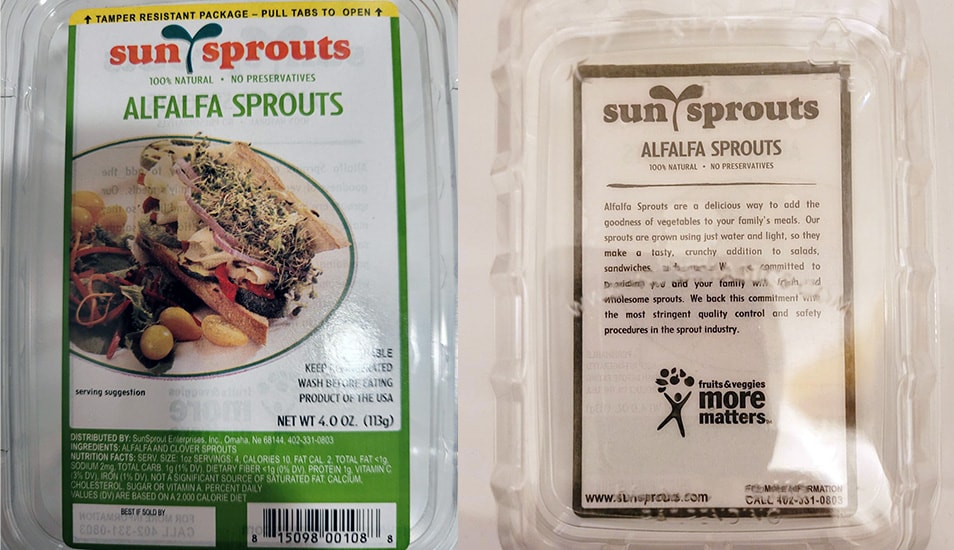
Front and back packaging of alfalfa sprouts in this outbreak

Fast Facts
  • Illnesses: 63
  • Hospitalizations: 10
  • Deaths: 0
  • States: 8
  • Recall: Yes
  • Investigation status: Closed
Outbreak Investigation Summary

Data showed that alfalfa sprouts made people in this outbreak sick.

  • Of the 50 people interviewed, 35 (70%) reported eating alfalfa sprouts.
  • Eight of the people who got sick in this outbreak confirmed they had purchased Sun Sprouts brand alfalfa sprouts from their local grocery store.

On December 29, 2022, SunSprout Enterprises recalled four lots of raw alfalfa sprouts.

USA – Florida – Salmonella Outbreak linked to Oysters

Food Poison Journal

The Florida Department of Health (DOH) and the state health departments of Georgia and Alabama have detected a Salmonella outbreak associated with the consumption of raw oysters harvested from shellfish harvesting area FL-3012 in Cedar Key, Florida. To date, there have been 8 cases linked to this outbreak within Florida, Georgia, and Alabama.

On February 24, 2023, the Florida Department of Agriculture and Consumer Services closed shellfish harvesting area FL-3012 for the harvest of wild oysters and initiated a recall of these wild oysters harvested from December 16, 2022, to February 24, 2023.

Finland – People sick in Finland after eating oysters – Norovirus?

Food Safety News

Health officials in a city in Finland are investigating several cases of illness caused by contaminated oysters.

Food poisoning in Helsinki is suspected to be related to eating in different restaurants and at an event since the beginning of February. This past week, officials reported at least 20 people were affected but updates in local media suggest there are around 100 illnesses.

Investigators have tested food from restaurants and taken patient samples and have found norovirus. Some of those sick reported eating oysters.

A few restaurants have already been inspected after suspected epidemics and oyster importers have started to issue withdrawals and recall.

Food safety officials in Helsinki asked people who had eaten oysters and then fallen sick to contact them.

Norovirus is the most commonly identified cause of foodborne outbreaks in Finland. Between 2017 and 2021, oysters caused 11 norovirus outbreaks in which more than 110 people fell ill, according to the Finnish Institute for Health and Welfare (THL).

In October 2022, five people fell sick in the country after eating oysters from France contaminated with norovirus.

Wales – Multi agency outbreak team investigating Abergavenny food poisoning incident

Abergavenny Chronicle

A food poisoning outbreak has plagued Abergavenny in recent weeks, with Public Health Wales confirming that there are 13 known cases of shigella infection within the area and a number suspected cases still being investigated.

The illness identified as shigella infection (shigellosis) is an intestinal infection caused by a family of bacteria known as shigella. The main symptom of shigella infection is diarrhoea. It is not life threatening, although in some cases it may result in hospitalisation, but symptoms usually clear up within four to five days.

A Public Health Wales spokesperson said: “Following an increase in reports of gastrointestinal illness in the Abergavenny area, Public Health Wales stood up a multiagency Outbreak Control Team with representation from Aneurin Bevan University Health Board, Monmouthshire County Council, and Powys County Council.

“We are investigating cases of shigella infection (shigellosis) associated with a single fast-food premises in the town. To date, we have identified 13 confirmed cases and a number of suspected cases are still being investigated. Appropriate public health measures have been undertaken including tracing contacts of those affected and offering testing for contacts with relevant symptoms.

Public Health Wales recommended that anyone who may be concerned about any symptoms they’re experiencing should contact 111 over the weekend and evening or contact their GP in-hours service during weekdays.

Finland – Several cases of food poisoning caused by oysters confirmed in Helsinki

Helsinki Times

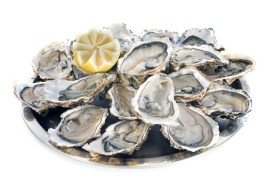
french oysters

The Environment Services of the City of Helsinki is investigating a number of suspected cases of food poisoning that are believed to be related to dining at several different restaurants and a pop-up event since the beginning of February. Currently, there are about 20 known cases of illness.

The individuals who have fallen ill all consumed oysters, and environmental services have taken food samples from the restaurants as well as patient samples from the city’s epidemiological action. Norovirus has been found in the samples.

The Food Safety Unit is requesting that anyone who has eaten oysters at Fisken på Disken, Ravintola Natura, Ravintola Gillet, The Cock, Ravintola Meripaviljonki, and the pop-up event at Ravintola Sake bar & Izakaya in February 2023 and has fallen ill after their meal, to contact the food safety unit. Illnesses may also be linked to other restaurants.

Those who have fallen ill are encouraged to contact the food safety unit primarily through an electronic food poisoning form at https://ilppa.fi. Contact can also be made by phone on weekdays from 8 am to 4 pm at +358 9 310 31527.

Norovirus is the most common cause of sudden intestinal infections in Finland.

USA – FDA Advises Restaurants, Retailers and Consumers to Avoid Raw Oysters from Baynes Sound, British Columbia, Canada Because They Are Potentially Contaminated with Norovirus

FDA

Eurofins

The FDA is advising consumers not to eat, and restaurants and food retailers not to sell, and to dispose of oysters that were harvested between January 16, 2023, and February 17, 2023, from Deep Bay, Baynes Sound subarea 14-8 or subarea 13-16 (landfile #140185) in British Columbia, Canada. Consumers who purchased oysters after January 16, 2023, should check the packaging to see if they were harvested in Baynes Sound subarea 14-8 or subarea 13-16 (landfile #140185). Contaminated shellfish can cause illness if eaten raw, particularly in people with compromised immune systems. Food contaminated with norovirus may look, smell, and taste normal. Consumers of these products who are experiencing symptoms of norovirus illness should contact their healthcare provider, who should report their symptoms to their local Health Department.

Research – Outbreak of Shigella sonnei in the EU/EEA and the United Kingdom among travellers returning from Cabo Verde

ECDC

As of 16 February 2023, 10 EU/EEA countries and the UK reported and the US reported 221 confirmed Shigella sonnei infections and 37 possible cases, all with a link to Cabo Verde.

Information on possible ways of infection or common exposure have not yet been identified but investigations are ongoing in Cabo Verde. Multiple modes of transmission are plausible, and the most likely way is through food, including via infected food handlers. However, person-to-person transmission is also possible.

The S. sonnei strain in the current outbreak indicates predicted resistance to trimethoprim and streptomycin but in some cases, multidrug resistance has also been detected.

Based on the available information, many cases are reported to have stayed in all-inclusive hotels located in the region of Santa Maria on the island of Sal. The most recent cases were reported in Sweden on 19 January 2023, suggesting an ongoing moderate risk of new infections among travellers to Cabo Verde, particularly among those staying in the region of Santa Maria on the Island of Sal.

Shigellosis is a gastrointestinal infection caused by one of four species of Shigella bacteria: Shigella sonnei, S. flexneri, S. boydii and S. dysenteriae. Humans are the primary reservoirs for Shigella.

Shigellosis is caught by oral contact with material contaminated by faeces, either through direct person-to-person contact, via contaminated food or water, or via objects which have been in contact with faeces. The necessary dose for infection is small, which increases transmissibility.

Food-related outbreaks are often caused by infected food handlers, who contaminate ready-to-eat food items like salads. Waterborne infection can occur if drinking or recreational water is contaminated with faeces from an infected person.

Handwashing with soap and water is important, especially after using the toilet and before preparing or eating food. Additional care with food and drinking water when travelling abroad is also important. There is no vaccine currently available to prevent Shigella infection.

People with shigellosis should not attend school, handle food, or provide child or patient care whilst ill. Children under the age of five, food handlers, and healthcare staff should stay at home for 48 hours after their symptoms have ceased.

ECDC encourages public health authorities in the EU/EEA to increase awareness among healthcare professionals on the possibility of Shigella infections among people that recently travelled to Cabo Verde.

Together with WHO/Europe, ECDC is in regular contact with authorities in Cabo Verde to support investigations on the sources of infection and to increase awareness among healthcare professionals in the country.

USA – FDA Core Food Outbreak Table Update

FDA

Date
Posted
Ref Pathogen
or
Cause of
Illness
Product(s)
Linked to
Illnesses

(if any)
Total
Case
Count

Status
2/15/2023 1123 Listeria
monocytogenes
Not Yet
Identified
See CDC
Investigation
Notice
Active
12/28/2022 1137 Salmonella
Typhimurium
Alfalfa Sprouts See
Outbreak
Advisory
Active
11/9/2022 1127 Listeria
monocytogenes
Enoki
Mushrooms
See
Outbreak
Advisory
Active

Wales – Public Health Wales confirms food poisoning outbreak in Welsh town

Daily Post

Public Health Wales (PHW) has confirmed a food poisoning outbreak believed to have been caused by the shigella bacteria. The infection can cause diarrhoea, a fever, and stomach cramps.

The infection, called shigellosis, is not life-threatening but can result in hospitalisation. Symptoms typically begin one to two days after being infected by the virus and can last up to seven days.

The outbreak in Abergavenny is said to be linked to a restaurant in the town, Wales Online reports. One person claims their family and friends have been put through “horrendous sickness” as a result of contracting shigella on February 12.