Category Archives: Food Virus Death

Catalonia – Viruses and food safety

ACSA

Albert Bosch, professor of microbiology at the University of Barcelona and member of the Scientific Advisory Committee on Food Safety, explains (in the link above) the diseases caused by viruses that can be acquired through food and how to prevent them.

The Scientific Advisory Committee for Food Safety is the advisory body on the technical and scientific aspects of food safety and quality. It is made up of fifteen experts in food safety with recognized solvency, from universities and research centers, appointed by the councilor of the department responsible for health, at the proposal of the Food Safety Steering Committee.

Research – The Top Three Culprits Behind Viral Foodborne Illnesses

FAO

Viruses are the tiniest of microbes, but that doesn’t mean they should be underestimated as a significant threat. While they do require a host to multiply, they can still survive in the environment, including in food, until encountering a victim. Contaminated food can find its way into our refrigerators and meals, and as a result, viruses find their way into our bodies, often causing unpleasant illness or, at worst, death. But there are things that can be done to prevent that from happening. CODEX developed the Guidelines on the Application of General Principles of Food Hygiene to the Control of Viruses in Food in 2012. But since then, things have changed, and new scientific findings call for updating these guidelines. The Joint Food and Agriculture Organization of the United Nations (FAO) / World Health Organization (WHO) Expert Meeting on Microbiological Risk Assessment (JEMRA) has come together to analyse the most recent science on the topic to inform the creation of new guidelines. JEMRA identified three main viruses that require special attention. Alone they cause millions of foodborne illness cases and tens of thousands of deaths annually.

The noroviruses and Hepatitis A virus take their usual place amongst the top viruses causing foodborne illnesses, but interestingly JEMRA identified a third virus that has emerged as a new threat. Check out the video to discover which virus we are referring to, and what are the main food sources of each of these viruses: https://youtu.be/XDKN_l8_ZCE?si=tyiiIMOhXCrKodwS

US Hepatitis A Outbreaks have sickened 44,947, hospitalized 27,469 and killed 424 – all preventable by a Vaccine

Marler Blog

Since the outbreaks were first identified in 2016, 37 states have publicly reported the following as of January 12, 2024:

  • Cases: 44,947
  • Hospitalizations: 27,469 (61%)
  • Deaths: 424

Hardly a week goes by that there is not yet another announcement of a hepatitis A positive employee putting co-workers, customers and the restaurant brand at risk. There have been illnesses, deaths, thousands of customers have had to stand in long lines to get preventative vaccines, some restaurants have shuttered and there certainly have been lawsuits.

Research – Use of Human Intestinal Enteroids for Recovery of Infectious Human Norovirus from Berries and Lettuce

MDPI

Abstract

Norovirus (NoV) is the leading cause of viral foodborne gastroenteritis globally. Currently, the gold standard for detecting NoV in clinical, food, and environmental samples is via molecular-based methods, primarily RT-PCR. Nevertheless, there is a great need for confirmatory assays that can determine the infectivity of viral particles recovered from contaminated matrices. The use of the human intestinal enteroids system (HIEs) has allowed for the expansion of norovirus replication, although it still suffers from limitations of strain preferences and the requirement of high titre stocks for infection. In this study, we wanted to explore the feasibility of using the HIEs to support the replication of NoV that had been recovered from representative food matrices that have been associated with foodborne illness. We first confirmed that HIEs can support the replication of several strains of NoV as measured by RT-qPCR. We subsequently chose two of those strains that reproducibly replicated, GII.4 and GII.6, to evaluate in a TCID50 assay and for future experiments. Infectious NoV could be recovered and quantified in the HIEs from lettuce, frozen raspberries, or frozen strawberries seeded with high titres of either of these strains. While many experimental challenges still remain to be overcome, the results of this study represent an important step toward the detection of infectious norovirus from representative produce items.

Norovirus tops expert ranking of foodborne viruses

Food Safety News

Experts have named norovirus the leading cause of viral foodborne illness, followed by Hepatitis A and Hepatitis E.

Hepatitis A and E viruses were ranked equally but higher compared to norovirus in terms of clinical severity by scientists at a recent meeting organized by the World Health Organization (WHO) and the UN Food and Agriculture Organization (FAO).

In September, the Joint FAO/WHO Expert Meeting on Microbiological Risk Assessment (JEMRA) on viruses in foods took place in Rome, Italy, in response to a request by the Codex Committee on Food Hygiene in 2022.

It focused on food attribution, analytical methods, and indicators. A summary of findings has been published, with the full report available later.

Scientists reviewed the literature on foodborne viruses published since the 2008 JEMRA report on the topic and information submitted in response to a call for data.

FAO and WHO plan meeting on foodborne viruses

Food Safety News

The UN Food and Agriculture Organization (FAO) and World Health Organization (WHO) are set to hold an expert meeting on viruses in food later this month.

The Joint FAO/WHO Expert Meeting on Microbiological Risk Assessment (JEMRA) event, at FAO headquarters in Rome on Sept. 18 to 22, will work on food attribution, analytical methods, and indicators of viruses in foods.

United States-based experts proposed for the meeting are Donald Schaffner, of Rutgers University; Xiang-Jin Meng, at Virginia Tech; Kali Kniel, from the University of Delaware; Lee-Ann Jaykus, at North Carolina State University; and Jacquelina Williams-Woods of the FDA.

In 2022, the Codex Committee on Food Hygiene (CCFH) asked JEMRA to provide scientific advice to inform a review of guidelines established in 2012. This was due to emerging issues associated with foodborne viruses and scientific developments.

Denmark – Health and Economic Burden of Seven Foodborne Diseases in Denmark, 2019

Mary Anne Liebert

We ranked seven foodborne pathogens in Denmark on the basis of their health and economic impact on society in 2019. We estimated burden of disease of infections with Campylobacter spp., Salmonella spp., Shiga toxin-producing Escherichia coli (STEC), Yersinia enterocoliticaListeria monocytogenes, norovirus, and hepatitis A virus in terms of incidence, mortality, disability-adjusted life years (DALY), and economic burden in terms of direct and indirect health costs. These seven pathogens accounted for 268,372 cases, 98 deaths, and 3121 DALYs, and led to a total expenditure of 434 million Euro in 1 year in a country with 5.8 million citizens. Foodborne infections by CampylobacterSalmonella, and norovirus caused the most DALYs, whereas Campylobacter, and norovirus and STEC had the higher costs. A combination of disease burden and cost of illness estimates is useful to inform policymaking and establish food safety priorities at the national level.

Switzerland – Source of rise in Swiss Hepatitis E cases remains a mystery; pork investigated

Food Safety News

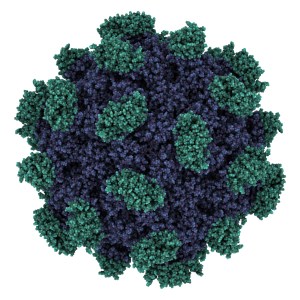
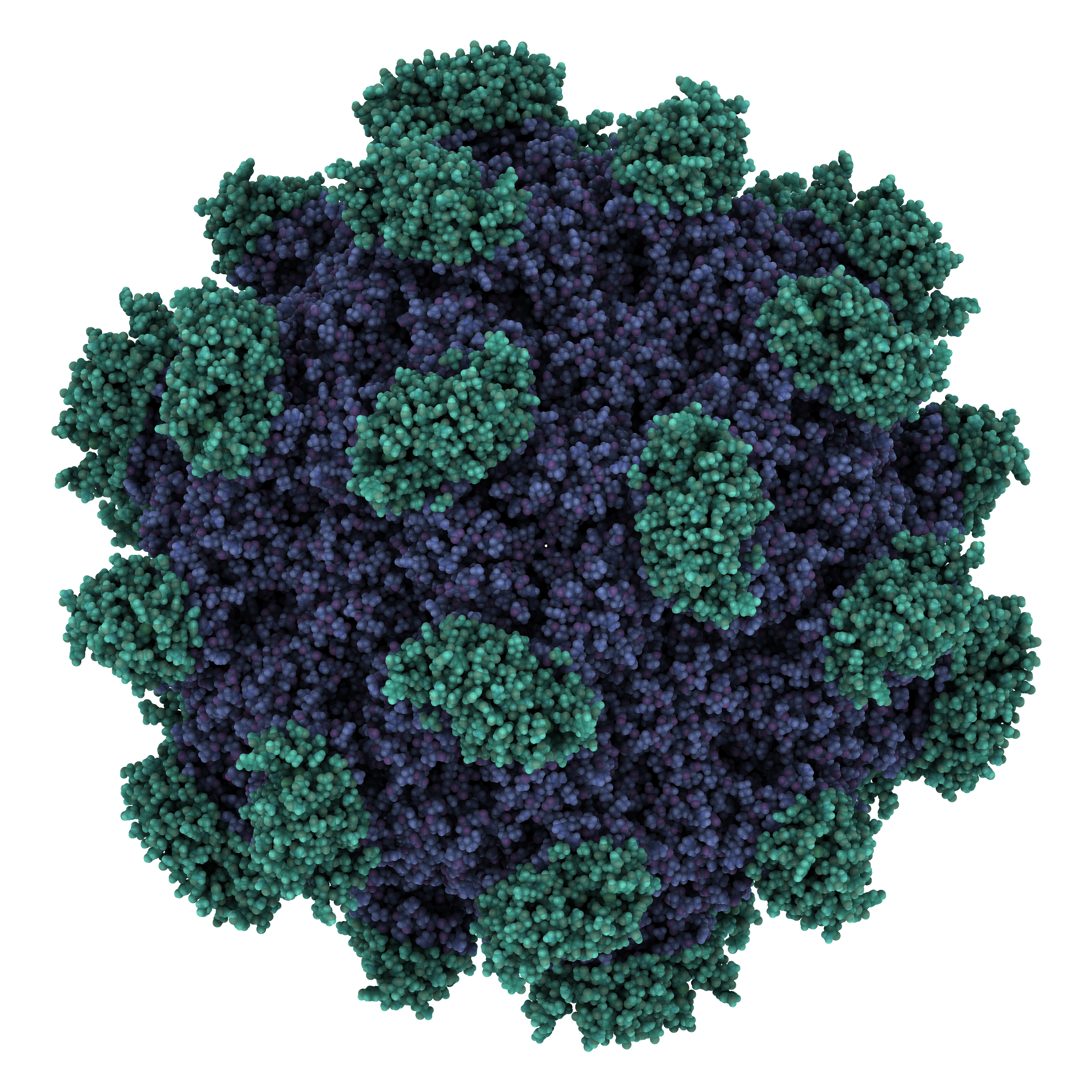
Hepatitis E virus capsid structure. HEV infection causes viral hepatitis. Atomic-level structure.

Officials in Switzerland have been unable to find what was behind an increase in hepatitis E infections that affected more than 100 people in 2021.

The Federal Office of Public Health (FOPH) recorded a rise in cases of hepatitis E virus (HEV) between January and May 2021.

A total of 105 cases were reported across the country, which is almost triple the number compared to the same period in previous years. More men than women were affected and patients ranged in age from 18 to 87 years old. A total of 29 people were hospitalized with or following an HEV infection and two died.

USA – Gino’s Ristorante & Pizzeria in West Norriton outbreak update: 13 sick with 3 dead from Hepatitis A

Food Poison Journal

NBC10 Philadelphia reports that health officials confirmed a third death in a Hepatitis A outbreak in Montgomery County linked to Gino’s Ristorante & Pizzeria in West Norriton. They have also allowed a restaurant that was closed in connection to the outbreak to reopen.

The Montgomery County Office of Public Health (MCOPH) first announced there was an outbreak on January 5. On Thursday they revealed there have been ten confirmed cases of the virus in the county with three of them fatal. The seven survivors were hospitalized but later released.

Officials also say they are investigating three other possible cases in the outbreak.

Through interviews, health officials confirmed the initial exposure occurred in late November but is no longer a risk to the public.

After conducting a reopening inspection on Thursday, the MCOPH’s Division of Environmental Field Services also lifted the closure of Gino’s Ristorante & Pizzeria in West Norriton.

The restaurant had been closed since January 7 in relation to the outbreak.

USA – The latest on Gino’s Ristorante & Pizzeria Hepatitis A outbreak in Norristown Montgomery County Pennsylvania

Food Poison Journal

NORRISTOWN, PA – The Montgomery County Office of Public Health(OPH) announced today the temporary closure of Gino’s Ristorante & Pizzeria in West Norriton in relation to a Hepatitis A Virus (HAV) outbreak in the county. The restaurant will be closed until further notice while the investigation continues.

Per standard public health protocols, OPH coordinated with the Pennsylvania Department of Health to issue a health advisory on Wednesday. As a result, OPH continues to receive additional information to support its investigation and identify additional potential cases. Investigation conducted to date suggests the exposure occurred in late November no longer presents a risk. However, additional investigation into probable cases resulting from the health advisory associated with this outbreak are underway. In the interest of public health, the restaurant has been shut down until further notice.

At this time, 11 total cases are under investigation, with 9 confirmed cases of Hepatitis A and 2 potential cases of Hepatitis A. Of the 9 confirmed cases, 7 people were hospitalized. To date, one death is confirmed and one additional death is under investigation.

The source of the outbreak remains under investigation. Anyone experiencing symptoms of Hepatitis A should contact their doctor.