Histamine in tuna from Sri Lanka in Sweden
Histamine in Frozen Sardines (Sardina pilchardus) from The United Kingdom in France

Histamine in tuna from Sri Lanka in Sweden
Histamine in Frozen Sardines (Sardina pilchardus) from The United Kingdom in France
Posted in food contamination, food handler, Food Hazard, Food Hygiene, Food Inspections, Food Micro Blog, Food Microbiology, Food Microbiology Blog, Food Microbiology Testing, Food Poisoning, food recall, Food Safety, Food Safety Alert, Food Testing, Food Toxin, Histamine, RASFF, Scombroid, scombroid poisoning
Salmonella Bareilly and Bacillus cereus (enterotoxin) in Tumeric from Bosnia and Herzegovina in Slovenia
Posted in Bacillus, Bacillus cereus, Bacterial Toxin, Enterotoxin, food contamination, Food Hazard, Food Hygiene, Food Inspections, Food Micro Blog, Food Microbiology, Food Microbiology Blog, Food Microbiology Testing, Food Pathogen, Food Poisoning, food recall, Food Safety, Food Safety Alert, Food Testing, Food Toxin
Salmonella Infantis and Salmonella Enteritidis in chilled chicken meat from Poland in Latvia, Czech Republic, Belgium and Bulgaria
Salmonella enteritidis in chicken breast from Poland in the Czech Republic
Fresh poultry meat-Salmonella spp from Poland in Poland, UK, Netherlands and France
Salmonella in Brazilian black pepper in the Netherlands
Salmonella in Brazilian black pepper in the Netherlands
Salmonella Typhimurium in frozen chicken wings and drumsticks from Hungary in Croatia
Salmonella Enteritidis and Salmonella Typhimurium in poultry meat from Poland in Bulgaria, Hungary, Italy, Latvia and Poland
Salmonella Enteritidis in chicken meat from Poland in France
Salmonella Minnesota, Salmonella Newport and Salmonella Abaetetuba in black pepper from Brazil in Germany
Salmonella enterica ser. Saintpaul (presence /25g) in black pepper from Brazil in Germany
Salmonella Minnesota in black pepper from Brazil in Germany
Salmonella Münster in black pepper from Brazil in Germany
Salmonella Bovismorbificans and Salmonella II 42:r:- in black pepper from Brazil in Germany
S. Poona and S. Morehead in black pepper from Brazil in Germany
Salmonella Poona, Salmonella Oranienburg, Salmonella Minnesota and Salmonella Saintpaul in black pepper from Brazil in Germany
Salmonella group E1 O-form in black pepper from Brazil in Germany
Salmonella enterica ser. Typhimurium in chilled turkey thighs from Poland in Poland and Belgium
Salmonella enterica ser. Derby (in 1 out of 5 samples /25g) in chilled chicken meat from Poland in Austria, Bulgaria, Czech Republic, Germany, Greece, Hungary, Latvia, Poland and Slovakia
Salmonella derby in official samples of chicken neck skins from Poland in Hungary, Italy and Romania
Salmonella in chicken meat preparation from Thailand in the Netherlands
Salmonella Bareilly and Bacillus cereus (enterotoxin) in Turmeric from Bosnia and Herzegovina in Slovenia
Salmonella Enteritidis in official samples of chicken neck skins from Poland in Hungary and Latvia
Salmonella in chicken cutlets from Italy in Germany
Salmonella Enteritidis in poultry meat (guinea fowl and chicken) from France in Germany and Monaco
Posted in food contamination, Food Hazard, Food Hygiene, Food Inspections, Food Micro Blog, Food Microbiology, Food Microbiology Blog, Food Microbiology Testing, Food Pathogen, food recall, Food Safety, Food Safety Alert, Food Testing, Polish Chicken Salmonella, RASFF, Salmonella, Salmonella in Black Pepper, Salmonella in Chicken, Salmonella Poland
Do not consume, use, sell, serve, or distribute the recalled products
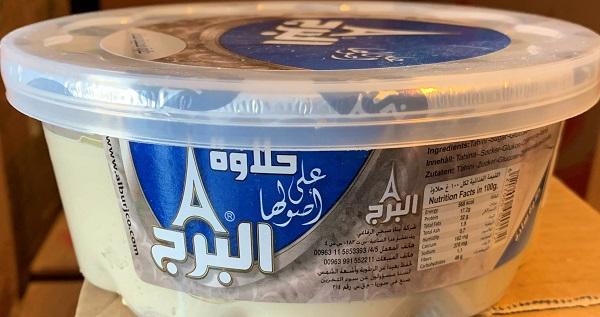
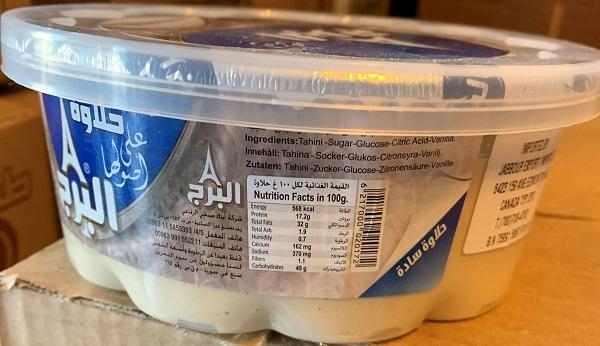
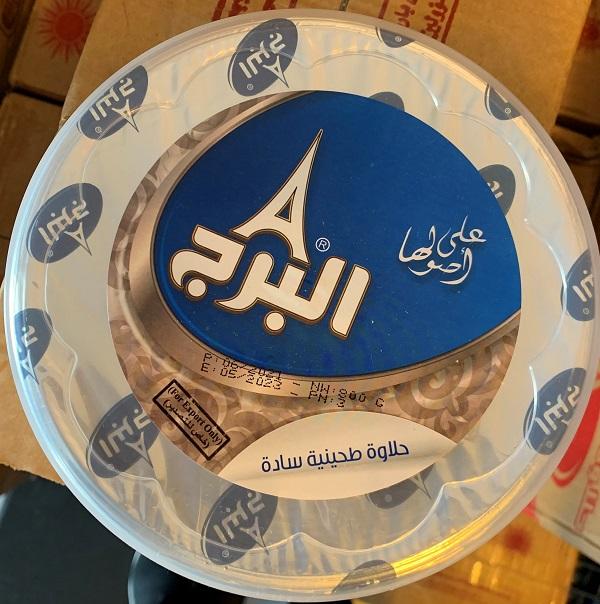
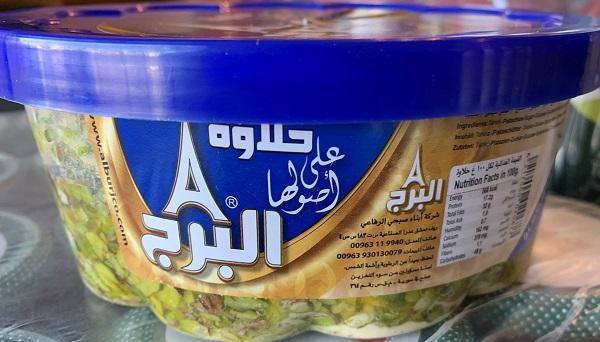
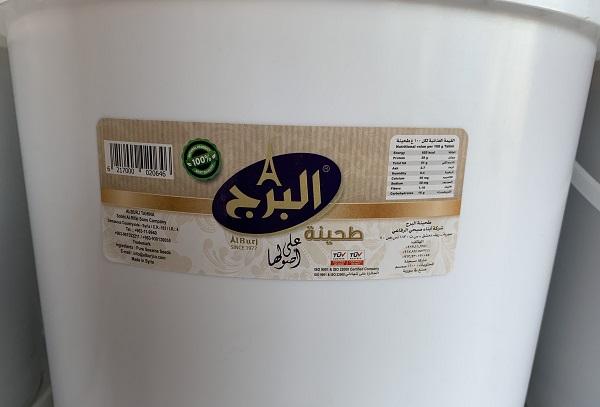
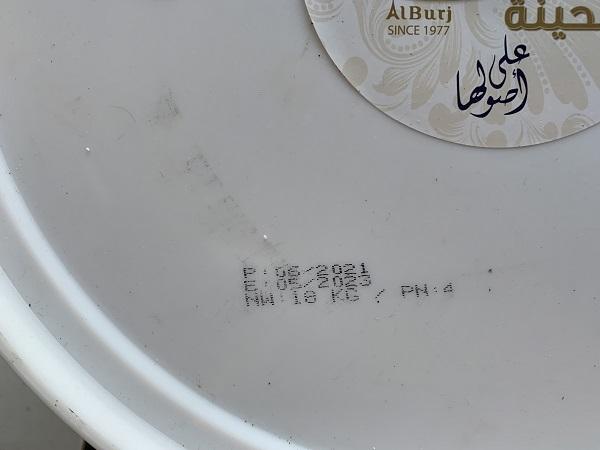
| Brand | Product | Size | UPC | Codes |
|---|---|---|---|---|
| AlBurj (Arabic characters only) | Tahina | 800 g | 6 217000 020646 | All codes up to and including: P: 06/2021 |
| AlBurj | Tahina | 18 kg | 6 217000 020646 | All codes up to and including: P: 06/2021 |
| AlBurj (Arabic characters only) | Halawa Original (Arabic characters only) | 800 g | 6 217000 020172 | All codes up to and including: P: 06/2021 |
| AlBurj (Arabic characters only) | Halawa Pistachio Extra (Arabic characters only) | 800 g | 6 217000 020677 | All codes up to and including: P: 06/2021 |
| AlBurj (Arabic characters only) | Halawa Pistachio (Arabic characters only) | 800 g | 6 217000 020486 | All codes up to and including: P: 06/2021 |
Jabbour Export/Import Ltd. is recalling AlBurj brand Tahina and Halawa from the marketplace due to possible Salmonella contamination.
The recalled products have been sold in Alberta.
Three family members including one month old baby died of food poisoning symptoms in Phoe Kanbay village, Maubin Township, Ayeyawaddy Region on the morning of November 10.
“The family of three where husband is 20 years old, wife is 18 years old and the baby is one month old died on the morning of November 10. When they were not appear at the fink farm where they were working, people came to their house and saw them dead. In the mosquito net, they found half eaten coconut, Morinda and papaya fruits,” said Sayadaw of Nay+Toe philanthropic organization.
Posted in Death, food contamination, food death, Food Hazard, Food Hygiene, Food Illness, Food Inspections, Food Micro Blog, Food Microbiology, Food Microbiology Blog, Food Microbiology Testing, Food Pathogen, Food Poisoning, Food Poisoning Death, Food Safety, Food Safety Alert, Food Testing, Food Toxin, Poisoning
Fifty employees of the Pasay City Treasurer’s Office, two janitorial staff, and a reporter fell ill after eating pancit Malabon on Nov. 9
Amor Virata, publisher of a weekly newspaper “People’s Lider”, was among the victims of food poisoning.
City Epidemiology and Surveillance Unit (CESU) head Mico Llorca said most of the employees affected by the food poisoning are now recovering at home.
Llorca said Mayor Emi Calixto-Rubiano ordered an investigation to determine if the pancit Malabon, which was ordered through food delivery service, was indeed the cause of food poisoning.
Posted in food contamination, food handler, Food Hazard, Food Hygiene, Food Illness, Food Inspections, Food Micro Blog, Food Microbiology, Food Microbiology Blog, Food Microbiology Research, Food Microbiology Testing, Food Pathogen, Food Poisoning, food recall, Food Safety, Food Safety Alert, Food Testing, Food Toxin, Foodborne Illness, Illness, Poisoning

A 30-month study is reported of an epidemic of salmonellosis involving 46 newborn infants and 34 older individuals who were contacts and became carriers. A total of 80 persons was involved, all having positive stool cultures for Salmonella sp. (type Oranienburg). Of the total number of infants delivered during the epidemic, the 46 infected infants established an attack rate of 20%. The additional 34 older individuals who were carriers were contacts of the infected infants. The mechanics of contact or mode of pattern of spread could not be completely determined. In the newborn infants response to this infection varied. One infant died, 7 were acutely ill, 33 had symptoms of grossly abnormal stools, 5 had asymptomatic infection and were diagnosed by positive stool cultures alone. With one exception, the older individuals all were asymptomatic and were diagnosed by positive stool cultures. Serologic confirmation of the presence of this specific infection was established by determinations of specific antibodies. These were positive in 9 of 10 infants. In the older individuals, antibody agglutinations were positive in seven of eight so studied. Of the 33 infants followed, all became carriers and at the end of 30 months, cultures of stools of 30 of the total number had become negative for Salmonella sp. (type Oranienburg) and 3 remained positive. Of the 22 older individuals followed, all had cultures negative for Salmonella sp. (type Oranienburg) at the end of 13 months. Therapy was prescribed in six acute cases and all of these patients recovered. Experimental therapy for the carrier state resulted in failure in all cases. A comparison of the group of 20 infants not treated suggested that stools of the untreated patients cleared spontaneously more readily than those who were treated.
Posted in food contamination, food handler, Food Hazard, Food Hygiene, Food Inspections, Food Micro Blog, Food Microbiology, Food Microbiology Blog, Food Microbiology Research, Food Microbiology Testing, Food Pathogen, food recall, Food Safety, Food Safety Alert, Food Testing, Research, Salmonella, Salmonella in Onions
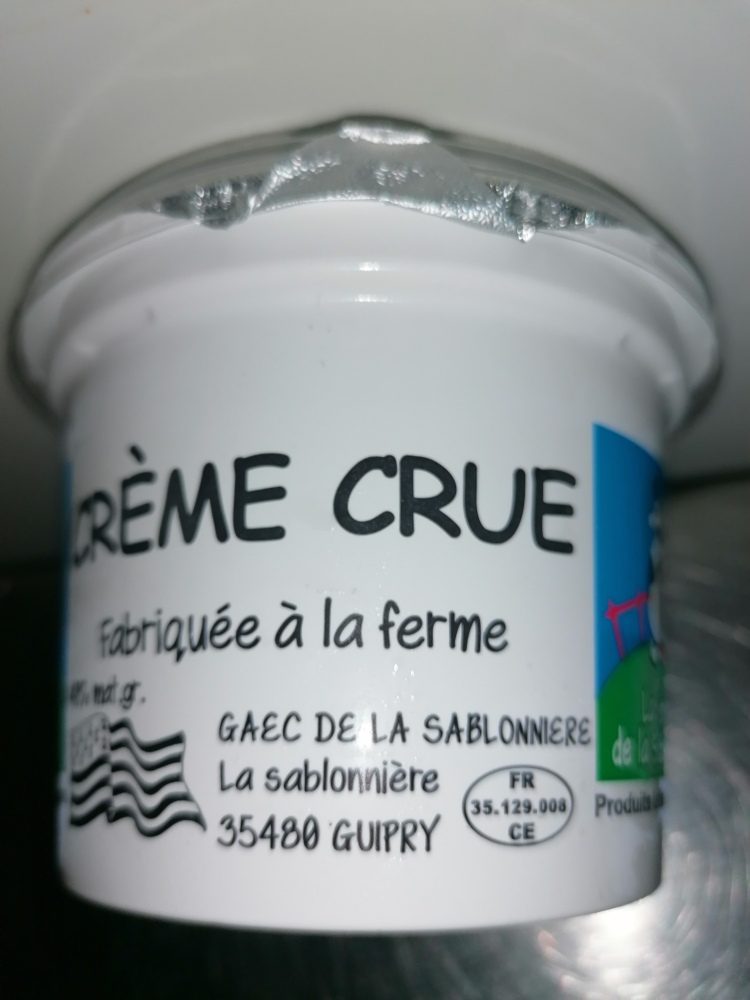
| GTIN | Lot | Dated |
|---|---|---|
| 3760093420037 | 1577 | Use-by date 20/11/2021 |
Posted in E.coli, escherichia coli, food contamination, food handler, Food Hazard, Food Hygiene, Food Inspections, Food Micro Blog, Food Microbiology, Food Microbiology Blog, Food Microbiology Testing, Food Pathogen, Food Poisoning, food recall, Food Safety, Food Safety Alert, Food Testing, Food Toxin
| Lot | ||
|---|---|---|
| see list of products attached | ||
WASHINGTON, Nov. 10, 2021 – Euro Foods, a Freeland, Penn. establishment, is recalling approximately 119,091 pounds of salame stick products that may be contaminated with Salmonella the U.S. Department of Agriculture’s Food Safety and Inspection Service (FSIS) announced today. FSIS issued a public health alert for the salame stick products on October 29, 2021, believing that the product was no longer in commerce. However, following this alert, FSIS observed product available at one retail location and two Citterio salame stick samples previously collected by the California Department of Public Health have tested positive for Salmonella.
The Italian-style salame stick items were produced prior to October 25, 2021. The following products are subject to recall [view label]:
The products subject to recall bear establishment number “EST. 4010” inside the USDA mark of inspection. These items were shipped to retail locations nationwide and exported to Bermuda.
FSIS has been working with the Centers for Disease Control and Prevention (CDC) and state public health partners to investigate a multistate outbreak of 31 Salmonella I 4,[5],12:i:- illnesses in 10 states with onset dates ranging from September 18, 2021 through October 18, 2021. The epidemiologic and traceback investigation identified that ill people consumed Citterio Italian-style Salame Sticks produced by Euro Foods Inc. Two unopened, intact, packages of Citterio Italian-style Salame Sticks collected by the California Department of Public Health as part of the ongoing investigation tested positive for Salmonella. Further testing is ongoing to determine if the product samples are related to the outbreak. FSIS continues to work with federal and state public health partners to determine if there are additional illnesses linked to these products.
Consumption of food contaminated with Salmonella can cause salmonellosis, one of the most common bacterial foodborne illnesses. The most common symptoms of salmonellosis are diarrhea, abdominal cramps, and fever within 6 hours to 6 days after eating the contaminated product. The illness usually lasts 4 to 7 days. Most people recover without treatment. In some persons, however, the diarrhea may be so severe that the patient needs to be hospitalized. Older adults, infants, and persons with weakened immune systems are more likely to develop a severe illness. Individuals concerned about an illness should contact their health care provider.
FSIS is concerned that some product may be in consumers’ pantries or refrigerators. Consumers who have purchased these products are urged not to consume them. These products should be thrown away or returned to the place of purchase.


