Category Archives: Food Safety

Germany and Tunisia – working together to improve food safety

bfr

Whether it be olive oil, dates or almonds, Tunisian food ought to become even safer. That is why the German Federal Institute for Risk Assessment (BfR) and the Federal Office of Consumer Protection and Food Safety (BVL), both institutions in the portfolio of the German Federal Ministry of Food and Agriculture (BMEL), launched the project “Strengthening Food Safety and Consumer Protection in Tunisia”. The German Federal Ministry for Economic Cooperation and Development (BMZ) provide in total 5 million euros for this over 5 years. The BMEL provides the necessary technical expertise through its two authorities. To begin with, high-ranking representatives of German and Tunisian ministries and authorities met today. The German Ambassador, Peter Prügel, opened the event. Under the chairmanship of Hichem Mechichi, the Tunisian Prime Minister and co-initiator, and in the presence of Dr. Maria Flachsbarth, Parliamentary State Secretary to the German Federal Minister of Economic Cooperation and Development, and Hans-Joachim Fuchtel, Parliamentary State Secretary to the German Federal Minister of Food and Agriculture as well as Mohamed Fadhel Kraiem, acting Tunisian Minister of Agriculture, Hydraulic Resources and Maritime Fishing the BfR and the Tunisian Ministry of Health signed the implementation agreement for the project. “Building a functioning food safety system is a milestone for consumer health protection in Tunisia,” said BfR President Professor Dr. Dr. Andreas Hensel. “We are pleased that we can support Tunisia with the expertise of our institutions,” added his colleague BVL President Friedel Cramer.

In 2019, Tunisia adopted a new food safety law that allows the establishment of effective risk analysis structures. In the joint project, BfR and BVL are supporting the North African country in its implementation on the ground. The aim is to strengthen the administrative structures for food safety and consumer protection in Tunisia. The aim is to protect consumers and create better working conditions. In addition to regional trade, stable administrative structures and international standards are also important for the increasingly global and complex chain of goods.

Since the new law was passed, Tunisia has already set up a national Food Safety Authority (INSSPA) and a national risk assessment Agency (ANCSEP/ANER). Both are under the responsibility of the Tunisian Ministry of Health. As subsidiary bodies of the BMEL, BfR and BVL will advise the Tunisian sister authorities and provide training. Activities in the fields of policy advice, organizational development and training programmes for experts and managers are currently being planned together.

It is the first project to be based on the “Agreement on the involvement of BMEL business institutions in development cooperation projects”. The purpose of the agreement is to systematically integrate the expertise of institutions in the BMEL business area into BMZ’s development cooperation. The project is thus part of the Federal Ministry of Food and Agriculture’s Africa Strategy, which defines strengthening food security as a goal for Africa’s participation in regional and international trade.

Press Release in French

About the BfR

The German Federal Institute for Risk Assessment (BfR) is a scientifically independent institution within the portfolio of the Federal Ministry of Food and Agriculture (BMEL) in Germany. It advises the German federal government and German federal states (“Laender”) on questions of food, chemical and product safety. The BfR conducts its own research on topics that are closely linked to its assessment tasks.

About the BVL

The Federal Office of Consumer Protection and Food Safety (BVL) is an independent federal supreme authority within the remit of the Federal Ministry of Food and Agriculture (BMEL). BVL contributes to food safety through a wide range of measures. It issues approvals and coordinates monitoring programmes together with the Laender. Within the framework of the European rapid alert system, BVL ensures the flow of information between the EU and the Laender.

This text version is a translation of the original German text which is the only legally binding version.

USA – Maryland recalls cheeses due to Staphylococcus aureus (Staph) and E.coli

Food Poison Journal

The Maryland Department of Health (MDH) is warning consumers not to eat the following cheeses under the brand names La Cieba, La Colonia, and Selectos Latinos until further notice, as they may be contaminated with Staphylococcus aureus (Staph) and E.coli bacteria:

  • Cuajada el Terron
  • Queso Morolique con Chile
  • Queso Con Loroco
  • Queso Con Chile
  • Queso Frijolero
  • Queso Duro Blando Salvadoreno
  • Queso Salvadoreno
  • Queso Seco Salvadoreno

Marylanders are advised not to consume these products. If you have purchased one or more of these products, throw them away. If you consumed one or more of these products, watch for symptoms such as stomach cramps, diarrhea, vomiting, nausea, or fever. If symptoms occur, contact your healthcare provider.

Sri Lanka – Company importing unrefined coconut oil fails second Aflatoxin test

Adaderana

A company that imported unrefined coconut oil containing the carcinogen Aflatoxin has failed its second quality test as well, the Sri Lanka Standards Institution (SLSI) stated.

The company in question has failed due to its test reports indicating an overdose of Aflatoxin in the imported oil.

Accordingly, the company will have to re-export the relevant oil stocks.

Meanwhile, 03 more companies have appealed for a second test of their samples and their reports are due tomorrow (29).

Several companies are currently re-testing samples of imported unrefined coconut oil containing the potent carcinogen Aflatoxin.

These tests are carried out by the SLSI, the Food Safety Unit of the Ministry of Health, and the Industrial Technology Institute (ITI).

Canada – Food Recall Warning – Kolapore Springs brand smoked trout products recalled due to potential presence of dangerous bacteria – Clostridium botulinum

CFIA

Recall date:
March 26, 2021
Reason for recall:
Microbiological – Clostridium botulinum
Hazard classification:
Class 1
Company / Firm:
North Shore Specialty Foods
Distribution:
Ontario
Extent of the distribution:
Consumer

Recall details

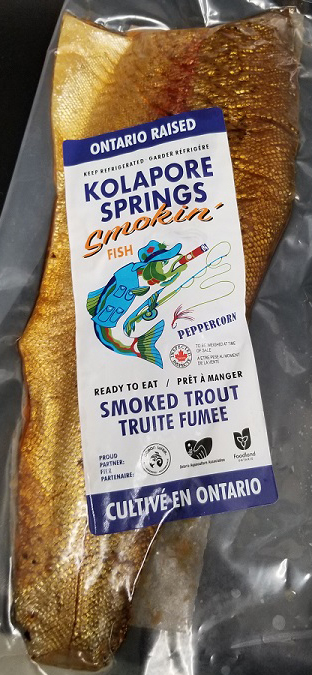
Ottawa, March 26, 2021 – North Shore Specialty Foods is recalling Kolapore Springs brand smoked trout products from the marketplace because they may permit the growth of Clostridium botulinum. Consumers should not consume the recalled products described below.

Recalled products

Brand Product Size UPC Codes
Kolapore Springs Smoked trout Variable 6 27987 16383 4 All best before dates up to and including 2021 MR 31
Kolapore Springs Smoked trout, Peppercorn Variable 6 27987 16383 4 All best before dates up to and including 2021 MR 31

What you should do

If you think you became sick from consuming a recalled product, call your doctor.

Check to see if you have the recalled products in your home. Recalled products should be thrown out or returned to the store where they were purchased.

Food contaminated with Clostridium botulinum toxin may not look or smell spoiled but can still make you sick.

Symptoms in adults can include facial paralysis or loss of facial expression, unreactive or fixed pupils, difficulty swallowing, drooping eyelids, blurred or double vision, difficulty speaking, including slurred speech, and a change in sound of voice, including hoarseness.

Symptoms of foodborne botulism in children can include difficulty swallowing, slurred speech, generalized weakness and paralysis. In all cases, botulism does not cause a fever. In severe cases of illness, people may die.

Background

This recall was triggered by Canadian Food Inspection Agency (CFIA) test results. The CFIA is conducting a food safety investigation, which may lead to the recall of other products. If other high-risk products are recalled, the CFIA will notify the public through updated Food Recall Warnings.

The CFIA is verifying that industry is removing the recalled products from the marketplace.

Illnesses

There have been no reported illnesses associated with the consumption of these products. this active outbreak investigation.

Product photos

Printer ready version of photos

  • Kolapore Springs - Smoked trout
  • Kolapore Springs - Smoked trout, Peppercorn

Public enquiries and media

Company information
North Shore Specialty Foods: 1-705-606-1377 (Sean)
Public enquiries
Toll-free: 1-800-442-2342 (Canada and U.S.)
Telephone: 1-613-773-2342 (local or international)
Email: cfia.enquiries-demandederenseignements.acia@canada.ca
Media relations
Telephone: 613-773-6600
Email: cfia.media.acia@canada.ca

USA – Kareem Mart Recalls “Halva” Because of Possible Health Risk -Salmonella

FDA

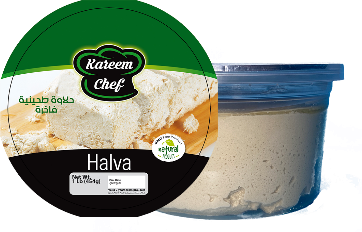
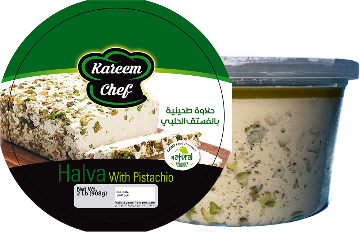
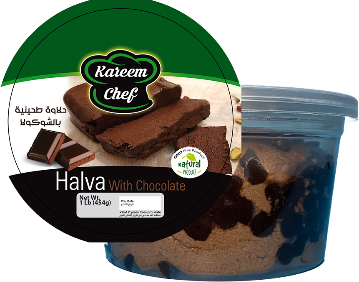
Kareem Mart of Garden City, MI,is recalling its 1lb and 2lb Kareem Chef brand “Halva”, “Halva with Pistachio”, and “Halva with Chocolate” food treats because they have the potential to be contaminated with salmonella, an organism which can cause serious and sometimes fatal infection in young children, frail or elderly people, and others with weakened immune systems. Healthy persons infected with salmonella often experience fever, diarrhea (which may be bloody), nausea, vomiting and abdominal pain. In rare circumstances, producing more severe illnesses infections.

The recalled “Halva” were distributed through Mediterranean food stores and wholesalers in Michigan, Illinois, Missouri, New York, Ohio, North Carolina and Pennsylvania.  Between March 2020 to Feb 2021.

Please do not consume the product and immediately dispose of the product or return to 32816 Manor Park Garden City MI 48135. Or to the place of purchase. And send us a note to the email: recalls@kareemmart.com with the return receipt and product purchase date for a full refund.

The products come in 1lb and 2lb plastic tubs. There is only one lot distributed.

With Best Before 07-01-2022.

No illnesses have been reported to date in connection with the problem.

The potential for contamination was noted after routine testing from samples in the stores by the Michigan Department of Agriculture and Rural Development (MDARD).

Production of the product has been suspended while the FDA and the company continue their investigation as to the source of the problem.

Thank you.


Company Contact Information

Consumers:
Distributing Department
 (313)651-4600
 recalls@kareemmart.com

Product Photos

Luxembourg – RECALL: VALENÇAY RAW MILK CHEESE FROM THE FROMAGERIE D’ANJOUIN BRAND – Listeria monocytogenes

Fromagerie d’Anjouin recalls the following product:

Source: Auchan
Last name Valençay raw milk cheese
Mark Fromagerie d’Anjouin
Unit 220 g
EAN code 3301170008504
Date of Minimum Durability (DDM) 04/03/2021
Lot V028
Sale period from: 02/18/2021 to 03/26/2021

Danger  : Potential presence of Listeria monocytogenes

Listeria monocytogenes can cause fever, headache, and gastroenteritis. Vulnerable people such as the immunocompromised and the elderly and young children may experience neurological symptoms due to meningitis. Pregnant women should also pay special attention to these symptoms. Gastroenteritis can appear between a few hours and 3 days after consumption, while neurological symptoms can only appear after 3 months. People who have consumed these products and who have these symptoms are advised to consult a doctor, notifying him of this consumption.

Sale in Luxembourg by: Auchan

A sale by other operators cannot be excluded.

Source of information: Auchan recall notification

Communicated by: Government Commission for Quality, Fraud and Food Safety .

France – Product recall: Valençay raw milk cheese 220 g from the Fromagerie d’Anjouin brand – Listeria monocytogenes

Oulah

Product recall: Valençay raw milk cheese 220 g from the Fromagerie d'Anjouin brand

ENCOUNTERED PROBLEM

Possible presence of Listeria monocytogenes

PROPOSED SOLUTION

People who may have this product are asked not to consume it and to return it to the point of sale where it was purchased.

People who have consumed this product and who present with fever, isolated or accompanied by headaches, are invited to consult their attending physician, notifying him of this consumption.
Pregnant women should pay special attention to these symptoms, as well as immunocompromised people and the elderly. These symptoms may suggest listeriosis, a disease that can be serious and can take up to eight weeks to incubate.

FURTHER INFORMATION

▸ Barcode
3301170008504

▸ Lot
V028

▸ DDM
04/03/2021

▸ Type of packaging
Sold to the self-service / cup shelves

▸ Health
stamp FR 36.004.001 CE

▸ Marketing
from 02/12/2021 to 03/26/2021

▸ Consumer service contact
The Consumer Service is at your disposal to answer any questions
Toll-free number: 0800 35 29 19
Hours: 9:00 a.m. – 5:00 p.m.

▸ Source
https://www.auchan.fr/

Australia- Food Recall Statistics – 2020

FSANZ

Why do we collect food recall data?

We collect data on Australian food recalls to identify trends and common issues in the food industry and help find ways to prevent future incidents.

An analysis of annual food recall statistics for the last 10 years is below. For statistics on allergen-related recalls see Undeclared allergen food recall statistics. Our statistics are updated annually.

Classification of food recalls

We classify food recalls based on the reason for the recall. Reasons include:

  • Microbial contamination
  • Labelling
  • Foreign matter
  • Chemical/other contaminants
  • Undeclared allergen
  • Biotoxin
  • Other

Food recall statistics (1 January 2011 – 31 December 2020)

Figure 1: Food recalls by year 2011-2020

Fig 1.png

Between 2011 and 2020, FSANZ coordinated 763 recalls, including 109 recalls in 2020 (see Figure 1). The 10-year average increased from 71 to 76 recalls per year.

Microbial contamination food recalls

Figure 6: Food recalls due to microbial contamination by microbe 2011-2020

 Fig 6.png

Between 2011 and 2020 there were 195 food recalls due to microbial contamination (see Table 1). As shown in Figure 6, the most common microbes were Listeria monocytogenes (65 recalls; 33%), Salmonella (48 recalls; 25%) and E. coli (42 recalls; 22%). Salmonella related recalls increased in 2020 due to multiple recalls associated with lettuce products.

Meat and meat products, dairy products and mixed and/or processed foods were the main food groups recalled due to Listeria monocytogenes contamination. The food industry and government place a high priority on Listeria management in these sectors and undertake extensive product testing to monitor for contamination.

A wide range of foods are recalled due to Salmonella contamination. Eggs and fruits, vegetables and herbs were the most commonly recalled categories. Fruits, vegetables and herbs recalled due to Salmonella included lettuce, sprouts, rockmelon and dried herbs.

Dairy products are more commonly recalled due to concerns with process hygiene, indicated through E. coli testing, than other categories of food. Other products commonly recalled for E. coli include fresh sprouts and fermented sausages.

Research – Ciguatera fish poisoning on the rise.

Saipan Tribune

The Commonwealth Healthcare Corp. has lately seen an increase in ciguatera fish poisoning cases due to the consumption of various shallow- to deep-water bottom fish and has warned the public to avoid eating fish larger than about 4-6 lbs.

Ciguatera fish poisoning, or CFP, is a common food-borne illness related to the consumption of certain species of fish that have been contaminated with plankton (algae) derived toxin associated with coral reefs. The ciguatera toxin is non-detectable as it does not harm the fish and is unrecognizable when consumed. Unlike other food-borne illnesses, CFP is not transferred from cross-contamination due to inadequate food handler hygiene, food preparation, cooking, handling, and storage. In addition, the ciguatera toxin can withstand cooking and freezing temperatures and is not preventable if the fish species already harbors the toxin.

USA – New Course from ChildCare Education Institute on Preventing Foodborne Illnesses

Global News Wire

ATLANTA, GA, March 25, 2021 (GLOBE NEWSWIRE) — ChildCare Education Institute® (CCEI), an online child care training provider dedicated exclusively to the early care and education workforce, is proud to introduce NFS102: Preventing Foodborne Illnesses to the online child care training course catalog.

Foodservice managers and others tasked with preparing meals for children enjoy creating delicious and nutritious options for the children in their care. Those who prepare food in the early childhood environment are eager to prepare tasty, nutritious meals because they know how important good nutrition is for young bodies and minds.

Foodborne illnesses are infectious or toxic diseases caused by bacteria or other agents that enter the body through contaminated food.  Every person is at risk of contracting a foodborne illness. Foodborne illnesses are prevented by combining good hygiene and sanitation, safe storage, and proper preparation and handling.