Category Archives: Food Poisoning

Switzerland – Be careful eating Chinese fondue, says Swiss food safety agency – Campylobacter

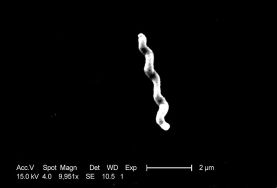
Le News  Campylobacter_jejuni_01


Chinese fondue is a culinary crossover between two nations. A dish that exists in both China and Switzerland. The Swiss version retains the communal pot of hot broth, thinly sliced raw meat and Chinese mushrooms of the original but departs radically in terms of flavour.

According to the Federal Food Safety and Veterinary Office (FSVO), food poisoning rises at the end of the year, something partly attributable to Chinese fondue. Raw chicken, and its high rate of campylobacter contamination, is the main cause. In general meat is the most likely source of food poisoning, according to FSVO, and men between 18 and 30 are the most likely to get poisoned.

Norway – Norway investigates Listeria infections; Sweden, Denmark report on Campylobacter and Salmonella

Food Safety News

Norwegian authorities are investigating a potential outbreak of Listeria monocytogenes that has affected six people.

The Norwegian Institute of Public Health (Folkehelseinstituttet) reported an increase in cases of people infected with Listeria in December. Of the six cases, four are from Oppland and Hedmark. Usually, one to two patients with listeriosis are reported monthly.


UK – Drinking raw milk – has led to a dangerous rise in food poisoning and killed TWO people, experts warn

The Daily Mail

Drinking raw milk has led to a dangerous rise in food poisoning, say experts   

  • A child fed raw milk in Wales died from a type of E. coli poisoning, while a man died of listeriosis after eating cheese made with raw milk 
  • Unlike pasteurised milk, which is heat-treated to kill bacteria, raw milk can harbour dangerous germs


Research – Bacteria found in ancient Irish soil halts growth of superbugs: New hope for tackling antibiotic resistance

Science Daily

Researchers analyzing soil from Ireland long thought to have medicinal properties have discovered that it contains a previously unknown strain of bacteria which is effective against four of the top six superbugs that are resistant to antibiotics, including MRSA. Antibiotic-resistant superbugs could kill up to 1.3 million people in Europe by 2050, according to recent research. The World Health Organisation (WHO) describes the problem as ‘one of the biggest threats to global health, food security, and development today.’

Research – Long-Term Depuration of Crassostrea virginica Oysters at Different Salinities and Temperatures Changes Vibrio vulnificus Counts and Microbiological Profile

Journal of Food Protection

Previous short-duration depuration studies with the eastern oyster (Crassostrea virginica) demonstrated difficulty in achieving significant naturally incurred Vibrio vulnificus population count reductions. The present study used long-duration depuration (14 days) at controlled temperatures (10 or 22°C) and salinities (12, 16, or 20 mg/g). All depuration temperature–salinity combinations significantly reduced V. vulnificus counts, with greatest reductions seen in 12 mg/g, 10°C seawater (2.7-log CFU/g reduction) and in 20 mg/g, 22°C seawater (2.8-log reduction). Mesophilic vibrios dominated the overall microflora of freshly harvested oysters, whereas refrigerated storage selected for psychrotrophic bacteria (Pseudomonas spp., Aeromonas spp., Shewanella spp., Psychrobacter spp.) as well as did depuration at 10°C (Pseudoalteromonas spp., Shewanella spp., Vibrio spp.). Depuration at 22°C retained dominance of mesophilic vibrios, including pathogenic species, followed by Shewanella spp., Pseudoalteromonas spp., and Photobacterium spp. Although aerobic plate counts were lower in 22°C depurated oysters (5.0 log versus 6.0 log) compared with 10°C, depuration at 10°C offered greater V. vulnificus population reductions than depuration at 22°C. This advantage was only seen at 12 mg/g salinity, with no impact at 16 and 20 mg/g salinities. No depuration treatment reduced V. vulnificus counts to nondetectable levels. Use of prolonged depuration may be a helpful intervention to control V. vulnificus populations in oysters.

RASFF Alert – E.coli – Live Mussels

RASFF-Logo

RASFF -too high count of Escherichia coli (940 MPN/100g) in live mussels (Mytilus edulis) to be purified from Ireland in Ireland

RASFF Alert – Histamine – Chilled mackerel (Scomber scombrus)

RASFF-Logo

RASFF -histamine (410 mg/kg – ppm) in chilled mackerel (Scomber scombrus) from France in Belgium

RASFF Alerts – Aflatoxin – Peanuts – Pistachios – Groundnuts – Almonds

RASFF-Logo

RASFF-aflatoxins (B1 = 37.7; Tot. = 44.3 µg/kg – ppb) in peanuts with shell from Egypt in Italy

RASFF-aflatoxins (B1 = 73.8; Tot. = 79 µg/kg – ppb) in pistachios in shell from Syria in Greece

RASFF-aflatoxins (B1 = 21.2; Tot. > 24 µg/kg – ppb) in groundnuts from China in Spain

RASFF-aflatoxins (B1 = 60; Tot. = 71 µg/kg – ppb) in shelled pistachios from the Netherlands in the Netherlands

RASFF-aflatoxins (B1 = 92; Tot. = 110 µg/kg – ppb) in almonds from the United States in the Netherlands

RASFF Alert – Ochratoxin – Sultana Raisins

RASFF-Logo

RASFF -ochratoxin A (14.6 µg/kg – ppb) in sultana raisins from Turkey in Poland

Information – From leftovers to storing food: How to avoid food poisoning this Christmas

Start Sat 60

Food poisoning impacts more than four million Australians each year and with the Christmas season fast approaching, it’s important to take food safety and food poisoning seriously.

In simple terms, food poisoning is caused because of contamination. This can be caused by food being prepared in unhygienic areas, if food is stored at incorrect temperatures, or if food is simply undercooked. Food poisoning terms many people are familiar with include staphylococcus aureus, listeria, salmonella and bacillus cereus and symptoms and side effects can vary from person to person.

Is food poisoning caused by the last thing I ate?

Despite the myth, food poisoning is not always caused by the last thing a person ate. In fact, the NSW Food Authority states that symptoms such as gastro intestinal cramps and vomiting can be caused by food eaten up to eight hours before symptoms start to show.

Diarrhoea on the other hand can begin between four hours to three days after eating affected food.