Category Archives: Food Poisoning Death

Kenya – Mukumu girls deaths linked to E.coli, Salmonella from contaminated water

KBC

Three students and a teacher at Sacred Heart Mukumu Girls in Kakamega died as a result of contaminated water.

The Ministry of Health Friday said preliminary findings had revealed E. coli and Salmonella typhi, a bacterium that is responsible for typhoid fever as the causes of the illness initially suspected to be cholera.

“The Ministry wishes to inform the general public that this disease is likely to be a mixture of E. coli and Salmonella typhi which usually occurs if water sources are contaminated with these micro-organisms” Ag. Director General for Health Dr. Patrick Amoth said.

A comprehensive investigation is however underway even as the top health official ruled out aflatoxin.

Several learning institutions including, Mukumu Girls and Butere Boys in Kamamega and the latest being Mukuuni Boys High School in Chuka, Tharaka Nithi County have been closed after students were taken ill.

“The Ministry of Health has taken several water, food, and human tissue samples, from which preliminary laboratory investigations undertaken have revealed Enterotoxigenic E. coli and Salmonella typhi as the causes of the illness,” he said

“Further laboratory investigations carried out on the grains and pulses for aflatoxin have turned negative for aflatoxicosis- a dangerous fungal infection from poorly stored cereal grains” he added.


Research – How to deal with food poisoning while traveling—and how to avoid it altogether

National Geographic

Some countries have a reputation for putting travelers at a higher risk for gastrointestinal illnesses. But you can get sick from an improperly handled meal anywhere in the world.

Pad thai from a Bangkok street vendor or raw milk cheese from a bistro in France taste delicious in the moment. But for many travelers, the local dishes that make trips meaningful sometimes give them food poisoning—and the wrong sort of vacation memories.

By some metrics, gastrointestinal infections related to food or water affect 30 to 70 percent of all travelers during or immediately after their trips, according to a 2015 study in BMJ Clinical Evidence. Each year, one in six Americans and nearly one in 10 people worldwide suffer from such illnesses caused by bacteria (E. coli, salmonella, listeria), viruses (norovirus, hepatitis A), or parasites (giardiasis, roundworms, tapeworms).

Lower-income countries have a reputation for putting travelers at a higher risk for food poisoning, but people are just as likely to be sickened from an improperly handled meal in Italy or Australia—or from some sushi at their local supermarket.

Here’s why people get food poisoning, what to do if it strikes, and how to (maybe) prevent it, read at the link above.

Viet Nam – One dead, one in critical condition, nine hospitalized after eating pickled carp – Clostridium botulinum

Vietnamnet

kswfoodworld

Ten people in a mountainous district of the Central Province of Quang Nam were hospitalized for Botulinum poisoning, with one of them dead after eating pickled carp on March 7.

Three seriously ill patients including one female and two male adults requiring mechanical ventilation were given Botulism Antitoxin Heptavalent (BAT) to treat Clostridium Botulinum poisoning. Up to now, 2/3 of patients have had good improvement after antidote infusion, a good prognosis; however, one patient is in critical condition.

Previously, the SGGP Newspaper released that after eating pickled carp at a house of a local inhabitant, four people experienced poisonous symptoms. They were rushed to the local infirmary for treatment. On the morning of March 18, physicians of the General Hospital in Phuoc Duc Commune of Phuoc Son District connected with Cho Ray Hospital in Ho Chi Minh City for consultation. Soon, doctors of Cho Ray Hospital flew to Quang Nam Province with five antidotes vitals to the General Hospital of the Northern mountainous region of Quang Nam for the treatment of the patients with botulinum poisoning.

Yesterday, Director of the Quang Nam Department of Health Mai Van Muoi said that the unit has just sent a dispatch on strengthening measures to prevent and control food poisoning when people like eating traditional foods such as fermented foods.

Thereby, the Department of Health of Quang Nam province suggested localities, especially highland areas, strengthen communication about food safety to local inhabitants to raise their awareness.

India – Two more arrested in food poisoning case

The Hindu

The police team probing the death of a 33-year-old woman due to food poisoning from a restaurant in Kottayam on Wednesday arrested two more persons from Malappuram in connection with the case.

Research – Study reveals Botulism impact in Italy

Food Safety News

kswfoodworld

Italian researchers have looked at botulism trends over two decades including a large outbreak in 2020.

Italy has one of the highest botulism rates in Europe with one factor being a strong home canning tradition in the country. From 1986 to September 2022, 406 botulism incidents involving 599 people were laboratory confirmed.

The study described the surveillance system as well as information on botulism cases reported by local health services and those from hospital discharge forms from 2001 to 2020.

Botulism is a rare but life-threatening condition caused by toxins produced by Clostridium botulinum bacteria. In foodborne botulism, symptoms generally begin 18 to 36 hours after eating a contaminated food. However, they can start as soon as six hours after or as long as 10 days later.

Symptoms can include general weakness, dizziness, double-vision, and trouble speaking or swallowing. It paralyzes respiratory muscles so most patients must be placed on life support. Difficulty breathing, weakness of other muscles, abdominal distention and constipation may also occur. People experiencing these problems should seek immediate medical attention.

India – 43 Kerala Hotels Shut After 100 Fall Sick Due To Suspected Food Poisoning

NDTV

The Food Safety Department of Kerala government has conducted an inspection in 429 establishments across the state and shut down 43 hotels following the death of a woman in a suspected food poisoning incident at a religious event.

The inspections on Tuesday came in the backdrop of the death of a young woman in Kottayam after allegedly having food from a hotel.

The state health ministry said that among the 43 establishments, 21 were found out to be without a licence.

Apart from this, 22 establishments which were lacking cleanness have also been suspended from carrying on with their business.

Notices were issued to 138 institutions and 44 food samples have been sent for testing.

The ministry also stated that inspections would be continued intensively across the state.

On Sunday, Kerala Health Minister Veena George ordered the probe into a suspected food poisoning incident in which over 100 people fell ill. The incident occurred in the Keezvaipur area of the Pathanamthitta district of Kerala.

The affected people have been admitted to various hospitals in the district where they are currently undergoing treatment.

Estonia improves fish controls after Listeria outbreak

Food Safety News

Measures taken by Estonian authorities following a Listeria outbreak have improved the fish control system, according to the European Commission.

A remote DG Sante audit, in October 2020, looked at checks to ensure smoked fish meets microbiological food safety criteria, as well as measures taken by authorities in non-compliances.

Eight Rapid Alert System for Food and Feed (RASFF) reports for Listeria monocytogenes in smoked fishery products from Estonia have been issued since 2015. All but one concerned the same establishment.

A multi-country outbreak of 22 listeriosis cases linked to cold-smoked salmon and trout pointed toward M.V Wool, an Estonian processing company as the manufacturer of these fish products. This was based on traceability information and a match between the outbreak strain and samples on the processing line and in four batches of the final product. Five countries were affected from 2014 to 2019 and five people died.

Shannon Illingworth Explains Why Lettuce and Spinach Keeps Getting Contaminated With E. Coli

yahoo finance

The Centers for Disease Control (CDC) reports that  each year in the United States, 48 million people get sick, 128,000 are hospitalized, and 3,000 die from foodborne diseases.

“Those numbers are staggering and unacceptable,” says Shannon Illingworth, founder of “Know the Grow.”

Illingworth is spreading the word that our nation’s food system is in crisis, and it’s time for people to understand where and how their food was grown.

“That lettuce on your plate may have come from thousands of miles away, picked way ahead of its peak flavor and nutritional value, and may have been exposed to pathogens in dozens of ways during its voyage from seedling to your table,” he said.

According to the CDC, “Germs can contaminate leafy greens at many points before they reach your plate. For example, germs from animal poop can get in irrigation water or fields where vegetables grow. Germs can also get on leafy greens in packing and processing facilities, in trucks used for shipping, from the unwashed hands of food handlers, and in the kitchen.”

Read more at the link above.

USA – Botulism from food causes the death of a respected outdoorsman from Jackson Hole

Food Safety News

Wyoming social media reports the death of 55-year-old Hans Russell, who succumbed to botulism after being conscious but also completely paralyzed for several weeks in a Salt Lake City hospital.

Russell was a popular outdoorsman and river guide in Jackson Hole, WY. His death is blamed on a solo camping trip to Idaho where he consumed a can of soup that was not properly refrigerated. The doctors in Salt Lake City who fought to keep him alive came to believe that the single can of soup was the source of the botulism toxin Russell consumed.

USA – Outbreak Investigation of E. coli O121:H19 Frozen Falafel (October 2022)

FDA

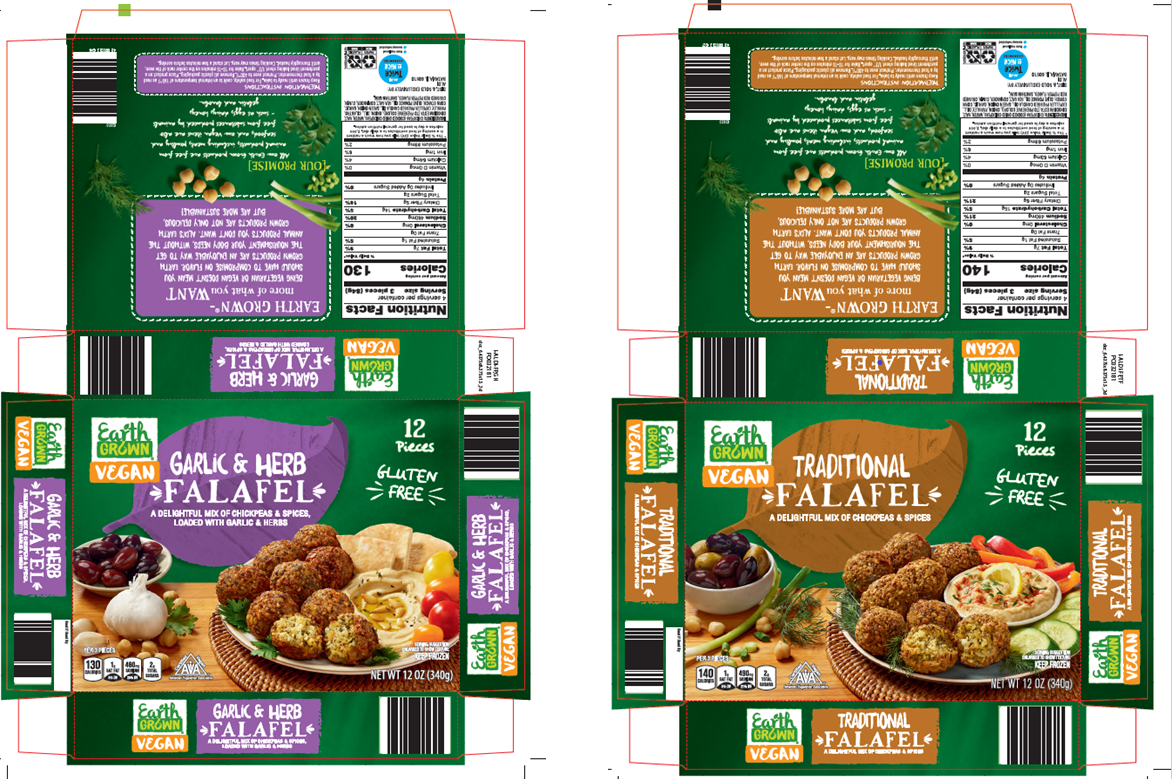
The FDA, along with CDC and state and local partners, investigated a multistate outbreak of E. coli O121:H19 infections linked to Earth Grown frozen falafel.

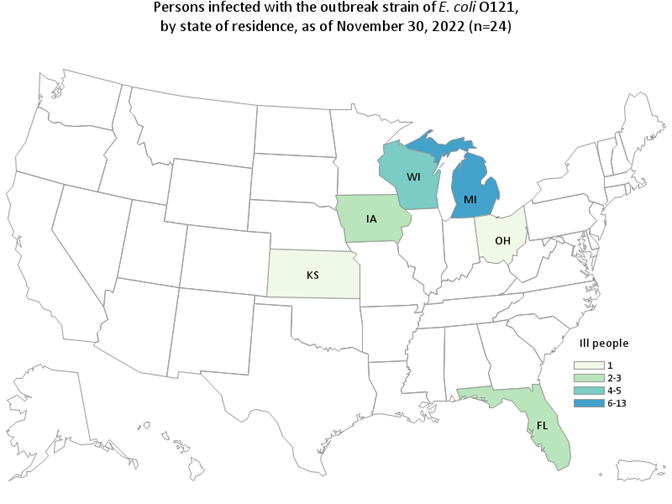
As of December 1, 2022, CDC announced that the outbreak is over. There have been a total of 24 illnesses in six states. The last illness onset was October 24, 2022.

On October 7, 2022, the Michigan Department of Agriculture and Rural Development collected Earth Grown frozen falafel for testing from a sick person’s home. Whole Genome Sequencing done at the Michigan Department of Health & Human Services showed that the E. coli strain in the falafel sample was closely related to the strain causing illness in this outbreak.

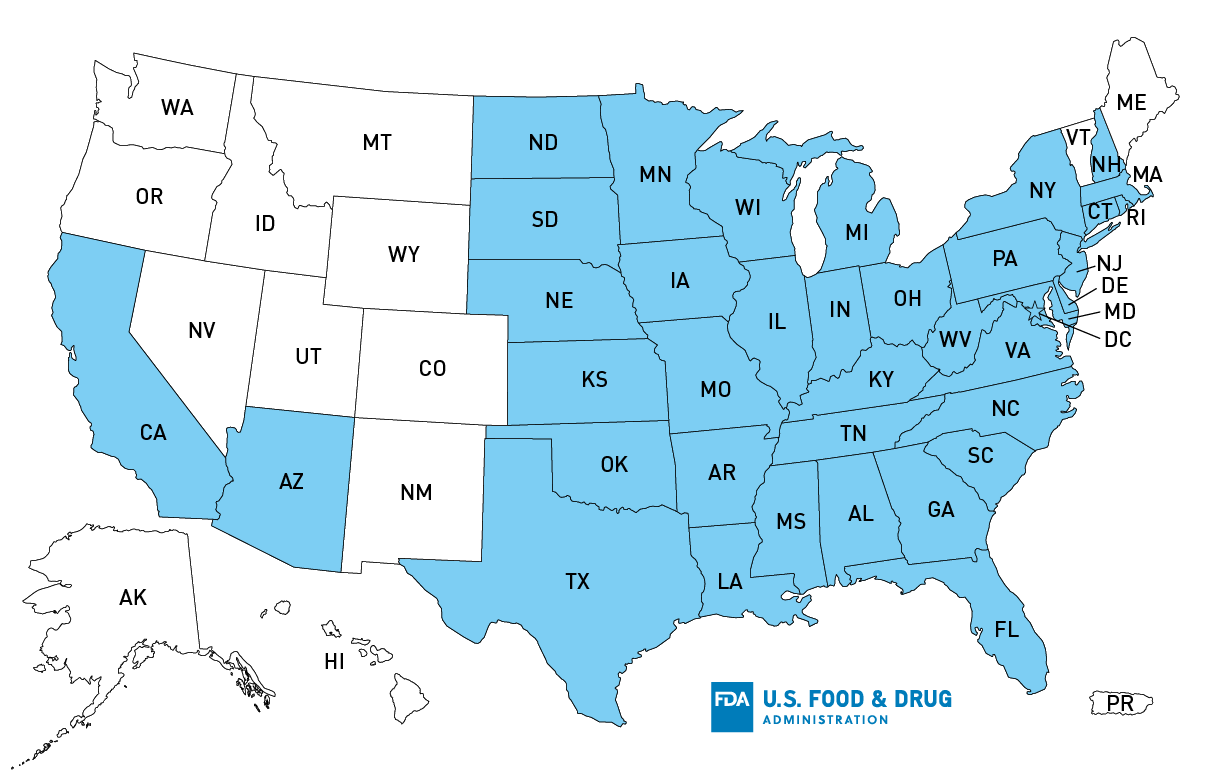
On October 6, 2022, the manufacturer of Earth Grown frozen falafel, Cuisine Innovations, initiated a voluntary recall. Recalled products include Earth Grown vegan traditional falafel and garlic & herb falafel distributed and sold exclusively by ALDI. Additional information on recalled products is available in the firm’s recall notice.

Recommendation

These items are no longer available for sale but were sold frozen and have a long shelf-life of 18 months, so consumers should check their freezers for any recalled Earth Grown vegan traditional falafel and garlic & herb falafel that was sold by ALDI. If you have recalled frozen falafel in your freezer, do not eat or serve them.


Product Images

Outbreak Investigation E.coli Frozen Falafel October 2022 - Sample Product Images

Map of U.S. Distribution

Outbreak Ecoli Falafel Distribution Map

Case Count Map Provided by CDC

Outbreak Investigation of E. coli O121: Frozen Falafel (October 2022) - CDC Case Count Map as of December 1, 2022

Case Counts

Total Illnesses: 24
Hospitalizations: 5
Deaths: 1
Last illness onset: October 24, 2022
States with Cases: FL (2), IA (2), KS (1), MI (13), OH (1), WI (5)
Product Distribution: Nationwide