Category Archives: Food Pathogen

USA -Outbreak Investigation of Salmonella Potentially Linked to Tailor Cut Produce Fruit Mix, Winter 2019

FDA

FDA and the Pennsylvania Department of Health (DOH) are investigating an outbreak of illnesses caused by Salmonella Javiana in Pennsylvania. Epidemiologic and traceback evidence indicate that fruit mix with cantaloupe, honeydew, pineapple, and grapes from Tailor Cut Produce of North Brunswick, New Jersey, are a potential source of this outbreak.

Total Illnesses: 31

Recommendation

Food service and institutional food operators should not sell or serve the fruit mix with cantaloupe, honeydew, pineapple, and grapes prepared by Tailor Cut Produce.

Tailor Cut Produce reports that their products may be found in restaurants, banquet facilities, hotels, schools and institutional food service establishments in New Jersey, New York, and Pennsylvania.

Because this fruit mix may have been distributed to nursing homes, schools, hospitals and other facilities that cater to vulnerable populations, it is important that these facilities do not sell or serve this fruit medley. Please consult with your distributor to confirm the source of the fruit mix used in your operation.

Background

The Pennsylvania Department of Health (DOH) reports that it is investigating 31 laboratory-confirmed illnesses of Salmonella at four healthcare facilities in southeast Pennsylvania. Salmonella Javiana has been identified among cases at three of four facilities. According to the Pennsylvania DOH the epidemiologic evidence collected thus far indicates that this fruit mix is a potential source of the illnesses. The state’s review of invoices shows that a common food eaten by many case patients was the fruit mix with cantaloupe, honeydew, pineapple, and grapes from Tailor Cut Produce.

FDA has activated a team to coordinate its outbreak investigation.  On December 6, 2019, the FDA and the Pennsylvania DOH shared the results of the investigation thus far with the firm, and the firm’s leadership stated that they would work with FDA to implement a recall of this product.

FDA will continue its investigation and provide updates as more information becomes available.

RASFF Alerts – Listeria monocytogenes – Chilled Cheese – Organic Mortadella – Chilled Fishery Products – Chilled Rillettes – Garlic Sausages

RASFF-Logo

RASFF – Listeria monocytogenes in chilled cheese from Switzerland in Germany

RASFF – Listeria monocytogenes (1400 CFU/g) in organic mortadella from Italy in Italy

RASFF – Listeria monocytogenes (250 CFU/g) in chilled fishery products from Croatia in Slovenia

RASFF – Listeria monocytogenes ( <10 CFU/g) in chilled rillettes from France in France

RASFF – Listeria monocytogenes (600 CFU/g) in garlic sausages from Austria in Germany

RASFF Alerts – Salmonella- Raw Poultry Meat – Cooked and Frozen Crawfish – Black Pepper – Crayfish – Moringa Powder – Frozen Beef Trimmings – Spicy Chicken Burger – Sesame Seeds

RASFF-Logo

RASFF – Salmonella enterica ser. Enteritidis (present /25g) in frozen raw poultry meat from Poland in Poland

RASFF – Salmonella enterica ser. Newport (presence /125g) in cooked and frozen crawfish from China in dill brine from China in Sweden

RASFF – Salmonella enterica ser. Saintpaul (presence /25g) in black pepper from Brazil in Germany

RASFF – Salmonella enterica ser. Poona (presence /25g) and Salmonella enterica ser. Saintpaul (presence /25g) in black pepper from Brazil in Germany

RASFF – Salmonella (present /25g) in frozen pre-cooked crayfish. from China in Sweden

RASFF – Salmonella enterica ser. Enteritidis (presence /25g) in chilled raw poultry meat from Poland in Poland

RASFF – Salmonella enterica ser. Poona (presence /25g) in moringa powder (Moringa oleifera) from Burkina Faso in Luxembourg

RASFF – Salmonella enterica ser. Enteritidis (presence /25g) in frozen beef trimmings from Poland in Sweden

RASFF – Salmonella (presence /25g) in black pepper from Brazil in Germany

RASFF – Salmonella enterica ser. Morehead (presence /25g) in black pepper from Brazil in Germany

RASFF – Salmonella (presence /25g) in frozen spicy chicken burger from the Netherlands in the Netherlands

RASFF – Salmonella (presence /25g) in sesame seeds from Sudan in Greece

RASFF Alert – Pseudomonas aeruginosa – Crushed Ice

RASFF-Logo

RASFF – Pseudomonas aeruginosa (1 CFU/ml) in crushed ice from Spain in Italy

RASFF Alert – E.coli – Chilled Clams

RASFF-Logo

RASFF – Escherichia coli (1.3 to 4.5 MPN/100g) in chilled clams (Chamelea gallina) from Italy in Spain

Bulgaria -Chicken meat infected with Salmonella from Poland

Poultry Med 

At least 100 tons of chicken infected with salmonella has reached the Bulgarian market. Some of the meat, imported from Poland, has been seized and so far there are no reporters of consumers infected with salmonella. Poland is the major producer of poultry meat in the European Union. the majority of poultry meat exports are directed to the internal EU market.
This is not the first time that poultry products imported from Poland are contaminated with Salmonella. Salmonella has been detected in 16 tons of poultry imported to the Czech Republic from Poland in April-May 2019.
In 2018 The EU has reported  almost 1,500 people sickened by Salmonella linked to Polish eggs in an outbreak that has lasted more than six years and affected 18 countries.

USA -Dozens of norovirus-like cases linked to Brave Horse Tavern

Outbreak News Today

Food Borne Illness - Norovirus -CDC Photo

Image CDC

Public Health — Seattle & King County is reporting some 43 cases of a norovirus-like illness linked to a Seattle restaurant.

Officials say the outbreak is associated with Brave Horse Tavern on 310 Terry Ave N, in  Seattle. The patients experienced symptoms of vomiting, diarrhea, body aches, chills, and fever.

Health officials report:

Since November 27, 2019, 30 people from 5 meal parties reported becoming ill after consuming food and drinks from Brave Horse Tavern on November 23 and 24, 2019.

We identified at least 11 employees who experienced symptoms consistent with norovirus dating back to November 24, 2019. At least 2 employees had 2 total household members with symptoms dating back to November 20, 2019.

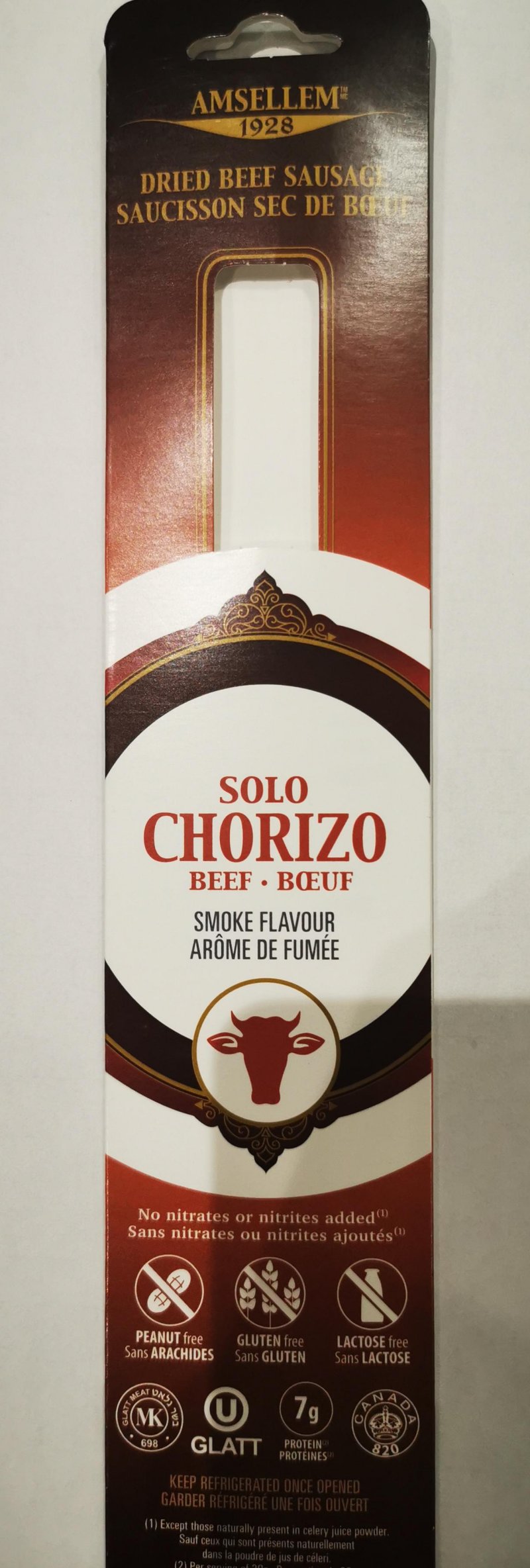
Canada – Food Recall Warning – Amsellem brand Solo Chorizo – Dried Beef Sausage recalled due to Salmonella

CFIA

Recall details

Ottawa, December 4, 2019 – Usine Amsellem Inc. is recalling Amsellem brand Solo Chorizo – Dried Beef Sausage from the marketplace due to possible Salmonella contamination. Consumers should not consume the recalled product described below.

Recalled product

Brand Product Size UPC Codes
Amsellem Solo Chorizo – Dried Beef Sausage 28 g 6 28055 38930 9 91002DC-707
BB 2020 AVR 08

Illnesses

There have been no reported illnesses associated with the consumption of this product.

Product photos

Printer ready version of photos

  • Amsellem - Solo Chorizo – Dried Beef Sausage

USA – Investigation of E. coli O157:H7 Outbreak Linked to Romaine from Salinas, California, November 2019

FDA

kswfoodworld E.coli O157

Image CDC


Recommendation

FDA, CDC, and state health authorities are investigating an outbreak of illnesses caused by E. coli O157:H7 in the United States. Epidemiologic, laboratory, and traceback evidence indicates that romaine lettuce from the Salinas, California growing region is a likely source of this outbreak. According to CDC, there have been 102 cases reported in 23 states.  The latest date that one of these patients reports becoming ill was on November 18, 2019.

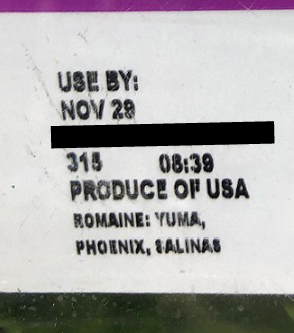
Romaine from Salinas, California Label Enjoy By December 2, 2019


Romaine from Salinas, California Label Use By November 29, 2019

Consumers: Consumers should not eat romaine lettuce harvested from Salinas, California. Additionally, consumers should not eat products identified in the recall announced by the USDA on November 21, 2019.

Romaine lettuce may be voluntarily labeled with a harvest region. If this voluntary label indicates that the romaine lettuce was grown in “Salinas” (whether alone or with the name of another location) do not eat it. Throw it away or return it to the place of purchase.  If romaine lettuce does not have information about harvest region or does not indicate that it has been grown indoors (i.e., hydroponically- and greenhouse-grown), throw it away or return it to the place of purchase. Consumers ordering salad containing romaine at a restaurant or at a salad bar should ask the staff whether the romaine came from Salinas.  If it did, or they do not know, do not eat it.

At this time, romaine lettuce that was harvested outside of the Salinas region has not been implicated in this outbreak investigation. Hydroponically- and greenhouse-grown romaine, which is voluntarily labeled as “indoor grown,” from any region does not appear to be related to the current outbreak. There is no recommendation for consumers to avoid using romaine harvested from these other sources.

Restaurants and Retailers: Restaurants and retailers should not serve or sell romaine harvested from Salinas, California.  If you do not know the source of your romaine lettuce, and if you cannot obtain that information from your supplier, you should not serve, nor sell it.

Suppliers and Distributors: Suppliers, distributors and others in the supply chain should not ship or sell romaine harvested in Salinas, California. If the source of the romaine lettuce is unknown, you should not ship, nor sell the product.

For Restaurants, Retailers, Suppliers and Distributors: Currently, the FDA does not have enough traceback information to identify the specific source of the contamination that would allow us to request a targeted recall from specific growers.

FDA requested that industry voluntarily withdraw romaine grown in Salinas from the market and is requesting that industry withhold distribution of Salinas romaine for the remainder of the growing season in Salinas. Without more specific traceback information, this was the most efficient way to ensure that contaminated romaine was off the market.

At this time, romaine lettuce that was harvested outside of the Salinas region has not been implicated in this outbreak investigation. Hydroponically- and greenhouse-grown romaine, which is voluntarily labeled as “indoor grown,” from any region does not appear to be related to the current outbreak. There is no recommendation for consumers or retailers to avoid using romaine harvested from these other sources.

Update

According to the CDC, as of December 2, 2019, 102 people infected with the outbreak strain of E. coli O157:H7 have been reported from 23 states. The case patients report that illnesses started on dates ranging from September 24, 2019 to November 18, 2019. Illness onset dates reported to date are prior to the public warning issued on November 22.

Based on available traceback data, FDA requested that industry voluntarily withdraw romaine grown in Salinas from the market and is requesting that industry  withhold distribution of Salinas romaine for the remainder of the growing season in Salinas. This was the most efficient way to ensure that contaminated romaine was off the market.

Products that were part of the U.S. Department of Agriculture’s Food Safety and Inspection Service (FSIS) announced recall related to this outbreak investigation had a “Best By” of Nov. 1 or earlier, more than one month ago, and should no longer be on the market.

FDA continues to actively investigate the cause of this outbreak. FDA, with the assistance of staff from the California Department of Public Health and the California Department of Food and Agriculture, immediately deployed investigators to three farms in the Salinas area that were identified based on the traceback investigation. On the farms, investigators sampled soil and animal droppings, compost, water, and other potential environmental sources. The samples and information collected during the farm investigations are currently being analyzed. Investigators are attempting to identify any factors that could have led to contamination. Additionally, state partners are testing romaine lettuce samples for E. coli that they have collected from stores and from case patients’ homes.

The FDA and state partners are conducting a traceback investigation to determine whether a common supplier or source of contamination can be identified.  This investigation involves collecting and analyzing potentially hundreds of distribution records to trace the romaine that may have been available at points of exposure reported by ill people to their source. We are continuing to collect these records.

This remains an evolving and fluid situation. Information about our findings will be forthcoming as the investigation proceeds.

The Salinas region as defined by the United Fresh Produce Association and the Produce Marketing Association Romaine Taskforce ReportExternal Link Disclaimer includes: Santa Cruz, Santa Clara, San Benito, and Monterey counties in California.

Case Counts

Total Illnesses: 102
Hospitalizations: 58
Deaths: 0
Last illness onset: November 18, 2019
States with Cases:  AZ (3), CA (4), CO (6), FL (1), IA (1), ID (3), IL (1), MD (4), MI (1), MN (3), MT (1), NE (1), NJ (7), NC (1), NM (2), OH (12), OR (1), PA (8), SD (1), TX (4), VA (4), WA (2), WI (31)


New Zealand – MPI puts consumer health first – directs unregistered raw (unpasteurised) drinking milk producers to stop selling

MPI Raw Milk Food Safety KSW Foodworld

The Ministry for Primary Industries (MPI) has directed unregistered raw (unpasteurised) drinking milk suppliers across the country to stop selling their product until they comply with the legal requirements for sale.

MPI compliance staff yesterday executed search warrants at non-compliant raw drinking milk suppliers in Auckland, Hawkes Bay, Manawatu, Horowhenua, Nelson, and Southland following a year-long operation.

MPI’s manager of food compliance Melinda Sando says the purpose of the coordinated site visits was to gather evidence of the offending and to allow further investigation of non-compliant sales.

“We believe that the suppliers we visited today are operating outside of the regulatory framework. By not adhering to the rules for selling raw drinking milk, they are putting consumer health at risk.

“There have been multiple instances in the past of people getting sick after drinking raw milk from some of these suppliers. We can’t let this continue.

“Raw unpasteurised milk is a risky product as it hasn’t been heat-treated (pasteurised) to remove illness-causing bacteria including E. coli, listeria and Campylobacter.

“These types of bacteria most commonly cause severe diarrhoea and vomiting, but occasionally some have been linked with more serious complications that include miscarriage, paralysis, meningitis, and serious kidney problems in children. Raw milk may also be a source of tuberculosis (Tb).