Category Archives: Food Pathogen

Germany – FM Feinkost Manufaktur poultry meat salad with herbs -Salmonella

LMW

Warning type: Food
Date of first publication: December 18, 2020
Product name:

FM Feinkost Manufaktur poultry meat salad with herbs

Manufacturer (distributor): Feinkostmanufaktur frisch & spracher GmbH, Pulsnitz / Saxony
Reason for warning: Suspected contamination with salmonella
Packaging Unit: 200 g and 750 g
Durability: 07/01/2021
Lot identification: Batch 12.14
Further information:

The product was delivered to consumer markets in the city of Dresden as well as to REWE stores in Saxony and to Edeka stores in Saxony and Thuringia.

Homepage of the manufacturer:

Contact to the responsible authorities:
Saxony:

poststelle@sms.sachsen.de

Thuringia:

LM-Ueberendung@tlv.thueringen.de

Germany – Jacket potato salad “Saxon” -Salmonella

LMW

Warning type: Food
Date of first publication: December 18, 2020
Product name: Jacket potato salad “Saxon”
Manufacturer (distributor):

Feinkostmanufaktur frisch & spracher GmbH, Pulsnitz / Saxony

Reason for warning: Suspected contamination with salmonella
Packaging Unit: 200 g and 750 g
Durability: Best before: December 28th, 2020 and best before: January 2nd, 2021
Lot identification: Batch 12.10 and Batch 12.15
Further information:

The product was delivered to consumer markets in the city of Dresden as well as to REWE stores in Saxony and to Edeka stores in Saxony and Thuringia.

Homepage of the manufacturer:

Contact to the responsible authorities:
Saxony:

poststelle@sms.sachsen.de

Thuringia:

LM-Ueberendung@tlv.thueringen.de

Germany – FM Feinkost Manufaktur Colorful Pasta Salad – Salmonella

LMW

Warning type: Food
Date of first publication: December 18, 2020
Product name: FM Feinkost Manufaktur Colorful Pasta Salad
Manufacturer (distributor):

Feinkostmanufaktur frisch & spracher GmbH, Pulsnitz / Saxony

Reason for warning: Suspected contamination with salmonella
Packaging Unit: 200 g and 750 g
Durability: Best before: 01.01.2021 and best before: 06.01.2021
Lot identification: Batch 12.11 and Batch 12.16
Further information:

The product was delivered to consumer markets in the city of Dresden as well as to REWE stores in Saxony and to Edeka stores in Saxony and Thuringia

Homepage of the manufacturer:

Contact to the responsible authorities:
Saxony:

poststelle@sms.sachsen.de

Thuringia:

LM-Ueberendung@tlv.thueringen.de

Research – Prevalence, Concentration, and Antimicrobial Resistance Profiles of Salmonella Isolated from Florida Poultry Litter

Journal of Food Protection

ABSTRACT

For over a decade, Salmonella contamination has increasingly led to outbreaks of foodborne illness associated with fresh produce. The use of untreated animal manures, or biological soil amendments of animal origin, to amend agricultural soils holds a risk of contamination from foodborne pathogens, such as Salmonella. This study was conducted to determine the prevalence, concentration, serotypes, and antimicrobial resistance profiles of Salmonella in poultry litter from Florida farms. Litter pH, total Kjeldahl nitrogen, total ammonia nitrogen, total phosphorus (P2O5), total potassium (K2O), moisture content, total solids, total ash, organic matter, and aerobic plate count (APC) were also measured. Litter samples (n = 54) were collected from 18 broiler farms across three seasons (spring, summer, and winter). Salmonella concentrations were enumerated using a most-probable-number (MPN) method, and antimicrobial susceptibility testing was performed. The prevalence of Salmonella in litter samples was 61.1%, with a geometric mean of 0.21 ± 20.7 MPN/g. Across all seasons, Salmonella concentrations were not influenced by the chemical, physical, or microbial properties measured. Recovered Salmonella isolates (n = 290) were grouped into serogroups O:4 (43.1%), O:7 (26.9%), O:8 (11.0%), O:1,3,10,19 (7.9%), and O:9,46 (7.2%). Serotyping Salmonella isolates (n = 47) resulted in 12 serotypes, with the most common being Typhimurium (27.7%), Kentucky (17.0%), Enteritidis (14.9%), and Mbandaka (14.9%). Antimicrobial resistance to tetracycline (29.8%), sulfisoxazole (23.4%), and streptomycin (14.9%) was observed. No isolates were resistant to more than two antimicrobial agents. This study provides valuable information for future risk assessments for the use of poultry litter as an untreated biological soil amendment of animal origin.

HIGHLIGHTS
  • Prevalence and concentration of Salmonella in Florida poultry litter were examined.
  • Serovars Typhimurium, Kentucky, Enteritidis, and Mbandaka were most common.
  • Antimicrobial resistance to tetracycline, sulfisoxazole, and streptomycin was seen.
  • Multidrug-resistant Salmonella isolates were not observed.

Research – Botulism outbreak after the consumption of vegetarian pâté in the south of Viet Nam

Welcome Open Research

kswfoodworld

Botulism is a potentially life-threatening disease caused by toxins produced by Clostridium botulinum. Here we reported a case series of six patients who presented with botulism following ingestion of commercially made pâté. The key features of presentation were acute onset of bilateral cranial nerve palsies and symmetrical descending weakness in the absence of fever resulting in the need for mechanical ventilation in all six patients. The clinical diagnosis of botulism was confirmed through the identification of C. botulinum from the suspected food source.  Given that botulinum antitoxin was not available in Vietnam at the time, and their severe status, all patients received a trial of plasma exchange therapy, but no clear benefit was seen.
Due to its rarity, diagnosing botulism is a challenge, demanding high clinical suspicion. Successful outcomes depend upon early recognition and rapid initiation of specific treatment with botulinum antitoxin. There is a need to improve global access to antitoxin.  These cases, the first in Viet Nam, serve as a reminder of the need to maintain the highest possible food hygiene and preservation practices.

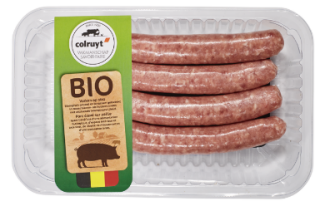
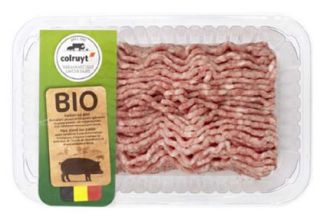
Luxembourg – UPDATE: COLRUYT BRAND ORGANIC CHIPOLATA AND ORGANIC MINCED PORK RECALL – Salmonella

SAP

Colruyt recalls the following products:

Last name Organic Chipolata
Mark Colruyt
Unit 280 g
Article number 17959
Best before date (DLC) 12/18/2020 and 12/20/2020
Sale period from 12/9/2020 to 12/17/2020 included

Colruyt recalls the following products:

Last name Organic minced pork
Mark Colruyt
Unit 400 g
Article number 17968
Best before date (DLC) 12/18/2020
Sale period from 12/9/2020 to 12/15/2020 included

Danger  : Presence of Salmonella

Salmonella can cause symptoms such as nausea, vomiting, abdominal cramps, diarrhea, fever and headache within 6 to 72 hours after consumption. These symptoms may be aggravated in young children, immunocompromised individuals and the elderly. People who have consumed these products and who present these symptoms are advised to consult a doctor, notifying him of this consumption.

RASFF Alerts -Salmonella – Chilled Chicken Meat – Chicken Elements – Cooked Unpeeled Shrimp – Chicken Carcase – Beef Trimming – Boiled Clam Meat – Chicken Minced Meat – Dried Fish Maws -Chicken Wings – Chicken Fillet -Turkey Meat -Eggs

European Food Alerts

RASFF

Salmonella enterica ser. Enteritidis (in 5 out of 5 sample /25g) in chilled chicken meat from Poland in Poland

RASFF

Salmonella (presence /25g) in chilled chicken elements from Poland in Poland

RASFF

Salmonella (presence /25g) in cooked unpeeled shrimps from the Netherlands in the Netherlands

RASFF

Salmonella enterica ser. Enteritidis (presence /25g) in chilled chicken carcass from Poland in Poland

RASFF

Salmonella enterica ser. Enteritidis (in 1 out of 5 samples /25g) in and missing identification code on frozen beef trimmings from the United Kingdom, via Belgium in the Czech Republic

RASFF

Salmonella (in 2 out of 5 samples /25g) in frozen boiled clam meat (Paratapes undulatus) from Vietnam in Portugal

RASFF

Salmonella (presence /25g) in minced chicken meat from the Netherlands in the Netherlands

RASFF

Salmonella enterica ser. Agona (presence /25g), Salmonella enterica ser. Münster (presence /25g), Salmonella enterica ser. Nyborg (presence /25g) and Salmonella enterica ser. Poona (presence /25g) in dried fish maws from the Gambia in the UK

RASFF

Salmonella enterica ser. Infantis (presence /25g) in frozen chicken wings from Poland in Italy

RASFF

Salmonella enterica ser. Infantis (presence /25g) in chilled chicken fillet from Poland in Poland

RASFF

Salmonella (presence /25g) in chilled minced turkey meat from Poland in Poland

RASFF

Salmonella enterica ser. Coeln (presence /25g) in eggs from Ukraine in Latvia

RASFF

Salmonella enterica ser. Typhimurium (presence in 1 out of 5 samples) in chilled chicken meat from France in France

RASFF

Salmonella (presence /25g) in food supplements from India in Germany

RASFF Alerts – STEC E.coli – O26 – O103 – Chilled Beef – Cow Carcasses

European Food Alerts

RASFF

shigatoxin-producing Escherichia coli (stx1+, stx2+, eae+, O26) in chilled beef from Belgium in Belgium

RASFF

shigatoxin-producing Escherichia coli (stx+; eae+, O103) in cow carcasses from Belgium in Belgium

RASFF Alert – Norovirus – Frozen Raspberries

European Food Alerts

RASFF

norovirus (GI, in 1 out of 5 samples /100g) in frozen raspberries from the Czech Republic, with raw material from Poland in Czech Republic

RASFF Alerts – Listeria monocytogenes – Syrian Cheese – Goats Milk Cheese – Raw Milk Goats Cheese – Pesto

European Food Alerts

RASFF

Listeria monocytogenes (present /25g) in Syrian cheese from the Netherlands in the Netherlands

RASFF

Listeria spp in goat’s milk cheese from France in the Netherlands

RASFF

Listeria monocytogenes (<10 CFU/g) in raw milk goat’s cheese from France in France

RASFF

Listeria monocytogenes (present /25g) in pesto from Belgium in the Netherlands