Category Archives: Food Microbiology Testing

France – CAESAR SALAD 300G – L’ATELIER CATERING – Listeria monocytogenes

Gov france

Identification information of the recalled product

  • Product category Feed
  • Product subcategory Prepared meals and snacks
  • Product brand name THE CATERING WORKSHOP
  • Model names or references CAESAR SALAD 300G – L’ATELIER CATERING
  • Identification of products
    GTIN Date
    3664335054243 Use-by date 07/07/2023
  • Packaging 300G tray
  • Marketing start/end date From 06/13/2023 to 06/19/2023
  • Storage temperature Product to be stored in the refrigerator
  • Health mark EN 35.196.001 EC
  • Geographic area of ​​sale Whole France
  • Distributors E. LECLERC

USA – Multiple states report infections from Cyclospora; source evades investigators

Food Safety News

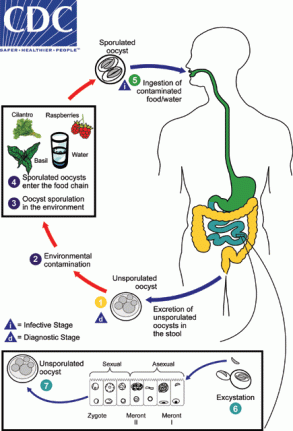
Cyclospora_LifeCycle201

The Centers for Disease Control and Prevention is reporting a multi-state outbreak of infections from the Cyclospora parasite that has sickened almost 100 people.

As of the agency’s most recent outbreak update, 97 people from 14 states have been confirmed infected by the microscopic parasite. Sixteen people have required hospitalization because their symptoms were so severe. Public health officials have not reported any deaths.

The total number of sick people has not yet been reported to the CDC because of the time it takes for testing and confirmation testing. Some individual case counts reported so far this year by state authorities include Colorado with 62 patients who ate at a single restaurant. Outbreak investigations are also underway in 15 other states.

Prior to the current update, the CDC first reported on the outbreak on May 25. The first date of onset of the infections was April 1. No specific food items have been identified as the source of the parasite.

USA – Man dies after contracting flesh-eating bacteria from raw oysters – Vibrio vulnificus

National Post

A Missouri man died after contracting a flesh-eating bacteria from eating raw oysters from a seafood stand, U.S. health officials said.

The 54-year-old man, whom authorities have not publicly identified, became infected after he ate oysters bought from The Fruit Stand & Seafood in Manchester, Mo., the St. Louis County Public Health Department said last week.

He died after being infected with the bacteria Vibrio vulnificus, which is contracted by consuming raw or undercooked oysters and other shellfish.

Denmark – Lactic acid bacteria in soy-ginger dressing

Foedevarestyrelsen

Orkla Food Danmark is recalling soy-ginger dressing due to the risk of growth of lactic acid bacteria, which can give the dressing a sour taste.

What food

Beauvais Soya Ginger Dressing

Net weight 275 g

Best before date: 11.04.24

Sold in: Bilka, SuperBrugsen, Dagli’Brugsen, Føtex, Meny, Spar, Min Købmand, Kvickly, Netto

Why is the dressing being recalled?

There is a risk of growth of lactic acid bacteria in the dressing. Growth of lactic acid bacteria makes the product unsuitable as food.

What should you do as a consumer?

The Danish Veterinary and Food Administration recommends that consumers return the product to the store where it was purchased, or discard it.

Who recalls the product

Orkla Foods Danmark A/S

Denmark Salmonella in medister, minced pork and minced ham

Foedevarestyrelsen

Himmerlandskød is recalling Frilandsmedister as well as minced pork and minced ham from Frilandsgris due to the discovery of Salmonella. The products should be returned to the store where they were purchased or discarded.

What foods

Medister of the brand Frilandsgris, 10% fat
Packages of 400 grams
Production date: 15.06.2023
Last date of use: 22.06.2023
EAN number: 5710238000899

Minced pork of the brand Frilandsgris, 8-12% fat
Packages of 400 grams
Production dates: 14.06.2023-16.06 .2023
Last use-by dates: 20.06.2023-22.06.2023
EAN number: 5705451650273

Minced ham from the brand Frilandsgris, 4-7% fat
Packs of 400 grams
Production dates: 14.06.2023-16.06.2023
Last use-by dates: 20.06.2022 3-22.06. 2023
EAN number: 5710238000882

Sold in: REMA 1000 stores nationwide.

Why are the products being recalled?

The company has, in connection with its own inspection, found Salmonella in the medister. Since the same raw material is included in the minced pork and minced ham, there is a risk that Salmonella is also present in these products. The symptoms of infection with Salmonella are diarrhoea, abdominal pain, fever, headache and possibly nausea and vomiting. The illness can last from a few days to several weeks.

What should you do as a consumer?

The Danish Veterinary and Food Administration advises consumers to return the products to the store where they were purchased, or to discard them.
If you experience symptoms in connection with consuming the products, you should contact your own doctor.

Who recalls the products

Himmerland beef

USA – FDA releases report on contamination in refrigerated dips and spreads

Food Safety News

The U.S. Food and Drug Administration has released the results of a recent sampling assignment that focused on refrigerated ready-to-eat (RTE) dips and spreads. Conducted from March 2021 to Jan. 2022, this assignment aimed to assess the presence of Salmonella and Listeria monocytogenes in these food products.

Refrigerated dips and spreads encompass a broad range of food products, including hummus, tahini, pimento cheese and yogurt-based items. Dips involve submerging a piece of food, such as a chip or vegetable, into a thinner consistency mixture, like salsa. On the other hand, spreads are typically applied with a knife onto other foods, like bread or crackers.

RTE foods can become contaminated through environmental pathogens or contaminated ingredients, making dips and spreads susceptible to bacterial growth if present. As people typically consume these products without a “kill step” like cooking, the presence of Listeria monocytogenes or Salmonella poses a significant public health risk, according to the FDA.

The presence of Listeria monocytogenes or Salmonella in dips and spreads poses significant risks to public health, leading to multiple recalls in recent years. Between 2017 and 2020, there were five hummus product recalls and six multi-commodity dip recalls because of contamination by these pathogens.

Norway searches for source of E. coli outbreak; Austrian outbreak under investigation

Food Safety News

Norwegian officials are investigating an E. coli outbreak that has affected half a dozen people.

The Norwegian Institute of Public Health (FHI) said six people, living in different parts of the country, are sick. E. coli O157:H7 with the same genetic profile has been detected in all patients.

Two people fell ill in October and November 2022, while the remaining four became sick in February, March and May this year. No-one has developed serious illness. They are between the ages of 14 and 49, and five are men.

Two patients live in Rogaland, while Viken, Trøndelag, Vestland, and Oslo all have one case each.

Meanwhile, several children have fallen ill with E. coli infections in a state of Austria beginning in late May.

In recent weeks, 11 children and young people, mostly from three childcare facilities in the Frastanz area, have contracted infections caused by Shiga toxin-producing E. coli (STEC). The serotype was not mentioned by officials.

At least two children developed HUS and another four were hospitalized, said officials in the province of Vorarlberg.

USA – Norovirus Outbreak linked to Oyster Shooters in Hawaii

Food Poison Journal

Food Borne Illness - Norovirus -CDC Photo

The Hawai‘i Department of Health (DOH) Food Safety Branch is issuing an alert regarding raw oysters exported from Dai One Food Co., Ltd., Republic of Korea (ROK), which may be potentially contaminated with norovirus.

DOH notified the United States Food and Drug Administration (FDA) of five illnesses from individuals who consumed raw oyster shooters at a restaurant in Hawai‘i on May 10, 2023. Trace-back information revealed the source for the implicated raw oysters was from a shipment by Dai One Food Co., Ltd., ROK. Samples collected were sent to the FDA to be tested for the presence of norovirus. The FDA released its findings on June 12, 2023, confirming  that norovirus GII was detected in one of the two samples collected.

Dai One Food Co. Ltd. has voluntarily recalled Individual Quick Freezing (IQF) raw oysters, harvested between February 2 and  4, 2022 and April 13 and 14, 2022, that were shipped from the ROK and distributed to restaurants and retailers in Hawai‘i, Georgia and Minnesota. The lot numbers affected are: D021031, D021041, and D020481.

USA – Another state reports a Cyclospora outbreak

Food Safety News

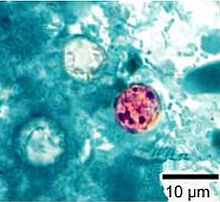
220px-Cyclospora_cayetanensis_stained

The Alabama Department of Public Health is investigating multiple reports of Cyclospora infection statewide.

The state’s health department has logged more infections from this parasite since April, and there are more than twice as many cases so far this year as were reported in Alabama in all of 2022.

Cyclosporiasis is a gastrointestinal illness caused by a microscopic parasite. People can get sick with cyclosporiasis by eating fresh produce contaminated with Cyclospora. However, Alabama officials have not yet determined a specific source of the parasites in this year’s outbreak.

In recent weeks other states, including Georgia, and the U.S. Food and Drug Administration have reported outbreaks of infections from the parasite.

USA – Listeria Leafy Green Outbreak sickened 19

Food Poison Journal

CDC, public health and regulatory officials in several states, and the U.S. Food and Drug Administration (FDA) investigated a multistate outbreak of Listeria monocytogenes infections. Epidemiologic data showed that leafy greens were a likely source of the outbreak. However, there was not enough other data to identify a specific type or producer of leafy greens.

As of June 13, 2023, a total of 19 people infected with the outbreak strain of Listeria were reported from 16 states. Sick people’s samples were collected from July 3, 2018, to March 31, 2023.

Public health officials collected many different types of information from sick people, including their age, race, ethnicity, other demographics, and the foods they ate in the month before they got sick. This information provided clues to help investigators identify the source of the outbreak.

Sick people ranged in age from less than 1 to 96 years, with a median age of 72, and 63% were female. Among 19 people with race information available, 17 people were White, 1 was African American/Black, and 1 reported “Other” race. Among 19 people with ethnicity information available, two people were Hispanic. Eighteen people were hospitalized, and no deaths were reported.