Category Archives: Food Microbiology Research

Hong Kong – Food Safety Focus – Bacteria in Raw Meat vs Cooked Meat

CFS

Recently, bacterial contamination of meat has attracted public attention. According to the World Health Organization, contamination of food by microbiological agents is a worldwide public health concern; and most countries have documented significant increases over the past few decades in the incidence of diseases caused by microorganisms in food. In this article, we will introduce some factors that determine the growth of bacteria in food, and discuss the different food safety considerations for bacteria in raw meat and cooked meat and the measures to reduce risks of food poisoning caused by bacteria.

Factors Determining the Growth of Bacteria in Food

Bacteria grow best when intrinsic and extrinsic properties are optimal for their growth. Intrinsic properties are the properties that are inherent parts of the food, such as pH and water activity, while extrinsic properties are the properties of the environment in which the food is stored, such as temperature. Water activity is not the same as the moisture content of the food but is a measure, ranging from 0 to 1, of the availability of water in food which determines the growth and survival of bacteria. By controlling these factors (e.g. controlling the storage temperature of the food), bacterial overgrowth can be prevented.
Hong Kong – Bacteria and viruses that cause food poisoning

CFS

In a nutshell: Bacteria and viruses are the most common causative agents of foodborne illnesses. Bacteria grow rapidly in foods that are warm, rich in moisture or protein and low in acidity. Milk, shell eggs, poultry, fish, meat and shellfish are common foods susceptible to bacteria growth. Although viruses cannot grow in food or water, a small number of viral particles can cause sickness when consuming the contaminated food.

Information on some of the most common bacteria and viruses that cause foodborne illnesses is provided below:

Norway tests flour for STEC; issues warning about Prime beverages

Food Safety News

Norwegian surveillance has found a low level of flour samples positive for Shiga toxin-producing E. coli (STEC).

The Norwegian Food Safety Authority (Mattilsynet) commissioned a survey of STEC in wheat flour to gather data on the problem.

A total of 151 samples of flour were collected from retailers in 2021 and analyzed in 2022. Enriched samples were examined for the presence of selected genetic markers. Attempts to isolate STEC were carried out from samples that were positive for Shiga toxin (stx) 1 and/or stx2. Isolates identified as STEC were further characterized using whole genome sequencing.

Research – Six E. coli infections linked to fermented raw milk

Food Safety News

Five people are sick in France, two seriously, and one in Belgium after drinking a brand of raw fermented milk.

In France, four children and one adult have been infected by Shiga toxin-producing E. coli (STEC) O26:H11. They fell ill between the end of March and the beginning of April this year.

Santé publique France has been investigating two cases of Hemolytic Uremic Syndrome (HUS) in the Hauts-de-France and Île-de France regions. The latter was in the context of a family outbreak. The suspected food was fermented raw milk. HUS is a severe complication associated with E. coli infections that causes kidney failure.

“The sequencing of the strains isolated within these outbreaks confirmed the same genomic profile. Food investigations made it possible to identify, for the case in Hauts-de-France, the place of purchase and to sample milk on sale at the time of the inspections. It was fermented raw milk made in Belgium,” agency officials told Food Safety News.

New Zealand – North Island warning Extended – PSP

MPI

North Island warning

Reason for alert Paralytic Shellfish Poisoning (PSP)

Date warning issued Extended 18 May 2023

10 May 2023

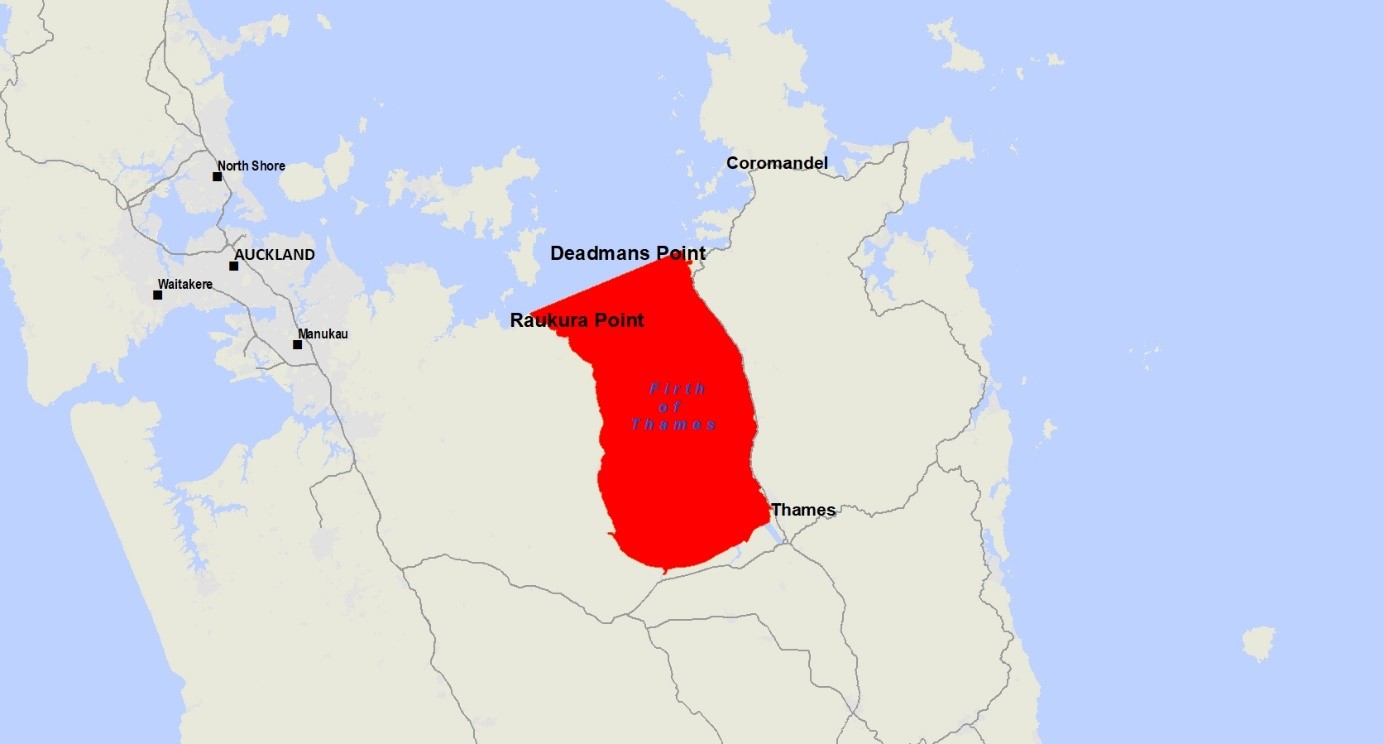
Affected area Firth of Thames.
Shellfish affected Mussels, oysters, tuatua, pipi, toheroa, cockles, scallops, catseyes, kina (sea urchin) and all other bivalve shellfish.

Note, cooking shellfish does not remove the toxin.

Pāua, crab and crayfish may still be eaten if the gut has been completely removed prior to cooking, as toxins accumulate in the gut. If the gut is not removed its contents could contaminate the meat during the cooking process.

Symptoms Symptoms typically appear between 10 minutes and 3 hours after ingestion and may include:

  • numbness and a tingling (prickly feeling) around the mouth, face, and extremities (hands and feet)
  • difficulty swallowing or breathing
  • dizziness
  • headache
  • nausea
  • vomiting
  • diarrhoea
  • paralysis and respiratory failure and in severe cases, death.
Other information Paralytic shellfish toxins have been detected in shellfish from the Kaipara Harbour at levels over the safe limit of 0.8mg/kg set by MPI. Ongoing testing will continue and any changes will be communicated accordingly.

Map of the affected area

Map of affected area from Raukura Point across to Deadmans Point.

Public warnings about toxic shellfish

We test shellfish and seawater for toxic algae every week from popular shellfish gathering areas around New Zealand. If the shellfish are not safe to eat, we issue public health warnings and put up signs at affected beaches.

Research – Multistate Outbreak of Hepatitis A Virus Infections Linked to Frozen Organic Strawberries

CFI

Hepatitis A kswfoodworld

Hepatitis A is a very contagious liver infection caused by the hepatitis A virus (HAV), resulting in an inflammation of the liver.

The Centers for Disease Control and Prevention (CDC), state public health and regulatory officials such as the Washington State Department of Health (DOH), and the U.S. Food and Drug Administration are “investigating an outbreak of hepatitis A transmission linked to frozen organic strawberries imported from certain farms located in Baja California, Mexico, by a common supplier” (CDC, 2023).

India – Assam: One dies, several hospitalised due to suspected food poisoning

Daiji World

One person died in Assam’s Goalpara district, while several others were hospitalised after they complained of food poisoning following a ritual feast organised in Mariampur village bordering Meghalaya, officials said on Friday.

The function was organised on Wednesday night by Garo community members living in that village. People started complaining about uneasiness soon after the dinner.

The fishery department has collected samples and sent those for the test. Some samples were also sent to an Indian Council of Medical Research (ICMR) laboratory outside the state. Once we get the reports, the reason behind the mass illness can be ascertained.

India – One person dies, 158 others fall ill due to food poisoning in Assam: Police

Hindustan Times

According to official reports, the affected people had attended a feast followed by a religious event organised in Mariampur village bordering Meghalaya

According to official reports, the affected people had attended a feast followed by a religious event organised in Mariampur village bordering Meghalaya.

After eating the food, people started feeling unwell.

Police said that they are yet to ascertain the reason behind the death.

“We are investigating if the person died due to food poisoning or due to other reasons. Things will be clearer once we get the post-mortem report,” the official said.

India – 31 fall ill after attending funeral service ; food poisoning suspected

The Shillong Times

Nongpoh, May 12: Dozens of villagers from Nongladew village in Ri Bhoi district of Meghalaya fell ill after attending a funeral service in Mariampur under Goalpara District of Assam. As many as 41 villagers had attended the funeral rituals of their relative on May 9. However, on Wednesday night (May 10), 31 of them returned home and fell ill, prompting immediate action from health officials.

The villagers had consumed fish, potato, and dal during the funeral service, and many of them complained of illness when they returned home. While the exact cause of the illness is not known, the villagers suspect the fish, which they believe was poisoned, to be the reason for their condition

Quebec – Notice not to consume smoked mussels and warning concerning the lack of information necessary for the consumption of certain smoked fish products, prepared and sold by Poissonnerie de la Baie inc. by Bonaventure – Clostridium botulinum

Quebec

The Ministry of Agriculture, Fisheries and Food (MAPAQ), in collaboration with the company Poissonnerie de la Baie inc., located at 170, avenue de Port- Royal , in Bonaventure, warns the public not to consume the product indicated in the table below, because the retailer mentioned above has not prepared and packaged it in such a way as to ensure its safety. Indeed, this product could promote the proliferation of the bacterium  Clostridium botulinum .

Product name

Format

Affected lot

“ATKINS SMOKED MUSSELS”

Unitary

Units sold until May 12, 2023

In addition, the MAPAQ, in collaboration with the same company, warns the population not to consume the products indicated in the table below beyond 14 days following the date of packaging.

Product name

Format

Affected lot

“SMOKED SALMON BITES IN LERABLE”

Variable

Units sold until May 12, 2023

“ATKINS SMOKED TURBOT FILLET”

Variable

Units sold until May 12, 2023

The products that are the subject of this warning were offered for sale until May 12, 2023 inclusively, and only at the establishment designated above. The smoked fish products were vacuum packed in a transparent plastic bag and the smoked mussels were packed in glass jars with a metal lid. The products were all sold chilled. The label of the products included, in addition to their name, the words “Poissonnerie de la Baie”.

The operator is voluntarily recalling the products in question. It has agreed with MAPAQ to issue this warning as a precautionary measure. 

Smoked mussels  : people who have this product in their possession are advised not to consume it. They must return it to the establishment where they bought it or throw it away. Even if the affected product shows no signs of tampering or suspicious odors, its consumption may represent a health risk.

Maple Smoked Salmon Bites and Smoked Turbot Fillets  : People who have either of these products in their possession are advised not to consume it if it has been packaged for more than 14 days. They must return it to the establishment where they bought it or throw it away. Even if the affected products show no signs of tampering or suspicious odors, their consumption may represent a health risk. In fact, when smoked fish is sold refrigerated, mandatory preventive measuresThis link will open in a new window. must be taken with regard to the type of packaging and the shelf life.

It should be noted that no case of illness associated with the consumption of these foods has been reported to MAPAQ to date.