Category Archives: Food Microbiology Research

USA – Salmonella tainted Raw Milk sickens 5 children in Minnesota

Food Poison Journal

The Minnesota Department of Health (MDH) is investigating a cluster of five illnesses caused by the bacteria Salmonella Typhimurium among children from the Twin Cities metro. The families of two children reported that they consumed unpasteurized milk. Information could not be obtained from the remaining families, but the bacteria from the cases were found to be identical through laboratory analysis. This indicates the infections came from the same source.

The cases include children ranging in age from 3 months to 10 years who became ill between the end of June and early July. One child was hospitalized.

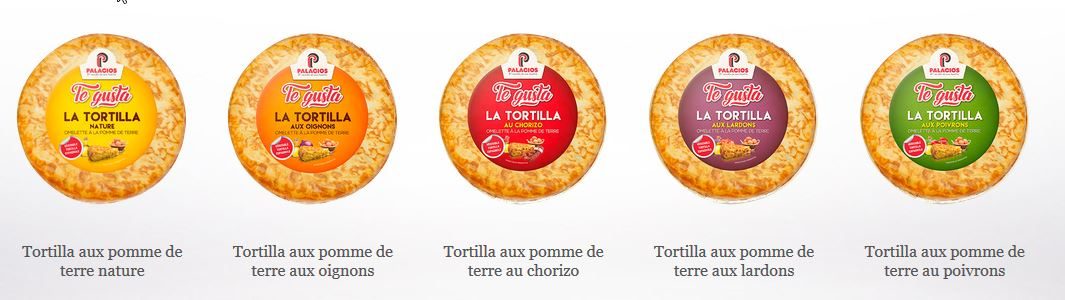
France – TORTILLAS – Clostridium botulinum

Gov france

Identification information of the recalled product

  • Product category Feed
  • Product subcategory Others
  • Product brand name PALACIOS / TE GUSTA
  • Model names or references Plain potato tortillas Potato and onion tortillas Potato and bacon tortillas Potato and pepper tortillas Potato and chorizo ​​tortillas Halal potato tortillas
  • Identification of products
    Batch
    All lots
  • Storage temperature Product to be stored in the refrigerator
  • Further information There is a range of PALACIOS frozen tortillas concerned as well.
  • Geographic area of ​​sale Whole France
  • Distributors Carrefour, Cora, intermarket

Research – Isolation of Biofilm-Forming Staphylococci from the Bulk-Tank Milk of Small Ruminant Farms in Greece

MDPI

Abstract

The objectives of this study were (i) to describe staphylococcal isolates recovered from bulk-tank raw milk collected from sheep and goat farms during a countrywide study performed in Greece, (ii) to study management factors potentially associated with their presence in bulk-tank milk and (iii) to provide evidence regarding their association with the quality of the milk. In total, 312 staphylococcal isolates, recovered from samples of bulk-tank raw milk from 444 small ruminant farms in Greece, were evaluated in this work. The in vitro formation of biofilm by the isolates was tested by combining the findings of (a) culture appearance on Congo Red agar plates and (b) results of a microplate adhesion test. The most frequently identified species was Staphylococcus aureus (75 isolates); other frequently recovered species were S. simulans (44 isolates), S. equorum (34 isolates) and S. haemolyticus (26 isolates); in total, 23 species were identified. In total, 224 (71.8%) isolates were biofilm-forming and were recovered from the bulk-tank milk samples of 148 sheep flocks (45.5%) and 55 goat herds (46.2%). There was evidence of seasonality in the isolation of staphylococci: during spring, mostly biofilm-forming isolates were recovered, whilst during summer, mostly non-biofilm-forming isolates were recovered. Among farms applying machine-milking, the proportion of farms from which biofilm-forming isolates were recovered was higher where water with temperature < 50 °C or ≥90 °C was used to clean the milking parlour. In the multivariable analyses, for farms applying machine-milking, the temperature of the water emerged as the only significant variable (p = 0.024), whilst in farms applying hand-milking, the only tendency that emerged was for the frequency of collection of milk from the farm tank (p = 0.08). In sheep flocks, recovery of biofilm-forming staphylococci from the bulk-tank milk was associated with higher somatic cell counts and higher total bacterial counts in the milk. The study identified abiotic factors related to the presence and isolation of these bacteria, specifically the temperature of water used for the cleaning of the milking parlour (in farms where machine-milking is applied) and the frequency of milk collection from the farm tank. These factors apply after the production of milk, and they could thus be regulated appropriately in order to reduce bacterial load and improve the quality of milk delivered to dairy plants. In sheep farms, an association was also seen between recovery of biofilm-forming staphylococci and high somatic cell counts in milk.

Research – A smart package for monitoring food contamination

Advanced Science News

Governments perform sanitary checks at different points of the food production chain to reduce the risks of foodborne illnesses. The reference method to detect food pathogens is culture, which verifies pathogens’ presence by testing their ability to grow under optimal conditions. However, this method is laborious and slow (it can take a week for bacteria and longer for fungi) as it requires sampling at the production site, shipping samples to the laboratory, and analyzing them using specialized equipment and trained personnel.

To address these limitations, Associate Professor Tohid Didar and colleagues from McMaster University in Canada joined their efforts. They designed a smart device, which they named lab-in-a-package, that can sense dangerous levels of bacteria quickly and without even opening the package.

In this work, they designed a sensor specific for Salmonella Typhimurium (S. Typhimurium), a species of Salmonella most commonly associated with chicken and other poultry products. With lab-in-a-package, the team successfully detected S. Typhimurium in contaminated chicken on site, with high sensitivity and specificity, and in real-time.

Research – Food Safety Monitoring of Salmonella spp. in Northern Italy 2019–2021

MDPI

Abstract

Salmonella is the second most frequent bacterial pathogen involved in human gastrointestinal outbreaks in the European Union; it can enter the food-production chain from animal or environmental sources or from asymptomatic food operators. European food legislation has established microbiological criteria to ensure consumer protection. Salmonella is listed under both process hygiene criteria and food safety criteria. Each EU member state designates an agency to organize or perform controls and other official activities. This paper describes the official control plans performed by competent authorities in Northern Italy in the three-year period 2019–2021. A total of 4413 food samples were delivered to the IZS Food Safety laboratories for Salmonella detection, of which 36 (0.8%) tested positive. Salmonella was most frequently detected in poultry meat samples (25/36 positive samples) followed by other meat products and pork products. The official controls for the protection of consumer health apply the EU’s farm-to-fork approach: the samples were collected during production (food production plants), from products on the market, and from collective catering (restaurants, cafeterias, canteens). This manuscript will provide information about the presence of Salmonella in foodstuffs that can help competent authorities to set control plans based on risk assessments.

USA – Persistent Strain of Salmonella Infantis (REPJFX01) Linked to Chicken

CDC

Foodborne Pathogen

REPJFX01

REPJFX01 is a persistent, multidrug-resistant strain of Salmonella Infantis bacteria that has caused illnesses and outbreaks in the United States and globally.

Illness caused by this strain was first reported to PulseNet in 2012. As of December 31, 2022, information from 2,900 patients with REPJFX01 infection was reported to PulseNet. The median age of patients was 54 years (interquartile range, 27–70 years), and 62% were female. The isolate source was stool in 65% and urine in 27% of cases. Illnesses caused by this strain occur year-round but are most common in July and August. In the past, REPJFX01 has spread to people through contaminated chicken in the United States and through exposures during international travel.

Among a subset of 251 patients with records in Foodborne Disease Active Surveillance Network (FoodNet) during 2018–2020, 10% of patients traveled internationally in the 7 days before their illness began; most traveled to the Dominican Republic (45%), Peru (25%), or Ecuador (10%). Among the same subset of patients, 29% were hospitalized, 7% were admitted to the intensive care unit, and fewer than 1% died. Among 85 patients who received antibiotics recommended as first-line or alternative treatment for salmonellosis, 78% had an isolate that was resistant to that antibiotic.

This strain of Salmonella Infantis is relatively diverse genetically. Bacteria in the strain are within 82 allele differences of one another by core genome multilocus sequence typing (cgMLST). This is more genetically diverse than typical multistate foodborne outbreaks, in which bacteria generally fall within 10 allele differences of one another.

EFSA – Multi-country outbreak of Salmonella Senftenberg ST14 infections possibly linked to cherry like tomatoes

EFSA

Abstract

Since August 2022 and as of 12 July 2023, 92 cases of Salmonella Senftenberg have been reported in Austria (5), Belgium (4), Czechia (4), Estonia (1), Finland (12), France (16), Germany (26), Ireland (1), the Netherlands (5), Norway (1), Sweden (11), the United Kingdom (4), and the United States (2). In total, 69.6% of the reported cases were female. One patient has died of the infection. The first case was reported in France with an isolation date of 22 August 2022 and the most recent case was reported on 24 June 2023 in Sweden. Most cases were reported between October 2022 and March 2023, with a decline in the number of countries with exposures after December. In Austria, Germany, and France, cherry-like tomatoes were identified as the food exposure most reported by interviewed cases. The outbreak strain was detected in France from a mixed salad dish, containing cherry tomatoes and green leafy vegetables, prepared on 17 August 2022 but not served. Tomatoes from the salad in France and tomatoes in Austria were suspected as the vehicle of infections by national authorities and were traced back to wholesalers in Germany, the Netherlands and Spain, and to growers in the Netherlands, Spain and Morocco. In the absence of microbiological evidence from the tomatoes, the source of the infections could not be established. The genetic similarity of the human outbreak strains suggests a likely common source(s) causing a prolonged, cross-border food-borne outbreak with cases intermittently reported in 11 EU/EEA countries, the UK, and the US for about 10 months. The contamination may have originated from farms growing tomatoes. Since December 2022, as the number of cases has declined, the risk of new infections has decreased to a low level.

Sweden – Fish suspected in deadly Swedish Listeria outbreak

Food Safety News

Three people have died in Sweden as part of a Listeria outbreak that may have been caused by smoked fish.

Folkhälsomyndigheten (the Public Health Agency of Sweden) said deaths of three of the older patients were connected to their Listeria infections but it is not clear if they died with or because of listeriosis.

From the end of May to the beginning of July, 10 people contracted Listeria infections caused by the same type of the bacteria. Another four people fell ill in late 2022 from this strain.

Patients are 10 men and four women aged 63 to 93 years old. They live in eight different regions in the country.

Based on information from a questionnaire given to patients about foods they ate before becoming sick, many reported eating gravad or cold-smoked salmon but the exact product that caused the outbreak is not yet clear.

USA – Investigations of Foodborne Illness Outbreaks

FDA

What’s New

  • A new outbreak of Cyclospora cayetanensis (ref #1171) in a not yet identified product has been added to the table. There are currently 39 cases. FDA and state partners have initiated sample collection and testing and FDA has initiated traceback.
  • A new outbreak of E. coli O26 (ref #1165) with 13 cases linked to a not yet identified product has been added to the table. FDA has initiated traceback.
  • For the outbreak of Cyclospora cayetanensis (ref #1163), the case count has increased from 118 to 121 cases and FDA has initiated traceback.
  • For the outbreak of Salmonella Paratyphi B var. L(+) tartrate+ (ref #1157), the case count has increased from 34 to 35 cases.
  • For the outbreak of Cyclospora cayetanensis (ref #1159), the case count has increased from 43 to 68 cases.
  • For the outbreak of hepatitis A virus (ref #1143) linked to frozen strawberries, the advisory was updated on July 20, 2023 to include one additional case. FDA reminds consumers to check their freezers and not eat recalled frozen strawberries.

UK – Standards Agency and Food Standards Scotland issue updated advice to higher risk consumers on ready-to-eat cold-smoked and cured fish following publication of a risk assessment

Gov UK

The Food Standards Agency (FSA) and Food Standards Scotland (FSS) are advising pregnant women and those with a weakened immune system to avoid eating ready-to-eat cold-smoked or cured fish.

The Food Standards Agency (FSA) and Food Standards Scotland (FSS) are advising pregnant women and those with a weakened immune system to avoid eating ready-to-eat cold-smoked or cured fish, following publication of a risk assessment showing they are at higher risk of severe illness from listeriosis. Products include smoked salmon, smoked trout and gravlax.

As the risk of serious illness from listeriosis increases with age, the FSA and FSS are also advising that older people should be aware of the risks associated with eating these products.

The FSA and FSS’s joint risk assessment (Opens in a new window), commissioned in response to an ongoing outbreak of Listeria monocytogenes linked to ready-to-eat cold smoked fish, found that while the risk of contracting listeriosis in higher-risk individuals from cold-smoked fish is low, the severity of the illness is high. This means there is the potential for severe illness, hospitalisation, and death among higher risk groups.