Category Archives: Food Microbiology Research

Research – Risks for animal health related to the presence of Ochratoxin A (OTA) in feed

EFSA

Abstract

In 2004, the EFSA Panel on Contaminants in the Food Chain (CONTAM) adopted a Scientific Opinion on the risks to animal health and transfer from feed to food of animal origin related to the presence of ochratoxin A (OTA) in feed. The European Commission requested EFSA to assess newly available scientific information and to update the 2004 Scientific Opinion. OTA is produced by several fungi of the genera Aspergillus and Penicillium. In most animal species it is rapidly and extensively absorbed in the gastro‐intestinal tract, binds strongly to plasma albumins and is mainly detoxified to ochratoxin alpha (OTalpha) by ruminal microbiota. In pigs, OTA has been found mainly in liver and kidney. Transfer of OTA from feed to milk in ruminants and donkeys as well as to eggs from poultry is confirmed but low. Overall, OTA impairs function and structure of kidneys and liver, causes immunosuppression and affects the zootechnical performance (e.g. body weight gain, feed/gain ratio, etc.), with monogastric species being more susceptible than ruminants because of limited detoxification to OTalpha. The CONTAM Panel considered as reference point (RP) for adverse animal health effects: for pigs and rabbits 0.01 mg OTA/kg feed, for chickens for fattening and hens 0.03 mg OTA/kg feed. A total of 9,184 analytical results on OTA in feed, expressed in dry matter, were available. Dietary exposure was assessed using different scenarios based on either model diets or compound feed (complete feed or complementary feed plus forage). Risk characterisation was made for the animals for which an RP could be identified. The CONTAM Panel considers that the risk related to OTA in feed for adverse health effects for pigs, chickens for fattening, hens and rabbits is low.

Research – New Insights into Inhibiting the Spread of Cholera-causing Bacteria

Express Health Care Management

A recent research article published in The Proceedings of the National Academy of Sciences (PNAS) has provided new insights into inhibiting the spread and infection of Vibrio cholerae, the bacteria responsible for causing cholera. The study, titled “A peptide-binding domain shared with an Antarctic bacterium facilitates Vibrio cholerae human cell binding and intestinal colonization,” was coauthored by Karl Klose, director of The South Texas Center for Emerging Infectious Diseases (STCEID), and Cameron Lloyd, a UTSA doctoral student.

Traditionally, V. cholerae is found naturally on various surfaces within marine environments. When contaminated water or food is consumed by humans, the bacteria colonize the gastrointestinal tract and cause cholera, leading to symptoms such as diarrhea, vomiting, and circulatory collapse. If left untreated, severe cases of cholera can be fatal.

The research team, in collaboration with other international laboratories, identified a peptide, a short chain of amino acids, that can inhibit the virulence of V. cholerae. They discovered that the peptide inhibitors, which bind to an Antarctic bacterium called Marinomonas primoryensis, can disrupt V. cholerae from adhering to human cells, forming biofilms, and colonizing the gastrointestinal tract.

Research -Systematic Review and Meta-Analysis of Campylobacter Species Contamination in Poultry, Meat, and Processing Environments in South Korea

MDPI

Abstract

Campylobacter spp. constitute a significant global threat as a leading cause of foodborne illnesses, with poultry meat as a prominent reservoir for these pathogens. South Korea is known for its diverse poultry consumption habits, and continuous outbreaks make it a matter of concern to perform a meta-analysis to identify the primary source of contamination. This systematic review and meta-analysis aimed to assess and compare the prevalence of Campylobacter in various poultry and meat types while also considering the importance of environmental factors in South Korea. The meta-analysis revealed that duck meat exhibited the highest prevalence of Campylobacter, with a pooled estimate of 70.46% (95% CI: 42.80% to 88.38%), followed by chicken meat at a pooled prevalence of 36.17% (95% CI: 26.44% to 47.91%). Additionally, our analysis highlighted the predominance of C. jejuni and C. coli in South Korea. These findings underscore the importance of implementing rigorous food safety measures and establishing robust surveillance programs in the poultry industry to mitigate the risk of Campylobacter-related foodborne illnesses associated with meat consumption in South Korea.

Research – Monophasic Variant of Salmonella Typhimurium 4,[5],12:i:- (ACSSuGmTmpSxt Type) Outbreak in Central Italy Linked to the Consumption of a Roasted Pork Product (Porchetta)

MDPI

Abstract

The monophasic variant of S. Typhimurium 4,[5],12:i:- (MVST) is the third most commonly reported Salmonella serovar involved in human infections (8.8%) in the EU and ranks after S. Enteritidis (54.6%) and S. Typhimurium (11.4%). In Italy, in contrast, the MVST has achieved peculiar epidemiological and ecological success which has allowed it to be, since 2011, the serovar most frequently isolated from humans. In the summer of 2022, a foodborne outbreak of the MVST involving 63 people occurred in the Marche Region (Central Italy). A common food exposure source among some human cases was a roasted, ready-to-eat (RTE) pork product, porchetta, which is a typical product of Central Italy. This paper describes the results of investigations conducted to clarify this outbreak. The porchetta was produced by a local manufacturing plant and distributed to at least two local retail stores, one of which was the retail outlet for the manufacturing plant. The MVST was isolated from surface samples collected at the porchetta manufacturing plant and at both local retail stores via bacterial analysis, and the porchetta sampled at one store contained the MVST. These data confirm this type of RTE pork product can be a source of Salmonella infection in humans.

France – Cans/Jars – Clostridium botulinum

RASFF

  • Product category Food
  • Product subcategory Prepared meals and snacks
  • Product brand name White Clover Farm
  • Model names or references the recalled products are all jars with a DDM prior to October 18, 2026
  • Product identification
    Batch Date
    All lots Use-by date between 09/11/2023 and 13/10/2026
  • Packaging the recalled products are all jars with a DDM prior to October 18, 2026
  • Start/end date of marketing Until 10/18/2023
  • Storage temperature Product to be stored at room temperature
  • Geographical sales area Departments: LOIRE-ATLANTIC (44)
  • Distributors– Ferme du limeur – The Foucher sisters – Graines d’ici – Joly Coquelicot – kokolet – chap and seeds
  • Reason for recall Problem with the sterilization process
  • Risks incurred by the consumer Clostridium botulinum (causing agent of botulism)

RASFF Alert -Campylobacter – Chicken Wings

RASFF

Salmonella infantis and Campylobacter jejuni in chicken wings from Austria in Germany

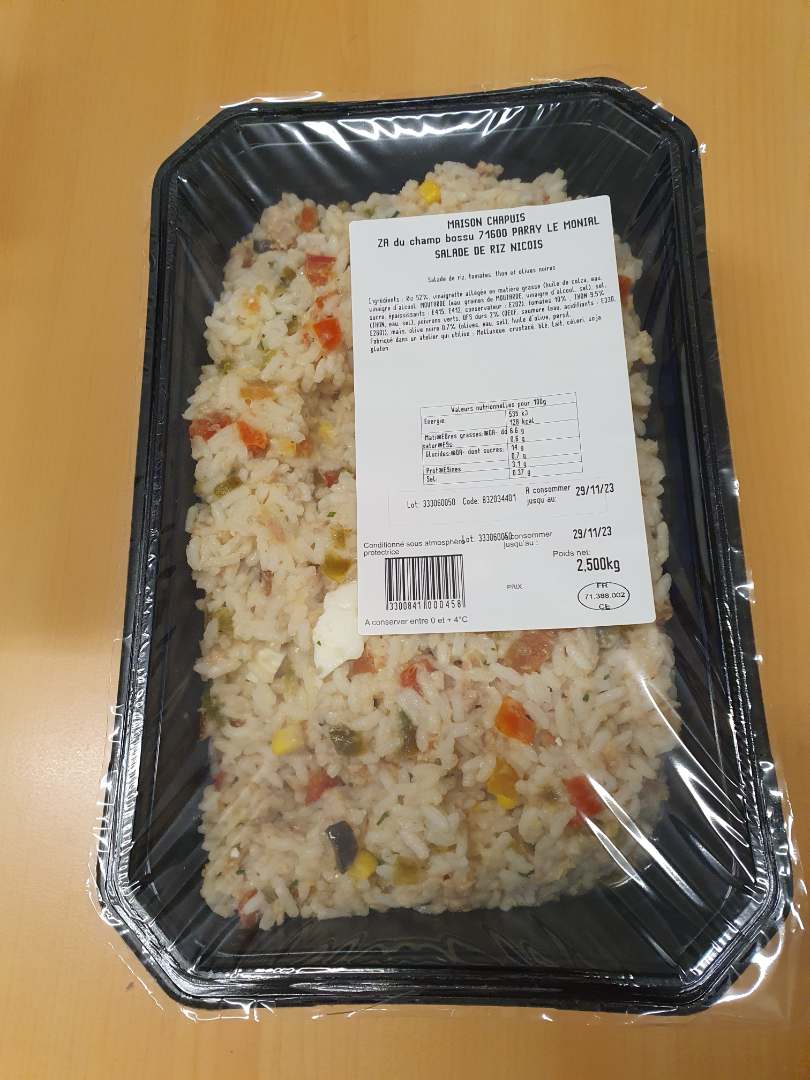
France – NICOIS RICE – Listeria monocytogenes

Gov France

  • Product category Food
  • Product subcategory Prepared meals and snacks
  • Product brand name Chapuis House
  • Model names or references All weights
  • Product identification
    GTIN Batch Date
    3300842274070 From lots No. 332750000 to lot No. 333119999 Use-by date between 10/26/2023 and 12/01/2023
    3300842240389 From lots No. 332750000 to lot No. 333119999 Use-by date between 10/26/2023 and 12/01/2023
    3300842253549 From lots No. 332750000 to lot No. 333119999 Use-by date between 10/26/2023 and 12/01/2023
    3300842253259 From lots No. 332750000 to lot No. 333119999 Use-by date between 10/26/2023 and 12/01/2023
    3300841246498 From lots No. 332750000 to lot No. 333119999 Use-by date between 10/26/2023 and 12/01/2023
  • Packaging Capped tray under modified atmosphere
  • Start/end date of marketing From 09/10/2023 to 13/11/2023
  • Storage temperature Product to keep in the refrigerator
  • Health mark FR 71 388 002 EC
  • Geographical sales area Whole France
  • Distributors Supermarkets, wholesaler, bakery, independent store

WHO unveils WGS guides to help tackle foodborne disease

Food Safety News

The World Health Organization (WHO) has released a guide for use of whole genome sequencing (WGS) in food safety.

The guidance comes in three parts. The first explains the minimum capacity requirements in the foodborne disease surveillance and response system prior to considering implementation of WGS.

The second discusses how WGS can help to support outbreak investigations and the third describes the usage of WGS in routine surveillance of foodborne diseases.

A related webinar was organized in June 2023 where lessons learned, opportunities, challenges and national examples were highlighted. The event featured Dr. Eric Brown, from the Center for Food Safety and Applied Nutrition (CFSAN), at the U.S. Food and Drug Administration.

WGS is useful for understanding foodborne diseases through enhancing routine surveillance, outbreak detection and response and for source identification, said WHO. It is hoped the technology will help reduce the burden of foodborne illness.

Research – Toxoplasmosis: Epidemiology, Prevention and Control

MDPI

Book cover: Toxoplasmosis: Epidemiology, Prevention and Control

Summary

Scientific motivation to publish this book comes from the increased interest in the study of toxoplasmosis, showed all over the world. Though the Toxoplasma gondii infection was first discovered in 1908, toxoplasmosis remains a today’s research topic, a realm of questions and dilemmas that interest both the veterinarians and the human doctors. Studies in the field are directed to the epidemiology of the disease, the sources of infection, epidemiological chains, being underlined the important feature in the transmission of this parasite: the ability to pass from one intermediate host to another intermediate host without passing through the final host – felids. An increased prevalence of toxoplasmosis in humans and animals, as well as the difficulty of coproscopic diagnosis of toxoplasmosis in cats, expensive serological examinations in both animals and humans, lack of diagnostic methods accessible to veterinarians in slaughterhouses, cultural and culinary differences of human patients, which can influence the prevalence of the disease, motivate the scientific and practical importance of the proposed book and reveal the importance of this topic for animal and human health. So, the proposed book will contain informations regarding the etiology and history of Toxoplasma gondii infection and also the parasite’s morphology and biology. This work will contain a very detailed epidemiology of the toxoplasmosis from all over the world and for all species of animals. This chapter will include also personal findings of the authors about the Toxoplasma gondii seroprevalence in domestic animals from Romania. In the last part of the book we will present the main methods for toxoplasma diagnosis. At the end of the book we will synthesize the main routes for T. gondii infection and the recommendations for reducing toxoplasmosis seroprevalence.

Research – From field to plate: How do bacterial enteric pathogens interact with ready-to-eat fruit and vegetables, causing disease outbreaks?

Science Direct

Abstract

Ready-to-eat fruit and vegetables are a convenient source of nutrients and fibre for consumers, and are generally safe to eat, but are vulnerable to contamination with human enteric bacterial pathogens. Over the last decade, Salmonella spp., pathogenic Escherichia coli, and Listeria monocytogenes have been linked to most of the bacterial outbreaks of foodborne illness associated with fresh produce. The origins of these outbreaks have been traced to multiple sources of contamination from pre-harvest (soil, seeds, irrigation water, domestic and wild animal faecal matter) or post-harvest operations (storage, preparation and packaging). These pathogens have developed multiple processes for successful attachment, survival and colonization conferring them the ability to adapt to multiple environments. However, these processes differ across bacterial strains from the same species, and across different plant species or cultivars. In a competitive environment, additional risk factors are the plant microbiome phyllosphere and the plant responses; both factors directly modulate the survival of the pathogens on the leaf’s surface. Understanding the mechanisms involved in bacterial attachment to, colonization of, and proliferation, on fresh produce and the role of the plant in resisting bacterial contamination is therefore crucial to reducing future outbreaks.