Category Archives: Food Microbiology Research

Research – Sanitization of Chicken Frames by a Combination of Hydrogen Peroxide and UV Light To Reduce Contamination of Derived Edible Products

Journal of Food Protection

ABSTRACT

Chicken carcass frames are used to obtain mechanically separated chicken (MSC) for use in other further processed food products. Previous foodborne disease outbreaks involving Salmonella-contaminated MSC have demonstrated the potential for the human pathogen to be transmitted to consumers via MSC. The current study evaluated the efficacy of multiple treatments applied to the surfaces of chicken carcass frames to reduce microbial loads on noninoculated frames and frames inoculated with a cocktail of Salmonella enterica serovar Enteritidis and Salmonella enterica serovar Typhimurium. Inoculated or noninoculated frames were left untreated (control) or were subjected to treatment using a prototype sanitization apparatus. Treatments consisted of (i) a sterile water rinse, (ii) a water rinse followed by 5 s of UV-C light application, or (iii) an advanced oxidation process (AOP) combining 5 or 7% (v/v) hydrogen peroxide (H2O2) with UV-C light. Treatment with 7% H2O2 and UV-C light reduced numbers of aerobic bacteria by up to 1.5 log CFU per frame (P < 0.05); reductions in aerobic bacteria subjected to other treatments did not statistically differ from one another (initial mean load on nontreated frames: 3.6 ± 0.1 log CFU per frame). Salmonella numbers (mean load on inoculated, nontreated control was 5.6 ± 0.2 log CFU per frame) were maximally reduced by AOP application in comparison with other treatments. No difference in Salmonella reductions obtained by 5% H2O2 (1.1 log CFU per frame) was detected compared with that obtained following 7% H2O2 use (1.0 log CFU per frame). The AOP treatment for sanitization of chicken carcass frames reduces microbial contamination on chicken carcass frames that are subsequently used for manufacture of MSC.

HIGHLIGHTS
  • Chicken carcass frames were sanitized using an advanced oxidation process.

  • Salmonella was reduced by 1.1 log CFU per frame with H2O2 and UV-C light.

  • Aerobic bacteria were reduced by up to 1.5 log CFU per frame with 7% H2O2 plus UV-C light.

  • Advanced oxidation processing produced greater reductions than water or UV-C light alone.
Research -Characterization of bacterial pathogens associated with milk microbiota in Egypt

Academic Journals

Abstract

Milk is a substantial source of nutrients needed by all humans across lifespan development. Given its nutritional composition, milk is considered a vehicle for various microbes including beneficial and pathogenic bacteria. In this study, 270 milk samples comprising raw cow and buffalo milk and pasteurized milk with different shelf-life durations were tested along with pasteurized organic milk for the presence of Staphylococcus aureus and Escherichia coli. Collectively, 21 E. coli and 14 S. aureus isolates were cultivated and identified from total milk samples. All E. coli and S. aureus isolates exhibited resistance to erythromycin and penicillin, respectively. Serogroups O26, O128, and O111 were the most frequently identified amongst E. coli isolates, whereas staphylococcal enterotoxins (SEs) were inconsistently produced across S. aureus isolates. The molecular profile showed clustering of 6 isolates of E. coli by harboring stx1, stx2, eaeA genes, and 5 isolates of S. aureus by mecA gene. Findings revealed the bacteriological quality of popularly consumed milk in Egypt, including raw and pasteurized milk with preference to pasteurized organic milk and 7-day shelf life (7DSL) pasteurized milk. However, raw milk and 3MSL pasteurized milk were the major sources of E. coli and S. aureus, posing a serious public health issue.

Research -Occurrence, Seasonal Distribution, and Molecular Characterization of Vibrio vulnificus, Vibrio cholerae, and Vibrio parahaemolyticus in Shellfish (Mytilus galloprovincialis and Ruditapes decussatus) Collected in Sardinia (Italy)

Journal of Food Protection

ABSTRACT

In this study, we investigated the occurrence, seasonal distribution, and molecular characterization of pathogenic vibrios in Mediterranean mussels (Mytilus galloprovincialis) and grooved carpet shells (Ruditapes decussatus) from two harvesting areas of Sardinia (Italy). Samples collected before and after depuration were submitted for qualitative and quantitative determination of Vibrio spp. Vibrio spp. isolates were presumptively identified by means of biochemical methods. Identification and virulence profile of Vibrio cholerae, Vibrio parahaemolyticus, and Vibrio vulnificus were performed by molecular methods. The prevalence of Vibrio spp. in M. galloprovincialis and R. decussatus was, respectively, 96 and 77%. The averaged enumeration (mean ± standard deviation) of Vibrio spp. in samples of M. galloprovincialis and R. decussatus collected at the harvesting time was 2.04 ± 0.45 and 2.51 ± 0.65 log CFU/g, respectively. The average contamination levels in samples collected after purification were 2.28 ± 0.58 log CFU/g (M. galloprovincialis) and 2.12 ± 0.67 log CFU/g (R. decussatus). Four potentially pathogenic V. parahaemolyticus isolates (tdh+ or trh+) were recovered from grooved carpet shells samples. No isolate was tdh+/trh+. The presence of potentially pathogenic vibrios in Sardinian waters strengthens the need for rational purification practices under controlled conditions to guarantee the protection of consumers.

HIGHLIGHTS
  • Occurrence and pathogenicity characteristics of Vibrio pathogens were investigated.

  • Prevalence of Vibrio spp. in M. galloprovincialis was 96% and in R. decussatus was 77%.

  • Environmental conditions influence the occurrence of Vibrio spp.

  • Four V. parahaemolyticus isolates carried tdh or trh genes.

  • Rational purification practices are needed to guarantee the protection of consumers.

Research – Potential Ad Hoc Markers of Persistence and Virulence in Canadian Listeria monocytogenes Food and Clinical Isolates

Food Protection Journal

ABSTRACT

The Listeria monocytogenes gene inlA, encoding a surface virulence protein, was examined for the presence of premature stop codon (PMSC) mutations in 82 isolates obtained by the Canadian Food Inspection Agency (CFIA) from foods and food contact surfaces. These mutations were coanalyzed for the presence of stress survival islet 1 (SSI-1) and for the abilities of the isolates to invade Caco-2 intestinal epithelial cells and form biofilms on polystyrene. PMSC mutations were present in one-third of the isolates (predominantly those of serogroup 1/2a), and their presence was correlated with a noninvasive phenotype. The presence of SSI-1 and the ability to form biofilms were also linked to the 1/2a serogroup. Serogroup 4b isolates lacked inlA PMSC mutations and were invasive, but neither formed biofilms nor carried SSI-1. To expand upon these experimental findings, an in silico analysis was performed on L. monocytogenes genomes from Canadian databases of 278 food isolates and 607 clinical isolates. The prevalence of inlA PMSC mutations in genomes of food isolates was significantly higher (P < 0.0001) than that in clinical isolates. Also, a three-codon deletion in inlA associated with a hyperinvasive phenotype was more prevalent in genomes from clinical isolates (primarily of clonal complex 6, serogroup 4b) than in those from food isolates (P < 0.001). In contrast, SSI-1 was significantly overrepresented (P < 0.001) in genomes from food isolates. We propose the hypothesis that SSI-1 and inlA play a role in the evolution of Canadian L. monocytogenes strains into either a virulent (represented by serogroup 4b clinical isolates) or an environmentally persistent (represented by serogroup 1/2a food isolates) phenotype. The combined presence of SSI-1 and inlA PMSC mutations have potential for use as genetic markers for risk assessment when L. monocytogenes is recovered from foods, indicating low potential for pathogenesis.

HIGHLIGHTS
  • Numerous Canadian food isolates of L. monocytogenes have attenuated virulence.

  • Food but not clinical Canadian L. monocytogenes strains often have inlA mutations.

  • Listeria strains carry potential markers of virulent or persistent phenotypes.

  • SSI-1 and inlA may be phenotypic markers for Canadian L. monocytogenes strains.

  • SSI-1 and inlA may indicate the health risk associated with L. monocytogenes food isolates.

Canada -Food Recall Warning – MF Inc. brand fishballs recalled due to potential presence of dangerous bacteria – Clostridium botulinum

CFIA

Recall details

Ottawa, October 19, 2019 – Mannarich Foods Inc. is recalling fishballs from the marketplace because they may permit the growth of Clostridium botulinum. Consumers should not consume the recalled products described below.

Recalled products

Brand Product Size UPC Codes
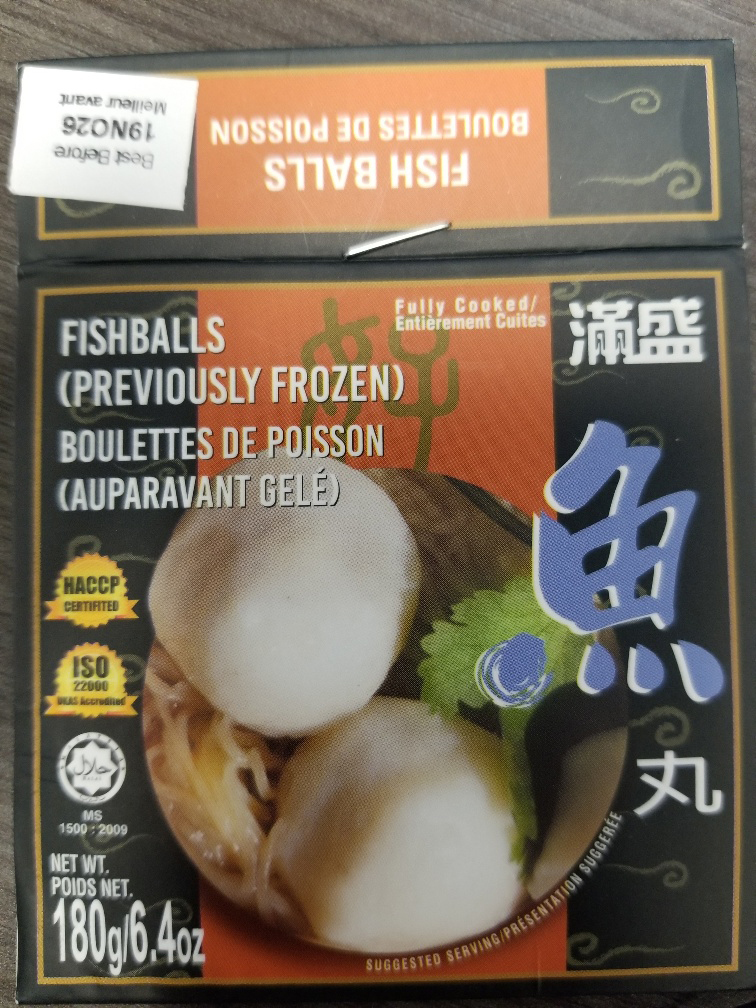
MF Inc. Fishballs (previously frozen) 180 g 0 68636 03040 2 All units sold up to and including October 21, 2019
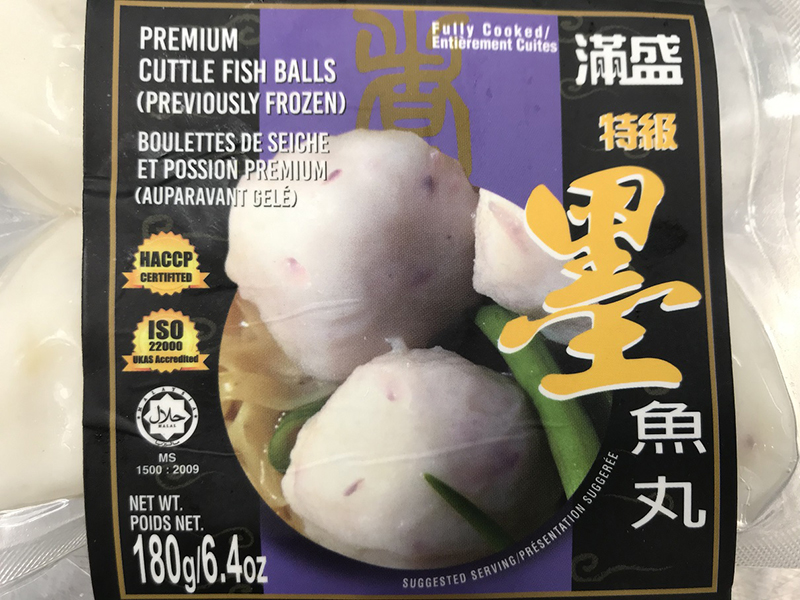
MF Inc. Premium cuttle fish balls (previously frozen) 180 g 0 68636 02030 4 All units sold up to and including October 21, 2019
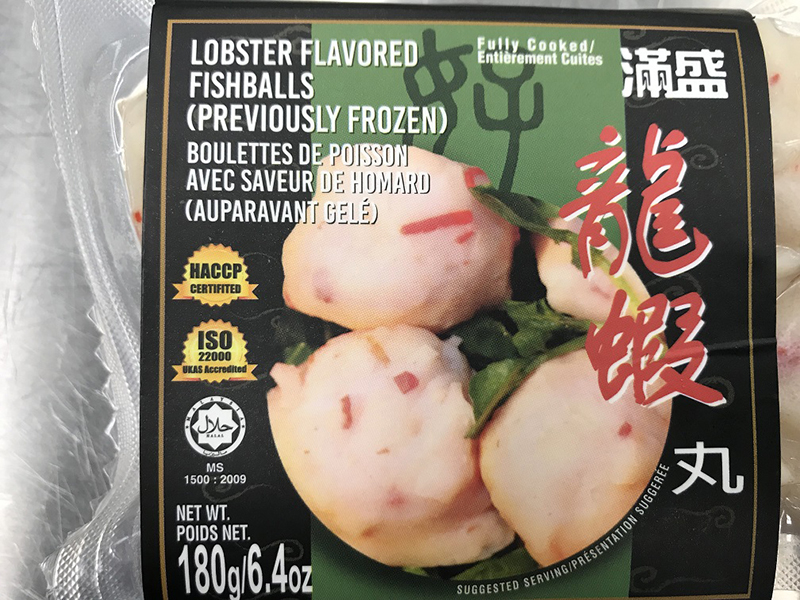
MF Inc. Lobster flavored fishballs (previously frozen) 180 g 0 68636 03430 1 All units sold up to and including October 21, 2019
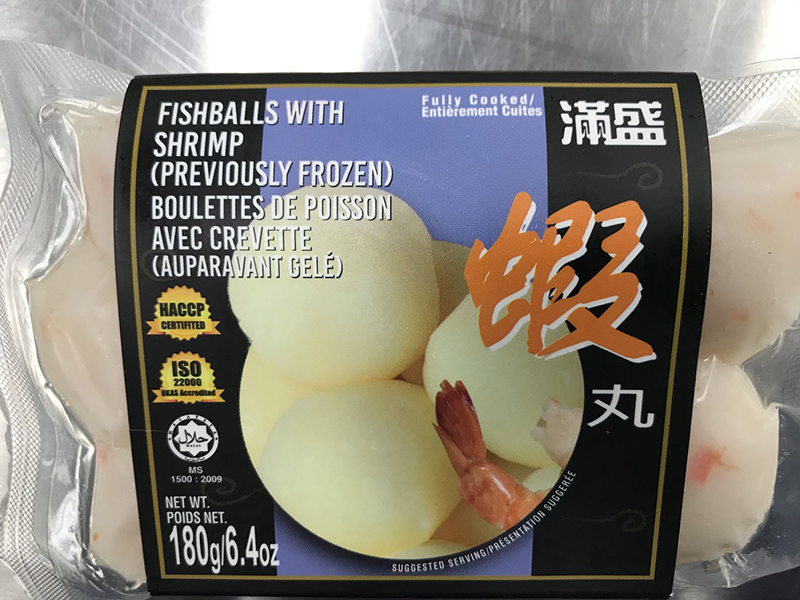
MF Inc. Fishballs with shrimp (previously frozen) 180 g 0 68636 02011 3 All units sold up to and including October 21, 2019

What you should do

If you think you became sick from consuming a recalled product, call your doctor.

Check to see if you have the recalled products in your home. Recalled products should be thrown out or returned to the store where they were purchased.

Food contaminated with Clostridium botulinum toxin may not look or smell spoiled but can still make you sick.

Symptoms in adults can include facial paralysis or loss of facial expression, unreactive or fixed pupils, difficulty swallowing, drooping eyelids, blurred or double vision, difficulty speaking or including slurred speech, and a change in sound of voice, including hoarseness.

Symptoms of foodborne botulism in children can include difficulty swallowing, slurred speech, generalized weakness and paralysis. In all cases, botulism does not cause a fever.  In severe cases of illness, people may die.

Background

This recall was triggered by Canadian Food Inspection Agency (CFIA) test results. The CFIA is conducting a food safety investigation, which may lead to the recall of other products. If other high-risk products are recalled, the CFIA will notify the public through updated Food Recall Warnings.

The CFIA is verifying that industry is removing the recalled products from the marketplace.

Illnesses

There have been no reported illnesses associated with the consumption of these products.

Product photos

Printer ready version of photos

  • Fishballs (previously frozen)
  • Premium cuttle fish balls (previously frozen)
  • Lobster flavored fishballs (previously frozen)
  • Fishballs with shrimp (previously frozen)

Research -Tiny droplets allow bacteria to survive daytime dryness on leaves

Science Daily

Microscopic droplets on the surface of leaves give refuge to bacteria that otherwise may not survive during the dry daytime, according to a new study published today in eLife.

Understanding this bacterial survival strategy for dry conditions may enable scientists to develop practices that support healthy plant microbiomes in agricultural and natural settings.

The surface of an average plant leaf is teeming with about 10 million microbes — a population comparable to that of large cities — that contribute to the health and day-to-day functioning of the plant. Scientists have long wondered how bacteria are able to survive as daytime temperatures and sunlight dry off leaf surfaces.

“While leaves may appear to be completely dry during the day, there is evidence that they are frequently covered by thin liquid films or micrometre-sized droplets that are invisible to the naked eye,” says co-lead author Maor Grinberg, a PhD student at Hebrew University’s Robert H. Smith Faculty of Agriculture, Food, and Environment in Rehovot, Israel. “It wasn’t clear until now whether this microscopic wetness was enough to protect bacteria from drying out.”

To answer this question, Grinberg, together with co-lead author and Research Scientist Tomer Orevi and their team, recreated leaf surface-like conditions in the laboratory using glass plates that were exposed to various levels of humidity. They then conducted experiments with more than a dozen different bacteria species in these conditions.

They observed that while these surfaces appeared dry to the naked eye, under a microscope bacteria cells and aggregates were safely shielded in miniscule droplets. Interestingly, larger droplets formed around aggregates of more than one cell, while only tiny droplets formed around solitary cells. This microscopic wetness is caused by a process called deliquescence — where hygroscopic substances, such as aerosols, that are prevalent on leaves absorb moisture from the atmosphere and dissolve within the moisture to form the droplets.

“We found that bacteria cells can survive inside these droplets for more than 24 hours and that survival rates were much higher in larger droplets,” Orevi explains. “Our results suggest that through methods of self-organisation, for example by aggregation, these cells can improve their survival chances in environments frequently exposed to drying.”

These findings could have important implications for agriculture as human practices may inadvertently interfere with this bacterial survival mechanism, endangering the health of crops and natural vegetation, according to senior author Nadav Kashtan, PhD, Assistant Professor at Hebrew University’s Robert H. Smith Faculty of Agriculture, Food, and Environment. “A greater understanding of how microscopic leaf wetness may protect the healthy plant microbiome and how it might be disrupted by agricultural practices and human aerosol emissions is of great importance,” he says.

Kashtan also notes that similar microscopic surface wetness likely occurs in soil, in the built environment, on human and animal skin, and potentially even in extra-terrestrial systems where conditions might allow, suggesting such bacterial survival strategies are not limited to leaf surfaces.


Story Source:

Materials provided by eLife.

Research -Human gut microbes could make processed foods healthier A specific microbe can break down a chemical common in manufactured foods

Science Daily

A new study from Washington University School of Medicine in St. Louis sheds light on how human gut microbes break down processed foods — especially potentially harmful chemical changes often produced during modern food manufacturing processes.

Eating processed foods such as breads, cereals and sodas is associated with negative health effects, including insulin resistance and obesity.

Reporting Oct. 9 in the journal Cell Host & Microbe, scientists have identified a specific human gut bacterial strain that breaks down the chemical fructoselysine, and turns it into harmless byproducts. Fructoselysine is in a class of chemicals called Maillard Reaction Products, which are formed during food processing. Some of these chemicals have been linked to harmful health effects. These findings raise the prospect that it may be possible to use such knowledge of the gut microbiome to help develop healthier, more nutritious processed foods.

Research – Effect of mycotoxins on gut development

All About Feed

Mycotoxins are defined as secondary fungal metabolites, toxic to humans and animals. Worldwide, mycotoxins have a significant impact on human and animal health, economies and international trade, making feed contamination by mycotoxins an area of great concern. However, how do mycotoxins relate to the immune system? In literature, there are several reports of mycotoxins negatively effecting it.

Animal immune systems are modulated during early life due to stimulus given through diet, microbiota colonisation and gastrointestinal mucosa. To what degree, and how, can mycotoxin exposure during early life modulate the immune system of young animals?

USA – CDC report highlights Norovirus, Salmonella and restaurants as key

New Food Magazine

The Centers for Disease Control and Prevention’s (CDC) annual Foodborne Disease Outbreak Report, published in September 2019, has provided data on the 841 foodborne disease outbreaks that occurred throughout the US in 2017, resulting in 14,481 illnesses, 827 hospitalisations, 20 deaths, and 14 food recalls. The statistics provided some eye-opening information, particularly with regards to Salmonella, the Norovirus, and restaurants.

Although Listeria was a key focus of the US Food and Drug Administration (FDA) “swabathons” in 2017, and there was a major E. coli leafy greens outbreak, the two most frequently reported confirmed causes of outbreaks and associated illnesses that year were actually Norovirus and Salmonella.

Norovirus was the cause of:

  • 140 outbreaks, 35 percent of confirmed single-pathogen outbreaks
  • 4,092 illnesses, 46 percent of confirmed single-pathogen illnesses
  • 40 hospitalisations, six percent of confirmed single-pathogen, outbreak-related hospitalisations
  • Four deaths, 20 percent of outbreak-related deaths.

Salmonella was the cause of:

  • 113 outbreaks, 29 percent of confirmed single-pathogen outbreaks
  • 3,007 illnesses, 34 percent of confirmed single-pathogen illnesses
  • 472 hospitalisations, 66 percent of confirmed single-pathogen, outbreak-related hospitalisations
  • Eight deaths, 40 percent of outbreak-related deaths.

Research – Bacteria trapped — and terminated — by graphene filter Laser-induced graphene to remove pathogens from the air

Science Daily

Airborne bacteria may see what looks like a comfy shag carpet on which to settle. But it’s a trap.

Rice University scientists have transformed their laser-induced graphene (LIG) into self-sterilizing filters that grab pathogens out of the air and kill them with small pulses of electricity.

The flexible filter developed by the Rice lab of chemist James Tour may be of special interest to hospitals. According to the Centers for Disease Control and Prevention, patients have a 1-in-31 chance of acquiring a potentially antibiotic-resistant infection during hospitalization.

The device described in the American Chemical Society journal ACS Nano captures bacteria, fungi, spores, prions, endotoxins and other biological contaminants carried by droplets, aerosols and particulate matter.

The filter then prevents the microbes and other contaminants from proliferating by periodically heating up to 350 degrees Celsius (662 degrees Fahrenheit), enough to obliterate pathogens and their toxic byproducts. The filter requires little power, and heats and cools within seconds.

LIG is a conductive foam of pure, atomically thin carbon sheets synthesized through heating the surface of a common polyimide sheet with an industrial laser cutter. The process discovered by Tour’s lab in 2014 has led to a range of applications for electronics, triboelectric nanogenerators, electrocatalysis, water filtration and even art.

Adapting it for use as a filter meant laser-building graphene into both sides of the polyimide, leaving a fine, three-dimensional lattice of the polymer to reinforce the graphene foam. Laser-building at different temperatures resulted in a thick forest of graphene fibers with smaller, interconnected sheets underneath.

Like all pure graphene, the foam conducts electricity. When electrified, Joule heating raises the filter’s temperature above 300 C, enough to not only kill trapped pathogens but also to decompose toxic byproducts that can feed new microorganisms and activate the human immune system.

The researchers suggested a single, custom-fit LIG filter could be efficient enough to replace the two filter beds currently required by federal standards for hospital ventilation systems.

“So many patients become infected by bacteria and their metabolic products, which for example can result in sepsis while in the hospital,” Tour said. “We need more methods to combat the airborne transfer of not just bacteria but also their downstream products, which can cause severe reactions among patients.

“Some of these products, like endotoxins, need to be exposed to temperatures of 300 degrees Celsius in order to deactivate them,” a purpose served by the LIG filter, he said. “This could significantly lessen the transfer of bacteria-generated molecules between patients, and thereby lower the ultimate costs of patient stays and lessen sickness and death from these pathogens.”

The lab tested LIG filters with a commercial vacuum filtration system, pulling air through at a rate of 10 liters per minute for 90 hours, and found that Joule heating successfully sanitized the filters of all pathogens and byproducts. Incubating used filters for an additional 130 hours revealed no subsequent bacterial growth on the heated units, unlike control LIG filters that had not been heated.

“Bacteria culturing experiments performed on a membrane downstream from the LIG filter indicated that bacteria are unable to permeate the LIG filter,” said Rice sophomore John Li, co-lead author of the paper with postdoctoral researcher Michael Stanford.

Stanford noted the sterilization feature “may reduce the frequency with which LIG filters would need to be replaced in comparison to traditional filters.”

Tour suggested LIG air filters could also find their way into commercial aircraft.

“It’s been predicted that by the year 2050, 10 million people per year will die of drug-resistant bacteria,” he said. “The world has long needed some approach to mitigate the airborne transfer of pathogens and their related deleterious products. This LIG air filter could be an important piece in that defense.”