Category Archives: Food Microbiology Research

Research – Evaluating a Combined Method of UV and Washing for Sanitizing Blueberries, Tomatoes, Strawberries, Baby Spinach, and Lettuce

Journal of Food Protection

ABSTRACT

We assessed a fresh produce decontamination system using a combined method of UV and washing (water-assisted UV [WUV]) in different scales. The system used tap water to wash fresh produce while exposing it to UV light. First, the reduction of Salmonella in tap water under UV treatment (1 to 1,740 mJ/cm2) was determined. Increasing the UV dose significantly (P < 0.05) increased the Salmonella reduction in wash water, and UV intensity of more than 2 mW/cm2 could reduce Salmonella in tap water to below 1 CFU/mL given enough processing time (more than 1 min; UV dose of 120 mJ/cm2). Then, the decontamination effectiveness of a small WUV system was tested on blueberries (50 g). Blueberries were spot or dip inoculated with a Salmonella cocktail and treated by the small WUV system (200 mL of water). In general, WUV treatments achieved significantly better Salmonella inactivation than tap water wash; tap water wash (10 min) and 2 mW/cm2 WUV treatment (with a UV dose of 1,200 mJ/cm2) reduced populations of spot-inoculated Salmonella on blueberries by 2.44 and 5.45 log, respectively. Compared with spot-inoculated Salmonella on blueberries, dip-inoculated Salmonella was more difficult to be inactivated by WUV treatments. Then, the decontamination effectiveness of WUV treatments was tested on blueberries (170 g), tomatoes (290 g), strawberries (170 g), baby spinach (60 g), and lettuce (60 g) using a larger WUV system. In general, 10 min of 29 mW/cm2 WUV treatment (a high UV dose of 17,400 mJ/cm2) resulted in significantly better Salmonella inactivation than tap water wash (for 10 min) regardless the inoculation method, agreeing with the results of the small-scale study. For both spot- and dip-inoculated lettuce, no significant difference (P > 0.05) in Salmonella inactivation by WUV treatments was observed when the quantity of lettuce increased from 50 to 100 g.

HIGHLIGHTS
  • Water-assisted UV showed ≤3 log more Salmonella inactivation than tap water wash.

  • Water-assisted UV showed the highest Salmonella reduction on blueberries and tomatoes.

  • More spot-inoculated Salmonella was killed than dip-inoculated Salmonella by up to 3 log.

  • Water-assisted UV of 17.4 J/cm2 could reduce Salmonella in water to less than 1 CFU/mL.
Research -Efficacy of Surfactant Combined with Peracetic Acid in Removing Listeria innocua from Fresh Apples

Journal of Food Protection

ABSTRACT

Large amounts of water used in the apple packing process, the presence of organic matter, and difficult-to-clean equipment are vectors for contaminating apples with foodborne pathogens, such as Listeria monocytogenes. There is a need to develop new cleaning methods for fresh apples and evaluate their antimicrobial efficacy. A series of surfactants of different chemical properties (cationic lauric arginate [LAE], anionic sodium dodecyl sulfate [SDS], and nonionic Tween 20 [T20]) alone and combined with peracetic acid (PAA) were evaluated for their efficiency in the removal of L. innocua, a surrogate of L. monocytogenes, from fresh apples. Whole fresh apples were inoculated with L. innocua (7 log CFU/mL) by a dipping method, dried, and subjected to wash treatments with selected cleaning solutions (water, PAA, PAA-LAE, PAA-SDS, and PAA-T20). The contact angle between the cleaning solutions and the surface of the apples was measured. The antimicrobial activity of the cleaning solutions and the efficacy of the cleaning treatment were evaluated by enumeration of L. innocua from treated apples and visualized by scanning electron microscopy. Stem bowl and calyx cavities of the apple harbored higher bacteria concentrations (∼4.82 log CFU per apple), compared with the equatorial section (∼2.66 log CFU per apple). Addition of 0.1% of selected surfactants led to a significant decrease in surface tension of cleaning solutions and allowed better spreading on the apple surface. Surfactants combined with PAA solution resulted in higher L. innocua reduction compared with PAA alone; however, their efficacy was limited. The most effective cleaning solution was PAA-T20, with reduction of approximately 2.2 log. Scanning electron microscopy imaging confirmed that most bacteria were harbored inside the surface irregularities. PAA alone and with surfactants caused damage and deformation of bacteria cells. Cleaning apples with PAA combined with surfactants may improve microbial safety in whole apples; however, the efficiency of the decontamination treatment can be reduced because of variations in apple morphology.

HIGHLIGHTS
  • Combining surfactants with PAA decreased the population of L. innocua on apples.

  • Treating apples with PAA-T20 reduced the load of L. innocua by 2.2 log.

  • Stem bowl and calyx cavity are difficult-to-reach areas during the cleaning operation.

  • Cleaning treatments were not effective in removing all L. innocua from apples.

Research -Antibacterial Effect of a Mixed Natural Preservative against Listeria monocytogenes on Lettuce and Raw Pork Loin

Journal of Food Protection

ABSTRACT

A mixed natural preservative, including grapefruit seed extract (GSE), cinnamaldehyde (CA), and nisin, was investigated for the reduction of Listeria monocytogenes growth on lettuce and raw pork loin. The MIC of each natural preservative was investigated for L. monocytogenes strains tested. Following central composite design, lettuce and pork loin were inoculated with a cocktail of three strains of L. monocytogenes (ATCC 15313, H7962, and NADC 2045 [Scott A]) and treated with the mixed natural preservative that included GSE (0.64 to 7.36 ppm), CA (1.6 to 18.4 ppm), and nisin (0.48 to 5.5 ppm). The MIC of GSE was 31.25 ppm in tested L. monocytogenes strains, and of CA was 500 and 1,000 ppm in L. monocytogenes ATCC 15313 and the other L. monocytogenes strains, respectively. The MIC of nisin was 250 ppm. The R2 value of this model was more than 0.9, and the lack of fit was not significant. The mixed natural preservative showed a synergistic antimicrobial effect and reduced the growth of L. monocytogenes by 4 to 5 log CFU/g on lettuce. In addition, the reduction of L. monocytogenes on pork loin was 3 log CFU/g. The mixed natural preservative, which consisted of GSE (6 to 8 ppm), CA (15 to 20 ppm), and nisin (5 to 6 ppm), increased the antibacterial effect against L. monocytogenes. These results suggest that the use of the mixed natural preservative could reduce the economic cost of food preparation, and response surface methodology is considered effective when measuring synergy among antimicrobials.

HIGHLIGHTS
  • Antibacterial effect of a mixed preservative was tested on lettuce and pork loin.

  • The mixed preservative consists of GSE, CA, and nisin.

  • The RSM via the CCD using GSE, CA, and nisin was statistically relevant.

  • The mixed preservative was effective against L. monocytogenes on food products.


Research – Interaction and inactivation of Listeria and Lactobacillus cells in single and mixed species biofilms exposed to different disinfectants

Wiley Online

Abstract

Listeria spp. are ubiquitously found in both the natural and the food processing environment, of which Listeria monocytogenes is of an important health risk. Here, we report on the formation of single and mixed species biofilms of L. monocytogenes/Listeria innocua and Lactobacillus plantarum strains in 24‐well polystyrene microtiter plates and on the inactivation of 24‐hr and 72‐hr biofilms using quaternary ammonium compound‐, tertiary alkyl amine‐, and chlorine‐based disinfectants. Fluorescent in situ hybridization (FISH) and LIVE/DEAD BacLight staining were applied for 72‐hr L. innocuaL. plantarum mixed biofilms in the LabTek system for the species identification and the reaction of biofilm cells to disinfectants, respectively. L. monocytogenes/L. innocua were more resistant to disinfectants in 72‐hr than in 24‐hr biofilms, whereas L. plantarum strains did not show any significant differences between 72‐hr and 24‐hr biofilms. Furthermore, L. innocua when grown with L. plantarum was more resistant to all disinfection treatments, indicating a protective effect from lactobacilli in the mixed species biofilm. The biofilm formation and reaction to disinfectants, microscopically verified using fluorescence in situ hybridization and LIVE/DEAD staining, showed that L. innocua and L. plantarum form a dense mixed biofilm and also suggested the shielding effect of L. plantarum on L. innocua in the mixed species biofilm.

Research – Antibiofilm Efficacy of Peptide 1018 against Listeria monocytogenes and Shiga Toxigenic Escherichia coli on Equipment Surfaces

Journal of Food Protection

ABSTRACT

Listeria monocytogenes and Shiga toxigenic Escherichia coli (STEC) are important foodborne bacterial pathogens that can form biofilms on equipment surfaces at food processing facilities. Pathogens in biofilms are resistant to conventional antimicrobials and require higher antimicrobial concentrations to be inactivated. In this study, the efficacy of a synthetic innate defense regulator peptide 1018 (peptide 1018) for inactivating L. monocytogenes and STEC (O26, O111, O145, O157) biofilms on stainless steel and polycarbonate surfaces was investigated. Stainless steel and polycarbonate coupons (12 mm in diameter) were used in a Centers for Disease Control and Prevention biofilm reactor containing 400 mL of 10% tryptic soy broth (TSB) that had been inoculated with an individual strain of L. monocytogenes or STEC to obtain 6 log CFU/mL populations. The reactor was set with a constant flow rate at 50 mL/h of 10% TSB for 48 h. After 48 h, coupons were treated with peptide 1018 at 0, 10, 20, or 50 μg/mL in phosphate buffer saline (PBS) for 24 h. Surviving bacterial populations were determined by scraping off the coupons and spiral plating on selective media. Significantly higher levels of pathogens in biofilms formed by certain bacterial strains, including L. monocytogenes F6854, E. coli O157:H7 RM4407 and NADC5713, and non-O157 E. coli NADC3629, were recovered on polycarbonate surfaces than on stainless steel. Antibiofilm efficacy of peptide 1018 against pathogens was concentration-dependent and varied with the type of pathogen and material surfaces. Peptide 1018 at 50 μg/mL significantly inactivated all tested bacterial biofilms on both surfaces compared with the PBS control (P < 0.05). L. monocytogenes was the bacterium most sensitive to peptide 1018; on stainless steel surfaces treated with 50 μg/mL peptide 1018, there was a 3.7- to 4.6-log CFU/cm2 reduction in Listeria populations compared with a 1.0- to 3.5-log CFU/cm2 reduction of STEC. Results suggest that peptide 1018 may be used to inactivate L. monocytogenes and STEC biofilms on equipment surfaces.

HIGHLIGHTS
  • Bacteria attach at higher levels on polycarbonate surfaces than on stainless steel.

  • L. monocytogenes is more sensitive than STEC to peptide 1018.

  • Peptide 1018 can be used to inactivate biofilms on equipment surfaces.

Canada – Updated Food Recall Warning – Parent’s Choice brand Infant Formula for Babies Sensitive to Lactose recalled due to Cronobacter spp.

CFIA

Recall details

Ottawa, October 30, 2019 – The food recall warning issued on October 25, 2019 has been updated to include additional product information. This additional information was identified during the Canadian Food Inspection Agency’s (CFIA) food safety investigation.

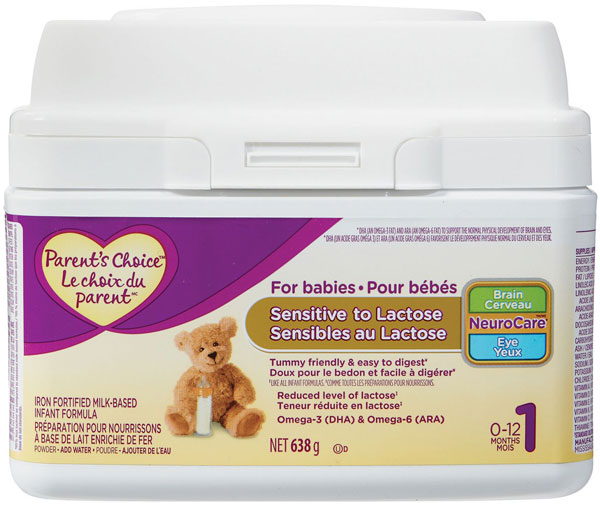
Walmart Canada Corp. is recalling Parent’s Choice brand Infant Formula for Babies Sensitive to Lactose from the marketplace due to possible Cronobacter spp. contamination. Consumers should not consume the recalled product described below.

The following product has been sold nationally.

Recalled product

Brand Product Size UPC Codes
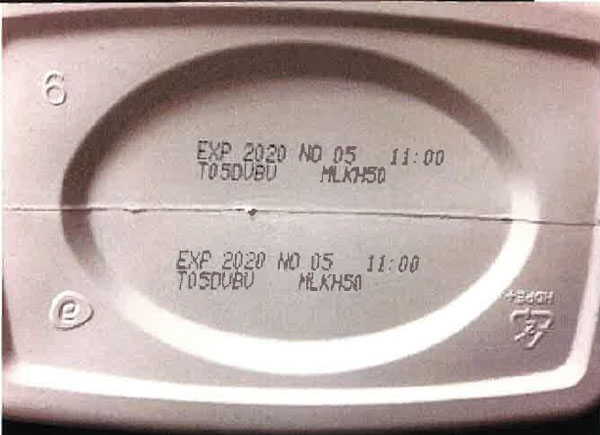
Parent’s Choice Infant Formula for Babies Sensitive to Lactose 638 g 6 28915 09517 3 EXP 2020 NO 05
T05DVBV

Background

This recall was triggered by CFIA test results. The CFIA is conducting a food safety investigation, which may lead to the recall of other products. If other high-risk products are recalled, the CFIA will notify the public through updated Food Recall Warnings.

The CFIA is verifying that industry is removing the recalled product from the marketplace.

Illnesses

There have been no reported illnesses associated with the consumption of this product.

Product photos

Printer ready version of photos

  • Parent's Choice – Infant Formula for Babies Sensitive to Lactose – 638 grams (front)
  • Parent's Choice – Infant Formula for Babies Sensitive to Lactose – 638 grams (lot code)

Research – Outbreaks of Shiga Toxin–Producing Escherichia coli Linked to Sprouted Seeds, Salad, and Leafy Greens: A Systematic Review

Journal of Food Protection

ABSTRACT

Shiga toxin–producing Escherichia coli (STEC) outbreaks involving ready-to-eat salad products have been described in the scientific literature since 1995. These products typically do not undergo a definitive control step such as cooking to eliminate pathogens. To reduce the number of STEC infections from salad products, efforts will need to focus on preventing and reducing contamination throughout the food chain. We performed a systematic review of STEC outbreaks involving sprouted seeds, salad, or leafy green products to determine whether there were recurrent features, such as availability of microbiological evidence or identification of the contamination event, which may inform future investigations and prevention and control strategies. Thirty-five STEC outbreaks linked to contaminated leafy greens were identified for inclusion. The outbreaks occurred from 1995 to 2018 and ranged from 8 to more than 8,500 cases. Detection of STEC in the food product was rare (4 of 35 outbreaks). For the remaining outbreaks, the determination of leafy greens as the source of the outbreak mainly relied on analytical epidemiology (20 of 35) or descriptive evidence (11 of 35). The traceback investigation in 21 of 32 outbreaks was not able to identify possible routes leading to where the STEC bacteria came from or how the leaves were contaminated. Investigations in eight outbreaks found poor practice during processing that may have contributed to the outbreak, such as insufficient postharvest disinfection of the product. Six outbreak investigations were able to identify the outbreak strain in animal feces near the growing fields; two of these were also able to find it in irrigation water on the farms, providing a likely route of contamination. These results highlight the limitations of relying on microbiological confirmation as a basis to initiate investigations of upstream production to understand the source of contamination. This review also demonstrates the importance of, and difficulties associated with, food-chain traceback studies to inform control measures and future prevention.

HIGHLIGHTS
  • Systematic review identified 35 STEC outbreaks linked to contaminated leafy greens.

  • Most (20 of 35) outbreaks relied on epidemiological evidence to identify leafy greens.

  • In 21 of 35 studies, no evidence was found for how original contamination occurred.

  • In 11 studies, water was identified as the probable vector in the contaminating product.

  • Only two studies were able to identify the likely source and route of contamination.

Research – UK study: Food not likely source of drug resistant E coli.

Cidrap

CDC E.coli

Image CDC

A large genomic epidemiology study by scientists in the United Kingdom has found that most bloodstream infections caused by drug-resistant Escherichia coli involve human-associated strains of the pathogen, with little contribution from the food chain.

The study, published yesterday in The Lancet Infectious Diseases, found that the extended-spectrum beta-lactamase-producing (ESBL) E coli sequence type (ST) 131 was the predominant strain found in bloodstream isolates, as well as in samples collected from human feces and sewage, while isolates from meat, veterinary diagnostic samples, and farm runoff were dominated by other ESBL E coli sequence types. Few drug-resistant E coli strains were shared among the animal and human isolates.

The authors of the study say the findings suggest that while ESBL E coli strains are widespread in humans, animals, and the environment, there’s little crossover between these strains, and efforts to reduce invasive ESBL E coli infections should focus on limiting human transmission.

Research – Characterization of Virulence and Persistence Abilities of Listeria monocytogenes Strains Isolated from Food Processing Premises

Journal of Food Protection

ABSTRACT

We report the characterization of 15 Listeria monocytogenes strains isolated from various food processing plants by multivirulence locus sequence typing to determine virulence types (VTs) and epidemic clones. Molecular mechanisms involved in adaptation to food processing environments and related to virulence were also studied. Phenotypic behaviors associated with various antimicrobials, biofilm formations, and invasiveness were assessed. There were 11 VTs among the 15 L. monocytogenes strains. Strains belonging to six VTs were stress survival islet 1 (SSI-1) and one strain of VT94 was SSI-2. Tn6188 was found in VT6 and VT94 strains, and bcrABC cassette genes were identified in VT21, VT60, and VT63 strains. Only one strain, in VT20, showed llxS, whereas a full-size inlA was detected in strains belonging to VT8, VT20, VT21, and VT63. VT10, VT20, VT21, VT60, and VT63 strains were the most tolerant to studied disinfectants. A VT6 strain showed the strongest biofilm formation ability in polyvinyl chloride, and strains belonging to VT10, VT11, VT20, and VT94 had moderate abilities. Antimicrobial sensitivity tests showed that all the L. monocytogenes strains were multidrug resistant. F tests revealed that only strains of VT10, VT60, and VT94 were significantly noninvasive (P < 0.05) in Caco-2 cells. Our findings illustrate how L. monocytogenes isolates exploit diverse mechanisms to adapt to adverse conditions. Consequently, detailed characterization of L. monocytogenes isolates is required for comprehensive elimination of this pathogenic bacterium in food processing environments.

HIGHLIGHTS
  • Virulence types of epidemic clones are multidrug resistant and tolerant to disinfectants.

  • Presence of SSI-1, SSI-2, Tn6188, and ability to form biofilm support persistent strains.

  • Strains unable to invade Caco-2 cells have higher tolerance to disinfectants exposure.

Research – Recalls of Foods due to Microbial Contamination Classified by the Canadian Food Inspection Agency, 2000 to 2017

Journal of Food Protection

ABSTRACT

Recall of microbial-contaminated food products is an important intervention in preventing the transmission of foodborne illness. Here, we summarize the number and nature of foods recalled as a result of microbial contamination, classified by the Canadian Food Inspection Agency, for the period 1 January 2000 through 31 December 2017. A total of 10,432 food products were recalled from 2,094 recall events in Canada because of microbial contamination during this period. The meat, meat products and poultry category, followed by fishery and seafood products and nuts and edible seeds, contained the food products most commonly associated with microbial contamination. Most microbial-contaminated food products reported were recalled because of the presence bacterial pathogens. Salmonella contamination was responsible for the largest number of recall events, whereas Listeria monocytogenes contamination accounted for the greatest number of food products recalled because of microbial contamination. L. monocytogenes contamination was also most commonly associated with major food recall events, although records may be inflated because of an invested effort to prevent future L. monocytogenes outbreaks following a 2008 deli meat recall. The findings and data we present in this study will support future surveillance and analysis of microbial-contaminated food recalls in Canada.

HIGHLIGHTS
  • Top microbial-contaminated food products were meat, seafood, and nuts and edible seeds.

  • Salmonella contamination was responsible for the largest number of recall events.

  • L. monocytogenes accounted for the largest number of recalled food products.