Category Archives: Food Microbiology Research

Research -Reducing the risks of bacterial-borne diseases in shrimp farms

The Fish Site

KSWFOODWORLD

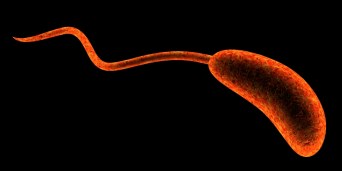
Vibrios are some of the most unwelcome bacteria in the global shrimp farming sector, causing diseases including EMS and costing the sector billions as year. However, as we explain in this article, there are a huge number of ways for farmers to reduce the risks of vibrio-related diseases.

Vibriosis is one of the most severe bacterial diseases in shrimp aquaculture, and is caused by the infection of pathogenic and/or opportunistic Vibrio bacteria. It can lead to mortality of up to 100 percent and is estimated to cause the shrimp sector US$ 3 billion in global losses a year. One of the most recent cases of vibrio-related diseases is early mortality syndrome (EMS), which is also known as acute hepatopancreatic necrosis disease (AHPND) and has put a huge dent in the profits from Asian shrimp production in the last decade.
New Zealand – Recall to manage Listeria in mung bean sprout products sold Nationwide

MPI

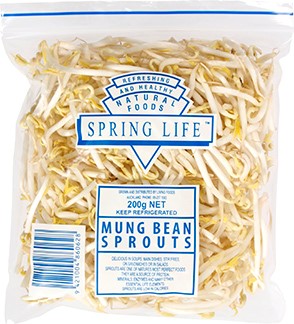
New Zealand Food Safety is advising the public to return a specific brand of mung bean sprouts and sweet mango mesclun salad as they may contain Listeria bacteria.

Consumers should return Living Foods Ltd Spring Life brand Mung Bean Sprouts sold in supermarkets in the North Island, included in Woop and The Kai Box meals distributed nationwide, and Pams brand Sweet Mango Mesclun with dressing Salad sold in supermarkets throughout New Zealand.

Information about the names of stores selling the affected product, ‘best before’ dates and packaging is available on MPI’s website.

Spring Life brand Mung Bean Sprouts and Pams brand Sweet Mango Mesclun With Dressing

Listeria can make people sick (listeriosis) if they consume contaminated food.

New Zealand Food Safety national manager food compliance services, Jenny Bishop, says customers should return products to the retailer for a full refund or throw the product out.

“Listeriosis infection can be serious among vulnerable groups such as pregnant women and their unborn babies, newborn babies, people with weakened immune systems, and elderly people.

“For those in the high-risk groups, listeriosis typically has an incubation period of 2 to 3 weeks (or longer) before symptoms appear.

“Healthy adults are likely to experience only mild infection, causing mild diarrhoea and flu-like symptoms.

“If you have consumed any of these products and have any concerns about your health, seek medical advice,” says Ms Bishop.

New Zealand Food Safety have not received any reports of illness.

Living Foods Ltd Spring have initiated the recall of the affected products.

France – Reblochon from Savoie – Listeria monocytogenes

Gov france

Identifying information for the recalled product

  • Product category Food
  • Product sub-category Milk and dairy products
  • Product brand name “In the heart of our Villages”
  • Names of models or references450g format
  • Product identification
    GTIN Lot Dated
    3389190100835 05020721 Use-by date 09/03/2021
    3389190100835 05060721 Use-by date 05/09/2021
    3389190100835 05160721 Use-by date 09/18/2021
    3389190100835 210174 Use-by date 08/31/2021
    3389190100835 210178 Use-by date 09/03/2021
    3389190100835 210194 Use-by date 09/18/2021
  • Packaging box of 6 or 12 pieces
  • Start date / End of marketing From 07/15/2021 to 08/07/2021
  • Storage temperature Product to be stored in the refrigerator
  • Health markFR-74.211.060-CE
  • Geographical sales area Whole France
  • Distributors All distributors.

Practical information regarding the recall

  • Reason for recall Listeria monocytogenes
  • Risks incurred by the consumer Listeria monocytogenes (causative agent of listeriosis)
  • Consumer behaviour Stop consuming
    Stop using the product
    Return the product to the point of sale
  • Sanitary recommendation People who have consumed the “products” mentioned above and who have fever, isolated or accompanied by headaches, and muscle aches, are invited to consult their doctor, notifying him of this consumption. Serious forms with neurological complications and maternal or foetal damage in pregnant women can also sometimes occur. Pregnant women as well as immunocompromised people and the elderly should pay special attention to these symptoms. Listeriosis is a disease that can be serious and can take up to eight weeks to incubate.
  • Contact number0800945235
  • Compensation modalities Refund
    Exchange
  • End date of the recall procedure Saturday, September 18, 2021

Australia/UK – Australian Hepatitis A cases from imported dates match UK outbreak strain – Dates

Food Safety News

Australian officials have reported three hepatitis A infections linked to dates imported from Jordan.

The strain is identical to the one that caused an outbreak of hepatitis A in the United Kingdom earlier this year, which was also caused by fresh Medjool dates from Jordan. Dates were recalled by Sainsbury’s and Marks and Spencer.

In the UK, at least 30 people fell ill in different parts of England with one person sick in Wales. They had a median age of 60 and ranged from 6 to 93 years old with 25 people needing hospital treatment.

At the time, information sent via the International Food Safety Authorities Network (INFOSAN) emergency contact did not reveal reports of similar outbreaks elsewhere.

Research – Antimicrobial Efficacy and Spectrum of Phosphorous-Fluorine Co-Doped TiO2 Nanoparticles on the Foodborne Pathogenic Bacteria Campylobacter jejuni, Salmonella Typhimurium, Enterohaemorrhagic E. coli, Yersinia enterocolitica, Shewanella putrefaciens, Listeria monocytogenes and Staphylococcus aureus

MDPI

Contamination of meats and meat products with foodborne pathogenic bacteria raises serious safety issues in the food industry. The antibacterial activities of phosphorous-fluorine co-doped TiO2 nanoparticles (PF-TiO2) were investigated against seven foodborne pathogenic bacteria: Campylobacter jejuniSalmonella Typhimurium, Enterohaemorrhagic E. coliYersinia enterocoliticaShewanella putrefaciensListeria monocytogenes and Staphylococcus aureus. PF-TiO2 NPs were synthesized hydrothermally at 250 °C for 1, 3, 6 or 12 h, and then tested at three different concentrations (500 μg/mL, 100 μg/mL, 20 μg/mL) for the inactivation of foodborne bacteria under UVA irradiation, daylight exposure or dark conditions. The antibacterial efficacies were compared after 30 min of exposure to light. Distinct differences in the antibacterial activities of the PF-TiO2 NPs, and the susceptibilities of tested foodborne pathogenic bacterium species were found. PF-TiO2/3 h and PF-TiO2/6 h showed the highest antibacterial activity by decreasing the living bacterial cell number from ~106 by ~5 log (L. monocytogenes), ~4 log (EHEC), ~3 log (Y. enterolcolitcaS. putrefaciens) and ~2.5 log (S. aureus), along with complete eradication of C. jejuni and S. Typhimurium. Efficacy of PF-TiO2/1 h and PF-TiO2/12 h NPs was lower, typically causing a ~2–4 log decrease in colony forming units depending on the tested bacterium while the effect of PF-TiO2/0 h was comparable to P25 TiO2, a commercial TiO2 with high photocatalytic activity. Our results show that PF-co-doping of TiO2 NPs enhanced the antibacterial action against foodborne pathogenic bacteria and are potential candidates for use in the food industry as active surface components, potentially contributing to the production of meats that are safe for consumption. View Full-Text

Research – Raw Meat-Based Pet Feeding and Food Safety: Netnography Study of Pet Owner Comments and Review of Manufacturers’ Information Provision

Journal of Food Protection

Feeding raw meat to domestic pets is a popular practice. Because of the potential food safety implications associated with handling raw meat, concerns about pet owner health have increased. For this study, a netnographic content analysis approach was used to analyze posts from ‘PetForums Community’ online archives, relating to ‘raw meat-based feeding’ and ‘food safety’ ( n =308). UK manufacturer/supplier websites ( n =33) were reviewed for provision of food safety information relating to raw meat-based pet feeding. The data were analyzed using qualitative thematic approach and quantitative methods. Pet owner forum comments indicated potential malpractices and indifference towards the possible food safety hazards when preparing raw meat-based pet food. Many were risk aware but indicated confusion regarding appropriate food safety practices. Although emotional concern about the safety of the pets and children was expressed, contracting a foodborne disease was not perceived as a personal risk. Additionally, the review identified that the majority (61%) of manufacturer/supplier websites failed to provide any food safety instructions or warnings to pet owners regarding raw meat-based pet food. Information was inconsistent and varied between sources. The most comprehensive sources of information were provided by manufacturers approved by the UK Pet Food Manufacturers’ Association. This is the first netnography study to explore pet owner online reports and the provision of food safety information, related to raw pet feeding. Findings suggest pet owners may not fully appreciate the potential risks associated with raw meat-based pet feeding. Consequently, there is a need for credible and consistent strategies to inform the pet owners about potential implications associated with feeding raw meat to pets, as well as about safe food handling practices.

Research – Antimicrobial Efficacy and Spectrum of Phosphorous-Fluorine Co-Doped TiO2 Nanoparticles on the Foodborne Pathogenic Bacteria Campylobacter jejuni, Salmonella Typhimurium, Enterohaemorrhagic E. coli, Yersinia enterocolitica, Shewanella putrefaciens, Listeria monocytogenes and Staphylococcus aureus

MDPI

Yersinia p

Contamination of meats and meat products with foodborne pathogenic bacteria raises serious safety issues in the food industry. The antibacterial activities of phosphorous-fluorine co-doped TiO2 nanoparticles (PF-TiO2) were investigated against seven foodborne pathogenic bacteria: Campylobacter jejuniSalmonella Typhimurium, Enterohaemorrhagic E. coliYersinia enterocoliticaShewanella putrefaciens, Listeria monocytogenes and Staphylococcus aureus. PF-TiO2 NPs were synthesized hydrothermally at 250 °C for 1, 3, 6 or 12 h, and then tested at three different concentrations (500 μg/mL, 100 μg/mL, 20 μg/mL) for the inactivation of foodborne bacteria under UVA irradiation, daylight exposure or dark conditions. The antibacterial efficacies were compared after 30 min of exposure to light. Distinct differences in the antibacterial activities of the PF-TiO2 NPs, and the susceptibilities of tested foodborne pathogenic bacterium species were found. PF-TiO2/3 h and PF-TiO2/6 h showed the highest antibacterial activity by decreasing the living bacterial cell number from ~106 by ~5 log (L. monocytogenes), ~4 log (EHEC), ~3 log (Y. enterolcolitca, S. putrefaciens) and ~2.5 log (S. aureus), along with complete eradication of C. jejuni and S. Typhimurium. Efficacy of PF-TiO2/1 h and PF-TiO2/12 h NPs was lower, typically causing a ~2–4 log decrease in colony forming units depending on the tested bacterium while the effect of PF-TiO2/0 h was comparable to P25 TiO2, a commercial TiO2 with high photocatalytic activity. Our results show that PF-co-doping of TiO2 NPs enhanced the antibacterial action against foodborne pathogenic bacteria and are potential candidates for use in the food industry as active surface components, potentially contributing to the production of meats that are safe for consumption.

USA – Core Investigation Table Update

FDA

USA – FDA begins testing cake mixes in search of specific product in E. coli outbreak

Food Safety News

They have not yet named any specific brands or flavors of cake mix related to an outbreak of E. coli infections, but federal officials have begun product testing in relation to the illnesses.

Sixteen people across 12 states have been confirmed as being infected, with seven requiring hospitalization, according to the Centers for Disease Control and Prevention. Illnesses began Feb. 26 with the most recent one beginning June 21. 

More patients will likely be identified, according to federal officials because of the long shelf life of cake mixes and the time lag between when a person becomes ill and when the illness is confirmed and reported to the CDC.

The Food and Drug Administration has been working with the CDC on the outbreak investigation and reported on Aug. 4 that the agency has begun product testing. The FDA has also initiated traceback efforts and onsite inspections. However no producer or specific products have been named by the FDA or CDC.

Hong Kong – Roving Exhibitions on Food Safety in 2021

CFS

Roving Exhibitions on Food Safety in 2021

The Centre for Food Safety (CFS) holds a series of exhibitions in major shopping centres of public and private housing estates across the territory every year.  Panels covering different topics such as food safety and nutrition, and educational videos are shown to enhance public knowledge on how to make safe and suitable food choices. See dates at the link above.