Category Archives: Food Microbiology Research

Research – Intervention Strategies to Control Campylobacter at Different Stages of the Food Chain

MDPI

Abstract

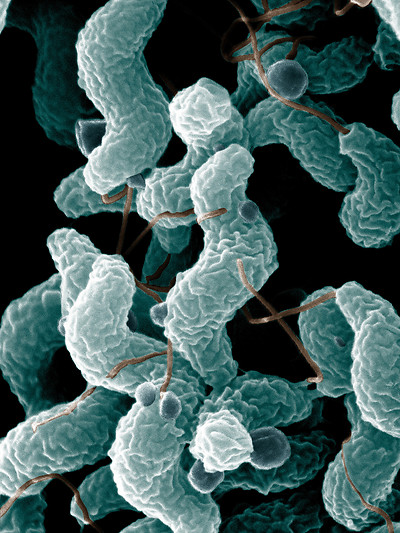
Campylobacter is one of the most common bacterial pathogens of food safety concern. Campylobacter jejuni infects chickens by 2–3 weeks of age and colonized chickens carry a high C. jejuni load in their gut without developing clinical disease. Contamination of meat products by gut contents is difficult to prevent because of the high numbers of C. jejuni in the gut, and the large percentage of birds infected. Therefore, effective intervention strategies to limit human infections of C. jejuni should prioritize the control of pathogen transmission along the food supply chain. To this end, there have been ongoing efforts to develop innovative ways to control foodborne pathogens in poultry to meet the growing customers’ demand for poultry meat that is free of foodborne pathogens. In this review, we discuss various approaches that are being undertaken to reduce Campylobacter load in live chickens (pre-harvest) and in carcasses (post-harvest). We also provide some insights into optimization of these approaches, which could potentially help improve the pre- and post-harvest practices for better control of Campylobacter.

Research – Pseudomonas fluorescens and Escherichia coli in Fresh Mozzarella Cheese: Effect of Cellobiose Oxidase on Microbiological Stability during Refrigerated Shelf Life

MDPI

Abstract

Background: Mozzarella cheese possesses a high moisture content (50–60%) and a relatively high pH (around 5.5) and is therefore considered a perishable food product characterized by high quality deterioration and the potential risk of microbial contamination. Moreover, it can be spoiled by Pseudomonas spp. and coliform bacteria, which may be involved in different negative phenomena, such as proteolysis, discolorations, pigmentation, and off-flavors. To prevent these, different methods were investigated. In this context, the present study aims to assess the antimicrobial effect of cellobiose oxidase on Pseudomonas fluorescens (5026) and Escherichia coli (k88, k99) in mozzarella cheese during refrigerated shelf life. Methods: microbiological challenge tests were designed by contaminating the mozzarella covering liquid containing different cellobiose oxidase concentrations with P. fluorescens (5026) and E. coli (k88, k99). The behavior of these microorganisms and the variation of hydrogen peroxide concentrations were then tested under refrigerated conditions for 20 days to simulate the mozzarella cheese shelf life. Results and Conclusions: The data obtained demonstrated the effect of cellobiose oxidase on microbial growth. In particular, E. coli (k88, k99) was inhibited over the entire shelf life, while P. fluorescens (5026) was only partially affected after a few days of refrigerated storage.

Research – Two Outbreaks of Foodborne Gastrointestinal Infection Linked to Consumption of Imported Melons, United Kingdom, March to August 2021 – Salmonella – STEC E.coli

Science Direct

Abstract

The aim of this study was to describe two foodborne outbreaks caused by contaminated imported melon and make recommendations for future practice. Between March and July 2021, there was an outbreak of 113 cases of Salmonella Braenderup in the UK (62% female, median age 61 years, 33% hospitalized). Analytical epidemiological studies identified Galia melons as the vehicle of infection (OR 671.9, 95% CI 39.0–58,074.0, p < 0.001). Subsequently, the outbreak strain was isolated from two samples of Galia melon imported from Latin America. In July and August 2021, there was an outbreak of 17 cases of Shiga toxin-producing Escherichia coli (STEC) O157:H7 in the UK (53% female, median age 21 years, 35% were hospitalized). Review of the STEC surveillance questionnaire data, followed by the analysis of responses from a modified hypothesis-generating questionnaire, implicated eating precut watermelon from retailer B sourced from Europe as the vehicle of infection. Outbreaks of gastrointestinal pathogens caused by contaminated food of nonanimal origin are a global public health concern. Given the difficulty in removing pathogens from the flesh of ready-to-eat fruit and vegetables, public health interventions should target all steps of the food chain prior to consumption, from cultivation on the farm to processing/packing and distribution.

India – 43 Kerala Hotels Shut After 100 Fall Sick Due To Suspected Food Poisoning

NDTV

The Food Safety Department of Kerala government has conducted an inspection in 429 establishments across the state and shut down 43 hotels following the death of a woman in a suspected food poisoning incident at a religious event.

The inspections on Tuesday came in the backdrop of the death of a young woman in Kottayam after allegedly having food from a hotel.

The state health ministry said that among the 43 establishments, 21 were found out to be without a licence.

Apart from this, 22 establishments which were lacking cleanness have also been suspended from carrying on with their business.

Notices were issued to 138 institutions and 44 food samples have been sent for testing.

The ministry also stated that inspections would be continued intensively across the state.

On Sunday, Kerala Health Minister Veena George ordered the probe into a suspected food poisoning incident in which over 100 people fell ill. The incident occurred in the Keezvaipur area of the Pathanamthitta district of Kerala.

The affected people have been admitted to various hospitals in the district where they are currently undergoing treatment.

Algeria – Food poisoning leaves one dead, 144 injured in Algeria

Roya News

A woman died and 144 people were injured after suffering food poisoning in Algeria earlier this week.

According to local reports, people have eaten sweets that are unfit for human consumption in the city of Magra, east of the country.

Research – Campylobacter contamination in broiler meat

Poultry World

Campylobacter in broiler meat is one of the leading foodborne pathogens associated with health risks and negative economic impacts worldwide. Campylobacter has several adaptive responses throughout the broiler production chain. Thus, it survives from broiler farm to slaughterhouse and processing plant.

Research -France publishes 2021 Campylobacter data

Food Safety News

Data from Campylobacter surveillance in 2021 confirmed trends seen in previous years, according to the most recent statistics published by Santé Publique France.

Findings are based on the National Reference Center (CNR) for Campylobacter and Helicobacter and mandatory declaration of outbreaks. Past data from 2020 showed Campylobacter infections were not impacted by public health measures taken because of the COVID-19 pandemic.

Campylobacter has been increasing since 2013 when online data entry was introduced. Scientists said this could reflect an actual rise in infections or it may be because of other factors such as better detection methods.

Hong Kong – Trade instructed to suspend importing and selling of raw oysters harvested in Carlingford Lough in Ireland

CFS

The Centre for Food Safety (CFS) of the Food and Environmental Hygiene Department today (January 4) instructed the trade to suspend the import of raw oysters harvested in Carlingford Lough (LH-CL-BN) in Ireland. The trade should also stop using or selling the product concerned immediately should they possess it.

A spokesman for the CFS said, “The CFS was notified by the Centre for Health Protection of the Department of Health of two food poisoning clusters which involved consumption of raw oysters at one restaurant in Mong Kok and one restaurant in Central. The CFS conducted investigations at the restaurants concerned and found that both restaurants had sold raw oysters which had been harvested in Carlingford Lough (LH-CL-BN) in Ireland. For the sake of prudence, the CFS has immediately instructed the trade to suspend the import into and sale within Hong Kong of all raw oysters harvested in Carlingford Lough (LH-CL-BN) in Ireland. ”

The CFS has also instructed the supplier and restaurants concerned to stop supplying and selling the affected raw oysters immediately, and is tracing the distribution of the affected product. The trade should also stop using or selling the product concerned immediately should they possess it.

The spokesman pointed out that as oysters feed by filtering a large volume of seawater, pathogens can accumulate in them if they are grown in or harvested from contaminated water. Raw or partially cooked oysters are high-risk foods. Susceptible groups, such as pregnant women, young children, the elderly and people with weakened immune systems or liver diseases, should avoid eating raw oysters.

The CFS will inform the Irish authorities and will also notify the local trade. It will continue to follow up on the incident and take appropriate action to safeguard food safety and public health. An investigation is ongoing.

Ends/Wednesday, January 4, 2023

Hong Kong – Food Safety Tips for “Poon Choi”

CFS

Seasonal Food Safety Tips

Leaflet

Research – Raw Aquatic Food Products – A Source of Pathogens and Parasites

CFS

The harmful microorganisms of concern include both bacteria (e.g. Vibrio parahaemolyticus (VP) and Vibrio cholerae (VC)) and viruses (e.g. norovirus). VP occurs naturally in seawater (estuaries and coastal areas). Hence, some seafood is inevitably contaminated with VP. On the other hand, VC can live in both saltwater and freshwater such as rivers. In Hong Kong, norovirus is a prevalent foodborne virus that is commonly found in polluted seawater and shellfish living in polluted areas is easily contaminated.