Category Archives: Food Micro Blog

USA – Outbreak Investigation of Salmonella Thompson – Seafood (October 2021) – Do not eat, sell, or serve recalled seafood sold in Colorado

FDA

The FDA, along with CDC and state and local partners, are investigating a multistate outbreak of Salmonella Thompson infections linked to seafood manufactured or processed by Northeast Seafood Products, Inc. of Denver, CO. According to CDC, the majority of sick people are either Colorado residents or reported traveling to Colorado during the week they got sick. Only two people did not report traveling to Colorado during the week they got sick.

CDC’s analysis of epidemiological information indicates that seafood is the leading hypothesis for the cause of illnesses linked to this outbreak. FDA’s traceback investigation identified Northeast Seafood Products, Inc. as a common distributor among illness subclusters. As part of this outbreak investigation, environmental samples were collected from Northeast Seafood Products, Inc. On 10/7/2021, environmental samples collected from Northeast Seafood Products, Inc. were reported positive for Salmonella Thompson and were determined to be a match to the outbreak strain through whole genome sequencing.

On 10/8/2021, Northeast Seafood Products, Inc. recalled Haddock, Monkfish, Bone-in Trout, Grouper, Red Snapper, Red Rock Cod, Ocean Perch, Pacific Cod, Halibut, Coho Salmon, Atlantic Salmon Portions, Lane Snapper, Tilapia, All Natural Salmon Fillet, Pacific Sole, and Farm Raised Striped Bass. These products were sold to restaurant and Albertsons, Safeway, and Sprouts supermarkets in Colorado.  The Pacific Cod sold through Sprouts is not being recalled. A full list of recalled products is available on FDA’s website. At this time, Northeast Seafood Products, Inc. has temporarily shut down production.

Recommendation

Consumers, restaurants, and retailers should not eat, sell, or serve any recalled seafood. FDA recommends that anyone who might have purchased or received recalled product, check their refrigerators and freezers and throw away recalled product.

A full list of recalled products is available on FDA’s website.


Map of U.S. Distribution of Recalled Northeast Seafood Products
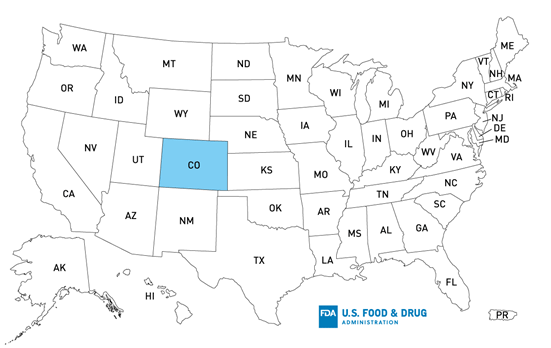
 Outbreak Investigation of Salmonella Thompson – Seafood - Map of U.S. Distribution of Recalled Products (October 8, 2021)

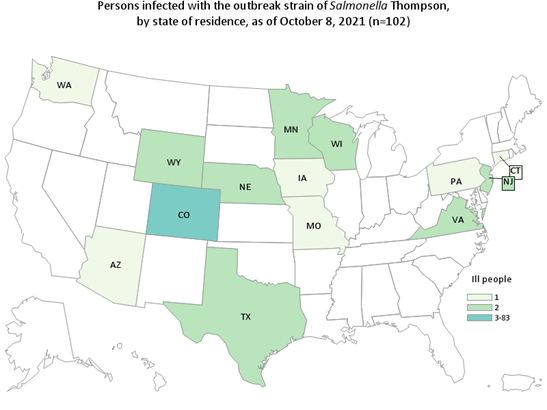
Case Count Map Provided by CDC

Outbreak Investigation of Salmonella Thompson – Seafood - CDC Case Count Map (October 8, 2021)

Case Counts

Total Illnesses: 102
Hospitalizations: 19
Deaths: 0
Last Illness Onset: September 7, 2021
States with Cases: AZ (1), CO (82), CT (1), IA (1), MN (2), MO (1), NE (2), NJ (2), PA (1), TX (2), VA (2), WA (2), WI (2), WY (2)
Product Distribution*: CO
*States with confirmed distribution; product could have been distributed further
France- Box of 6 organic eggs & loose eggs code 0FREOU01 – Salmonella

Gov france

Identifying information for the recalled product

  • Product category Food
  • Product sub-category Eggs and egg products
  • Product brand name Coteaux de la Saâne
  • Names of models or references Egg code: 0FREOU01
  • Product identification
    Lot Dated
    Box 6 eggs & bulk Recommended consumption date 10/30/2021
    Box 6 eggs & bulk Recommended consumption date 11/01/2021
  • Products List Product_list.pdf Enclosed
  • Packaging Box of 6 bulk eggs
  • Start date / End of marketing From 05/10/2021 to 07/10/2021
  • Storage temperature Product to be stored in the refrigerator
  • Geographical sales area Regions: Île-de-France,, Normandy
  • Distributors Bruel / Café de la Gare / Coccinelle / Auchan Luneray / Rapid Market / EpiService / Café de la Place / Viveco / Lycée Pablo Neruda / Les Saveurs d’Eric / Alexandre Clet / Super U Yerville / E. Leclerc Yvetot / U Express Yvetot / Valley grocery store
  • List of points of sale Reminder_list.pdf

Practical information regarding the recall

  • Reason for recall Positive Salmonella analysis in a livestock building
  • Risks incurred by the consumer Salmonella spp (causative agent of salmonellosis)
    Intoxication

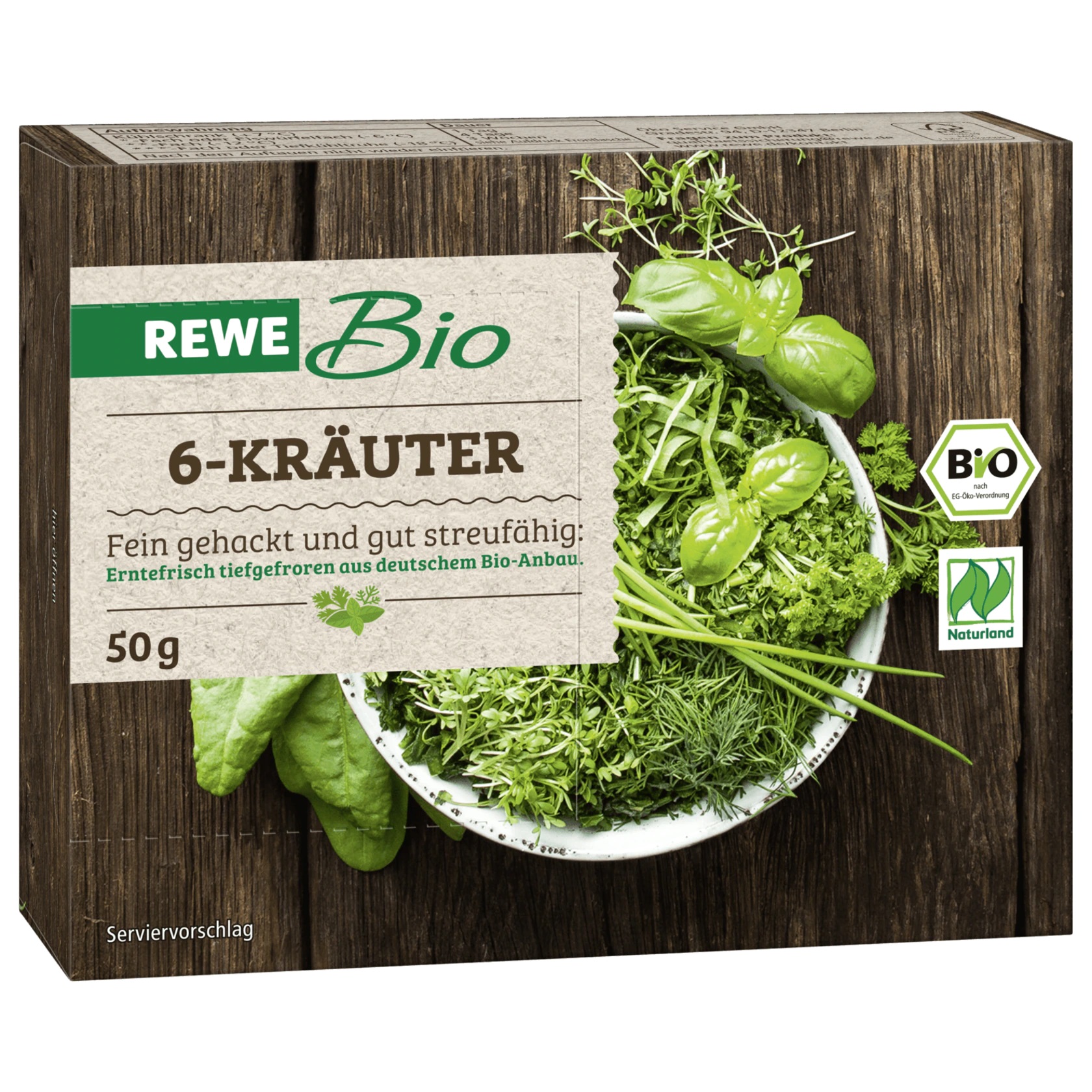
Germany – Rewe organic 6 herbs – STEC E.coli

LMW

Warning type: Food
Date of first publication: 08/10/2021
Product name: Rewe organic 6 herbs
Product pictures:

0184647-O1540 REWE organic 6-herb packshot.jpg

REWE GmbH

Manufacturer (distributor):

Öko Service GmbH, Auf dem Kleie 2, 49176 Hilter a. TW

Reason for warning:

Detection of Vero- / Shiga toxin-producing Escherichia coli (VTEC / STEC)

Packaging Unit: 50 g
Durability: Best before 07.2022
Lot identification: L1189F33; EAN 4388844006539
Additional Information:

According to BfR Opinion No. 009/2018 of April 19, 2018, all VTEC / STEC are to be regarded as potential enterohaemorrhagic Escherichia coli (EHEC).
Enterohaemorrhagic Escherichia coli (EHEC) are among the most important food-associated enteritis pathogens. In addition to gastrointestinal symptoms that occur after an incubation period of 1 – 8 days, EHEC can also cause post-infectious syndromes such as B. cause hemolytic uremic syndrome (HUS).

Homepage of the manufacturer:

Contact to the responsible authorities:

Baden-Württemberg:poststelle@mlr.bwl.de

Bavaria:poststelle@lgl.bayern.de
Brandenburg:Konsumenterschutz@Msgiv.Brandenburg.de
Hamburg:poststelle@justiz.hamburg.de
Hesse:Schnellwarnung@rpda.hessen.de
Lower Saxony:poststelle@ml.niedersachsen.de
North Rhine-Westphalia:poststelle@mulnv.nrw.de
Saarland:poststelle-luv@lav.saarland.de
Saxony:poststelle@sms.sachsen.de
Thuringia:LM-Ueberendung@tlv.thueringen.de

Ireland – Five Enforcement Orders Served on Food Businesses in September

FSAI

The Food Safety Authority of Ireland (FSAI) today reported that four Closure Orders and one Prohibition Order were served on food businesses during the month of September for breaches of food safety legislation, pursuant to the FSAI Act, 1998 and the European Union (Official Controls in Relation to Food Legislation) Regulations, 2020. The Enforcement Orders were issued by environmental health officers in the Health Service Executive (HSE) and officers of the FSAI.

Two Closure Orders were served under the FSAI Act, 1998 on:

  • La Cave Restaurant (Area closed: dry goods store of La Cave Restaurant), 28 Anne Street, Dublin 2
  • David Kra (Production Unit) (retailer), Unit 25, Midleton Enterprise Park, Dwyers Road, Midleton, Cork

Two Closure Orders were served under the European Union (Official Controls in Relation to Food Legislation) Regulations, 2020 on:

  • Mrs Crogh’s Bar (Closed Area: The food preparation area: preparation, cooking and service of food), 4 Parnell Street, Thurles, Tipperary
  • Domenico Take Away, Newcastle, Tipperary

One Prohibition Order was served under the FSAI Act, 1998 on:

  • Brazuca Market, 145 Parnell Street, Dublin 1

During the month September, two prosecutions were taken by the FSAI and the HSE in relation to:

  • Peter J Lyons, Ratoath, Meath
  • High Nelly’s Pub, Knocklonagad, Garryhill, Carlow

Some of the reasons for the Enforcement Orders in September include; flies noted throughout the premises; mice faeces noted in a room used to store burger buns; build-up of food debris and grease; a poor standard of personal hygiene by a food handler; raw foods stored above cooked foods in a fridge; food stored at unsafe temperatures; no evidence of regular hand washing; no pest control systems in place; completely inadequate food preparation surfaces; no facilities for disinfecting of crockery or utensils; food was wrapped in a freezer with a dead insect on its wrapping; food was being prepared cooked and served in an area where timber was also being chopped with an axe; a food worker had not received any training in food hygiene matters; a failure to provide traceability documentation.

Commenting, Dr Pamela Byrne, Chief Executive, FSAI, said that all food businesses must take their legal responsibility seriously to ensure they protect the health of consumers by complying with food law.

“It is a continuous disappointment that each month food inspectors find serious non-compliances in food businesses that can put consumers’ health at risk. Businesses failed to comply with food safety, hygiene and proper food storage and handling standards that are in place to protect consumers’ health. Food businesses also need to ensure that their premises have the right food safety management procedures in place to ensure pest control and best hygiene practice at all times”.

“Also, it is the responsibility of all food business owners to ensure that their food business is registered and operating in line with the legal requirements under food law. Failure to do so will not be tolerated. This was evident in September where a prosecution was taken in relation to an unregistered food business involved in the transportation of beef. It followed an investigation by the FSAI in conjunction with veterinary inspectors from Offaly County Council, South Dublin County Council, Meath County Council and Longford County Council,” added Dr Byrne.

Details of the food businesses served with Enforcement Orders are published on the FSAI’s website. Closure Orders and Improvement Orders will remain listed in the enforcement reports on the website for a period of three months from the date of when a premises is adjudged to have corrected its food safety issue, with Prohibition Orders being listed for a period of one month.

Enforcement Reports

Research – An Analysis of Tuna Recalls in the United States, 2002 through 2020

Journal of Food Protection

This manuscript reviews 18 years of voluntary recalls for commercially sold tuna in the United States. This recall information is a valuable indicator of the failure to implement procedures for food safety. The voluntary recalls involve fresh, frozen, processed, hermetically sealed and retorted in a shelf stable pack (i.e., canned tuna), and formulated into other tuna products. The FDA regulations that regulate the capture, processing, transportation, and sale of raw and processed seafood are discussed. These regulations include the current Good Manufacturing Practices, the Food Modernization Act, the Emergency Permit Control, Low Acid Canned Foods, the Seafood Hazard Analysis and Critical Control Points, Food Labeling, and Sanitary Food Transportation. The importance of traceability and Food Safety Culture to successfully prevent or implement recalls is also discussed. The recalls themselves were separated into product treatment groups: uncooked, canned shelf-stable items, and using tuna as an ingredient. The recalls were further categorized and summarized by reason or cause, such as biological and chemical contamination, undeclared ingredients, under-processing, and foreign materials. The primary causes of recalls of the reviewed tuna products were, in order, Listeria monocytogenes , undeclared allergens, elevated histamine levels, and under-processing of retorted tuna items. The recalls for elevated levels of histamine primarily occurred in uncooked (raw) tuna. Recalls for Listeria sp. and undeclared allergens were considered to be primarily Class I recalls, while recalls for elevated levels of histamine and under-processing were almost always assigned to the less serious Class II designation.

Research – A pilot-scale evaluation of using gaseous chlorine dioxide for decontamination of foodborne pathogens on produce and low-moisture foods

Wiley Online

Small-scale studies have shown that chlorine dioxide gas, ClO2(g), was effective for decontamination of produce, nuts, and spices. This study conducted a pilot-scale evaluation to identify effective ClO2(g) treatment parameters for commercial-scale applications. The gas was produced by a generator utilizing sodium chlorite and chlorine gas for decontamination of Shiga toxin-producing Escherichia coli (STEC), Listeria monocytogenes, and Salmonella inoculated on tomatoes, blueberries, baby-cut carrots, almonds, and peppercorns. Inoculated samples and 45 kg tomatoes in a 1,246-L treatment chamber were exposed to various ClO2(g) concentrations (mg/L) and times 9 (hr) at 70–95% RH to determine the treatment effects on the pathogen reductions. Results showed that the treatment caused higher reductions on produce. A ClO2(g) treatment of 1 mg/L-3 hr at 70% RH reduced 4.9–6.8, 5.1–5.6, and 4.2–6.3 log CFU/g of STEC, L. monocytogenes, and Salmonella, respectively, on produce, with the highest reductions on baby-cut carrots. For almonds and peppercorns, ClO2(g) treatments under higher RH caused higher reductions. The treatment of 2 mg/L-9 hr or 3 mg/L-4 hr at 95% RH reduced >4.0 log of STEC and Salmonella on almonds, and 1 mg/L-5 hr at 85% RH achieved >5.0 log reductions on peppercorns. Applying moisture to the surfaces of almonds caused >4.0 log reductions using 1 mg/L-5 hr at 95% RH. This study identified effective ClO2(g) treatment parameters for achieving >4.0 log reductions of common pathogens on tomatoes, blueberries, baby-cut carrots, almonds, and peppercorns and showed that ClO2(g) generator is suitable for large-scale decontamination. These findings can be used for pilot-scale ClO2(g) decontamination of these products and for testing using ClO2(g) for commercial-scale decontamination trials.

Research – Detection of Escherichia albertii in retail oysters

Journal of Food Protection

Escherichia albertii  is an emerging foodborne pathogen. Owing to its distribution in river water,  it is important to determine the presence of  E. albertii  in aquaculture-related foods. In this study, we investigated the distribution of  E. albertii  in retail oyster samples.  A total of  427 raw oyster samples (385 Pacific oysters, and 42 Japanese rock oysters) were enriched in  modified Escherichia coli  broth (mEC) or mEC supplemented with novobiocin (NmEC) at 42 °C. The cultures were used for  E. albertii -specific nested PCR assay, as well as for  E. albertii  isolation using  deoxycholate hydrogen sulfide lactose agar  (DHL), DHL supplemented with rhamnose and xylose (RX-DHL), and MacConkey agar supplemented with rhamnose and xylose (RX-MAC). The population of  E. albertii  in nested PCR-positive samples was  determined using the  most probable number  (MPN) method.  E. albertii  isolates were subjected to biochemical and genetic characterization.  E. albertii   was detected in 5 of 315 (1.6%) Pacific oyster samples  (one piece each), 2 of 70 (2.9 %)  Pacific oyster samples  (25 g each), and 2 of 42 (4.8 %) Japanese rock oyster samples  procured from four geographically distant regions. A total of 64  E. albertii  strains were isolated from eight of the nine nested PCR assay-positive oyster samples, and  the MPN value was under the detection limit (< 3 MPN/10 g).  A specific season or month for detecting  E. albertii  was not observed in this study, suggesting that the pathogen is present in seawater.   All the  E. albertii  isolates, except one, were positive for the virulence factor  eae,  indicating that these isolates have  the potential to infect humans.

Research – Inactivation of Salmonella enterica serovar Typhimurium and Staphylococcus aureus in rice by radio-frequency heating 

Journal of Food Protection

The objectives of this study were to determine the effect of the milling degree (MD) of Oryza sativa L. (Korean rice) on the heating rate, pathogen inactivation (Salmonella Typhimurium and Staphylococcus aureus), and color change resulting from radio-frequency (RF) heating. Rice samples inoculated with pathogens were placed in a polypropylene jar and subjected to RF heating for 0-75 s. The heating rate of rice with a 2% MD was the highest during RF heating, followed by those with a 0, 8, and 10% MD, and the reduction of pathogens showed the same trend. The reduction of the levels of pathogens in rice with a MD 0 and 2% was significantly higher than that observed for rice with a MD of 8 and 10% under the same treatment conditions. For example, log reductions of S. Typhimurium in rice by 55 s RF heating were 3.64, 5.19, 2.18, and 1.80 for milling degree of 0, 2, 8, and 10%, respectively. At the same treatment conditions, log reduction of S. aureus were 2.77, 5.08, 1.15, and 0.90 for milling degree of 0, 2, 8, and 10%, respectively. The color of rice measured according to L*, a*, and b* was not significantly altered after RF heating, regardless of the MD. Therefore, the MD of rice should be considered before RF heating is applied to inactivate foodborne pathogens.

Research – Emergence of Vibrio cholerae O1 Sequence Type 75, South Africa, 2018–2020

CDC

Abstract

We describe the molecular epidemiology of cholera in South Africa during 2018–2020. Vibrio cholerae O1 sequence type (ST) 75 recently emerged and became more prevalent than the V. cholerae O1 biotype El Tor pandemic clone. ST75 isolates were found across large spatial and temporal distances, suggesting local ST75 spread.

The seventh cholera pandemic, caused by Vibrio cholerae O1 biotype El Tor (7PET), arrived in Africa during 1970 and became endemic in many countries on the continent (1). Cholera was first reported in South Africa in 1974 (2). However, South Africa is not considered a cholera-endemic area; outbreaks typically are associated with importation, particularly from neighboring countries. The last cholera outbreak in South Africa was triggered by imported cases from an outbreak in Zimbabwe during 2008; South Africa reported 12,706 cases during November 2008–April 2009 (3).

Globally, 7PET isolates are genetically homogeneous and linked to the Bay of Bengal in South Asia (4,5). Most 7PET isolates are multidrug-resistant sequence type (ST) 69 (6). Rarely, 7PET has a single-locus variant, ST515, in isolates from Africa belonging to lineage T10 (7). As of September 2021, all cholera isolates from South Africa have been characterized as 7PET ST69 by multilocus sequence typing (MLST).

South Africa actively surveils for cholera. Since the 2008–2009 outbreak, few cases have been identified: 5 during 2010–2014, most of which were imported, and none during 2015–2017. During 2008–2009, large outbreaks occurred in 3 provinces, Mpumalanga, Limpopo, and KwaZulu-Natal (3), but all were caused by imported cases from neighboring Zimbabwe and Mozambique. Therefore, given their experience, healthcare workers and laboratorians in these provinces typically will test for cholera in all cases of acute watery diarrhea.

In South Africa, the National Institute for Communicable Diseases (NICD) is notified of suspected cholera cases. NICD’s Centre for Enteric Diseases supports case investigations and receives all human and environmental V. cholerae isolates for further investigation. The case definition for confirmed cholera is isolation of V. cholerae O1 or O139 from a person with diarrhea. We investigated the molecular epidemiology of V. cholerae in South Africa during 2018–2020.

Research – Transfer of Salmonella from inert food contact surfaces to wheat flour, cornmeal and NaCl.

Journal of Food Protection

Salmonella contamination in a dry processing facility frequently requires removal methods that are non-aqueous. Removal of pathogens from food processing systems with a purge of uncontaminated dry food materials has been proposed, however, little is known with the respect to efficacy. In this study, survival of Salmonella on inert contact surfaces and transfer of Salmonella from inert contact surfaces to low-moisture foods was evaluated. Six stainless steel and polymeric food contact material types, in bead form, were contaminated at 11 log CFU/mL and then stored at two temperatures, 25°C and 4°C for six months. Simultaneously, three dry food materials/ingredients were used to remove Salmonella from contaminated beads. Wheat flour, cornmeal, and NaCl (1 g each) were mechanically mixed with 3 beads of each material type. The rate of microbial transfer from contaminated beads to food materials was measured. Further experimentation using multiple transfers were applied on two representative beads types, 316 stainless steel and polypropylene, representing common surface contact materials used in processing equipment. Survival of Salmonella on beads depended on storage temperature, surviving longer at 4°C compared to 25°C (p<0.05), but was not influenced by type of bead material. Transfer of Salmonella from stainless steel beads to flour was significantly greater than from plastic (p<0.05). Transfer rates from stainless steel to wheat flour, cornmeal, and NaCl were measured as -0.5713, -0.2592, and -1.4221 Log CFU Salmonella removed/cm 2 /g clean material used. Transfer rates for polypropylene to whole wheat flour, cornmeal, and NaCl were more than 10-fold lower at -0.0156, -0.0148, and -0.0129 Log CFU Salmonella removed/cm 2 /g clean material used. These results indicate that while material type may not influence Salmonella survival during storage, Salmonella is more easily removed from stainless steel than polyethylene.