Category Archives: Food Micro Blog

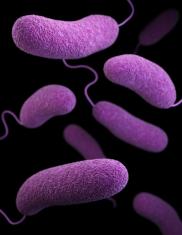
ECDC – Cholera – Annual Epidemiological Report for 2019

ECDC

Food Illness

Key facts

•In the European Union/European Economic Area (EU/EEA), cholera is a rare disease that is primarily associated with travel to endemic countries outside of the EU/EEA.

•In 2019, seven EU countries reported 26 confirmed cases of cholera, which was similar to previous years.

•Most cases (16/26) were reported by the United Kingdom.

Click to access CHOL_AER_2019_Report.pdf

EU – Latest Cryptosporidium parasite statistics show rise in Europe

Food Safety News

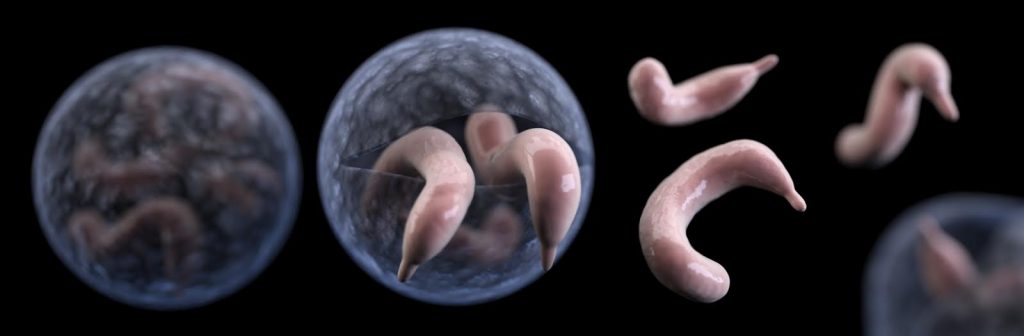
Infections from the Cryptosporidium parasite are continuing to rise in Europe, according to a report published this month by the European Centre for Disease Prevention and Control (ECDC).

Outbreaks associated with food and drink, such as juice, have been reported. The parasites are microscopic and do not make food smell, look or taste unusual.

For 2018, 20 countries reported 14,299 cryptosporidiosis cases, of which 14,252 were confirmed. The number of confirmed patients was more than the 11,435 in 2017. The notification rate for 2018 was higher than in the previous four years from 2014 to 2017.

Germany, Netherlands, Spain and the United Kingdom accounted for 76 percent of all confirmed cases in 2018, with the UK alone making up 41 percent with 5,820 infections.

USA- Bean Sprouts and Soy Sprouts recalled due to Listeria monocytogenes

Food Poison Journal

The purpose of this announcement is to advise you that Fullei Fresh is voluntarily recalling Bean Sprouts and Soy Sprouts as a precaution due to possible exposure to listeria monocytogenes. Affected lots are numbered consecutively between 251 and 271. They were harvested and shipped to distributors between September 14 and October 5, 2021. Both conventional and organic bean sprouts as well as soy sprouts are voluntarily recalled. No other products are affected at this time as they are grown and packed in segregated departments.

India – Maha: Six of family hospitalised due to suspected food poisoning

Outlook India

In a suspected food poisoning case, six members of a family, including a six-year old girl, fell ill after eating a food item made of ”bhagar” (barnyard millet) at a village in Jalna district of Maharashtra on Thursday, a district official said.

They have been admitted to hospitals, he said.

The affected family members reside at Antarwali Sarati village in Ambad tehsil. Apart from the minor girl, the victims – aged between 27 and 55 – ate the food item made of bhagar (which is generally consumed during fasting by Hindus) on the occasion of Navratri that began from Thursday. However, after that, they started suffering from dizziness and vomiting. They were taken to a local hospital, the official said.

Majorca – Food poisoning at wedding reception costs restaurant thousands

Majorca Daily Bulletin

A Mallorcan restaurant has been ordered to give a couple a refund for their wedding reception and pay them compensation after a third of the guests got food poisoning.

The wedding took place in September 2016, but in the days after the reception, 52 guests went to the doctor with gastric symptoms.

The restaurateur claimed the food was analysed and found to be in good condition, but the court ruled that there was no other explanation for so many guests getting sick.

The couple will receive a total of 14,000 euros, which includes the full amount for the reception plus 2,500 euros

UK – Kent E-Coli warning: SES Water issue update on contaminated water

Kent Live

A precautionary boil notice was earlier issued after E-coli was found at 443 postcodes

Tap water in thousands of Kent and Surrey homes has been deemed safe to drink following the lifting of a precautionary boil notice.

On Friday, SES water advised customers to boil all drinking water after the deadly E-coli bacteria was discovered during routine tests.

Teams were immediately called to restore the water supplies to their normal standards which has now been achieved.

USA- Boil water order issued for 4 Mass. towns after E. coli detection

Boston.com

Four towns on the South Coast of Massachusetts are under a boil water order after E. coli was detected in their water source.

The Mattapoisett River Valley Water District sent out the order on Wednesday, saying it was notified of the positive E. coli results in routine samples collected Tuesday, WCVB reported. The boil water order affects Mattapoisett, Fairhaven, Rochester, and Marion.

Per the order, any ice, drinks, formula, and uncooked foods prepared with water on or before Tuesday should be discarded, WCVB reported. The district has begun temporary chlorination of the water and will flush the system over the next few days. More samples will be collected Thursday, and residents will be informed when tests show no E. coli is present.

USA – Restaurant-related Hepatitis A outbreak doubles in size; more illnesses likely

Food Safety News

The case count in a hepatitis A outbreak linked to restaurants in Virginia has doubled. At least 30 people are now infected with the virus, which can cause life-threatening liver infections.

Health officials said the window for symptoms to appear is ongoing, so they may continue to hear of new cases for at least a few more weeks, according to the Roanoke Times. It can take up to 50 days after exposure to the virus for symptoms to begin, according to the U.S. Centers for Disease Control and Prevention.

At least three of the patients have been admitted to hospitals.

The infected people ate at three Famous Anthony’s restaurants, according to the Virginia Department of Health. Cynthia Morrow from the Roanoke City and Alleghany Health Districts provided an update on the outbreak recently.

UK – E. coli scare: People in Oxted told to boil drinking water

BBC

People in parts of Surrey are being told to boil their water before drinking it over fears it could contain E. coli.

Hundreds of postcodes in the Oxted area have been affected.

SES Water said an issue was discovered during routine tests, and “our teams are working to investigate the problem and restore supplies to their usual high standards”.

The scale of the contamination has not yet been confirmed.

The water company is awaiting further test results.

In the meantime people in the area are being told to boil all water and let it cool before using it for drinking, preparing food or cleaning their teeth.

Pets should also be given boiled tap water.

Boiled water can be kept in the fridge, and should be covered and used within 24 hours.

USA – Nick’s Famous Bar-B-Q Recalls Ready-To-Eat Pork Products Due to Possible Listeria Contamination

FSIS USDA

Click to access 036-2021-label.pdf

WASHINGTON, Oct. 8, 2021 – Nick’s Famous Bar-B-Q, a Nashville, Tenn., establishment, is recalling approximately 3,140 pounds of ready-to-eat (RTE) smoked pork barbecue products that may be adulterated with Listeria monocytogenes, the U.S. Department of Agriculture’s Food Safety and Inspection Service (FSIS) announced today.

The frozen RTE hickory smoked pork barbecue products were produced on September 7, 2021 and September 8, 2021 and packaged on September 8, 2021. The following products are subject to recall [view the label here]:

  • 20-lb. boxes of “Nick’s FAMOUS Hickory Smoked Pork Bar-B-Q” with a case code of 23452 and a use by date of 09/2022.

The products subject to recall bear establishment number “EST. 17863” inside the USDA mark of inspection. These items were distributed to institutions, including school locations in North Carolina. While the product was distributed to schools, it resulted from a commercial sale and was not part of food provided by the USDA for the National School Lunch Program.

The problem was discovered by FSIS during an assessment of the establishment’s production records.

There have been no confirmed reports of adverse reactions due to consumption of these products. Anyone concerned about an injury or illness should contact a healthcare provider.

Consumption of food contaminated with L. monocytogenes can cause listeriosis, a serious infection that primarily affects older adults, persons with weakened immune systems, and pregnant women and their newborns. Less commonly, persons outside these risk groups are affected.

FSIS is concerned that some product may be in institutions’ freezers. These products should be thrown away or returned to the place of purchase.