Category Archives: Food Micro Blog

Saudi Arabia – 58 hospitalised for food poisoning

Gulf News

Some 58 people were hospitalised for showing symptoms of food poisoning after eating at a restaurant in south-western Saudi Arabia, a local newspaper reported.

The victims were taken to a hospital in the governorate of Sabya in the border region of Jazan, Okaz added, citing a hospital official.

“Until now, 58 cases have reached the hospital. They have been treated and 50 of them have been discharged,” director of Sabya General Hospital, Dr Abdu Jafari, said.

“There are initial indications that the number will rise in the coming hours for suffering poisoning after having meals at a local restaurant,” he added.

The victims suffered from vomiting and diarrhoea, the official said.

Ireland – WARNING: Boil Water Notice issued to protect 4,000 people in Carrick-on-Suir – Cryptosporidium

Tipperary Live

Irish Water and Tipperary County Council have issued a Boil Water Notice for households, businesses and other customers supplied by the Carrick-on-Suir (Lingaun) Public Water Supply following the detection of cryptosporidium in the water supply.

The Boil Water Notice, announced this evening, was imposed to protect approximately 4,000 people served by this water supply following advice received from the Health Service Executive and it will .

Vulnerable customers who have concerns can contact our customer care team on 1800 278 278.

For customers who wish to check if their property is on the Boil Water Notice themselves, please go to the following link on the Irish Water website: https://www.water.ie/?map= supply-and-service-updates, enter the property’s Eircode and you will then see if your property is on the Boil Water Notice.

Water must be boiled for:

Drinking;
Drinks made with water;
Preparation of salads and similar foods, which are not cooked prior to eating;
Brushing of teeth;
Making of ice – discard ice cubes in fridges and freezers and filtered water in fridges. Make ice from cooled boiled water.
What actions should be taken:

Use water prepared for drinking when preparing foods that will not be cooked (e.g. washing salads);
Water can be used for personal hygiene, bathing and flushing of toilets but not for brushing teeth or gargling;
Boil water by bringing to a vigorous, rolling boil (e.g. with an automatic kettle) and allow to cool. Cover and store in a refrigerator or cold place. Water from the hot tap is not safe to drink. Domestic water filters will not render water safe to drink;
Caution should be taken when bathing children to ensure that they do not swallow the bathing water;
Prepare infant feeds with water that has been brought to the boil once and cooled. Do not use water that has been re-boiled several times. If bottled water is used for the preparation of infant feeds it should be boiled once and cooled. If you are using bottled water for preparing baby food, be aware that some natural mineral water may have high sodium content. The legal limit for sodium in drinking water is 200mg per litre. Check the label on the bottled water to make sure the sodium or `Na’ is not greater than 200mg per litre. If it is, then it is advisable to use a different type of bottled water. If no other water is available, then use this water for as short a time as possible. It is important to keep babies hydrated.
Great care should be taken with boiled water to avoid burns and scalds as accidents can easily happen, especially with children.

Updates will be available on our Water Supply Updates section on water.ie including a map of the affected area, on Twitter @IWCare and via our customer care helpline, open 24/7 on 1800 278 278. Customers are advised to set their location on water.ie to view updates specific to their water supply. Further information in relation to the boil water notice is available from https://www.water.ie/water- supply/water-quality/boil- water-notice/

Irish Water continues to work at this time with our Local Authority partners, contractors and others to safeguard the health and well-being of both staff and the public and to ensure the continuity of critical drinking water and wastewater services. Irish Water would like to remind people to follow the HSE COVID-19 advice and ensure frequent handwashing.

Czech Republic – Smoked pork neck – Listeria monocytogenes

Potravinynapranyri

Illustration photo no. 1

Place of inspection:
Prague – Újezd ​​u Průhonice ( Ke mlýnu 1, 14900 Prague – Újezd ​​u Průhonice )
Company ID: 28234324
Unsatisfactory parameter:

Listeria monocytogenes

The presence of the pathogenic bacterium Listeria monocytogenes was detected in the product . This bacterium can cause a condition called listeriosis.

Expiration date: 10/17/2021
Packaging: plastic foil, vacuum packed
Producer: Radev sro
Country of origin:  Czechia
Date of sampling: 24. 9. 2021
Reference number: 21-000072-SVS-CZ
The sample was found by official inspection of the State Veterinary Administration.

Germany – DANAEG Great Freedom 6 pieces DANAEG Frei 10 pieces – Eggs – Salmonella

LMW

Danaeg Bild.jpg

Warning type:

Food

Date of first publication:

11/02/2021

Product name:

DANAEG Great Freedom 6 pieces DANAEG Frei 10 pieces

Consumer information DANAEG
Manufacturer (distributor):

DANAEG A / S Denmark

Reason for warning:

In the course of a quality control carried out, suspicion of Salmonella was found for the articles mentioned.

Packaging Unit:

6 pieces per unit, 10 pieces per unit

Durability:

11/01/2021, 11/03/2021, 11/05/2021, 11/08/2021, 11/10/2021, 11/12/2021, 11/15/2021,

Lot identification:

Print number: 1DK081131

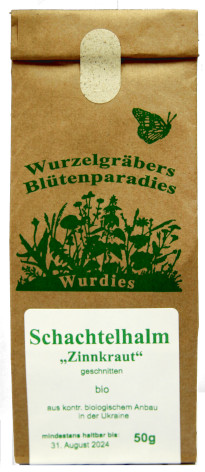
Germany – Horsetail “Horsetail” cut organic – Salmonella

LMW

Warning type: Food
Date of first publication: 03/11/2021
Product name:

Horsetail “Horsetail” cut organic

Product pictures:
Produktbild.png
Manufacturer (distributor):

Wurdies Herbs GmbH & Co. KG

Reason for warning: 

Detection of salmonella

Packaging Unit: see attached press release
Durability: see attached press release
Production date: see attached press release
Lot identification: see attached press release
Additional Information:

Reference is made to the company’s press release attached.

Homepage of the manufacturer:

Research – Irradiation to tackle foodborne bacteria

Food Manufacture

Alison Johnson, managing director at Food Forensics, discusses the use of irradiation in the fight against salmonella, campylobacter and E.coli.

USA – St. John Creamery Raw Goat Milk Recalled For E. coli

Food Poisoning Bulletin

St. John Creamery raw goat milk is being voluntarily recalled for possible E. coli contamination in Washington state. The same product was recalled in September 2021 for possible Listeria monocytogenes contamination. No known illnesses are associated with the consumption of this recalled goat milk at this time.

The recalled product is St. John Creamery raw goat milk that is bottled in half-gallon and one-pint containers. It was sold at the dairy’s on farm store, directly to private customers in drop groups, and at retail stores in western Washington state. The milk has best by dates through 110521 (November 5, 2021)

Belgium – Boni Selection & Everyday Brand Ham – Listeria monocytogenes

AFSCA

Recall of Colruyt
Products: Boni Selection & Everyday brand ham.
Problem: presence of Listeria monocytogenes.

Colruyt and OKay recall the defatted ham ( 200 g and 500 g) and the ham on the bone (200 g) Boni Selection, as well as the ham on the bone Meesterlyck (300 g) Everyday .

During an internal control, the presence of Listeria monocytogenes was observed in the products gluten-free defatted ham ( 200 g and 500 g) and gluten-free ham on the bone (200 g) Boni Selection, as well as ham with Meesterlyck bone (300 g) Everyday .

In consultation with the AFSCA, Colruyt and OKay have therefore decided to withdraw the products concerned from sale.

Customers who have purchased these products are advised not to consume them and to bring them back to the store, where they will be reimbursed. In the meantime, all stores have removed the affected products from the shelves.

Possible symptoms of Listeria monocytogenes poisoning

Listeria monocytogenes infection can be dangerous for young children, pregnant women (risk of miscarriage), immunocompromised people and the elderly. Possible symptoms of Listeria monocytogenes poisoning include nausea and vomiting, abdominal cramps, diarrhea or constipation, headache and persistent fever (feeling like the flu). These symptoms usually appear 2 to 60 days after taking Listeria monocytogenes.

People who have consumed these products and who present this type of symptoms are invited to consult their doctor, notifying him of this consumption.

Product description: 
Boni Selection gluten-free defatted ham 500 g Use-by
date (BBD): 11/11/2021
Sales period: from 10/22/2021 to 10/28/2021 inclusive
Item number: 27244 Defatted

Ham gluten free Boni Selection 200 g Best before
date (BBD): 12-13 /
11/2021 Sales period: from 22/10/2021 to 2/11/2021 inclusive
Item number: 27240

Ham on the bone without gluten Boni Selection 200 g Use-by
date (BBD): 11/11/2021
Sales period: from 10/21/2021 to 11/2/2021 inclusive
Item number: 27770

Ham on the bone Meesterlyck Everyday 300 g Best before
date (BBD): 12/11/2021
Sale period: from 22/10/2021 to 2/11/2021 inclusive
Item number: 27353

These products have been offered on sale in the following stores:
Collect & Go, Colruyt Belgium and OKay.

For more information, customers can contact Colruyt Group Customer Service on 0800 99 124.

Contact person for journalists
Colruyt Group Press Service
Tel. : 0473 92 45 10

USA – Outbreak Investigation of Salmonella Oranienburg: Whole, Fresh Onions (October 2021) – Update

FDA

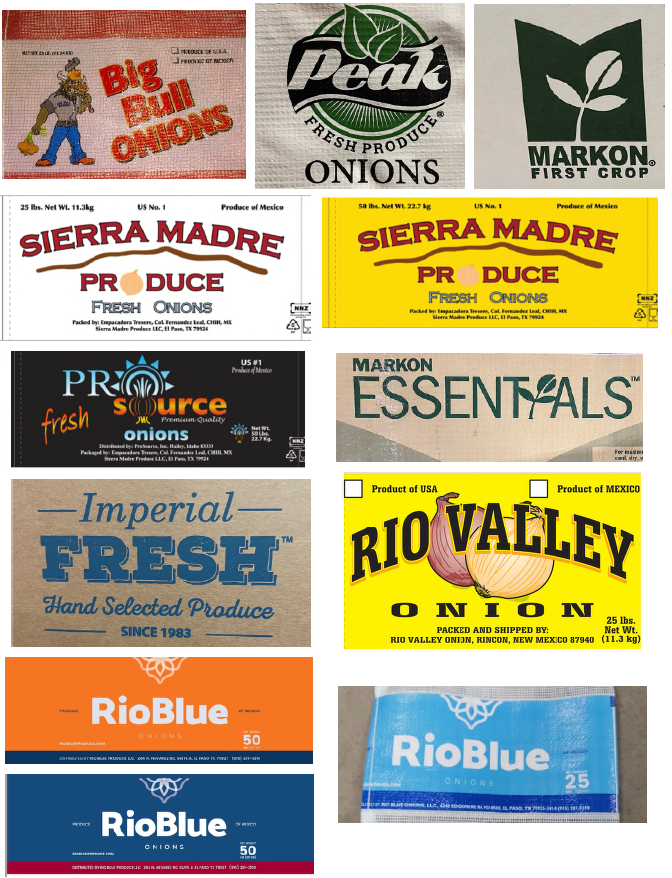
Outbreak Investigation of Salmonella Oranienburg in Whole, Fresh Onions - Sample Product Images (October 2021)

The FDA, along with CDC and state and local partners, is investigating a multistate outbreak of Salmonella Oranienburg infections linked to whole, fresh onions. FDA’s traceback investigation is ongoing but has identified ProSource Produce, LLC (also known as ProSource Inc.) of Hailey, Idaho, and Keeler Family Farms of Deming, New Mexico, as suppliers of potentially contaminated whole, fresh onions imported from the State of Chihuahua, Mexico.

On October 29, 2021, the FDA published a list of retail establishments that received product recalled by ProSource Produce LLC. This list represents the best information currently available to the FDA; however, it may not include all retail establishments that have received the recalled product or may include retail establishments that did not actually receive the recalled product. It is important that you use the product-specific information, available on the ProSource Produce LLC recall announcement, in addition to this list of retail stores, when you check the food you have to see if it has been recalled.

FDA’s investigation is ongoing to determine the source of contamination and if additional products or firms are linked to illness. Additional information will be provided as it becomes available.

Recommendation

Advice for restaurants, retailers and consumers: Do not eat, sell or serve recalled onions, or products containing recalled onions. All recalled onions were supplied by ProSource Produce LLC and Keeler Family Farms and imported from the State of Chihuahua, Mexico between July 1, 2021 and August 31, 2021. FDA has posted a list of additional recalls being conducted by companies that may have received recalled onions from ProSource Produce LLC and Keeler Family Farms. This list includes recalls conducted by companies that further processed the onions by using them as ingredients in new products or by repackaging them. If you cannot tell if your onions were recalled, do not eat, sell, or serve them and throw them out.

Onions may last up to three months if stored in a cool, dry place. Restaurants, retailers, and consumers who suspect having purchased such onions may still have them in storage and should not eat, sell, or serve them, and should throw them out.

FDA recommends that anyone who received or suspects having received recalled onions use extra vigilance in cleaning and sanitizing any surfaces and containers that may have come in contact with these products to reduce the risk of cross-contamination. This includes cleaning and sanitizing cutting boards, slicers, countertops, refrigerators, displays, and storage bins.

Suppliers and Distributors: Do not use, ship, or sell recalled onions. Suppliers and distributors that repackage raw onions should clean, rinse, sanitize, and air dry any surfaces and storage areas that may have come into contact with these products.  Farms and firms within the supply chain of recalled onions, including shippers, distribution centers, retailers and restaurants, should immediately clean and sanitize all food contact surfaces and non-food contact surfaces of equipment and tools that the onions may have touched or that may have become contaminated, including refrigerators, counter tops, storage shelving, trucks or other transportation carriers, etc. If there has been potential cross contamination or mixing of onions from other sources with these products, suppliers and distributors should discard all comingled and potentially cross-contaminated product.

Recall Information

FDA published a list of retail establishments that received product recalled by ProSource Produce LLC. This list represents the best information currently available to the FDA; however, it may not include all retail establishments that have received the recalled product or may include retail establishments that did not actually receive the recalled product. It is important that you use the product-specific information, available on the ProSource Produce LLC recall announcement, in addition to this list of retail stores, when you check the food you have to see if it has been recalled.

FDA has posted a list of additional recalls being conducted by companies that may have received recall onions from ProSource Produce LLC and Keeler Family Farms. This list includes recalls conducted by companies that further processed the onions by using them as ingredients in new products or by repackaging them.

ProSource Produce LLC has voluntarily recalled red, yellow, and white onions imported from the State of Chihuahua, Mexico, with import dates from July 1, 2021, through August 31, 2021. Additional descriptors used for these onion types may include, but are not limited to, jumbo, colossal, medium, summer and sweet onions. Additional recall information will be made public as soon as it is available from ProSource Inc.

The onions were distributed to wholesalers, broadline foodservice customers, and retail or grocery stores in:

  • 50 lb., 25 lb., 10 lb., 5 lb., 3 lb., and 2 lb. mesh sacks
  • 50 lb., 40 lb., 25 lb., 10 lb., and 5 lb. cartons

And by the following distributors and/or under the following brands:

  • Big Bull
  • Peak Fresh Produce
  • Sierra Madre
  • Markon First Crop.
  • Markon Essentials
  • Rio Blue
  • ProSource
  • Rio Valley
  • Sysco Imperial

Keeler Family Farms has recalled red, yellow, and white whole, fresh onions imported from the State of Chihuahua, Mexico, with import dates from July 1, 2021, through August 25, 2021. The onions were distributed in 25lb and 50lb mesh sacks. They contain a label that is marked as “MVP (product of MX)”.

Additional details regarding the recalled products are available on the Keeler Family Farms recall announcement.

Recalls have also been initiated by companies that sold recalled onions or products containing the recalled onions.

France – Strawberry tart – Bacillus cereus

Gov france

Identifying information for the recalled product

  • Product category Food
  • Product sub-category Others
  • Product brand name WITHOUT BRAND
  • Names of models or references Strawberry tart
  • Product identification
    GTIN Lot Dated
    0000000000 Products sold between 10/22 and 10/23 inclusive Use-by date 10/24/2021
  • Packaging Crystal Box
  • Start date / End of marketing From 10/22/2021 to 10/23/2021
  • Storage temperature Product to be stored in the refrigerator
  • Further information Store manufactured products
  • Geographical sales area62800
  • Distributors Carrefour Liévin ONLY

Practical information regarding the recall

  • Reason for recall Bacillus Cereus
  • Risks incurred by the consumer Bacillus cereus