Category Archives: Food Micro Blog

Information – Spain – Omelette, yes. Salmonella, no

asca

Salmonella is a bacterium that causes one of the most common foodborne diseases: salmonellosis. In food it is found mainly in eggs and in raw pork and chicken. It can be spread to people through foods that contain Salmonella .

According to epidemiological data, salmonella causes a third of the food poisoning that occurs in Catalonia.

Thanks to the control measures applied at all stages of the food chain, from primary production until the food reaches the consumer, the number of salmonella cases and outbreaks in Catalonia has been considerably reduced.

Another essential element for the prevention of human salmonellosis is the improvement in food preparation practices in restaurants and at home.

Scientific knowledge supports that cooking is the only way to eliminate salmonella:

  • Food containing eggs must be cooked to a temperature that reaches 75 ° C in the center of the product.
  • The tortillas have to be well curdled.
  • Roasts of meat and chicken have to reach 75 ° C in the center of the piece. Make sure the juices are clear and not pink.

Click to access EFSA_Salmonela-no.pdf

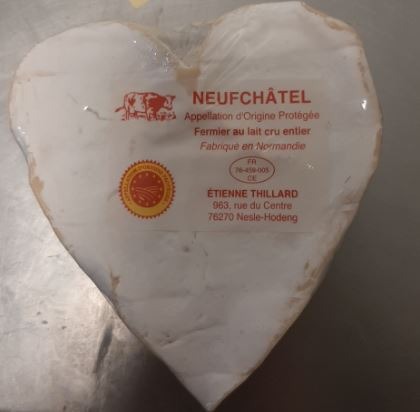
France – Cœur de neufchâtel farmer PDO raw milk – Listeria monocytogenes

Gov france

Identifying information for the recalled product

  • Product category Food
  • Product sub-category Milk and dairy products
  • Product brand name Etienne Thillard
  • Names of models or references Heart of Neufchâtel
  • Product identification
    GTIN Lot Dated
    3482527602009 2562910 Use-by date 10/29/2021
  • Packaging The product is sold by the cut in the traditional department
  • Start date / End of marketing From 06/10/2021 to 21/10/2021
  • Storage temperature Product to be stored in the refrigerator
  • Health mark FR 76-459-005 CE
  • Further information The product is sold in the traditional department
  • Geographical sales area Geispolsheim
  • Distributors Leclerc Geispolsheim

Practical information regarding the recall

  • Reason for recall presence of Listeria monocytogenes
  • Risks incurred by the consumer Listeria monocytogenes (causative agent of listeriosis)

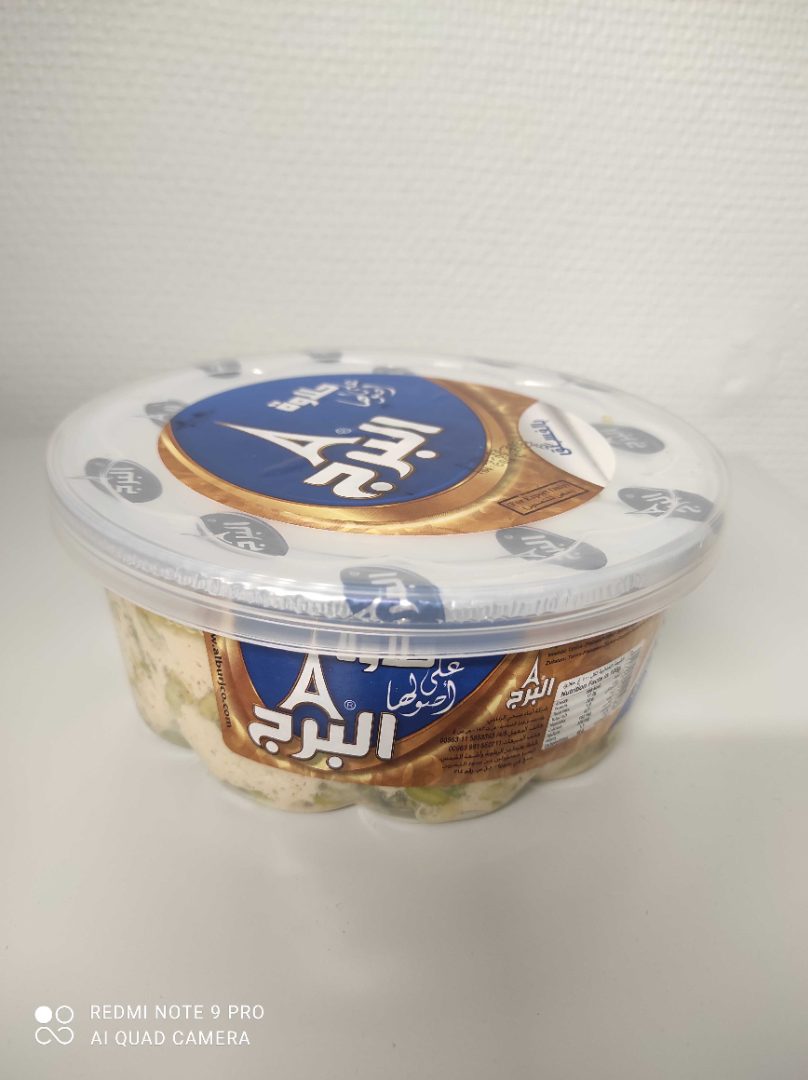
France – Halawa with pistachios – Salmonella

Gov france

Identifying information for the recalled product

  • Product category Food
  • Product sub-category Nuts and seeds
  • Product brand name AL BURJ
  • Names of models or references Halawa with pistachios 400g Halawa with pistachios 800g
  • Product identification
    GTIN Lot Dated
    6217000020486 All lots Date of minimum durability 07/09/2022
    6217000020493 All lots Date of minimum durability 07/31/2022
  • Packaging400g and 800g plastic box
  • Start date / End of marketing From 03/10/2021 to 10/27/2021
  • Storage temperature Product to be stored at room temperature
  • Geographical sales area Whole France
  • Distributors see the list on the PDF file
  • List of points of saleburj_sale_points.pdf

Practical information regarding the recall

  • Reason for recall Presence of SALMONELLE
  • Risks incurred by the consumer Salmonella spp (causative agent of salmonellosis)

Research – When the E. coli hits the fan! Evaluating the risks of dust-associated produce cross-contamination

CPS

Dust represents an understudied vehicle for microbial dispersal and produce contamination by pathogens. Dust deposition onto crops during cultivation is inevitable as plant surfaces serve as a major aerosol sink and dust can serve as a vehicle for bacteria. Wind-driven distribution of dust in agricultural environments can also impact food safety when the sources of dust include particles from natural and human-related reservoirs of pathogens. While the populations of enteric pathogens in water is frequently determined and the microbiological quality of soils are monitored, the evaluation of dust and soil-borne particulates is rarely conducted. This study proposes the following: 1). To evaluate the role of dust in transferring foodborne pathogens to produce surfaces grown in eastern and western regions of the US, 2). To determine the role of humidity in the deposition of dust on produce and the survival of pathogens in dust, and 3). To test dust particulates from animal operations in both regions for the presence of biomarkers indicative of fecal contamination and potentially the presence of pathogens. This study will enhance our understanding of pathogen transport from feces into and through produce fields and will quantify the risk associated with contamination from dust under varying environmental/atmospheric conditions.

Technical Abstract

Dust, broadly defined as fine particulate matter resulting from wind erosion on land surfaces and suspended in the air, is an inseparable component of the atmosphere. Dust represents an understudied vehicle for microbial dispersal in agricultural environments and produce contamination by microorganisms pathogenic to humans. Dust not only affects biological processes in plants, such as stomatal gas exchange, but also the plant surface microbiome. Dust deposition onto crops during field cultivation is inevitable as plant surfaces serve as a major aerosol sink. Studies have indicated that dust can serve as a vehicle for bacteria. Wind-driven distribution of dust in agricultural environments could also impact food safety when the sources of dust include particles from natural (soil, decaying vegetation, feral/wild animal droppings) and human-related (manure-amended soils, silage, municipal sewage-based biosolids, composting, and animal production facilities) reservoirs of human pathogens. While the populations of enteric pathogens in water is frequently determined through periodic testing as recommended by the Food Safety Modernization Act (FSMA) and the microbiological quality of soils are monitored, the evaluation of dust and soil borne particulates is rarely carried out. This study proposes the following: 1). To evaluate the role of dust in transferring foodborne pathogens to the surfaces of produce commodities specific to the eastern and western agricultural regions of the United States, 2). To determine the role of humidity in the deposition of dust on produce and the survival of foodborne pathogens in dust particulates, and 3). To test dust particulates from animal operations in Georgia and Arizona for the presence of biomarkers indicative of fecal contamination and the presence of enteric pathogens. This project will enhance our understanding of pathogen transport from feces into and through produce fields and will quantify the risk associated with contamination from dust under varying environmental and atmospheric conditions.

Click to access BRIGHT_FINAL.pdf

Denmark – Mold/Mould on burger buns

DVFA

Lantmännen Schulstad A / S is recalling a batch of Hatting Wholemeal Burger buns due to the discovery of mold in the product.

Recalled Foods , Published: November 1, 2021

What food:
Hatting Wholemeal Burger
Net weight: 380g
Best before date: 11.09.2021
EAN code: 05701205007553

Sold in:
Grocery stores across the country

Company withdraws:
Schulstad A / S

Reason:
The company has found that there is a risk for mold in the product.

Risk:
Mold formation makes the product unsuitable as food.

Advice for consumers: The Danish
Veterinary and Food Administration advises consumers to deliver the product back to the store where it was purchased or to discard it.

Singapore – Update – “Ceres 100% Apple Juice” – Mycotoxin – Patulin

Click to access extension-of-recall-of-ceres-100-apple-juice-products-due-to-patulin-contamination65a660f67e3641309ad04053f313235e.pdf

Germany – Alburj – Halva with Pistachio Tahini (Sesame) Pistachio Sauce – Salmonella

LMW

Warning type: Food
Date of first publication: 11/01/2021
Product name: Alburj – Halva with Pistachio Tahini (Sesame) Pistachio Sauce
Product pictures:

Picture 1.jpg
Picture 2.jpg
Manufacturer (distributor):

Al Safir Handels GmbH Lagerstraße 24 99086 Erfurt

Reason for warning:

Salmonella was detected in a sample from batch 07/2022.

Packaging Unit: 400 g – can
Durability: 07.2022
Lot identification: 07/2022
Additional Information:

A warning is given before consuming the product.

Salmonella disease manifests itself within a few days after infection with diarrhea, abdominal pain and occasionally vomiting and a slight fever. The symptoms usually subside on their own after several days. Infants, toddlers, the elderly and people with a weakened immune system in particular can develop more severe disease processes. People who have eaten this food and develop severe or persistent symptoms should seek medical attention and advise them of a possible salmonella infection.

Seeking preventive medical treatment without symptoms does not make sense.

Contact to the responsible authorities: 
North Rhine-Westphalia: poststelle@mulnv.nrw.de
Rhineland-Palatinate: Poststelle.Referat22@lua.rlp.de
Thuringia: LM-Ueberendung@tlv.thueringen.de

Research – Nanotechnology as a Processing and Packaging Tool to Improve Meat Quality and Safety

MDPI

Nanoparticles are gaining momentum as a smart tool towards a safer, more cost-effective and sustainable food chain. This study aimed to provide an overview of the potential uses, preparation, properties, and applications of nanoparticles to process and preserve fresh meat and processed meat products. Nanoparticles can be used to reinforce the packaging material resulting in the improvement of sensory, functional, and nutritional aspects of meat and processed meat products. Further, these particles can be used in smart packaging as biosensors to extend the shelf-life of fresh and processed meat products and also to monitor the final quality of these products during the storage period. Nanoparticles are included in product formulation as carriers of health-beneficial and/or functional ingredients. They showed great efficiency in encapsulating bioactive ingredients and preserving their properties to ensure their functionality (e.g., antioxidant and antimicrobial) in meat products. As a result, nanoparticles can efficiently contribute to ensuring product safety and quality whilst reducing wastage and costs. Nevertheless, a wider implementation of nanotechnology in meat industry is highly related to its economic value, consumers’ acceptance, and the regulatory framework. Being a novel technology, concerns over the toxicity of nanoparticles are still controversial and therefore efficient analytical tools are deemed crucial for the identification and quantification of nanocomponents in meat products. Thus, migration studies about nanoparticles from the packaging into meat and meat products are still a concern as it has implications for human health associated with their toxicity. Moreover, focused economic evaluations for implementing nanoparticles in meat packaging are crucial since the current literature is still scarce and targeted studies are needed before further industrial applications. View Full-Text

Germany – Finely ground tiger nut flour – Salmonella

LMW

Warning type: Food
Date of first publication: October 29, 2021
Product name:

Finely grind tiger nut flour

Product pictures:

View_RZ2_REDESIGN_borchers_Packaging_Erdmandelmehl_160x230mm_Seite_1.jpg
View_RZ2_REDESIGN_borchers_Packaging_Erdmandelmehl_160x230mm_Seite_2.jpg
Manufacturer (distributor):

borchers fine food GmbH & Co. KG, Rosa-Luxemburg-Str. 3, 28876 Oyten

Reason for warning:

Detection of salmonella

Packaging Unit: Bag 400g
Durability: Best before 02/22/2022
Lot identification: 21000273 and 21000133
Additional Information:

Salmonella disease manifests itself within a few days after infection with diarrhea, abdominal pain and occasionally vomiting and a slight fever. The symptoms usually subside on their own after several days. Infants, toddlers, the elderly and people with a weakened immune system in particular can develop more severe disease processes. People who have eaten this food and develop severe or persistent symptoms should seek medical attention and advise them of a possible salmonella infection. Seeking preventive medical treatment without symptoms does not make sense.

Sweden – Crown eggs recall eggs from Danaeg’s packing plant with plant number DK7003 – may contain Salmonella

Livsmedelsverket

Crown eggs recall eggs from Danaeg’s packing plant with plant number DK7003. The recall only applies to eggs with these 6 digits stamped after DK on the egg: 081131.

Kronagg

Click to access f-40-52-skabelon-tilbagekalds-dokument-kronägg_se.pdf