Category Archives: Food Micro Blog

Research – Vital Surveillances: Characteristics of Settings and Etiologic Agents of Foodborne Disease Outbreaks — China, 2020

China CDC

  • Abstract

    IntroductionFoodborne diseases are a growing public health problem and have caused a large burden of disease in China. This study analyzed epidemiological characteristics of foodborne diseases in China in 2020 to provide a scientific basis for prevention and control measures.

    MethodsData were collected from 30 of 31 provincial-level administrative divisions (PLADs) in the mainland of China, excluding Xizang (Tibet) Autonomous Region, via the National Foodborne Disease Outbreaks Surveillance System. The number and proportion of outbreaks, illnesses, hospitalizations, deaths by setting, pathogen-food category pairs and etiology were calculated.

    ResultsIn 2020, 7,073 foodborne disease outbreaks were reported, resulting in 37,454 illnesses and 143 deaths. Among the identified pathogens, microbial pathogens were the most common confirmed etiology, accounting for 41.7% of illnesses. Poisonous mushrooms caused the largest proportion of outbreaks (58.0%) and deaths (57.6%). For venues where foodborne disease outbreaks occur, household had the highest number of outbreaks (4,140) and deaths (128), and catering service locations caused the largest proportion of illnesses (59.9%). Outbreaks occurring between June and September accounted for 62.8% of total outbreaks.

    ConclusionsFoodborne disease outbreaks mainly occurred in households. Microbial pathogens remained the top cause of outbreak-associated illnesses. Poisonous mushrooms were ranked the top cause of deaths in private homes in China. The supervision and management of food safety and health education should be strengthened to reduce the burden of foodborne diseases. Publicity should be increased to reduce the incidence of mushroom poisonings in families, and supervision and management of food should be strengthened to reduce microbial contamination.
Research – How foodborne diseases protect the gut’s nervous system

Science Daily

A simple stomach bug could do a lot of damage. There are 100 million neurons scattered along the gastrointestinal tract — directly in the line of fire — that can be stamped out by gut infections, potentially leading to long-term GI disease.

But there may be an upside to enteric infection. A new study finds that mice infected with bacteria or parasites develop a unique form of tolerance quite unlike the textbook immune response. The research, published in Cell, describes how gut macrophages respond to prior insult by shielding enteric neurons, preventing them from dying off when future pathogens strike. These findings may ultimately have clinical implications for conditions such as irritable bowel syndrome, which have been linked to the runaway death of intestinal neurons.

“We’re describing a sort of innate memory that persists after the primary infection is gone,” says Rockefeller’s Daniel Mucida. “This tolerance does not exist to kill future pathogens, but to deal with the damage that infection causes — preserving the number of neurons in the intestine.”

Research – Biofilms are a concern across the entire food supply chain

Food Safety News

kswfoodworld biofilm

Biofilm, which is a cluster of pathogens encased in a protective matrix, is a common enemy across diverse food manufacturing industries.

From dairy, produce, meat, poultry, ready-to-eat deli foods and other products, biofilm is a concern at the farm level and at processing and manufacturing plants.

The protective layers generated by pathogens that create the biofilm, known as extracellular polymeric substances (EPS), resist sanitation efforts and are adept at spreading in moist environments, through a process known as “seeding dispersal.” According to Sterilex Industries, which offers products to treat biofilms and the pathogens they harbor, seeding dispersal is similar to a dandelion releasing seeds to encourage species growth.

Although forming biofilm is a natural process that pathogens — including those commonly leading to foodborne illness outbreaks, such as Shiga-toxin producing E. coli, Listeria monocytogenes and Salmonella — use to survive, industry food safety plans and government regulations don’t necessarily focus on biofilm and how to eradicate it.

France – GARLIC PATE – Listeria monocytogenes

Gov france

Identifying information for the recalled product

  • Product category Food
  • Product sub-category Meats
  • Product brand name THE DOUESY
  • Names of models or references GARLIC PASTE 3KGS S / VACUUM SALAISONS DU DOUESY
  • Product identification
    GTIN Lot Dated
    2993808000000 Batch number: 20812930036 Use-by date 12/17/2021
  • Start date / End of marketing From 10/29/2021 to 11/03/2021
  • Storage temperature Product to be stored in the refrigerator
  • Health mark FR 59.178.003 CE
  • Further information The product was unpacked and sold in store, in the Traditional Charcuterie department.
  • Geographical sales area E. Leclerc Douai
  • Distributors E. Leclerc Douai

Practical information regarding the recall

  • Reason for recall Presence of Listeria Monocytogenes (Detection with count less than 10)
  • Risks incurred by the consumer Listeria monocytogenes (causative agent of listeriosis)

Denmark – Denmark aims to use education to reduce Norovirus risk when dining out

Food Safety News

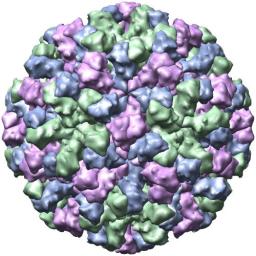
Norwalk_Caspid

The Danish Veterinary and Food Administration has launched a campaign to lower the risk of exposure to norovirus when dining out.

Ahead of Christmas, the Danish Veterinary and Food Administration (Fødevarestyrelsen) is focusing on how staff in professional kitchens, in cafés, canteens, restaurants and delicatessens can help to curb norovirus infections, which the agency said normally peak toward the end of the year.

Chefs and kitchen staff should stay home from work if they have symptoms of norovirus infection or have just had the disease. People can be infectious before feeling sick and at least 48 hours after having recovered.

Niels Ladefoged Nielsen, a consultant at the Danish Veterinary and Food Administration, said norovirus is extremely contagious, and there have been times when a single mistake in a professional kitchen has affected a large number of guests.

Nielsen said while the message of not cooking for others while feeling unwell is aimed at food professionals, it also applies to people at home in their own kitchen, and when preparing or serving food for family or friends.

Iceland – Warning against consuming mussels from Hvalfjörður – Algal Toxins

MAST

Matvælastofnun continues to warn against picking and consuming mussels from Hvalfjörður, as DSP algae toxins were recently detected above the reference limits.  

DSP algae toxins in mussels can cause abdominal pain, diarrhea, nausea and vomiting. Symptoms appear soon after consumption and disappear within a few days. 

A representative of the Food Administration collected mussels on Friday 22 October at Fossá in Hvalfjörður. The purpose was to investigate whether it was safe for the public to pick mussels in Hvalfjörður. The results of the measurements showed that the DSP algae toxin was 440 µg / kg but a month ago 1150 µg / kg was measured in the mussel. Both values ​​are well above the limit of 160 µg / kg. 

Consumers are still warned not to eat mussels from the fjord as things stand. The agency will continue to monitor the situation and let them know when it will be safe to eat mussels from the fjord. During the winter, sampling is monthly, as algae growth is slow during the dark winter months and algae toxicity changes are slower. 

Finally, the Food Administration would like to draw attention to the fact that there is always a risk involved in consuming shellfish collected during shell picking, and this is always at your own risk.  

Ireland – Boil water notice issued for thousands in Co Longford – Cryptosporidium

Irish Times

crypt

Almost half of the population of Co Longford is subject to a boil water notice which was issued on Thursday.

It comes after the cryptosporidium barrier at a treatment plant was compromised following a deterioration in the raw water quality of the lake source, Irish Water said.

Following consultation with the HSE, Irish Water and Longford County Council decided to issue a boil water notice for the area supplied by the Longford Central Public Water Supply to protect public health.

The population impacted by this notice is approximately 17,500 people. The areas affected include all customers in Longford Town, Newtown Forbes, Balinalee, part of Edgeworthstown, part of Drumlish, part of Killashee and surrounding areas.

Experts from Irish Water and Longford County Council are assessing the situation with a view to having the notice lifted as quickly as possible. In the meantime, all customers of this supply are advised to boil water before use until further notice.

USA – Three Grocery Chains recall frozen, cooked shrimp because of risk of Listeria monocytogenes

Food Safety News

Listeria kswfoodworld food safety food poisoning

Image CDC

Three grocery chains are recalling certain frozen, cooked shrimp after testing revealed Listeria monocytogenes.

Winn-Dixie, Fresco y Más, and Harveys Supermarkets stores recalled their Fisherman’s Wharf brand “Jumbo Cooked Shrimp” according to company officials with the chains’ parent company, SoutheasternGrocers.

Because of the long shelf life of the product, which reaches into 2023, there is concern that consumers may have the product in their home freezers.

The recalled frozen shrimp is packaged in plastic bags with 16-20 pieces in each bag. The 16-ounce bags are marked with the UPC number 2114003262 and a best-by date of April 5, 2023. 

Consumers are advised to not use the recalled shrimp and to throw them away or return them to the place of purchase for a refund.

USA – Shellfish growing area reopened after closure for link to outbreak

Food Safety News

A shellfish growing area has reopened for shellfish harvesting after a Camyboacter outbreak closed the pond two months ago.

Potter Pond is located in South Kingstown, RI, and was under investigation by the Rhode Island Department of Health (RIDOH), the Rhode Island Coastal Resources Management Council (CRMC), and Rhode Island of Environmental Management (DEM).

Potter Pond had been closed to shellfish harvesting because of bacterial contamination that was detected in early September. A RIDOH investigation indicated that eight people became ill after consuming raw shellfish harvested from Potter Pond and that the illnesses were because of Campylobacter bacterial contamination. The Campylobacter contamination has been linked to flocks of birds aggregating near shellfish growing areas.

Ireland – Recall of a Batch of Joyces Supermarkets of Galway Tipperary Brie due to the Presence of E. coli.

FSAI

Tipperary Brie for Recall

Summary
Category 1: For Action
Alert Notification: 2021.95
Product: Joyce’s Supermarkets of Galway Tipperary Brie; pack size:155g; approval number: IE 1089 EC
Batch Code: Use by date: 17/11/2021
Country Of Origin: Ireland

Message:

The above batch of Joyce’s Supermarkets of Galway Tipperary Brie is being recalled due to the presence of E. coli.  Point-of-sale recall notices will be displayed in stores supplied with the implicated batch.

Nature Of Danger:

E. coli at the levels detected indicates a possible hygiene issue and the potential for the presence of harmful bacteria.

Action Required:

Manufacturers, wholesalers, distributors, caterers & retailers:

Retailers are requested to remove the implicated batch from sale.

Consumers:

Consumers are advised not to eat the implicated batch.