Category Archives: Food Micro Blog

RASFF Alert- Norovirus – Frozen Oysters

RASFF

Norovirus in frozen oysters from France in Italy

RASFF Alert- E.coli – Mussels

RASFF

Escherichia coli above legal limits in mussels from Spain in Italy

RASFF Alerts – STEC E.coli – Salad Vegetable Mix – Goat Cheese

RASFF

Shigatoxin-producing Escherichia coli in salad vegetable mix from the Netherlands in Germany

RASFF

Shigatoxin-producing Escherichia coli (STEC) in goat cheese from France in Germany and Italy

RASFF Alerts – Listeria monocytogenes – Cured Pork Loin – Organic Gorgonzola – Roast Beef

RASFF

Listeria monocytogenes in cured pork loin from Estonia in Lithuania

RASFF

Presence of listeria monocytogenes in organic gorgonzola from Italy in France, Belgium and South Korea

RASFF

Listeria monocytogenes in Roast beef from Ireland, via the Netherlands in Belgium, Germany, Seychelles

Research- Three clusters of Salmonella Enteritidis ST11 infections linked to chicken meat and chicken meat products

EFSA

Abstract

From 1 January–24 October 2023, 335 laboratory-confirmed Salmonella Enteritidis ST11 cases belonging to three distinct microbiological clusters have been reported in 14 EU/EEA countries, the United Kingdom and the United States, affecting all age groups. Most interviewed cases reported consumption of chicken meat, including chicken kebabs. Nine cases in three countries were hospitalised and one case in Austria died, highlighting the potential for severe and fatal infections from this outbreak. Following the food exposure information and the national investigations in 2023, the food safety authorities in Austria, Denmark and Italy investigated 10 food products (six contaminated by Salmonella Enteritidis ST11 cluster 1 and/or cluster 2), seven final producers in Poland and one in Austria. Traceability information revealed that three Salmonella-contaminated kebabs shared a number of Polish food business operators. The trading link of the suspected kebab suggests one or more common source(s)/point(s) of contamination in Austria, Denmark, and Italy. Following the collection of genomic information, the cluster analysis revealed the presence of the outbreak strains in the food chain in multiple European countries. Most positive foods sampled in 2022–2023 with shared epidemiological data originated from Poland. Given the information collected, contaminated chicken kebab and chicken meat are the plausible vehicles of the human infections reported in these three clusters. In the absence of conclusive microbiological evidence and comprehensive traceability, the role of the identified final producers, their meat suppliers, and the possible involvement of other food business operators as sources of the infections could not be confirmed or excluded. Further investigations are needed to identify the root cause of the contamination and the source of infections, which is crucial for prompt implementation of targeted effective control and corrective measures. As the source(s) have not been identified, new cases are likely to occur in this prolonged multi-country outbreak.

Norway – Outbreak of Salmonella infection

Matportalen

The Norwegian Food Safety Authority has been notified by the Norwegian Institute of Public Health about a national outbreak of the gastrointestinal bacterium Salmonella Napoli. So far, infection has been detected in seven people. The source of infection is not known.

An outbreak investigation has been initiated in collaboration between the Norwegian Food Safety Authority, the Norwegian Institute of Public Health, the Veterinary Institute and municipal chief medical officers. It is currently unknown what the source of infection is, but it is common for gastrointestinal bacteria to become infected through food. According to the Norwegian Institute of Public Health, the most common symptoms are diarrhoea, headache, abdominal pain, nausea and possibly fever.

– The Norwegian Food Safety Authority collects information from the sick persons about what they have eaten and what they have been in contact with. It may also be relevant to take samples of food and food packaging, says Anne Mæland, senior advisor in the biological food safety section of the Norwegian Food Safety Authority.

Outbreak investigation takes time and the work is complicated. It is not always possible to find the source of infection in such outbreaks. If a common source of infection from food, animals or the environment is identified, the Norwegian Food Safety Authority will follow up the tracing work along the food chain.

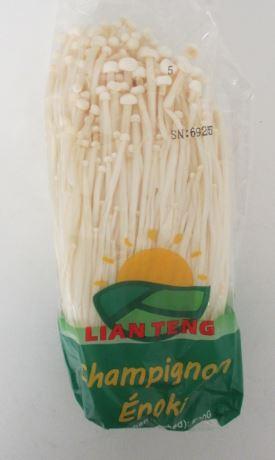
Canada – Lian Teng brand Enoki Mushroom recalled due to Listeria monocytogenes

Gov Canada

Lian Teng - Enoki muchrooms - Front

Product
Enoki Mushroom
Issue
Food – Microbial Contamination – Listeria
What to do

Do not consume, use, sell, serve or distribute recalled products.

Distribution
Ontario
Quebec

Issue

The affected product is being recalled from the marketplace due to possible Listeria monocytogenes contamination.

What you should do

  • If you think you became sick from consuming a recalled product, contact your healthcare provider
  • Check to see if you have recalled products
  • Do not consume, serve, use, sell, or distribute recalled products
  • Recalled products should be thrown out or returned to the location where they were purchased

Food contaminated with Listeria monocytogenes may not look or smell spoiled but can still make you sick. Symptoms can include vomiting, nausea, persistent fever, muscle aches, severe headache and neck stiffness. Pregnant women, the elderly and people with weakened immune systems are particularly at risk. Although infected pregnant women may experience only mild, flu-like symptoms, the infection can lead to premature delivery, infection of the newborn or even stillbirth. In severe cases of illness, people may die.

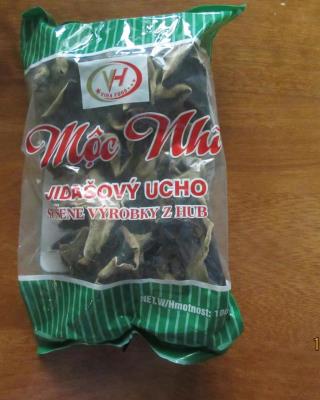
Czech Republic – Judas ear 100 g – Bacillus cereus

Potravinynapranyri

Illustrative photo #1

Place of inspection:
Libina ( Libina 216, 788 05 Libina )
ID: 48946265
Invalid parameter:

Bacillus Cereus

The presence of the pathogenic bacterium Bacillus cereus was detected in the food . The food is unfit for human consumption.

Batch: DMT 01.06.24
Best before date: 01.06.24
Packaging: PP foil
Quantity of the product in the package: 100 g
Distributor: Vihafood s.r.o., Novodvorská 95/42, Lhotka 142 00 Prague
Date of sample collection: 19/04/2023
Reference number: 23-000690-SZPI-CZ
The sample was detected by the official control of the State Agricultural and Food Inspection.

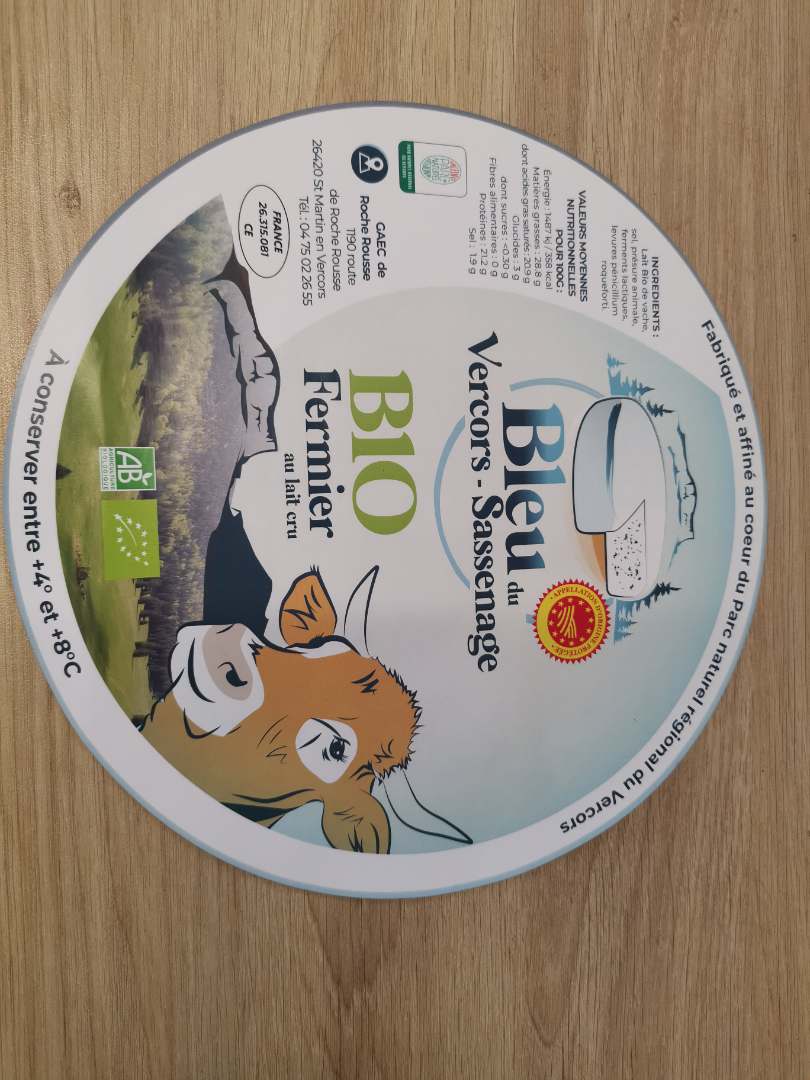
France – Bleu du Vercors Sassenage – Listeria monocytogenes

Gov france

  • Product category Food
  • Product subcategory Milk and dairy products
  • Product brand name Roche rousse farm
  • Model names or references Bleu du Vercors transformed on 09/23/2023
  • Product identification
    Batch Date
    09/23 Minimum durability date 11/23/2023
  • Packaging SOLD IN PIECE
  • Start/end date of marketing From 10/14/2023 to 10/17/2023
  • Storage temperature Product to keep in the refrigerator
  • Geographical sales area Regions: Auvergne-Rhône-Alpes
  • Distributors GOOD FARM: 38000 GRENOBLE TRAVERS CHAMPS: 26270 LORIOL SUR DROME AU MOST PRE: 26740 LA LAUPIE
  • List of points of saleDISTRIBUTORS.pdf

Belgium – ORGANIC Gorgonzola (170 gr) from the Ambrosi brand – Listeria monocytogenes

AFSCA

Recall from Euro Délices Distribution
Product: ORGANIC Gorgonzola (170 gr) from the Ambrosi brand
Nature of the problem: Possible presence of Listeria Monocytogenes

In agreement with the AFSCA, Euro Délices Distribution is withdrawing the product Gorgonzola BIO (170 gr) from the Ambrosi brand from sale and recalling it from consumers due to the possible presence of Listeria Monocytogenes.

Euro Délices Distribution asks its customers not to consume this product and to return it to the point of sale where it was purchased and where it will be refunded.

Product description

– Product name: Gorgonzola DOP BIO
– Brand: Ambrosi
– Consumption date: 09/12/2023
– Batch number: 194ARR
– Sales period: from 02/10/2023
– Nature of the product packaging: plastic packaging
– Weight: 170 gr


The product was distributed by:

BIO Planet Josef Huysmanslaan 80 1651 BEERSEL- LOT

For any further information , contact:

Madame Cluts Fabienne
+ 32 4 278 78 12 or fabiennecluts@gmail.com